
A sour smell in stored washables is not a small issue when you manage sourcing, product development, or repeat orders. A netted laundry bag can help reduce odor by improving airflow, draining water faster, and separating damp items before smells settle into fabric. That sounds simple, yet the details behind odor control are what decide whether a bag works well in daily use or becomes just another accessory with a nice label.
For many buyers, odor control is tied to more than home laundry. It affects travel sets, shoe washing bags, underwear care bags, sportswear storage, and bulk laundry programs. If the bag holds moisture too long, uses the wrong mesh structure, or closes in a way that traps stale air, users notice very quickly. If the bag balances breathability, protection, drying speed, and sensible construction, it becomes easier to sell, easier to reorder, and easier to place in different product lines.
Established in 2014, our company manufactures laundry mesh bags, bra laundry bag, washing bags for shoes, storage bags, laundry baskets, and drawstring mesh for customers across Europe, North America, South America, Korea, and Japan. OEM orders are welcome, customized designs are available, and our raw materials are environment-friendly, with products able to pass REACH and related tests.
Why odor becomes a product problem
Odor usually starts before the wash cycle has a chance to fix anything. Damp socks, gymwear, baby clothes, lingerie, towels, or lightweight uniforms sit in a pile, and the trapped moisture begins to build a stale smell. If a bag slows drying or traps wet fabric in dense folds, that smell gets stronger during storage, transport, or waiting time before wash day.
For procurement teams and product managers, this creates three common problems:
-
The user blames the bag when clothing smells worse after storage.
-
Returns rise when the bag looks fine but performs poorly in daily use.
-
A product line loses credibility because one weak detail affects the whole experience.
Odor control is also linked to how the bag is used. A delicates bag inside a washing machine has one job. A storage-and-wash bag for travel, teamwear, or shared laundry spaces has two jobs: it must protect garments and help manage smell between loads. Those are different use cases, and they need different feature choices.
Where the smell usually starts
Most odor complaints come from one or more of these conditions:
-
Wet fabric sits in a tightly packed bag for too long.
-
Mesh openings are too small for quick drainage and airflow.
-
The bag material dries slowly after washing.
-
The closure seals moisture in without any ventilation path.
-
Shoes, socks, and synthetic sportswear are mixed with fine garments.
When you look at odor control in this way, the buying decision becomes clearer. The issue is not only whether the product is called a mesh bag. The real question is whether the construction helps moisture leave the bag quickly enough.
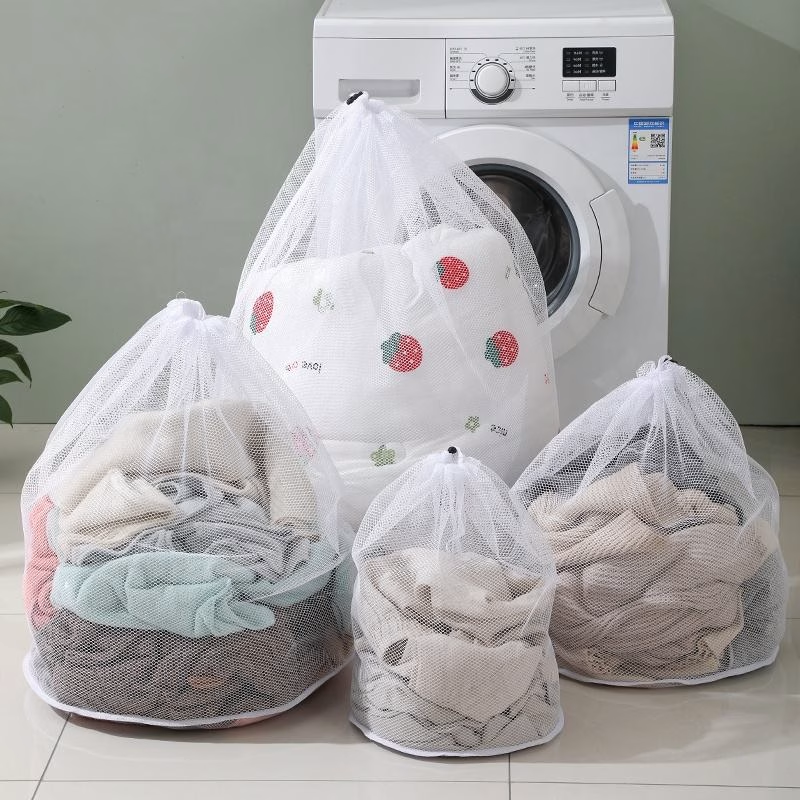
Why a netted laundry bag can help control odor
A netted laundry bag helps with odor control because breathability gives moisture a better path out of the load. Breathable mesh construction allows airflow and water circulation during washing, which helps reduce damp smells and mildew in washable bags. That benefit is strongest when users wash damp items promptly and avoid packing the bag too tightly.
Mesh also helps between wash cycles. In user discussions, mesh is valued because some air circulation can help sweaty clothing avoid a musty smell when the bag is not packed too tightly. This is why a breathable laundry net bag often works better than a dense pouch for gymwear, socks, light undergarments, and similar low-bulk items.
Still, not every odor problem should be handled with open mesh alone. If laundry is very wet, heavily soiled, or used in settings with stricter hygiene handling, containment rules change. CDC guidance says reusable linen bags should not be overfilled, should be tied securely, and can be laundered after each use, while leak-resistant containment is needed when wet laundry can soak through. That distinction helps buyers avoid overpromising a mesh solution where a lined or leak-resistant option is the better fit.
Open mesh vs sealed storage
A netted laundry bag is usually the better option when the goal is reducing damp smell during normal storage and washing. A sealed bag is usually the better option when the goal is containing moisture or isolating very dirty items for transport. Many product lines now need both options, not one universal bag.
What buyers should take from this
The term “odor control” should not mean “odor proof.” In most washable mesh products, odor control comes from better ventilation, drainage, separation, and cleaning frequency. That message is more honest, easier to support, and more useful for product pages, packaging, and wholesale discussions.
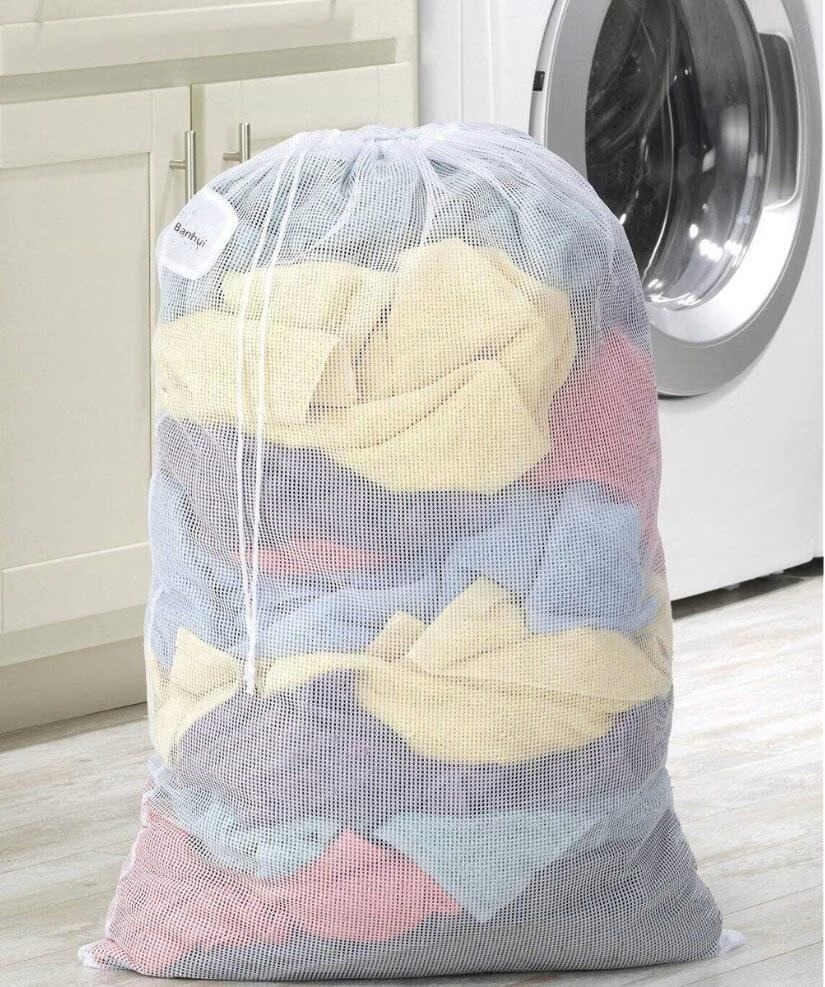
Which odor-control features buyers should request
A product does not need a long list of add-ons to perform well. It needs the right combination of mesh, material, closure, size, and washability. That combination changes based on whether the bag is made for lingerie, shoes, mixed clothing, travel use, or oversized laundry.
1. Mesh openness and fabric weight
Fine mesh protects delicate fabrics well, though it may dry a little slower when the load is dense. Coarse mesh gives better airflow and faster drainage, which makes it useful for sportswear, socks, and shoes. Many collections work best when they include both fine and coarse options rather than forcing one style across every use case.
2. Material choice
Polyester is a common choice because it dries quickly, keeps its shape well, and handles repeated wash cycles. Nylon can also work well in heavy-use applications. For odor control, the main point is not fashion appeal. The main point is how quickly the fabric sheds water and how reliably it performs after repeated washing.
3. Closure design
The closure affects both garment protection and smell control. Drawstrings are familiar, adaptable, and suitable for larger sizes. Zippers often suit delicates better because they keep small garments inside the bag during the wash. A laundry net bag for travel or mixed use may benefit from a drawstring top plus a breathable panel layout instead of a tighter closure that holds damp air.
4. Antimicrobial options
An antimicrobial mesh laundry bag may suit programs where odor complaints are frequent and product positioning calls for extra hygiene messaging. Still, buyers should verify what the treatment does, how long it lasts, and whether the claim is tied to the bag fabric itself or only to a marketing phrase. Clear claim wording is better than broad language that cannot be supported in testing or packaging review.
5. Size planning
Odor is easier to manage when items are sorted by type. A mixed-size set is often more useful than a single bag size because it keeps socks away from lingerie, shoes away from knitwear, and damp activewear away from other garments. That is one reason sets continue to sell well in wholesale and retail programs.
6. Labeling and visibility
A bag that can be color coded, printed, or labeled is easier to use correctly. If the user can tell at a glance which bag is for shoes, underwear, travel storage, or machine wash, they are less likely to overload the bag or mix items that should stay apart.
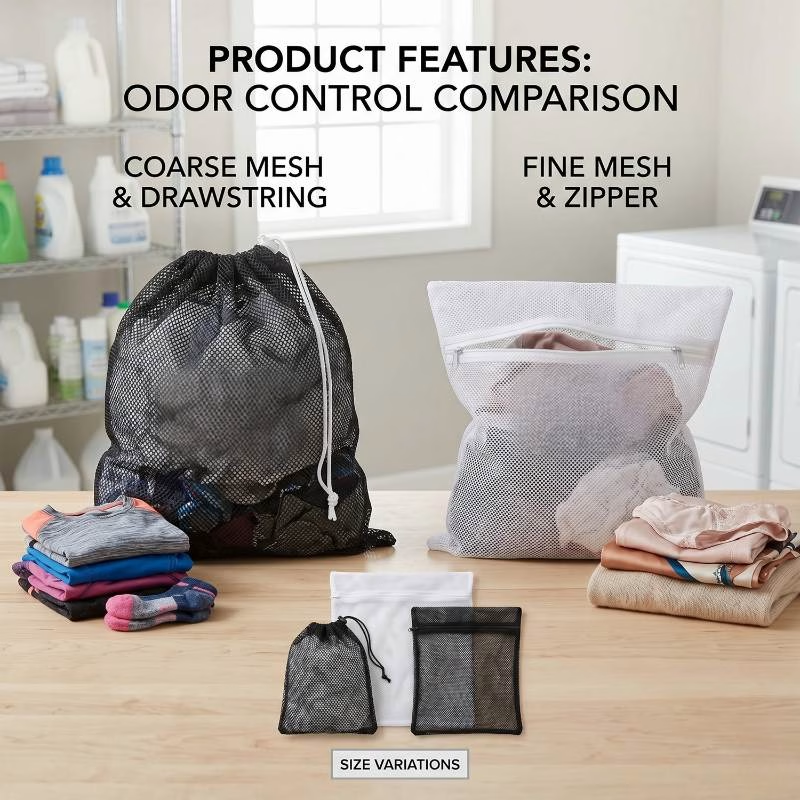
How to choose a netted laundry bag for odor control
When buyers compare samples, the best choice usually comes from use-case matching rather than broad claims. A netted laundry bag for daily delicates should not be judged by the same standard as a netted laundry bag meant for shoes, sportswear, or larger family loads. The bag has to match the moisture level, fabric type, washing frequency, and storage pattern behind the order.
Start with these sourcing questions
-
What items will spend the most time in the bag?
Bras, socks, underwear, uniforms, shoes, towels, or mixed garments each place different demands on the mesh. -
Will the bag hold mostly dry clothing or damp clothing?
Damp use calls for stronger airflow and faster drying. -
Does the customer need wash-only use, storage-only use, or both?
This decides whether breathability or containment comes first. -
Is the product part of a set?
Sets support sorting, and sorting supports odor control. -
Will the item be sold under your own brand?
That affects color choice, labels, printed logos, packaging, and testing files.
A practical selection matrix
Match product format to market
A compact set can work well for e-commerce bundles, seasonal promotions, and household organization lines. A larger drawstring mesh laundry bag for washing machine use can fit institutional programs, dorm supply, hotel-support products, and travel-related assortments. Buyers who start with one hero size often return later to build a full range once they see how different users sort laundry in practice.
If you want product references while planning the assortment, review the full laundry mesh bag product range, the set of 4 cleaning drawstring mesh laundry bag, the set of 5 thickened coarse mesh laundry bag set, and the 60×90 cm big size drawstring laundry bag. These product formats help buyers compare size strategy, closure style, and merchandising direction without guessing what a complete range should look like.
Sample review tips
Before placing volume orders, check:
-
Mesh opening consistency
-
Seam neatness and reinforcement
-
Closure ease after repeated use
-
Bag behavior after wash and dry cycles
-
Print clarity for logos or labels
-
Packaging fit for your sales channel
A useful sample review is not only about appearance. It should show how the bag behaves after real handling, loading, washing, and drying. That is where odor-control claims either hold up or fade.
Compliance, materials, and buyer documentation
Odor control features can help sales, though compliance and material clarity keep the product viable in regulated markets. For chemical compliance, the European Commission states that Entry 72 of Annex XVII under REACH restricts 33 CMR substances in clothing, textiles, and footwear, and the restriction has applied since 1 November 2020. Annex XVII also restricts nonylphenol ethoxylates in washable textile articles at concentrations of 0.01% by weight or higher.
This is why material selection should be discussed early, not after packaging design is finished. If the bag will be sold into Europe or through retailers with testing requirements, buyers should ask for documents that support the chemical profile of the fabric, trims, dyes, and prints. Helpful background reading can be found in the European Commission’s REACH restrictions overview and the Annex XVII restriction list.
Documents worth requesting
-
REACH-related test reports or chemical compliance files
-
Fabric composition details
-
Colorfastness results when dyed mesh is used
-
Closure component details for zipper, puller, or cord lock
-
Packaging material information when part of retailer review
-
Sample approval record before production starts
For laundering and handling guidance, CDC recommendations note that reusable linen bags should be tied securely, should not be overfilled, and can be laundered after each use. That guidance is especially useful when a buyer is planning products for shared laundry settings, institutions, or programs where bag handling is part of the value proposition. The CDC resource on linen and laundry management is a practical support link for that context.
Our company background aligns well with these sourcing needs. Established in 2014, we produce laundry mesh bags, bra laundry bags, washing bags for shoes, storage bags, laundry baskets, and drawstring mesh. Our raw materials are environment-friendly, OEM orders are welcome, customized designs are available, and our products can pass REACH and related tests.
Why this helps wholesale programs
Documentation shortens review cycles. It also reduces confusion between product marketing and product proof. When buyers receive sample support, size options, and test-related information together, decisions move faster and with fewer revisions later.
Product options, custom development, and direct sourcing
A strong mesh laundry range usually starts with a clear core group: fine mesh bags for delicates, coarse mesh bags for heavier daily wash, drawstring bags for bulkier loads, and larger sizes for bedding, uniforms, or storage. From there, the range can grow into travel sets, bra laundry bag formats, shoe washing bags, printed retail sets, or store-brand assortments built around specific user habits.
That is where direct manufacturing support becomes useful. Our company has served customers worldwide since 2014, with key markets in Europe, North America, South America, Korea, and Japan. We support OEM orders, customized designs, and product development based on target size, mesh density, closure type, packaging plan, and compliance needs.
Custom details that often shape an order
-
Mesh type: fine, medium, or coarse
-
Size set: small, medium, large, or oversized
-
Closure: zipper, drawstring, or mixed sets
-
Color coding: for sorting by garment type
-
Print: logo, care instruction, or size marking
-
Packaging: hanger card, insert, polybag alternative, or set bundle
-
Testing support: based on destination market needs
How to build a better assortment
Many wholesale buyers start with a safe general product, then expand after customer feedback. A better route is to build the assortment around actual use patterns from the start:
-
One fine mesh zipper set for delicate garments
-
One coarse mesh set for daily washing and faster drying
-
One oversized drawstring option for larger loads
-
One shoe washing bag for specialty care
-
One branded storage-and-wash set for travel or gifting
This approach gives more room for price ladder planning and clearer product differentiation. It also makes merchandising easier because each product has a visible job.
If your range needs odor-aware mesh bags that are easier to explain and easier to reorder, source them from the original manufacturer rather than building around guesswork. Working directly with us gives you access to factory-level input on size, mesh structure, closure style, packaging, and custom development. Share your target market, specifications, or sample request, and we can prepare a quote based on the product direction you want to build.
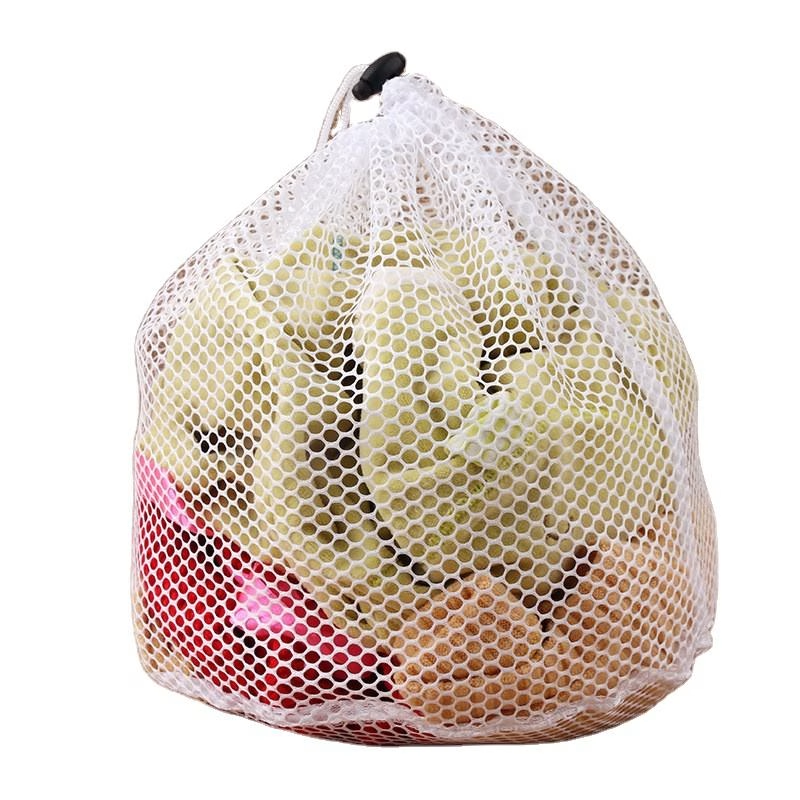
Frequently Asked Questions
1. What minimum order quantities do you offer?
Minimum order quantities depend on the bag type, size, material, and customization level. Stock-style items may support lower starting volumes, while custom programs often need a larger run. Reach out with your target specification for an MOQ estimate that fits your project.
2. Can you customize size, mesh, and closure style?
Yes, customization is available for size, mesh density, closure type, color, and packaging. OEM orders are welcome, and the product can be developed around your target market or retail format. Contact us with sample references or a tech pack for detailed specifications.
3. Do your products pass REACH-related tests?
Our raw materials are environment-friendly, and our products can pass REACH and related tests. For projects going into regulated markets, it is wise to confirm the test scope during sampling and approval. That keeps the product file aligned with the destination market.
4. How long do sampling and production take?
Lead time depends on order size, customization level, and material availability. Sampling is usually faster when the construction is close to an existing style, while new development may need added review time. Send your quantity and design details to receive a production schedule estimate.
5. Can we request samples before bulk production?
Yes, samples can be arranged before volume production. This gives your team a chance to review mesh feel, closure function, sizing, print placement, and wash performance. Contact us to request samples for evaluation and internal approval.