
Apparel returns, fabric snags, and premature garment wear create friction across the entire textile supply chain. When delicate knits, intimate wear, and activewear encounter mechanical agitators and high-speed spin cycles, physical abrasion weakens fibers and distorts seam structures. Incorporating protective washing cloth bags into garment care regimens solves these damage issues before they reach consumer review sections. For wholesale distributors, retail brand managers, and procurement officers, supplying the right laundry mesh bag protects merchandise integrity, boosts consumer trust, and expands product utility across international markets.
Selecting reliable laundry accessories requires a clear understanding of mesh construction, seam strength, zipper enclosures, and chemical safety certifications. Choosing poorly constructed wash pouches leads to broken zippers, frayed stitching, and snagged laces during domestic and commercial laundering. Sourcing engineered washing cloth bags directly from an established production partner ensures consistent build standards, verified chemical compliance, and tailored packaging suitable for retail shelves and catalog programs.
Why Washing Cloth Bags Are Essential for Garment Care
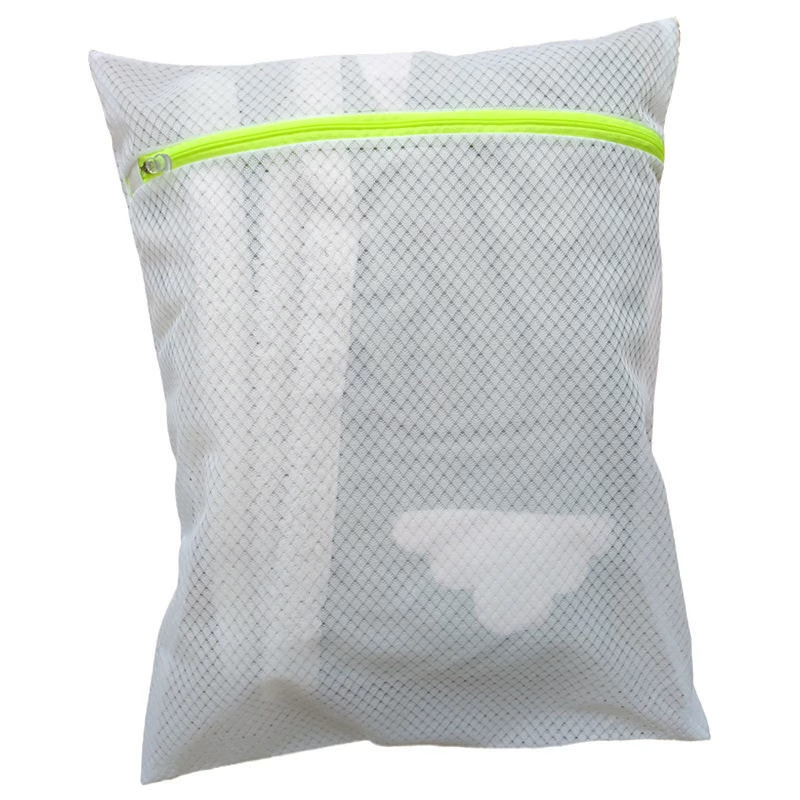
Modern washing machines generate heavy mechanical friction during wash and spin cycles. When delicate silks, lace bras, wool sweaters, and synthetic athletic gear tumble against heavy denim or metal zippers, microscopic tears develop in the yarn. Utilizing washing cloth bags creates a protective physical barrier around delicate textiles while permitting full detergent solution and rinse water circulation. This balance between mechanical buffering and fluid exchange prevents tangling, stretching, and surface pilling.
Without structural protection, garments containing elastane lose elasticity quickly when twisted around heavier items. Underwire bras can bend, poke through fabric channels, and damage washing machine drums. By isolating items in a dedicated laundry mesh bag, consumers keep strap shapes intact and prevent hook-and-eye closures from latching onto neighboring garments. Retail brands that bundle washing cloth bags with apparel offerings show proactive care for post-purchase garment longevity.
In addition to preventing physical snags, wash pouches serve as sorting organizers. Garment care guidelines defined under the FTC Care Labeling Rule emphasize protecting fabric finishes through appropriate wash conditions. Washing cloth bags allow users to separate hosiery, baby clothing, and sportswear into distinct wash units, reducing lint transfer between dark cottons and light synthetic weaves.
How Washing Cloth Bags Prevent Fabric Distortion and Friction
Rotational velocity and centrifugal force in modern washing machines pull garments outward against spinning drum walls. During spin cycles reaching 1200 to 1600 RPM, long sleeves, pant legs, and shoulder straps tangle together, creating strong tension points that stretch necklines and distort seams. Placing items inside washing cloth bags restricts loose fabric movement, keeping each garment compact within its individual compartment.
Pilling occurs when loose fibers break on fabric surfaces, tangle together, and form tiny balls due to continuous surface rubbing. Synthetic fleeces, wool blends, and modal fabrics are vulnerable to this abrasion. Washing cloth bags act as a physical buffer that absorbs the frictional load, preserving smooth fabric hands and extending garment wearable life. For compact garments and socks, deploying a small laundry bag prevents items from slipping into machine drainage areas.
When managing mixed laundry loads, color bleed and lint transfer present ongoing challenges. While washing cloth bags cannot replace sorting by wash temperature, fine mesh barriers trap loose fuzz, pet hair, and stray threads, preventing them from redepositing onto contrasting dark textiles. Sourcing durable multi-packs such as the set of 3 colorful mesh laundry bag allows consumers to color-code their wash loads by fabric type or family member.
Zipper Protection and Construction Standards for Commercial Durability
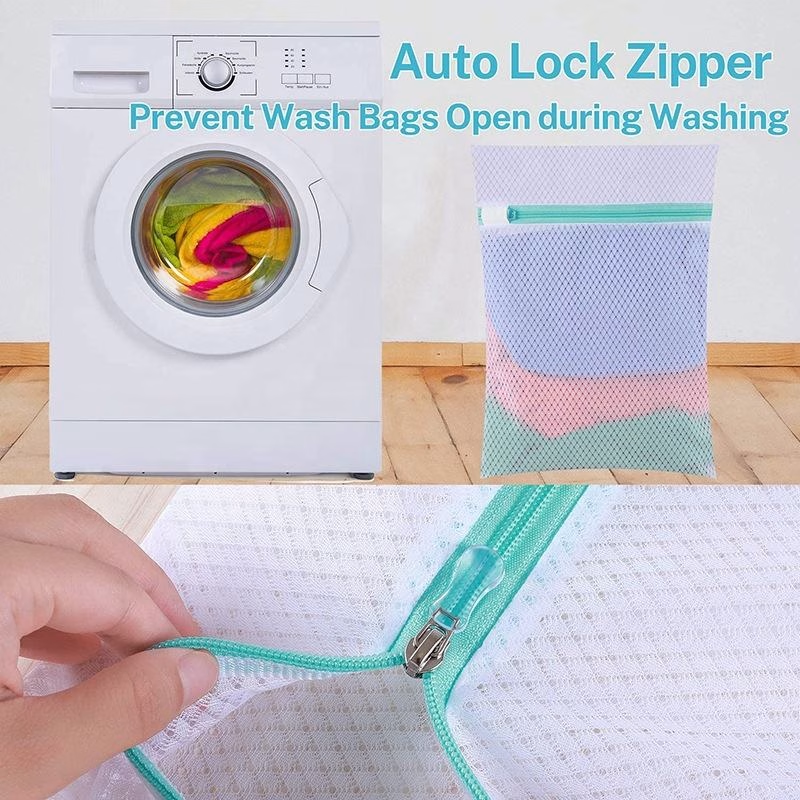
The zipper mechanism represents the most critical hardware element on any wash pouch. A failing zipper renders a wash pouch useless and can damage machine drums if metal pulls strike the interior during spin cycles. Sourcing commercial-grade washing cloth bags requires inspecting zipper materials, pull head locks, and elastic cover guards.
High-grade products feature rust-proof plastic coil zippers equipped with auto-locking pull tabs. These sliders do not open during rapid agitation cycles. An elastic guard sleeve sewn at the end of the zipper track allows the pull tab to tuck away completely. This construction standard eliminates scratching on appliance drums and prevents the pull head from catching on loose mesh fibers. For comprehensive product selections, reviewing the laundry bag with zipper collection provides multiple zipper configurations suitable for diverse retail requirements.
Beyond hardware, seam finishing dictates overall tensile strength. Standard single-needle stitching unravels when subjected to repetitive thermal stress in hot wash cycles and tumble dryers. Professional factory production applies double-folded edge binding with four-thread overlock stitching. This structural reinforcement ensures that washing cloth bags maintain shape, withstand heavy loads, and endure repeated industrial and domestic cycles without seam rupture.
Sourcing Specifications for Wholesale Programs and Retail Packaging
Procurement specialists and retail buyers balance material specifications, dimensional assortments, and consumer packaging when building private label catalogs. Offering structured collections rather than standalone bags increases average order values and satisfies diverse consumer laundering habits. Curating comprehensive bundles—such as an all-inclusive laundry bag set—gives end users dedicated solutions for intimate wear, blouses, knitwear, and shoes.
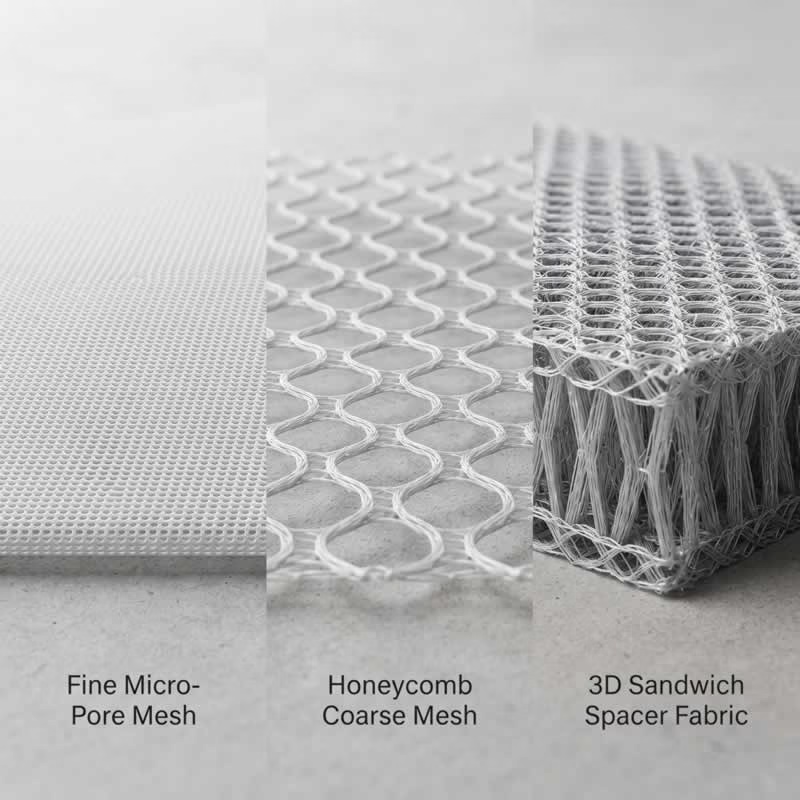
When specifying custom production runs, evaluating fabric density and branding finishes allows brands to differentiate their catalog offerings. Options range from standard white mesh to specialized lines like the white thickened fine laundry bag wholesaler program, or vibrant collections such as the colorful thickened fine mesh laundry bag wholesaler line. Custom woven labels, screen-printed graphic patterns, and embroidered pull tags elevate visual appeal on retail shelves.
Packaging formats should align with distribution channels. Brick-and-mortar retail environments require clear polybags with full-color card headers and hang holes for pegboard displays. Direct-to-consumer e-commerce brands benefit from flat-packed frosted zipper bags or recyclable kraft paper sleeves that minimize shipping volume and reduce fulfillment overhead. Working with an agile factory partner simplifies barcode labeling, customized master carton packing, and pallet consolidation.
Environmental Standards and Compliance for Global Markets
Supplying consumer goods across North America, the European Union, South America, Korea, and Japan requires strict adherence to international environmental and chemical safety standards. Retail buyers must verify that synthetic textiles, plastic zipper components, and colorant dyes contain no restricted hazardous substances that can leach into wastewater or contact skin.
In the European market, textile articles must satisfy the stringent chemical thresholds established under the European Chemicals Agency (ECHA) REACH Regulation. Sourcing washing cloth bags verified against REACH testing protocols guarantees that plasticizers, azo dyes, heavy metals, and formaldehyde remain well below regulatory limits. Responsible manufacturers also engineer high-tenacity 100% virgin or GRS-certified recycled polyester mesh that withstands repeated laundering without shedding microfibers into aquatic ecosystems.
Conducting thermal resistance tests ensures that washing cloth bags retain dimensional stability under hot wash temperatures (up to 90°C / 194°F) and commercial dryer cycles. Selecting products that maintain structural integrity without shrinking or warping preserves customer satisfaction and minimizes post-sale return rates.
Direct Factory Manufacturing and Customization Capabilities
Established in 2014, our company is a professional manufacturer of laundry mesh bags, bra laundry bag, washing bags for shoes, storage bag, laundry basket and drawstring mesh. Our customers are located worldwide, with key markets in Europe, North America, South America, Korea, and Japan. OEM orders are welcome, and customized designs are available. Our raw materials are environment-friendly, and our products can pass REACH and related tests.
Partnering directly with an established manufacturing facility gives procurement teams complete control over product specifications. Whether your program requires custom-dimensioned wash bags, reinforced shoe cleaning enclosures with internal plush lining, or cylindrical bra bags with protective plastic frames, direct factory communication eliminates intermediary markups and accelerates sample development. Sourcing items like the thickened white mesh laundry bag with embroidered logo or the set of 5 thickened coarse mesh laundry bag with customized logo provides full custom branding options.
Our integrated manufacturing lines handle high-capacity production volumes while maintaining strict quality control at every stage—from yarn warping and fabric weaving to sewing, zipper testing, and final packaging. Engaging with our direct manufacturing team gives you access to competitive pricing structures, flexible order quantities, and reliable production schedules tailored to your distribution timeline.
Frequently Asked Questions
1. What minimum order quantities apply for custom orders?
Our standard minimum order quantities start at 500 to 1,000 sets per design depending on fabric selection and packaging requirements. We also provide flexible pilot run quantities for newly developed product lines. Reach out for detailed specifications and quotation tiers tailored to your volume.
2. How do your products satisfy REACH compliance standards?
All raw materials, polyester mesh fabrics, zipper teeth, and pullers are formulated without restricted azo dyes, phthalates, or hazardous heavy metals. Our products undergo independent laboratory testing to ensure compliance with European REACH Annex XVII regulations. Reach out to inspect our full testing reports and documentation.
3. Can we customize dimensions, logo tags, and packaging?
We offer complete OEM customization including tailored bag dimensions, specific mesh fabric densities, woven brand labels, embroidered logos, and retail-ready packaging. Sourcing teams can choose from polybags with printed header cards, color gift boxes, or eco-friendly paper wrappers. Contact us to request samples and discuss design mockups.
4. What lead times are standard for mass production?
Prototype samples typically take 3 to 7 working days, while full commercial production runs average 20 to 35 days following sample approval and deposit confirmation. Accelerated production scheduling is available for urgent replenishment programs. Reach out to confirm exact delivery schedules for your region.