
A customer zips a lace bra into a mesh bag, runs a normal cycle, and still finds a bent underwire. The bag gets blamed. But in most cases, the washing bag did its job. The damage came from how it was filled, closed, or matched to the fabric.
For buyers and product teams, this shows up as returns, weak reviews, and repeat questions from retail partners. So the fix starts with knowing how people misuse these bags. Then you can choose designs that make misuse harder.
Below are six common washing bag mistakes, what each one does to clothes, and how to fix it. You’ll also find a step-by-step routine and a short checklist for bulk orders. The advice draws on our work making mesh laundry bags since 2014 for Europe, North America, South America, Korea, and Japan.
What Is a Washing Bag and When Should You Use One?
A washing bag is a zippered or drawstring pouch made of polyester mesh. It holds clothes during a machine wash. Water and detergent flow through the mesh, so items still get clean. At the same time, the mesh cuts friction, stops tangling, and keeps small items together.
Use a mesh laundry bag for:
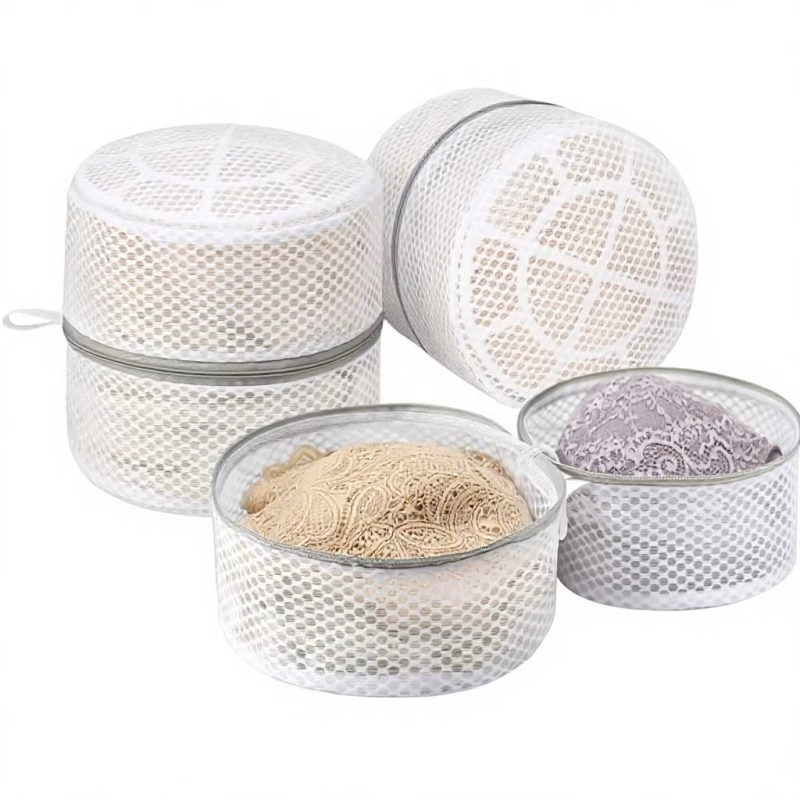
- Bras and lingerie – hooks and straps stay contained, so they don’t snag other clothes.
- Tights and hosiery – thin knits avoid runs caused by buttons and zippers in the drum.
- Knitwear, lace, and beaded tops – less rubbing means less pilling and fewer pulled threads.
- Socks and baby clothes – small items stay paired and don’t vanish into the door seal.
- Sportswear – straps and cords stay untangled.
- Sneakers and canvas shoes – a thick, padded mesh bag protects both the shoes and the drum.
However, a bag is not always needed. Heavily soiled work clothes often need full movement in the drum. And bulky items like duvets need a bag sized for them, or none at all.
Bags also help with sorting. Many households use one bag per family member or per item type. That cuts folding time and reduces mix-ups.
Mistake 1: Overfilling the Washing Bag
This is the most common error. A stuffed bag looks efficient, but it works against the wash.
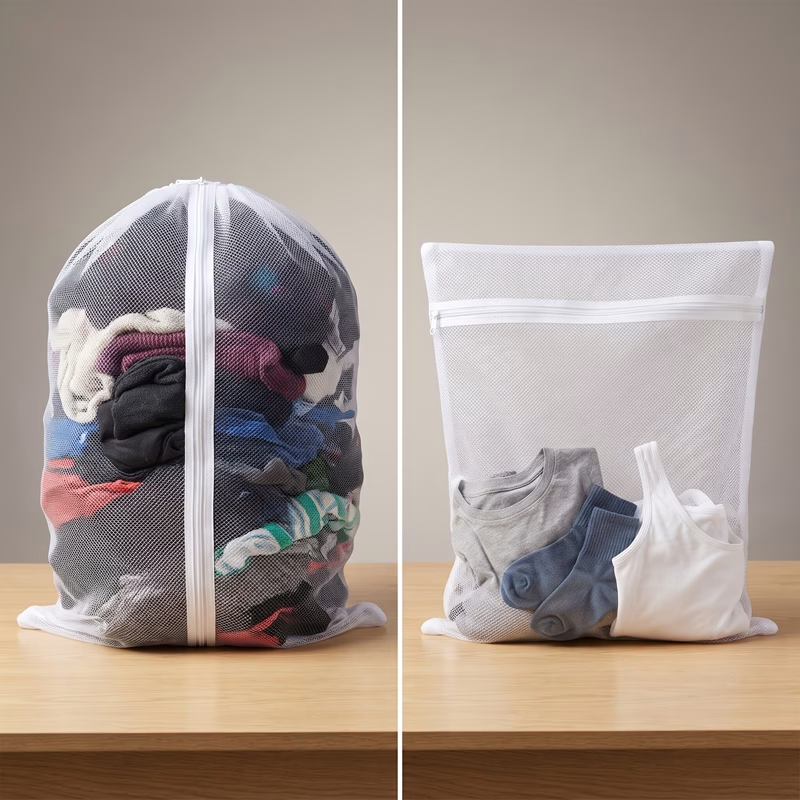
When the bag is packed tight, clothes can’t move. Water and detergent can’t reach the inner folds. So items come out with soap residue, odor, or even dry spots. A heavy, overfilled bag also strains the zipper and seams, which shortens the bag’s life.
How to fix it
- Fill the bag no more than half to two-thirds full.
- Shake the closed bag. If the items shift freely, the load is right.
- Split big loads across two or three bags instead of forcing one.
- Keep bulky and light items in separate bags.
For retailers, the easiest fix is a multi-size set. When shoppers have several bags on hand, they’re less likely to cram everything into one. A set of 7 fine mesh laundry bags or a set of 3 colorful mesh laundry bags covers most household loads. Color coding also helps families sort by person or by fabric.
Mistake 2: Choosing the Wrong Mesh for the Fabric
Not all mesh does the same job. Hole size and fabric thickness decide what a bag can protect.
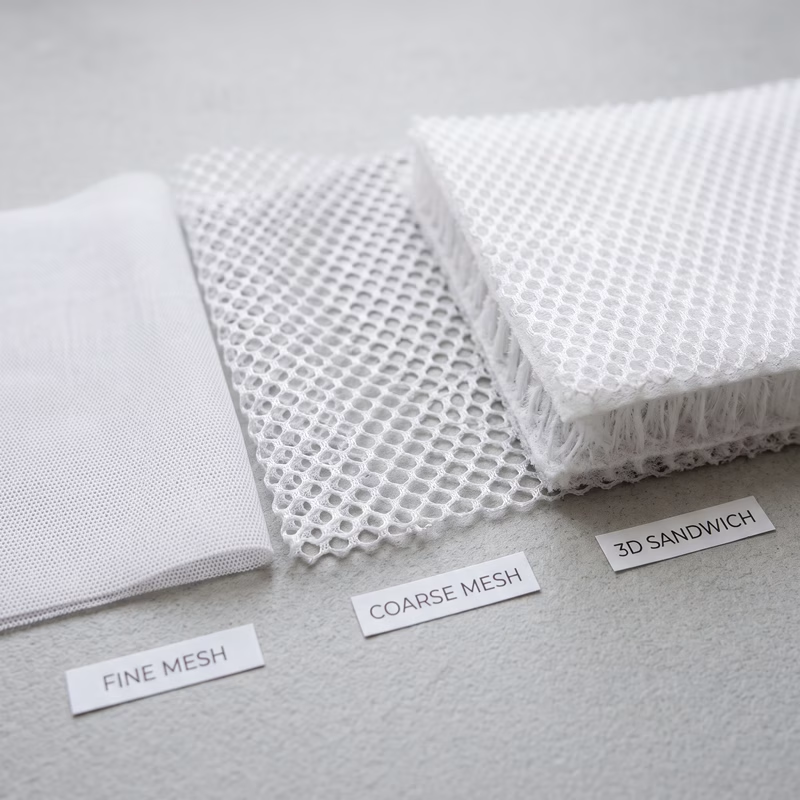
Fine mesh has small openings. So hooks, sequins, and thin threads can’t poke through. Coarse mesh has larger openings. That lets more water flow in, which suits sturdier items that need a deeper clean. Sandwich mesh, also called 3D or air mesh, has a padded, layered build. It cushions heavier items like shoes.
When buyers compare laundry bags mesh options, density should come before color or print. Here is a quick guide:
| Mesh type | Opening size | Works well for | Watch out for |
|---|---|---|---|
| Fine mesh | Small, tight weave | Bras, lingerie, tights, lace, silk blends | Slightly slower rinse on heavy loads |
| Coarse mesh | Larger, open weave | T-shirts, towels, sportswear, kids’ clothes | Hooks and beads can catch in the holes |
| Sandwich (3D) mesh | Layered and padded | Sneakers, canvas shoes, stuffed toys, bulky knits | Needs more drying time |
For delicates, the white thickened fine mesh laundry bag is a dependable choice. For everyday loads, a set of 5 thickened white coarse mesh laundry bags gives better water flow. And for shoes or bulky pieces, a Korea-style sandwich mesh laundry bag adds cushioning.
A practical tip for product teams: print the mesh type on the package. Many shoppers can’t tell fine from coarse by sight. Clear labels reduce misuse and returns.
Mistake 3: Leaving the Zipper Open or Exposed
A bag only protects what stays inside it. An open or half-closed zipper lets small items slip out during the spin. Then a sock ends up in the drain filter, or a bra wire gets stuck in the drum.
Exposed zipper pulls cause a second problem. They knock against the drum and scrape other clothes in the load. Over time, that leaves pulls and small holes in knits.
Garment fasteners count too. Open bra hooks and loose jacket zippers can grab the mesh from inside the bag.
How to fix it
- Close the bag’s zipper all the way.
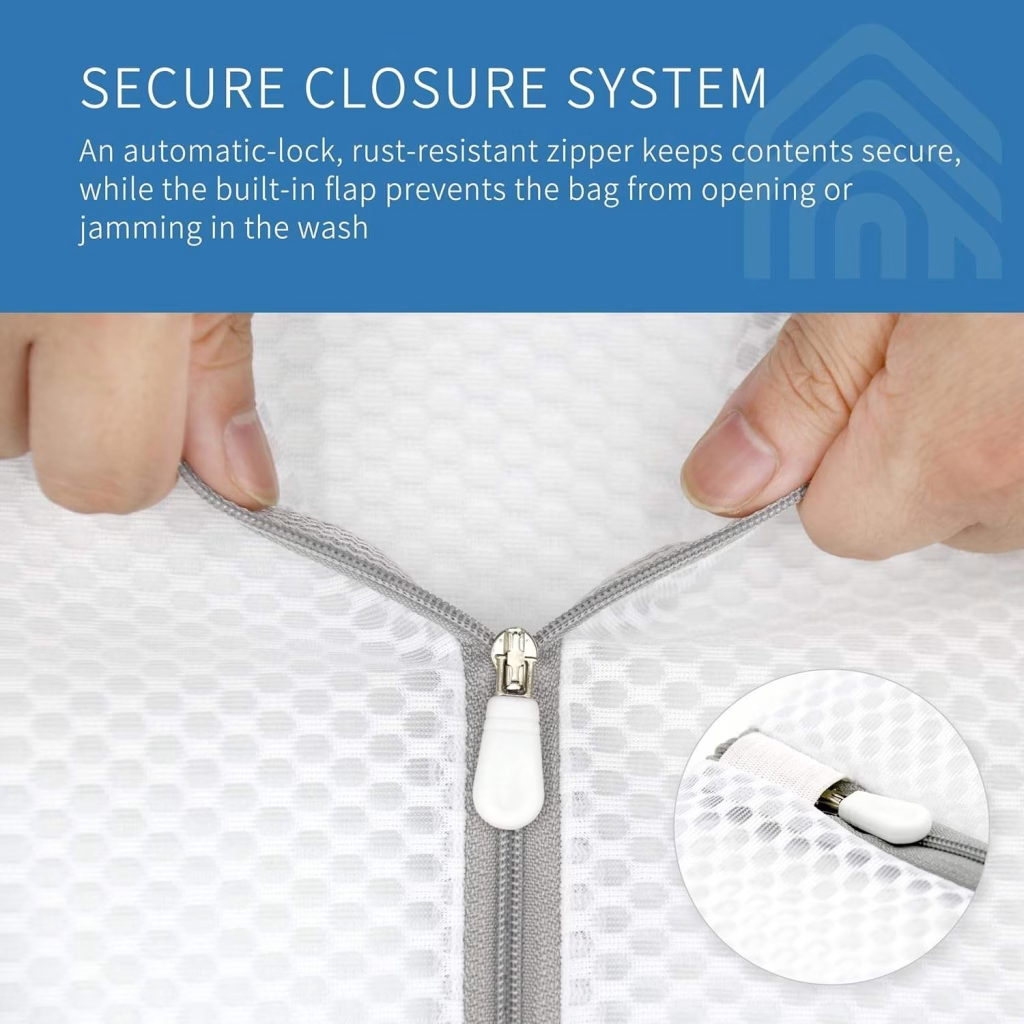
- Tuck the zipper pull into the guard or fabric cover, if the bag has one.
- Fasten bra hooks and close zippers on garments before bagging them.
- Turn printed or embellished items inside out.
From a design view, the closure shapes how people use the bag. This table compares the common options:
| Closure type | Containment | Snag risk | Ease of use |
|---|---|---|---|
| Zipper with guard or cover | Full | Low | Easy; one motion to close |
| Zipper without guard | Full | Medium; the pull can rub other clothes | Easy |
| Drawstring | Partial; can loosen during a spin | Low | Fast, but small items may escape |
For delicates and small items, a laundry bag with zipper and a covered pull is the safer choice. During sampling, also ask about the slider material. A rust-resistant slider keeps working after many wet cycles.
Mistake 4: Mixing Items That Should Be Washed Apart
Putting everything delicate into one bag feels tidy. But a bag holds items close together, so any rough piece rubs the soft ones harder.
Common bad pairings include:
- A lace bra with a denim item that has metal buttons.
- Light underwear with a new dark top that may bleed dye.
- Lint-shedding towels with fleece or black leggings.
- Shoes with clothing of any kind.
How to fix it
- Sort by fabric weight: keep thin knits apart from heavy cotton.
- Sort by color, just as you would for the full load.
- Keep anything with hooks, studs, or hard trims in its own bag.
- Wash shoes in a dedicated padded bag, never with clothes.
For footwear, a thick bag like the sandwich mesh laundry bag with embroidery keeps shoes from banging against the drum. It also cuts the noise of a shoe wash. Retailers often place shoe bags next to sneaker cleaners, because the two sell well together.
Mistake 5: Using One Bag Size for Everything
Size mistakes go both ways. A single sock in a large bag still tumbles and twists inside it. A wool sweater in a small bag gets crushed and comes out creased.
The right size gives each item a little room to move, but not much. As a rough guide:
| Bag size | Typical items | Usage tip |
|---|---|---|
| Small | Socks, baby clothes, face masks, hair ties | Fill with one type of item only |
| Medium | Bras, underwear, tights, swimwear | One to three bras per bag |
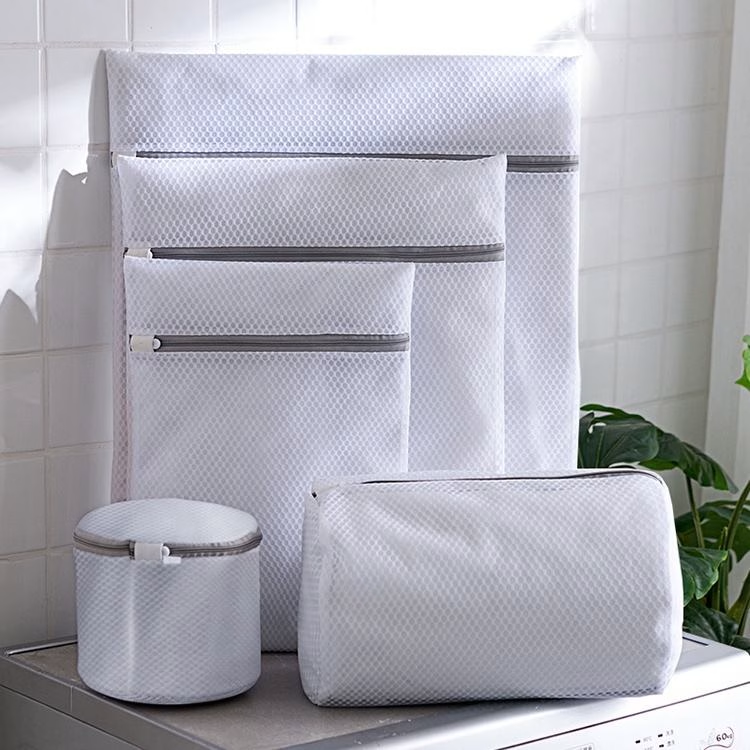
| Large | Shirts, blouses, knitwear, sportswear | Fold items loosely before bagging |
| Extra large | Bed sheets, curtains, small blankets | Wash alone or with a light load |
For buyers, sizes are an easy way to add value without raising unit cost much. A small laundry bag sells well as an add-on for baby and sock care. A mixed laundry bag set works as a ready-made gift or starter kit.
Mistake 6: Skipping Wash Settings and Bag Care
A bag reduces friction. However, it can’t undo hot water or a hard spin. Many people bag their delicates and then wash them on a cotton cycle at high heat. The fabric still shrinks or loses stretch.
The care label is the first guide. In the United States, the FTC Care Labeling Rule requires care instructions on most garments. So the right settings are usually printed inside the item.
Wash settings that protect bagged items
- Choose a gentle, delicate, or hand-wash cycle.
- Use cold or warm water, not hot, for elastic and lace.
- Lower the spin speed for bras and fine knits.
- Use a liquid detergent, which disperses more easily through mesh.
- Air-dry delicates instead of tumble-drying on high heat.
The bag needs care as well. Lint and detergent build up in the mesh over time. That can cause odor and slow the water flow.
Bag care habits
- Rinse the bag and shake out lint after each wash.
- Let it dry fully before storing it.
- Check the seams, mesh, and zipper every few months.
- Replace the bag once the mesh frays or the zipper stops closing smoothly.
A thicker mesh lasts longer under this routine. That’s why many buyers pick thickened styles, like the colorful thickened fine mesh laundry bag, for repeat household use.
How to Use a Washing Bag Step by Step
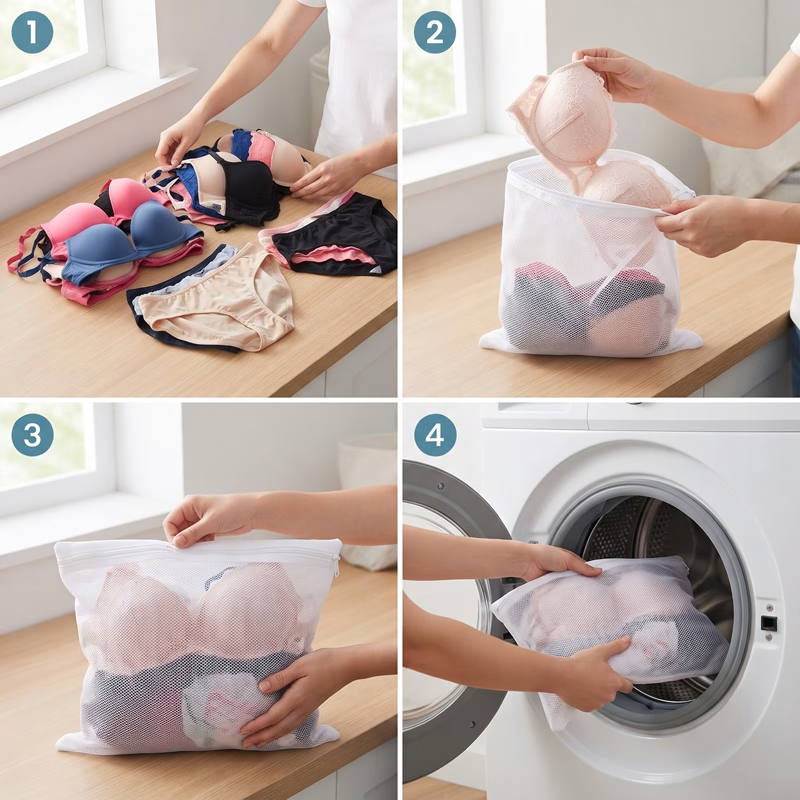
Here is a simple routine that avoids every mistake above:
- Sort the load. Group items by color, fabric weight, and fastener type.
- Prepare each garment. Fasten hooks, close zippers, and turn printed items inside out.
- Pick the right bag. Match the mesh type and size to the items.
- Fill to about two-thirds. Leave room for water and movement.
- Close the bag fully. Zip it shut and tuck the pull into the guard.
- Set a gentle cycle. Follow the garment care label for temperature and spin speed.
- Dry and store. Air-dry delicates, then rinse and dry the bag before reuse.
This routine also works well as packaging copy. A short “how to use” panel on the insert card helps shoppers use the product correctly from day one. It also answers the most common questions before they reach your service team.
What to Check Before Ordering Mesh Laundry Bags in Bulk
Many of the mistakes above can be reduced at the design stage. So before you confirm a bulk or OEM order, review these points with your supplier:
- Mesh material and thickness. Ask for the fabric type and weight. Thickened polyester mesh holds its shape longer.
- Mesh density. Confirm fine, coarse, or sandwich mesh for each SKU.
- Edge binding and stitching. Bound edges resist fraying. Check the stitch density on every seam.
- Zipper quality. Ask about the slider material, zipper guard, and cycle testing.
- Size range. Plan sizes around the items your customers wash most.
- Branding. Embroidered logos, woven labels, and custom colors build brand recall. See the thickened white mesh laundry bag with embroidered logo or the set of 5 coarse mesh laundry bags with customized logo for examples.
- Chemical compliance. For EU markets, ask whether the materials can pass tests under the EU REACH chemicals regulation. Request the test reports for your records.
- Packaging. Confirm retail packaging, insert cards, barcodes, and carton marks early.
- Samples. Wash-test samples on home settings before approving mass production.
A sample wash test is worth the extra week. Run each sample bag through ten or more cycles with real garments. Then check the zipper, seams, and mesh shape. This test catches many issues before they reach store shelves.
You can compare styles across our full range of mesh laundry bags, including fine, coarse, and thickened options. Ready-made sets, like the set of 5 thickened coarse mesh laundry bags and the set of 7 thickened fine mesh bags, are also good starting points for sampling.
Sourcing Washing Bags Directly From the Manufacturer
Most washing bag problems trace back to two things: how the bag is used and how it was built. Clear usage guidance fixes the first. Good specs fix the second, and specs are easiest to control at the source.
We have manufactured laundry mesh bags since 2014. Our range also covers bra laundry bags, shoe washing bags, storage bags, laundry baskets, and drawstring mesh. Our raw materials are environment friendly, and our products can pass REACH and related tests. Customers in Europe, North America, South America, Korea, and Japan work with us on both stock styles and custom designs.
Because we are the original factory, you deal directly with the people who make your bags. That means:
- Specs, samples, and changes handled directly, without a middle layer.
- OEM orders and customized designs, from mesh type to logo and packaging.
- Factory pricing and clear production timelines.
Send us your target styles, sizes, mesh type, and expected quantity. Our team will reply with a quote, sample options, and suggestions for your market. From the very first message, you’ll be talking to the manufacturer, not a reseller.
Frequently Asked Questions
1. What is the minimum order quantity for custom washing bags?
The MOQ depends on style, size, and how much customization you need. Stock styles usually start lower than fully custom designs. Share your target quantity, and we’ll confirm the MOQ for each option.
2. Can you add our logo to mesh laundry bags?
Yes, we offer embroidered logos, woven labels, printed tags, and custom colors. The right logo method depends on the mesh type and bag size. Send your artwork, and we’ll prepare a mock-up and quote.
3. Do your laundry bags mesh materials pass REACH testing?
Yes, our products can pass REACH and related tests. Our raw materials are environment friendly. Test reports can be shared on request for your compliance records.
4. How long does production take for a bulk order?
Lead time depends on order size, customization, and the current production schedule. We confirm a clear timeline with every quote. New designs or custom packaging may add time for sampling.
5. Can we get samples before placing a full order?
Yes, samples are available for both stock and custom styles. We recommend wash-testing them before you approve mass production. Contact us to request samples for your target market.