
A single lace bra caught on a metal zipper inside a washing drum can destroy a $60 garment in under ten minutes. Socks disappear. Hosiery tangles beyond repair. For procurement teams, product managers, and retail buyers, these are not just consumer complaints—they are product failure events that drive returns, bad reviews, and brand damage.
The fix is simpler than most buyers expect: a well-built small mesh laundry bag. This guide covers exactly how these bags protect delicate textiles, which sizes and mesh grades work for different applications, and what to look for when sourcing them in volume.
What a Small Mesh Laundry Bag Actually Does
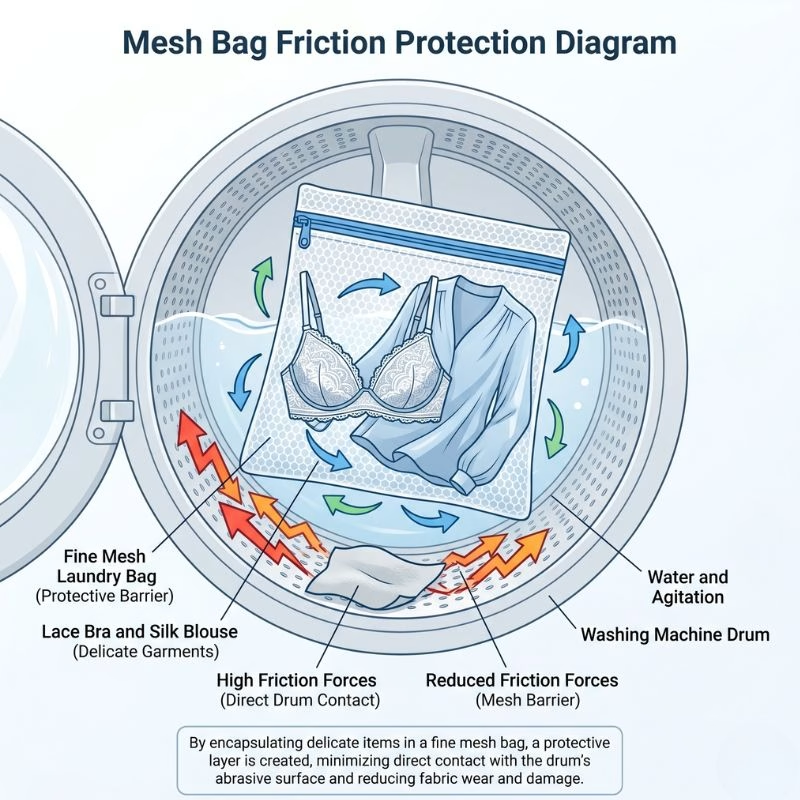
A washing drum is built to create friction. Mechanical agitation, hot water, and detergent work together to lift dirt from fabric. The problem is that friction does not discriminate. It treats a heavy denim jacket and a silk camisole with the same mechanical force.
A small mesh laundry bag creates a protected zone inside the drum. The item inside still gets water, detergent, and temperature—but direct friction drops by roughly 50 to 70 percent depending on how fine the mesh is. This is not marketing theory; it is basic physics. The mesh surface absorbs and disperses contact forces before they reach the garment.
In practical terms, the bag defends against three specific types of wash damage:
-
Friction. Direct rubbing between the garment and the drum wall—or other clothes—is dampened by the mesh barrier.
-
Snagging. Hooks, underwires, zippers, and buttons catch on lace, knitwear, and embroidery. The bag isolates these elements.
-
Deformation. During the spin cycle, centrifugal force pulls garments in every direction at 800 to 1,400 RPM. A bag limits stretching and shape loss.
For buyers, this means the product you are sourcing or stocking solves a real, measurable problem. It is not a nice-to-have accessory. It is protective equipment for textiles.
Small Mesh Laundry Bag Sizes and Real-World Use
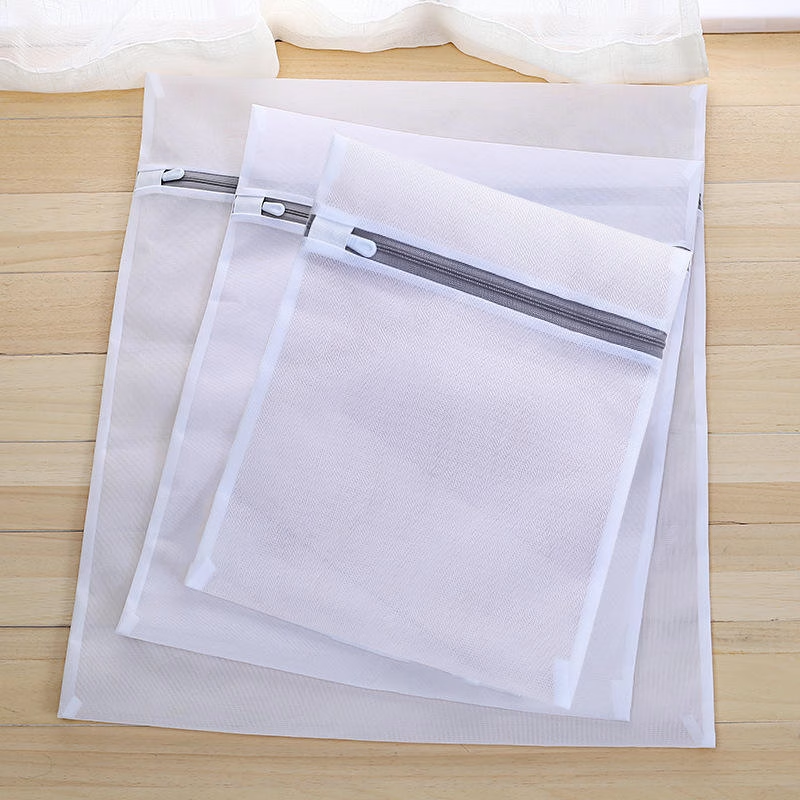
Not every bag fits every load. Size mismatches lead to two problems: an overstuffed bag blocks water circulation and leaves clothes poorly rinsed, while an oversized bag lets items tumble too freely and defeats the protection purpose.
Here is how the industry typically breaks down sizing:
The small mesh laundry bag is the workhorse of the lingerie and hosiery category. At roughly 30 × 40 cm, it holds one to two bras or several pairs of socks without crowding. For procurement teams, this size is also the highest-volume SKU in most retail assortments because every household with delicates needs at least one or two.
A rule buyers should pass on to end users: fill the bag to no more than two-thirds of its capacity. The remaining third is the space water needs to move through the bag. A stuffed-to-the-top bag traps detergent, limits rinsing, and can even burst a weak closure under spin force.
Fine Mesh vs. Coarse Mesh: Which Grade Do You Need?
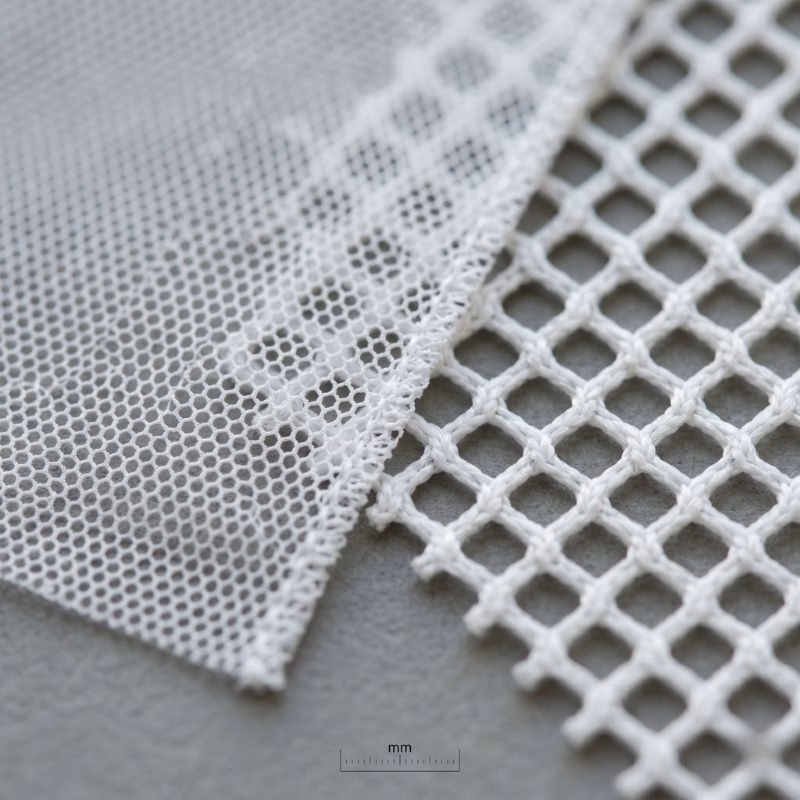
Mesh grade matters as much as bag size. The two categories serve completely different functions, and stocking the wrong grade for your target market creates returns.
For small mesh laundry bags for delicates, fine mesh is the clear choice. Bras with underwires can pierce coarse mesh, escape into the drum, and damage both the garment and the machine. Lace and hosiery snag on anything they touch; fine mesh is the only practical barrier.
That said, coarse mesh has its place. If you are sourcing bags for shoe washing or large household items, coarse mesh allows better water flow and faster drying. The key is matching the mesh grade to the end use, not assuming one grade fits all.
Where Small Mesh Laundry Bags Deliver the Most Value
Buyers often ask which use cases justify the highest margins and repeat purchases. The answer is consistent: categories where garment replacement costs are high and consumer frustration is acute.
Lingerie and Bras
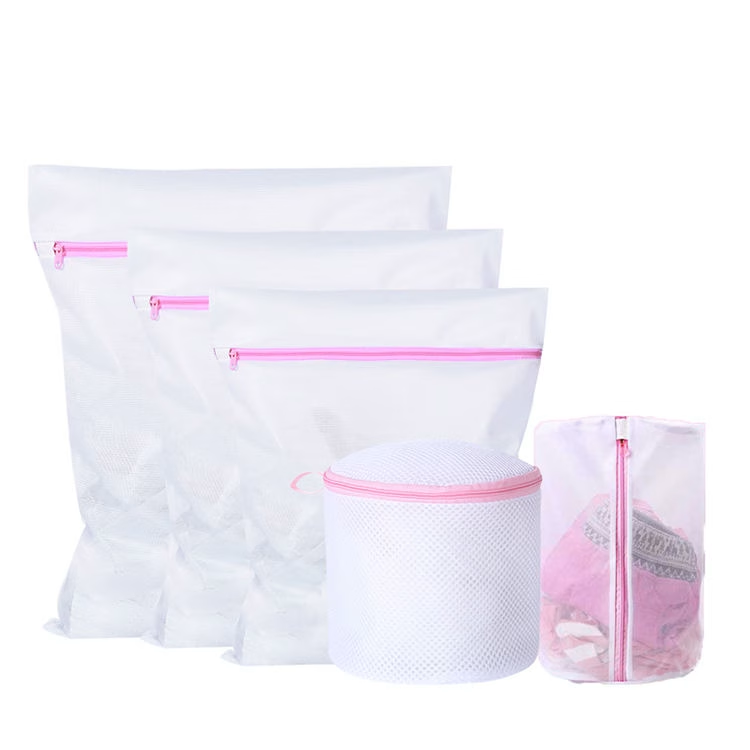
Bras are structurally complex. Underwires, elastic straps, molded cups, and hook closures all suffer under mechanical stress. A small mesh laundry bag designed for lingerie should hold one bra per bag so the 3D shape stays intact. The hooks should be fastened before washing so they do not catch on the mesh itself. For structured bras with molded cups, a dedicated 3D bag can add further shape protection, though a standard small bag still does the bulk of the protective work.
Socks and Hosiery
Socks vanish in washing machines because they get trapped inside other garments or flung behind drums. A dedicated sock bag keeps pairs together. Hosiery and tights are even more fragile—arguably the most delicate textile people regularly machine wash. A fine mesh bag is mandatory here. One stray zipper from another garment can ladder a pair of tights instantly.
Baby Clothes and Small Garments
Baby garments are small enough to get stretched or lost in adult-sized drums. A small mesh laundry bag keeps them contained and reduces friction on soft cotton and delicate trim. Parents also appreciate the hygiene factor: baby clothes stay separated from the rest of the household laundry.
Swimwear and Activewear
Elastic fibers in swimwear and activewear degrade faster under high friction and heat. A small bag keeps these items contained during the delicate cycle and helps preserve the elastic integrity. This is an under-marketed use case that buyers can easily add to product descriptions for incremental sales.
Materials, Closures, and Build Quality
The bag itself is a textile product, and its construction determines how long it lasts. For buyers evaluating samples, here are the specifics that separate durable bags from disposable ones.
Polyester mesh dominates the market because it resists stretching, dries quickly, and holds up through hundreds of wash cycles. Look for mesh that feels consistent across the surface—thin spots or irregular weaving are signs of lower-grade material that will tear prematurely.
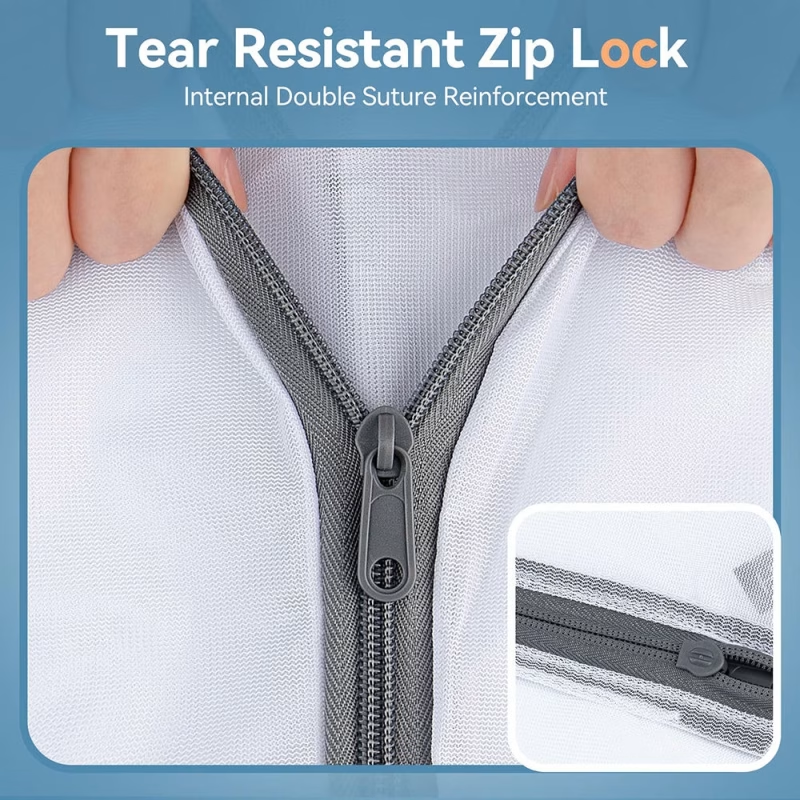
The closure is the weak point. A cheap zipper can slide open under centrifugal force and release the contents mid-cycle, destroying the very garments it was meant to protect. The better options are:
-
Double-slider zippers that lock more securely than single sliders.
-
Protective flaps that cover the zipper track and prevent accidental snagging.
-
Drawstring closures that are mechanically more reliable than zippers though slightly less convenient for users to open and close.
For buyers interested in drawstring styles, our drawstring bag collection includes several mesh options suitable for laundry and storage applications. We also produce disposable PE drawstring laundry bags commonly used in hotel and dry-cleaning operations where hygiene and single-use convenience matter.
Reinforced seams matter more than most buyers initially check. A bag with simple overlocked edges will fray after months of use. Double-stitched or bound seams add pennies to the unit cost but significantly extend product life. When you are building a brand or retail line, those pennies return as lower return rates and better reviews.
Compliance and Safety Standards for Global Markets
If you are importing or distributing laundry bags into the European Union, North America, or Japan, compliance is not optional. Regulatory rejections can hold or destroy entire shipments.
REACH and Textile Safety
The EU’s REACH regulation (EC 1907/2006) restricts hazardous chemicals in textile products, including dyes, inks, and coatings used on bags. Substances of Very High Concern (SVHC) must not exceed 0.1 percent of total product weight. This affects everything from the polyester fibers to the colorants in any printed logos.
Established in 2014, our company manufactures laundry mesh bags, bra laundry bags, washing bags for shoes, storage bags, laundry baskets, and drawstring mesh using environment-friendly raw materials. Our products can pass REACH and related tests, which matters for buyers supplying into markets where restricted chemical thresholds must be met. Always request test documentation when you evaluate a new supplier.
OEKO-TEX and Additional Certifications
OEKO-TEX Standard 100 certification offers an additional layer of assurance that the product has been tested for harmful substances. While not legally mandatory in every market, it is a strong selling point for consumers and retail partners who prioritize safety claims they can verify.
For buyers targeting North America, regulations are less centralized than the EU, but California Proposition 65 and the Consumer Product Safety Commission still set clear boundaries on chemical content. Japan’s Ministry of Health, Labour and Welfare also maintains strict import standards for textile articles. Ask your manufacturer for region-specific test reports before you commit to bulk production.
You can read more about REACH compliance for textiles from QIMA’s compliance team, or review Maytag’s guidance on delicate wash cycles for a manufacturer-side view of how machine settings interact with garment protection.
How to Choose a Small Mesh Laundry Bag for Your Product Line
Procurement teams and product managers face a specific challenge: balancing unit cost, perceived value, and functional performance. The cheapest bag is rarely the most profitable bag when return rates and customer complaints are factored in.
Here is a practical framework for evaluating options:
-
Define the end user. A bag sold in a lingerie boutique needs finer mesh and a more polished aesthetic than a bag bundled with a washing machine promotion.
-
Select the right size spread. A three-bag kit (two small fine-mesh, one medium) covers most household needs and offers a higher average order value than single-bag SKUs.
-
Test the closure under stress. Fill the sample bag with wet towels and spin it by hand. If the zipper drifts open, reject the sample.
-
Inspect the seams. Pull gently at the seam edges. Any sign of loose stitching or fraying will worsen after ten wash cycles, not improve.
-
Request compliance documentation. REACH reports, OEKO-TEX certificates, and material safety data sheets should be available from any serious manufacturer. If a supplier hesitates, that is a signal.
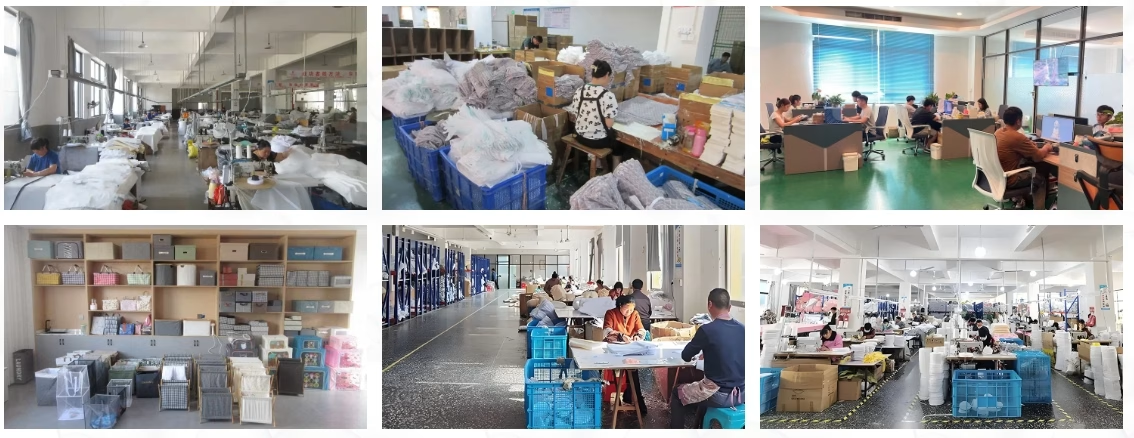
Established in 2014, our company is a professional manufacturer of laundry mesh bags, bra laundry bags, washing bags for shoes, storage bags, laundry baskets, and drawstring mesh. Our customers are located worldwide, with key markets in Europe, North America, South America, Korea, and Japan. OEM orders are welcome, and customized designs are available. If you are building a private-label line or expanding your household textile assortment, you can browse our full product range to see current capabilities.
We also produce larger-format options for specialized needs, including a thickened white drawstring mesh laundry bag, a set of 4 cleaning drawstring mesh laundry bags, and a 60×90 cm big-size drawstring laundry bag for blankets and bulkier items. For retail or promotional programs, our set of 12 vegetable drawstring shopping bags offers a crossover option between laundry and reusable shopping categories.
Maintaining and Replacing Mesh Bags
The bag itself needs care. A dirty or fatigued bag stops protecting and becomes part of the problem.
Wash the bag every two to three weeks if it is used regularly, or monthly with lighter use. Machine wash at 40 °C with the rest of the laundry, but keep it open and empty so water can flush through the mesh. Avoid fabric softener, which leaves a film on polyester fibers and reduces water permeability over time.
Replace the bag when you notice any of the following:
-
The mesh is torn, stretched, or has developed holes.
-
The zipper no longer closes securely or the drawstring frayed.
-
Seams are coming undone.
-
The bag has seen more than a year of intensive daily use. Polyester mesh stretches naturally with repeated heat and spin exposure.
For buyers, this replacement cycle is actually good news. It means mesh laundry bags are a consumable-adjacent product with genuine repeat-purchase potential, unlike rigid plastic laundry accessories that last a decade.
Related and Alternative Products to Consider
Mesh bags are not the only protective format, and buyers should know when a different product serves the customer better.
The microfiber capture bag—sometimes sold under branded names—deserves a brief note. Its purpose is environmental, not textile protection. It captures synthetic fibers released during washing to reduce microplastic pollution. According to research published in PMC, fiber shedding during laundry is significant across both synthetic and natural textiles, with mesh porosity directly affecting retention rates. While this is a valuable product category, it does not replace a small mesh laundry bag for delicates. The two can be complementary.
Frequently Asked Questions
1. What is the minimum order quantity for custom small mesh laundry bags?
Our standard MOQ varies by customization level. For existing designs with your logo printed or tagged, quantities are flexible. For fully custom sizes, colors, or materials, we typically start at 3,000 to 5,000 units per SKU. Reach out for detailed specifications and we will match a program to your volume.
2. Can your mesh bags pass REACH and OEKO-TEX testing for EU import?
Yes. We use environment-friendly raw materials and our products can pass REACH and related tests. We provide test documentation on request. If you are supplying into Europe, ask for REACH reports and any applicable OEKO-TEX certificates when you request samples.
3. How long does production and shipping take for wholesale orders?
Standard production lead time is 25 to 35 days after sample approval. Shipping depends on your destination and method—sea freight to Europe or North America typically adds 20 to 40 days, while express or air options are available for urgent restocks. Contact us to confirm current schedules for your region.
4. Do you offer samples before bulk production?
Yes. We encourage buyers to evaluate samples for mesh grade, closure strength, seam quality, and overall feel before placing a bulk order. Samples are available for a nominal fee plus shipping, and that fee is usually credited against your first bulk invoice.
5. Can we customize bag sizes, colors, and packaging for our brand?
Absolutely. OEM orders are welcome, and customized designs are available. You can specify dimensions, mesh fineness, drawstring or zipper closure types, color Pantone matching, and retail packaging including hang tags, polybags, or boxed sets. Our design team works with your product specifications to meet your brand requirements.