
Muddy trainers in a hotel laundry cart, a gym retailer’s return pile, or a factory sample wash often create the same headache: grit, odor, and scuffs spreading onto other goods. Shoe bag laundry is the practical fix. A dedicated mesh bag keeps footwear separate during washing, storage, and travel, so dirt stays contained and the washer drum takes less impact.
Procurement teams and product managers specify these bags because loose shoes are noisy, unbalanced, and hard on both the pair and the machine. The right bag also supports care labels, hotel programs, sports retail, and private-label catalogs. Established in 2014, we manufacture laundry mesh bags, bra laundry bags, washing bags for shoes, storage bags, laundry baskets, and drawstring mesh for buyers in Europe, North America, South America, Korea, and Japan.
What Is Shoe Bag Laundry and How Does It Work?
Shoe bag laundry is a closed mesh pouch used to wash, dry-air, store, or pack footwear without letting soles and uppers rub against other items. The mesh lets water and detergent pass through. The zipper or drawstring keeps the pair inside. The bag itself is usually polyester, nylon, or a blended filament with a lockable zipper and a flap that covers the slider.
The job is simple: isolate one pair (sometimes two light pairs) so laces do not wrap around a drum, pebbles do not score enamel, and dark soles do not mark white towels. Many teams also use the same bag as a travel shoe sack, which is why packing guides still tell travelers to keep shoes off garments.
A laundry-grade bag is not a thin souvenir pouch. Wash-rated mesh needs stable aperture size, bartacked stress points, and a zipper that survives repeated cycles. If you are comparing formats, start with our range of washing bags for shoes and match bag size to the footwear you actually ship.
What problems does the bag solve?
-
Stops soles from banging the drum and throwing the load off balance.
-
Keeps grit in the bag instead of in the pump filter.
-
Reduces color transfer from dark outsoles onto linens.
-
Holds shape better than an open pillowcase that can open mid-cycle.
-
Gives hotels, gyms, and retailers a repeatable wash method staff can follow.
Who typically specifies these bags?
Hotel groups, sports retailers, uniform suppliers, e-commerce brands, and catalog buyers. Product managers often need one SKU that works for sneakers, canvas shoes, and light trainers, plus a larger size for boots. Wholesale customers usually ask for private-label printing, custom mesh density, and cartons that match their warehouse scan labels.
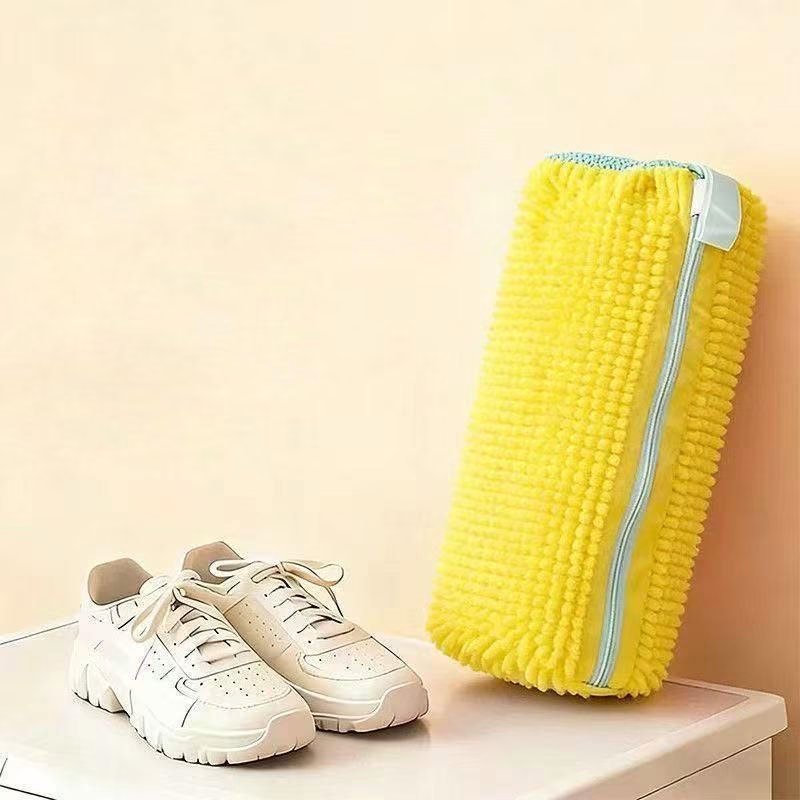
Why Washing Bags for Shoes Protect Footwear and Machines
Washing bags for shoes exist because footwear is heavier and more abrasive than a T-shirt. Canvas, knit uppers, and many synthetic sports shoes can go in a machine. Leather, suede, silk, and heavily decorated pairs should stay out. Appliance makers also warn that loose shoes can scuff the drum and that a mesh bag or tied pillowcase should contain them
From a buying desk, the bag is a low-cost control. One failed pair, one noisy service call, or one stained linen load costs more than a mesh pouch. That is why hotel SOPs and retail care cards increasingly name a shoe washing bag instead of “use any sack.”
How the bag protects the pair
The mesh cushions impact and limits twisting. Shoes sit opposite each other, toes-to-heel, so the bag stays flatter in the drum. Cold water and a gentle cycle then do the cleaning work without cooking adhesives. Heat and high spin are what warp midsoles and loosen glue, which is why drying guidance almost always says air-dry, not tumble-dry
How the bag protects the washer
Soles are dense. Unbagged, they slam the drum. Bagged, with two or three towels in the same load, the mass is padded and the cycle stays more even. Laces belong in a small zip bag so they do not wind around an agitator. Staff should brush mud off first; sand in the sump is a maintenance issue, not a product issue
If your catalog needs a sneaker-specific SKU, review the sneaker washing machine bag and the sneaker laundry bag. For UK and EU naming, a trainer washing machine bag or trainer washing bag often matches search language on those sites.
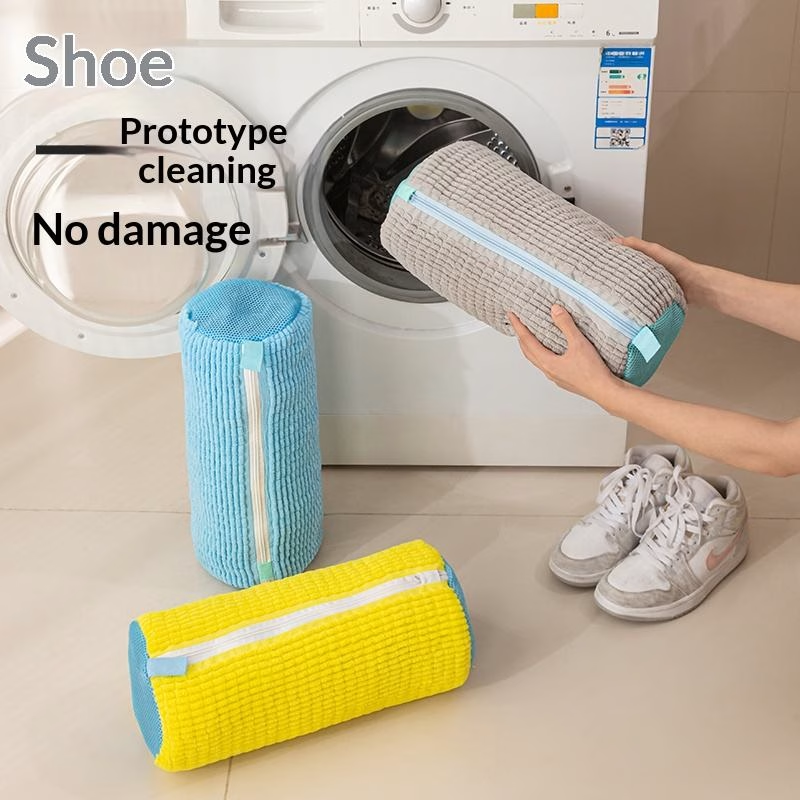
How to Choose Shoe Bag Laundry Specs for Orders
How to choose shoe bag laundry specs starts with the footwear, then the washer type, then the brand needs. A kids’ canvas pair and an adult running shoe do not share the same volume. Front-loaders are gentler than many top-loaders with agitators. Private-label buyers also need print area, color, and carton marks that match their other laundry SKUs.
Use this as a working spec sheet, then ask us to confirm mesh GSM, zipper gauge, and test reports for your market.
Size and pair count
One pair per bag is the safe default for adult sneakers. Oversized bags that hold two pairs often let shoes collide. If you sell a mesh laundry bag for shoes, state the intended pair count on the hangtag. For boots, specify a taller bag and remind end users that heavy hiking boots may still be hand-wash only.
Mesh density and yarn
Finer mesh hides the shoe and traps more lint. Coarser mesh rinses faster and dries quicker. Sports retail often prefers a visible mesh so customers see the pair through the bag. Hospitality often prefers a slightly denser mesh so dark soles stain the bag, not the linen. Both can be made from environment-friendly polyester yarns that we can support with REACH-related documentation.
Zipper, flap, and stitch points
A shoe washing bag fails at the slider more often than at the mesh. Specify a zipper garage (a fabric flap that covers the pull) so the slider does not scratch the drum. Bartack the corners and the zipper ends. If you need a lockable pull for shared laundry rooms, say so on the RFQ. You can compare a standard shoe washing bag with a mesh bag for washing shoes when you want a zipper-forward listing.
Branding and carton marks
OEM orders are welcome, and customized designs are available. Common requests: woven label, heat-transfer logo, care icons in EN/FR/DE/ES, and a barcode on the polybag. Match PMS colors to your existing laundry mesh bags so the shelf looks like one family.
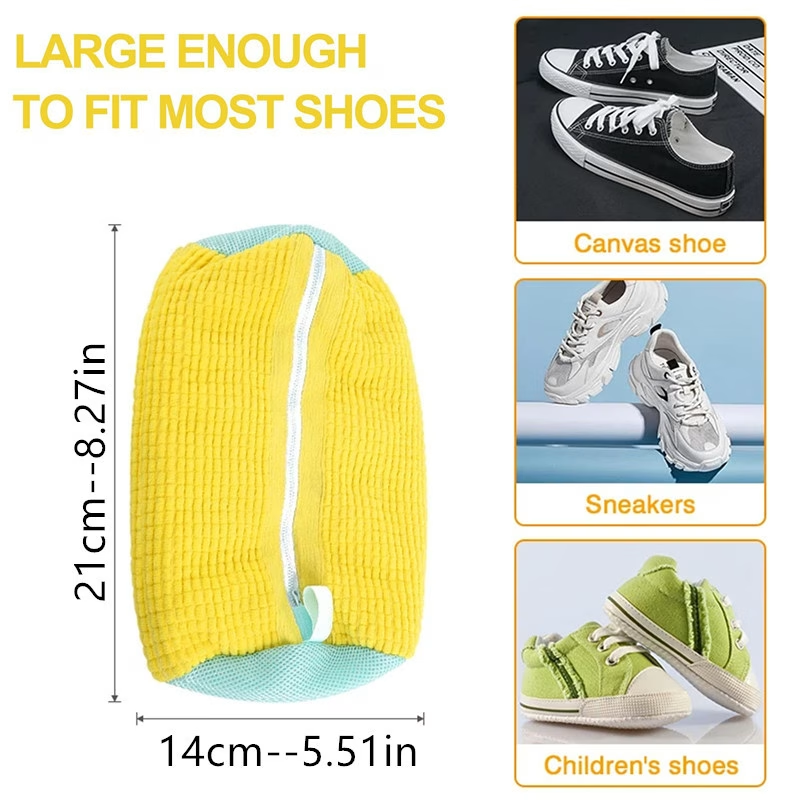
How to Use a Shoe Washing Bag Step by Step
How to use a shoe washing bag is a short SOP you can print on a hangtag or staff card. Appliance and footwear care sources agree on the same sequence: check the material, remove laces and insoles, knock off dirt, bag the pair, add towels, wash cold and gentle, then air-dry
Which shoes can go in the machine?
-
Usually suitable: canvas, many nylon or polyester sports shoes, and some PU uppers without fragile trims
-
Extra care: pairs marked hand-wash only; use cold water and low spin if you proceed at all
-
Keep out: leather, suede, satin, silk, beaded or sequined shoes, and many rubber or vinyl styles that can warp.
Step-by-step wash method
-
Read the shoe care label. If it forbids machine washing, stop.
-
Remove laces and insoles. Wash laces in a small zip bag. Wipe insoles by hand so they do not stay soaked.
-
Brush off dried mud outdoors. Grit in the machine is a filter problem.
-
Place one pair in the bag, toes facing opposite directions. Close the zipper fully and tuck the pull under the flap.
-
Load the bag plus two or three old towels. Do not mix with guest linens in a hotel setting.
-
Use a small dose of mild liquid detergent. Skip chlorine bleach and fabric softener unless the shoe brand allows it.
-
Select a gentle or delicate cycle, cold water, and low spin. Front-loaders are usually kinder to footwear.
-
Remove the pair promptly. Stuff with paper or cloth and air-dry away from direct heat. Do not use a hot dryer.
For listings aimed at “wash” and “washer” search terms, you can point customers to shoe bag wash, shoe bag washer, and shoe bag for washing machine. A sneaker wash bag page works well when the assortment is athletic only.
Travel and storage, not only washing
The same pouch works as a travel shoe sack. Packing advice still tells people to keep dirty soles off clothes; a reusable bag beats a grocery sack that tears. After the trip, the bag goes straight into the washer with the pair. That dual use is useful for outdoor and camping SKUs, and for any brand that already sells storage bags or drawstring mesh.
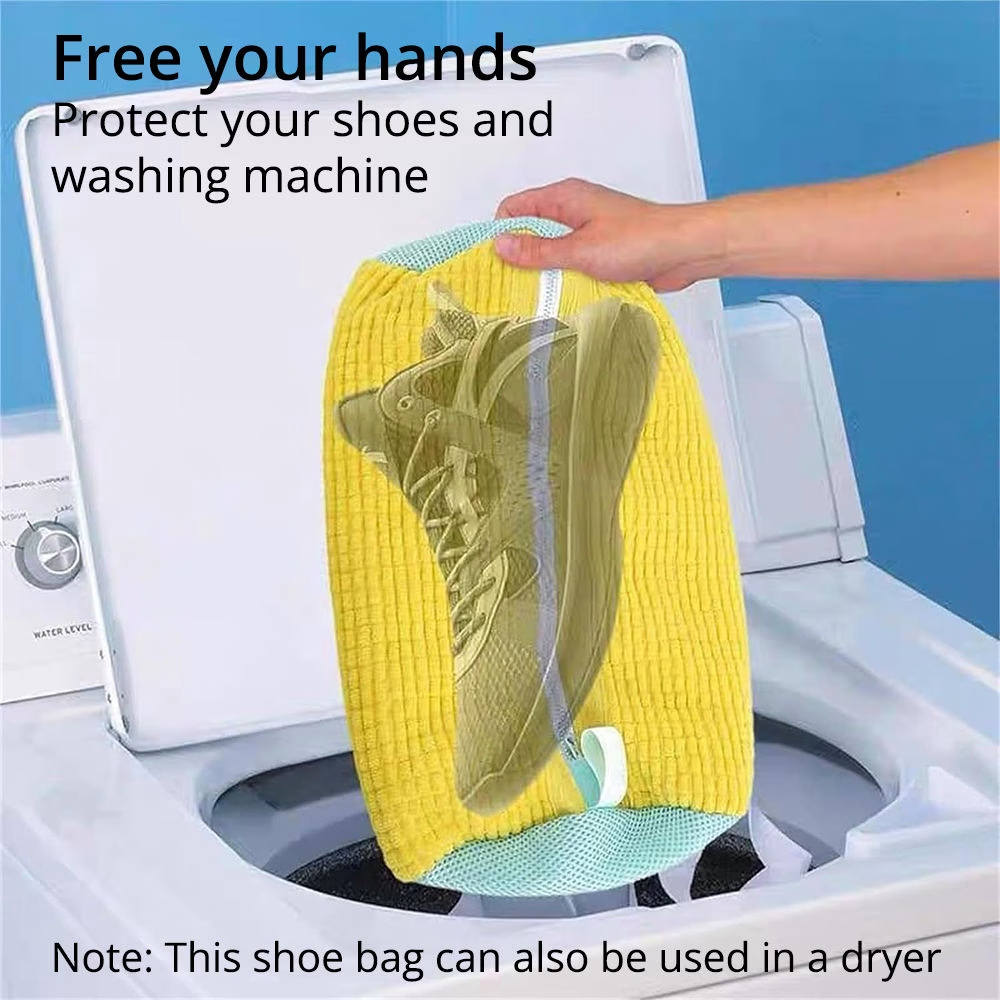
Materials, Closures, and Use Cases Compared
Materials, closures, and use cases compared side by side help a product manager pick one hero SKU and one large-size add-on. Polyester mesh is the workhorse: it holds color, dries fast, and accepts print. Nylon can feel silkier and resist abrasion in gym settings. Drawstring styles suit storage more than high-spin washing, because a knot can loosen.
Polyester vs. nylon mesh
Polyester is easier to source in environment-friendly grades and is familiar to REACH documentation packages. Nylon can offer higher abrasion resistance for a shoe bag cleaner type SKU that will see daily gym use. Neither mesh replaces a care label. The bag does not make leather machine-safe.
Zipper vs. drawstring
For machine washing, specify a zipper. For locker storage or a laundry basket liner, a drawstring mesh can be enough. Many OEM programs run both: a zippered shoe bag and a drawstring laundry sack in the same color story.
Retail vs. hospitality vs. industrial sample washing
Retail needs photography, a consumer care icon set, and a barcode. Hospitality needs durability and a way to mark room numbers. Industrial or brand-lab washing needs consistent mesh so test loads are repeatable. One factory can make all three if the RFQ lists cycle life, not only size.
OEM Options, REACH Tests, and Sampling
OEM options, REACH tests, and sampling are the questions that decide whether a bag can enter EU and UK shelves. REACH is the EU regulation for Registration, Evaluation, Authorisation and Restriction of Chemicals. It covers substances in everyday articles, including textiles, and places the burden on companies to identify and manage chemical risk. It entered into force on 1 June 2007.
Our raw materials are environment-friendly, and our products can pass REACH and related tests. That matters when a European importer is the legal duty-holder for an article shipped from outside the EU. Buyers in Korea and Japan often ask for additional local reports; share the target market on the RFQ so we prepare the right file set.
What you can customize
-
Size, mesh aperture, and GSM
-
Zipper color, pull shape, and lock
-
Logo print, woven label, and care icons
-
Retail header, polybag, and inner pack count
-
Matching bra laundry bags, storage bags, and laundry baskets in the same color
What to request in a quote
Send footwear type (sneaker, trainer, canvas, kids), target washer (home front-load vs. on-prem hotel), monthly volume, and whether you need a private label. Ask for a sample of the mesh laundry bag for shoes in the GSM you prefer. Wash the sample on the cycle your customers will use. Check zipper close, flap coverage, and whether the pair still has room to move.
Lead time and markets
We supply key markets in Europe, North America, South America, Korea, and Japan. Lead time depends on mesh color, print, and carton marks. Stock colors move faster than custom dye lots. If you already sell a shoe bag laundry adjacent SKU, we can match the existing trim so replenishment looks consistent.
Working with the original manufacturer means you are not guessing at mesh origin or zipper grade. You can ask for construction details, test support, and carton plans from the same team that runs production.
If you want a sample set, a print mock-up, or a factory quote, send the footwear size range and monthly quantity. You will be speaking with the source, not a reseller, and we can align washing bags for shoes with the rest of your laundry mesh line.
Frequently Asked Questions
1. What order quantities can we start with?
Opening quantities depend on size, mesh color, and print. Many buyers begin with a mixed carton of two sizes for sneakers and trainers. Share your monthly forecast and we will suggest a practical first run. Reach out for detailed specifications.
2. Can you customize washing bags for shoes?
Yes, OEM orders are welcome, and customized designs are available. Logo, mesh color, zipper, care icons, and retail packing can follow your brand file. Contact us to request samples in your target GSM.
3. Do these bags pass REACH-related tests?
Our raw materials are environment-friendly, and our products can pass REACH and related tests for the markets we serve. Tell us the destination country so we attach the matching reports. Contact us to request samples and the current test list.
4. How long do production lead times run?
Lead time follows mesh stock, custom color, and print. Repeat orders on an agreed SKU are faster than a first custom dye lot. Send your in-hands date with the RFQ so planning is honest.
5. Can buyers request samples before a bulk order?
Yes. Sample bags let your team run a real wash cycle and check zipper, size, and print. Contact us to request samples and a quote from the manufacturer.