
Choosing retail packaging for a laundry bag starts with the product, the display method and the packing process. An individual mesh bag and a multipiece set need separate packaging decisions, even when they share the same branding. Before comparing appearance or quotations, define what each retail unit contains and how customers should handle it.
OPP bags, header cards, PVC boxes and kraft sleeves are useful formats to discuss with packaging suppliers. Treat them as design candidates: the right choice depends on the finished sample, the retailer’s requirements and the complete packing cost.
What Retail Packaging Does for a Laundry-Bag Product
Retail packaging is the package presented with the product for sale. For a laundry-bag range, its practical jobs include keeping the selling unit together, identifying its contents and giving customers enough information to choose. Decide which product features must remain visible and which need explanation through text or illustrations.
Keep the packaging roles separate. The retail package surrounds or accompanies the individual selling unit. An outer package may group several selling units, while transport packaging supports handling and shipment. In German packaging discussions, Verkaufsverpackung refers to sales packaging associated with the product sold to the end customer. These distinctions help buyers discuss the correct packaging layer.
A retail pack should be developed alongside its shipping arrangement. A package that fits the display still needs to fit the agreed carton layout and arrive with readable labels, intact closures and an acceptable appearance.
Bags, Boxes and Sleeves: The Formats to Compare
These formats describe different structures and components. A header card can be combined with a bag, so the comparison should cover the complete assembled pack rather than treating every component as a separate alternative.
OPP bag
Clear bag packaging can keep a folded laundry bag visible through the film. For this route, specify the film material, bag construction, closure and label position. Ask the supplier to show the actual product inside the proposed pack. Check whether folds, seams or printed areas obscure the mesh, zipper or product logo.
Do not use OPP, polyethylene and cellophane as interchangeable material descriptions. The quotation and approved specification should identify the material being purchased. Opening and reclosure also need their own requirements; the material name does not define the closure.
Header card
A header card provides an area for branding and product information at the top of the pack. If the product will hang on a retail fixture, include the intended hanging arrangement in the brief. Specify whether the card accompanies a film bag or attaches through another agreed construction.
Assess the assembled pack with its full contents. Check card attachment, hanging position, product orientation and the removal process. Keep the piece count and product identity readable when adjacent packs are on display.
PVC box
Clear box packaging can combine product visibility with a defined shape. Discuss its construction, opening, closure and any insert as separate details. Assess the physical sample with the folded laundry bags inside, including how the product sits after the package has been handled.
Before developing this option, ask the buyer whether PVC is acceptable under its packaging specification. Obtain the proposed material specification and assess the finished structure; the word “box” alone does not establish its protective performance.
Kraft sleeve
Sleeve packaging provides space for printing while leaving part of the product exposed. Define what holds the contents together and what remains uncovered. Check the sleeve’s fit after handling and whether a customer can remove it without pulling at the mesh or zipper.
Specify the paper construction, printing and any coating or additional components. A kraft appearance alone is not a basis for an environmental claim. Make the complete material specification part of the purchasing discussion.
Define the Product First: Individual Laundry Bags and Multipiece Sets
Yiwu Yihang Daily-Use Commodity Co., Ltd. has manufactured laundry mesh bags and related laundry and storage products since 2014. Its polyester laundry-bag range includes fine mesh, coarse mesh, honeycomb, sandwich/3D mesh and thickened constructions, alongside 3-, 5- and 7-piece sets. Europe and Japan are among its existing markets.
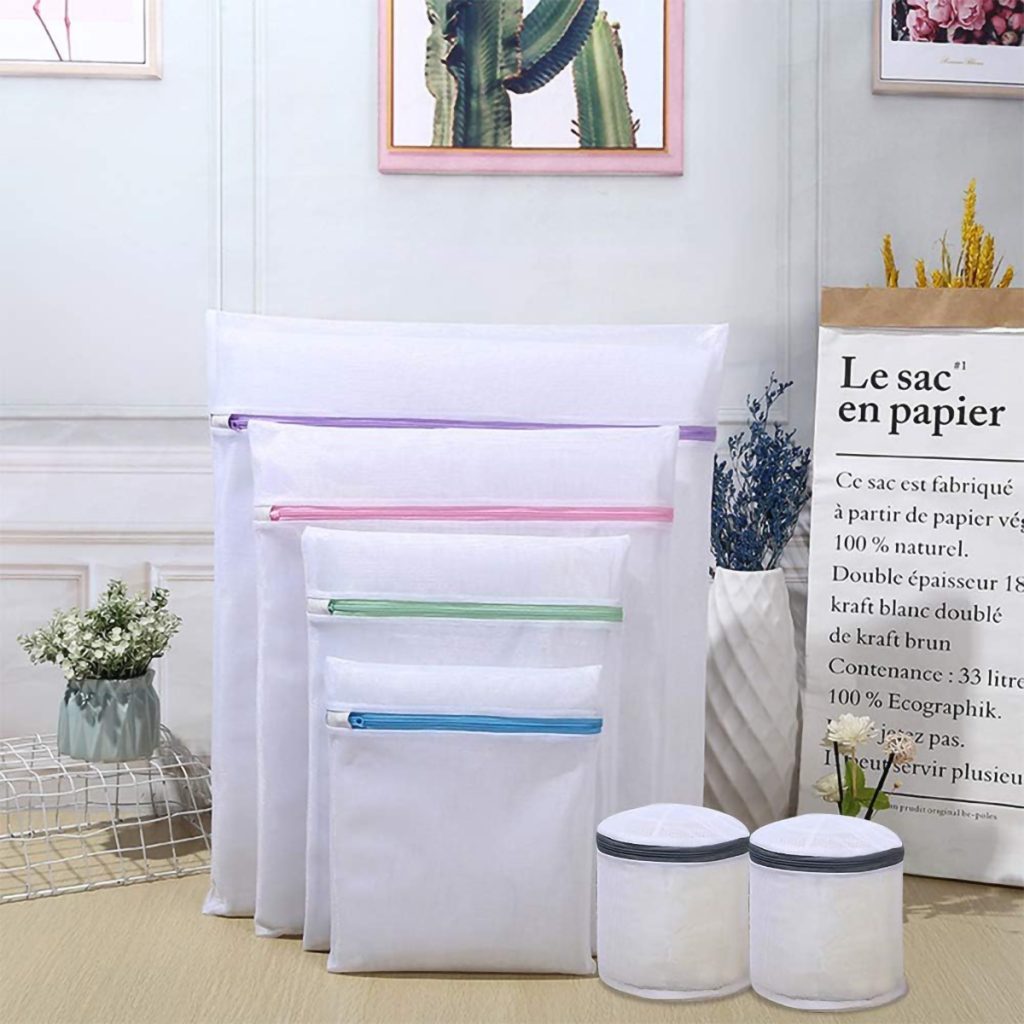
Use the product catalog to identify the exact item before developing its package. For each selling unit, record:
- The product model, mesh construction, closure and finished bag sizes.
- The piece count and the sizes or styles included in each set.
- The agreed folding method and arrangement of the contents.
- The product features that should face the customer.
- Any leaflet, insert, accessory or promotional item packed with the bags.
For a multipiece set, show the contents clearly even if only the front bag is visible. Decide whether customers need a size list, a contents illustration or both. Measure the actual folded set before asking for finished packaging dimensions.
OEM orders and custom designs are welcome, and the product range includes embroidered or custom-logo bags. Discuss the retail package as a separate specification alongside those product choices.
Compare Product Visibility, Opening and Reclosure
Visibility should answer a buying question. A customer may need to see the mesh construction, zipper or embroidery. Position the product accordingly, then check whether the packaging graphics cover that feature. A viewing window is another design option to discuss when full exposure is unnecessary.
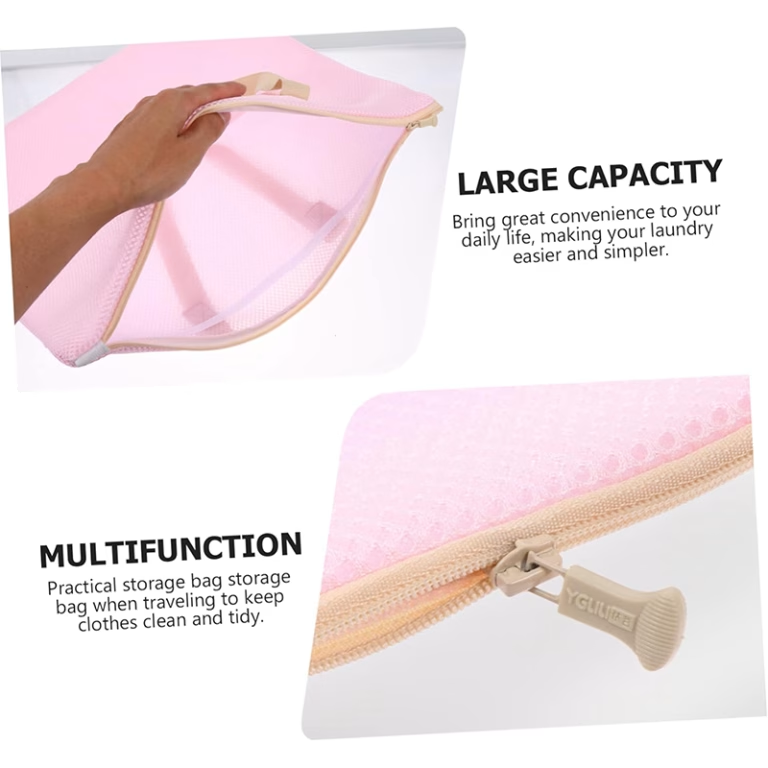
Easy removal and reclosure are separate functions. A package may open easily but have no way to close again. Decide whether reclosure serves a purpose for your sales channel, then specify it explicitly.
Review opening with the intended customer in mind, including older consumers where relevant. Check whether the opening point is obvious, whether the product catches during removal and whether any fastening needs a tool. An easy-opening requirement should describe the desired action, not simply use the word “convenient.”
Viewing windows, decorative inserts, carrying handles and security closures are possible design features. Select them for a clear purpose and review their effect on packing, opening and disposal. Avoid adding components solely to fill unused space.
Compare Branding Options: Printed Packaging, Labels and Tags
Branding can sit on the main package or on separate components. Options to discuss include printed bags, labels, hanging tags, tissue, ribbon and tape. Decide which component carries the product name, set contents, barcode, care information and required market-specific text.
Keep product identification consistent across variants. If several mesh constructions share the same package design, make the distinguishing label easy to find. For sets, check that the printed contents match the bags actually packed.
Distinguish an on-pack promotion from a special-edition design. An on-pack promotion places an additional item or incentive with the main product inside the retail package. Include that addition in the sample and packing specification. A promotional edition may instead use a special design for a limited period and quantity; define how remaining packaging will be handled when the campaign ends.
Consider Packing Methods and Logistics in the Design
Packaging development depends on whether packing will be manual or machine-assisted. Establish the intended method before approving the structure. For manual packing, review folding, insertion, closure and label placement. For machine packing, have the proposed materials and dimensions reviewed against the actual equipment requirements.
Request a packing trial using representative products and the complete proposed package. Record observations against agreed acceptance criteria:
- Can the contents be inserted and arranged consistently?
- Does the closure stay clear of mesh, cords and zippers?
- Are the label, barcode and product details readable after packing?
- Does the pack retain the intended presentation after agreed handling?
- Does the packed unit fit the proposed carton arrangement?
Include logistics requirements in the design brief: retail units per carton, carton orientation, handling route and any warehouse or retailer requirements. Keep the retail package and shipping protection in the same review.
Compare quotations on a common basis. Ask suppliers to separate packaging components, printing or tooling charges, assembly, product packing and delivery terms. Match the product configuration, order quantity and artwork scope before comparing totals. A component-only quotation cannot establish the complete packed-unit cost.
Custom Packaging Discussions: Shape, Size and Artwork Proofs
Custom shapes and sizes are purchasing options to discuss with packaging suppliers. Start with the folded product and display requirements, then request a proposed structure. Use the laundry bag tech pack guide to organize the product details that accompany the packaging brief.
Request a physical sample for fit and handling, plus an artwork proof before printing. Treat these as separate review steps: a digital proof shows artwork placement, while a packed sample lets you assess the structure and product presentation. Agree with the selected supplier on which proofs and samples its workflow includes.
Check text, piece count, barcode placement, opening direction and product visibility together. Record the approved materials, dimensions, artwork version and packing arrangement so repeat orders have a clear reference.
For wider sourcing questions, consult the wholesale FAQ for importers. When discussing a project through the contact page, include the product selection, set contents, sales channel and proposed packaging format so the packaging requirements can be assessed.
FAQ
What does retail packaging mean?
Retail packaging is the packaging presented with a product for sale. For laundry bags, it identifies the selling unit, communicates its contents and supports presentation and handling. It is distinct from the transport packaging used to ship multiple retail units.
How can I source packaging for my product?
Prepare a brief covering the product, folded dimensions, set contents, display method, artwork and packing process. Send the same requirements to potential suppliers, request samples and compare quotations that include the same components and services.
Which packaging format should I choose for a laundry-bag set?
Shortlist formats against your display and handling requirements, then assess them with the actual set inside. Compare visibility, contents identification, removal, closure, packing work and carton fit before selecting the structure.
Does retail packaging need to be resealable?
Specify reclosure when it serves a defined customer or retail handling need. Assess it separately from easy opening: being able to remove the laundry bags does not mean the package can be closed again.