
Before approving a custom laundry-bag order, make sure both sides can answer the same question: what exactly makes each payment due? A quotation that says only “deposit and balance” leaves important details open. The amount, currency, payment method and release conditions should be clear before money changes hands.
This guide explains how to turn payment terms into practical purchasing instructions for OEM and private-label textile orders. The aim is to give procurement, finance and the supplier one consistent schedule to work from.
What Payment Terms Cover: Amount, Timing, Method and Currency
Payment terms describe the conditions for paying an order. For an international purchase, record these items together:
- Amount: the total payable and any agreed installments.
- Timing: the date or event that makes each payment due.
- Method: the agreed way to transfer or arrange payment.
- Currency: the currency in which the buyer must settle the invoice.
- Charges and deductions: how transfer fees, discounts and credits will be handled.
- Supporting records: the documents needed to request or authorize payment.
Keep the payment method separate from the payment deadline. A method tells the finance team how to pay; it does not, by itself, explain when payment is due. Similarly, a deposit percentage is incomplete without a defined order value and payment trigger.
For example, specify whether an installment is calculated on goods alone or on a total that includes agreed packaging and other charges. If the quotation and settlement currencies differ, agree how the payable amount will be determined.
Where T/T, L/C and Escrow Fit
You may encounter T/T, letters of credit and escrow when discussing international orders. Treat these as separate topics from the installment schedule. Ask the supplier which arrangements are available for the proposed transaction before including one in your purchase order.
For any proposed arrangement, request its written requirements: who initiates it, which documents are needed, what authorizes payment or release, who pays the charges and how changes are handled. Do not choose from an abbreviation alone. Record product specifications and inspection requirements separately so that the payment wording does not have to carry the entire quality agreement.
Advance Payments and Custom Manufacturing Orders
Manufacturers sometimes request advance payment for made-to-order or customized goods. An advance can cover an agreed portion of the total rather than the whole order. The amount and conditions belong in the order agreement; there is no deposit rate established here for this company.
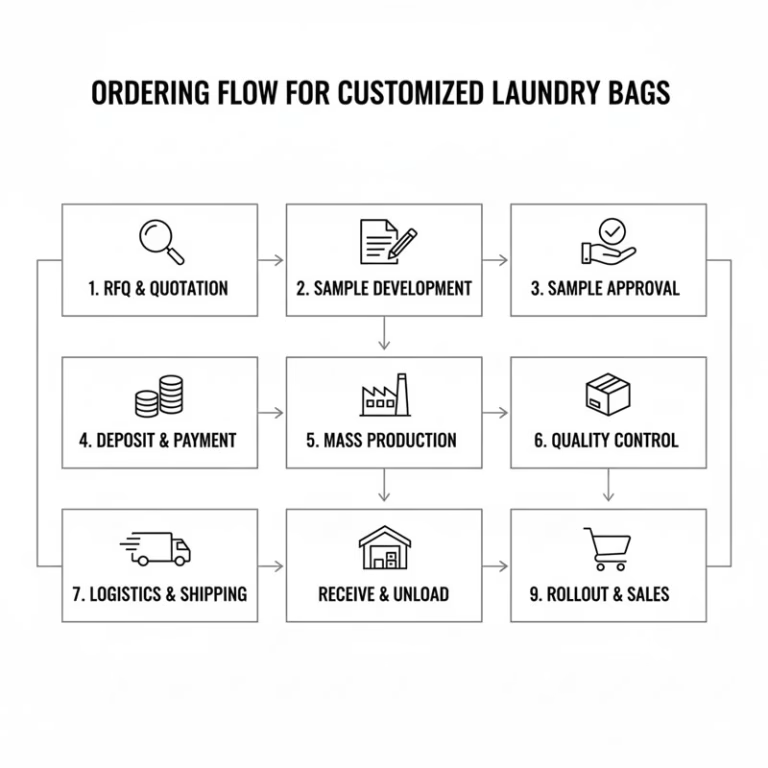
For custom-logo laundry bags, connect the payment discussion to the approved product brief. Identify the design version, logo artwork, material, dimensions and packaging covered by the quotation. If those details remain open, ask how later changes would affect the price and payment schedule.
Also distinguish payment from production authorization. Ask whether the proposed schedule starts after receipt of an advance, approval of a sample, confirmation of artwork, or completion of several conditions. Put the agreed trigger in writing instead of assuming that sending a transfer automatically starts production.
If you are still choosing a supplier, the laundry-bag sourcing guide provides a useful starting point. Settle the product scope and supplier selection before treating payment negotiation as the final purchasing decision.
Payment With Order, Before Shipment and on Delivery
These phrases identify different payment events. They should not be used interchangeably.
- Cash with order: payment is tied to placing the order.
- Cash before shipment: payment is required before the goods are shipped.
- Payment on delivery: payment is tied to delivery, which the agreement should define precisely.
- Cash next delivery: payment for the previous recurring order is a condition of receiving the next order.
- Consignment: the supplier receives payment after the buyer sells the goods onward to another customer.
For a shipment of washing bags or laundry baskets, “delivery” needs a named event and location. Specify whether it means arrival at a warehouse, handover to a designated recipient or another agreed event. State what record demonstrates that it occurred.
Likewise, “balance before shipment” should explain what the buyer receives before authorizing the balance. Depending on the agreement, request an inspection report, packing details or other specified records. Make these requirements explicit rather than assuming they are included.
Writing a Staged Payment Schedule
A staged-payment example is a schedule linking installments to order placement, shipment and acceptance, with the amount of each installment agreed in advance. This illustrates how payment can be divided across events; it is not a customary textile payment schedule or an offer from this manufacturer.
The useful part is the structure: amount plus event. To make such wording usable, define shipment and acceptance, identify the required evidence, and state the payment deadline after each event. Avoid a milestone called simply “completion” unless both sides have agreed what completion means.
Net Terms, Month-End Deadlines and Early-Payment Discounts
Net terms allow an agreed period before the full payment becomes due. The starting point matters as much as the length of that period. State whether the clock starts from the invoice date, receipt of the invoice, delivery or another agreed event.
For month-end billing, write down both the cutoff date and the payment date. A schedule can group transactions through a monthly cutoff and make payment due in the following month. Without both dates, the buyer and supplier may assign the same invoice to different payment cycles.
Also clarify how an invoice received after the cutoff will be handled. Avoid applying a domestic billing convention to an international supplier without discussing it.
An early-payment discount needs equally clear wording. Record the discount, the amount to which it applies, the qualifying deadline and what counts as payment within that deadline. The buyer’s transfer instruction date and the supplier’s receipt of funds should not be left as competing interpretations.
Matching Payment Terms Across the Purchase Order and Invoice
Carry the agreed payment conditions from the contract or purchase order onto the invoice. The invoice should provide a payment request that matches the agreement, rather than introduce a new deadline or an unexplained balance.
Before approving payment, check the documents together:
- Identify the order: match the buyer, supplier, purchase-order reference and relevant product descriptions.
- Reconcile the amount: check quantities, agreed prices, separately agreed charges, credits and previous payments.
- Match the currency: confirm that the invoice uses the agreed settlement currency.
- Check the trigger: confirm which installment is requested and whether its agreed conditions have been met.
- Check the deadline: make sure the invoice date and due date follow the agreed schedule.
- Confirm the payment instructions: verify beneficiary details through an established supplier contact, especially when instructions change.
For example, if the purchase order makes the balance payable after a specified inspection step and before shipment, the invoice should preserve that sequence. Resolve a conflicting demand for immediate payment before authorizing the transfer.
When an order changes, update the related payment records as well. A revised logo, quantity or packaging requirement should have an agreed commercial adjustment, including any effect on amounts already paid and the remaining balance.
Building a Payment Checklist for a Custom Laundry-Bag Order
Yiwu Yihang Daily-Use Commodity Co., Ltd. is a manufacturer in Yiwu, Zhejiang, China, producing laundry mesh bags, washing bags, laundry baskets and other storage products since 2014. Its offering includes OEM orders, custom designs and custom-logo laundry bags.
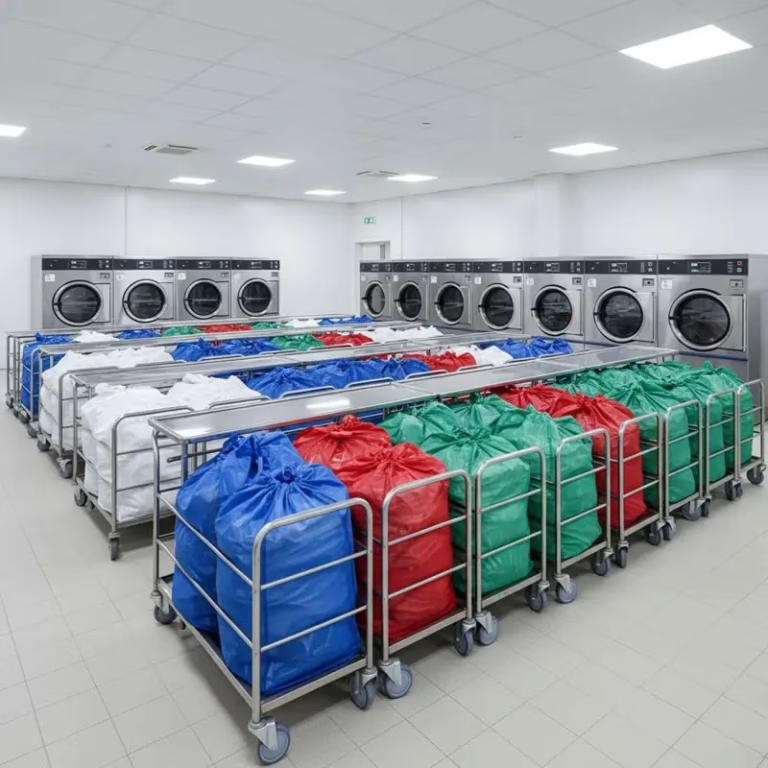
The company’s stated markets include Europe, North America, South America, Korea and Japan. For buyers across these markets, explicit payment wording helps avoid relying on local abbreviations or billing habits that the other party may interpret differently.
Use the product catalog to identify the items you want quoted, then build the payment discussion around a defined order:
- Product scope: list each bag or basket, its specifications, logo requirements and packaging.
- Order quantity: request the applicable minimum order quantity for the chosen configuration.
- Cost scope: ask which items are included in the quotation and which are charged separately.
- Schedule: request the proposed lead time and the conditions from which it is measured.
- Payment schedule: record the agreed amounts, currency, method and triggers.
- Approval records: identify any samples, artwork approvals or inspection records required at the relevant stages.
- Exceptions: agree how changes, partial shipments, delays and cancellation will affect payment.
For smaller bag formats, the small mesh laundry-bag sourcing guide can help you prepare the product specification. Keep that specification attached to the commercial discussion so that a revised product does not remain tied to an outdated quotation.
Send the finished brief through the contact page and request written payment terms for that order. Your purchasing team should be able to hand the agreed documents to finance without needing to explain missing conditions from memory.
FAQ
What does the term payment terms mean?
Payment terms are the agreed conditions for paying a purchase. They cover the amount, due date or payment trigger, method and currency, along with any agreed installments, discounts or charges.
What does DA mean in payment terms?
Payment abbreviations should be defined in the agreement alongside the payment deadline and any document-release conditions. If a quotation says only “DA,” ask for the full wording and transaction requirements before accepting it.
Which payment terms are commonly used?
General arrangements include advance payment, payment with order, payment before shipment, payment on delivery and deferred payment under net terms. Orders may also use staged payments. Discuss availability for the specific purchase; these categories do not establish what this manufacturer accepts.
What other words are used for payment?
Related terms include remittance, settlement, installment, deposit and balance. They serve different purposes: a deposit describes an advance portion, an installment is one part of a divided payment, and the balance is the amount remaining. Use the word that matches the actual transaction.