
A laundry bag can look suitable in a sample room yet fail after repeated wash cycles: the zipper opens, the seam pulls apart, or the fabric dries too slowly. Buyers also face a confusing label problem. Mesh, cotton, and nylon are often presented as three competing materials, even though mesh is a fabric structure and cotton or nylon describes the fiber. Mesh laundry wash bags should be specified by both structure and fiber, not by one material name. The comparison below covers protection, water flow, drying, durability, customization, and compliance so purchasing teams can choose a bag suited to real use.
What Are Mesh Laundry Wash Bags Made From?
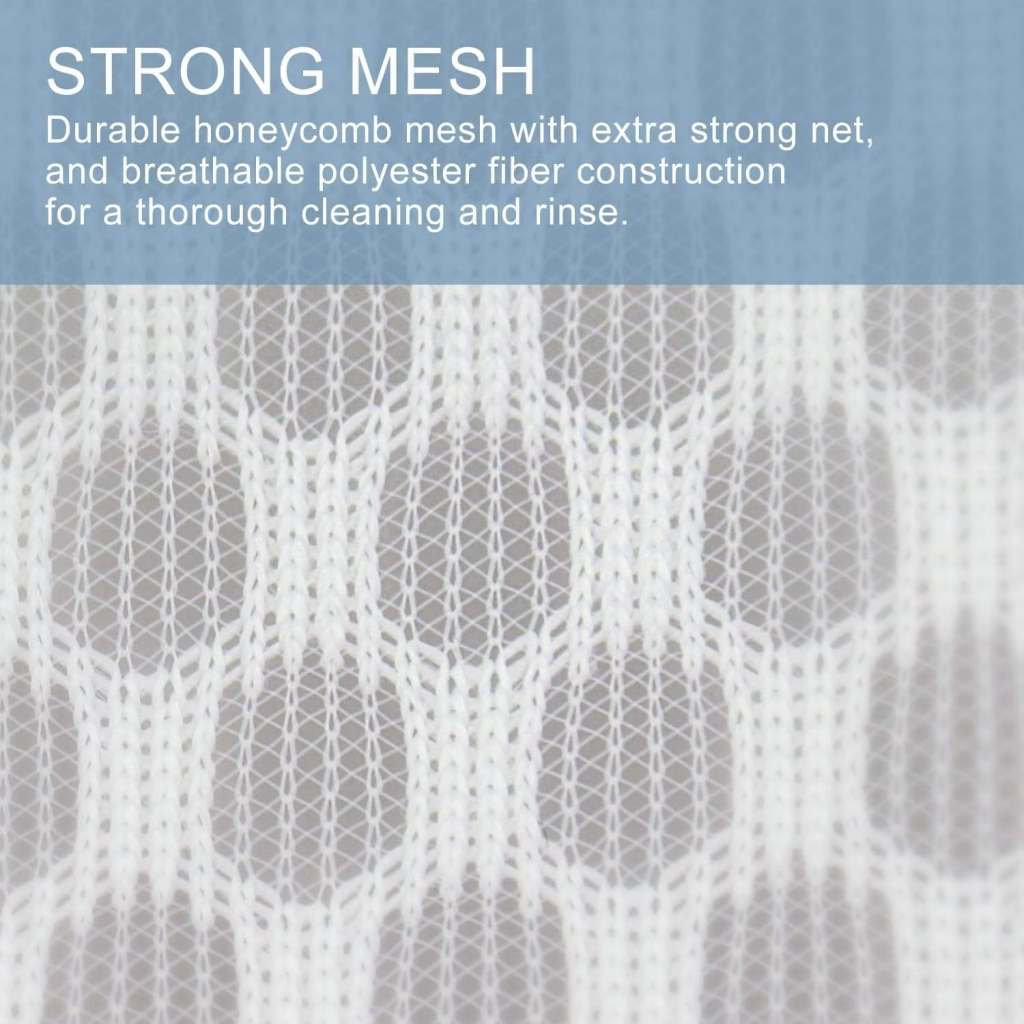
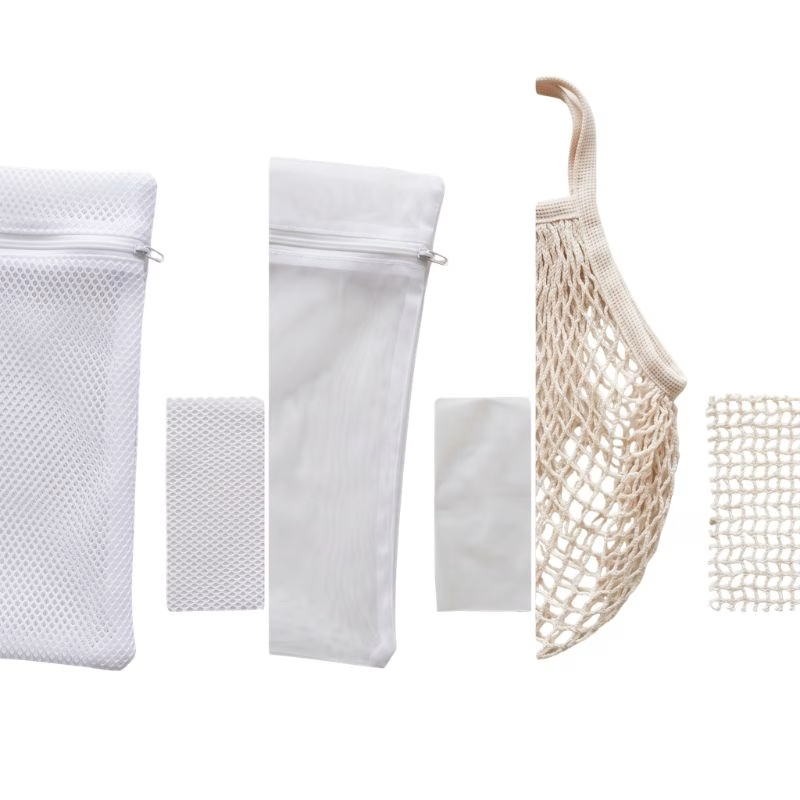
Mesh is an open fabric construction formed by spaced yarns or holes. It allows wash water and detergent to reach the contents while keeping garments contained. Polyester, nylon, and cotton can all be made into mesh. For that reason, “mesh versus nylon” is not a technically equal comparison. A nylon bag may also be a mesh bag.
The more useful specification has three layers:
- Fiber: polyester, nylon, cotton, or a blend.
- Construction: fine mesh, coarse mesh, sandwich mesh, woven fabric, or knitted fabric.
- Finished design: zipper, drawstring, seam binding, size, shape, logo method, and packaging.
For most machine-wash ranges, polyester mesh offers a balanced starting point. It dries quickly, holds its shape well, accepts many colors, and works across fine and coarse constructions. Nylon is often selected where flexibility and abrasion resistance carry extra weight. Cotton supports natural-fiber positioning and has a softer hand, but it absorbs more water, dries more slowly, and needs closer shrinkage control.
The final choice still depends on the garment and wash program. A padded bra bag, a shoe bag, and a large travel sorter should not share one fabric specification simply because all three are called mesh laundry bags.
Mesh Laundry Wash Bags: Polyester vs Nylon vs Cotton
The strongest choice is not a universal winner. It is the material that meets the intended wash cycle, garment type, target price, drying expectation, and product claim.
| Decision factor | Polyester mesh | Nylon mesh | Cotton fabric or cotton mesh |
|---|---|---|---|
| Water absorption | Low | Higher than polyester | High |
| Drying speed | Fast | Moderate | Slower |
| Shape stability | Usually stable | Flexible, may stretch by construction | Needs shrinkage control |
| Abrasion performance | Suitable for repeated household use | Often strong under rubbing and flexing | Depends heavily on yarn and construction |
| Hand feel | Smooth to firm | Smooth and flexible | Soft, natural feel |
| Mesh options | Fine, coarse, sandwich, padded | Fine or coarse, flexible structures | Open net, woven, or knitted options |
| Color and logo options | Broad | Broad | Good, with method checks |
| Common fit | Delicates, sets, travel, general wash use | Repeated handling and flexible bags | Natural-fiber collections and dry storage |
Why polyester is the common production choice
Polyester mesh laundry bags suit many retail and private-label programs because the fiber absorbs little water and normally keeps stable dimensions after washing. Fine polyester mesh can reduce direct contact between delicate garments and other items. Coarse polyester mesh increases water exchange for larger or less fragile garments. Sandwich mesh adds body and cushioning for shaped products.
Where nylon has an advantage
Nylon laundry wash bags can offer a flexible hand and strong resistance to abrasion. That makes nylon worth considering for frequent handling, institutional sorting, or products that face repeated rubbing. Yet fiber name alone does not prove service life. Yarn thickness, knitting density, heat setting, seam strength, and zipper quality can change the outcome.
When cotton earns a place
Cotton laundry bags feel soft and support collections built around natural fibers. Cotton is also absorbent, which can be helpful for some storage uses. Inside a wet wash cycle, that absorbency adds water weight and lengthens drying time. Buyers should request shrinkage, colorfastness, seam, and repeated-wash results before approving cotton for machine use.
Fiber content is only one buying variable
Two polyester fabrics can behave differently because yarn thickness, fabric weight, mesh opening, knit pattern, heat setting, and finishing are different. The same applies to nylon and cotton. Ask suppliers to identify the fiber content and provide a physical sample instead of approving from a material name alone.
If recycled content, an antimicrobial treatment, water repellency, or another finish is requested, define how the claim will be verified. Added finishes can change hand feel, color, wash durability, and chemical testing needs. A simpler untreated construction may fit many wash-bag programs. Any environmental claim should match the available certificates and the rules of the selling market.
How Mesh Size Changes Garment Protection
Mesh opening size changes how a wash bag behaves. It affects water exchange, surface contact, snag protection, lint movement, and the visual appearance of the product.
Fine mesh for delicate garments
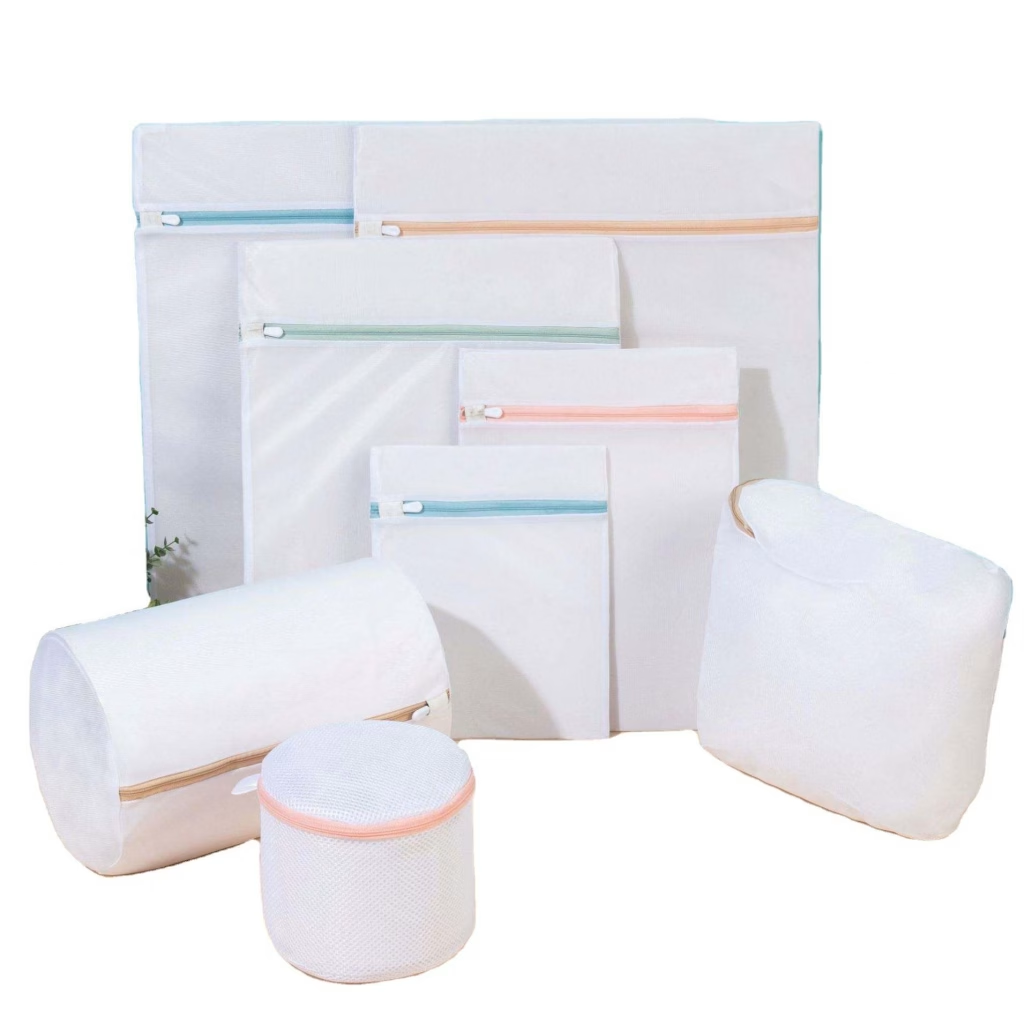
Fine mesh creates a closer barrier around bras, underwear, hosiery, embroidered pieces, baby items, and light knitwear. Smaller openings help keep hooks, straps, and decorative parts away from other garments. A set of seven thickened fine mesh bags can cover several garment sizes, while a small eight-bag format fits socks and compact accessories.
Fine mesh still needs enough water flow for the selected washer and detergent. Dense fabric, oversized loads, or an overfilled bag may reduce movement inside the bag. Users should leave space for garments to shift during washing.
Coarse mesh for water exchange and larger items
Coarse mesh has larger openings. It suits general garments, towels, travel sorting, and items that need faster water movement. A five-piece coarse mesh set provides several sizes for assortment planning.
Coarse openings provide less separation from hooks or hard trims outside the bag. The garment type, not only the desired wash speed, should guide the selection.
Sandwich mesh for shape and cushioning
Sandwich mesh uses a three-dimensional structure that adds thickness and air space. It works well for shaped bags and products needing added cushioning. The Korean-style sandwich mesh bag shows this approach in polyester and multiple sizes.

Closure, Seam, Size, and Load Design
Material selection gets attention, but finished construction often decides whether a bag performs well after many washes. Procurement specifications should cover every contact point.
Zippers and zipper guards
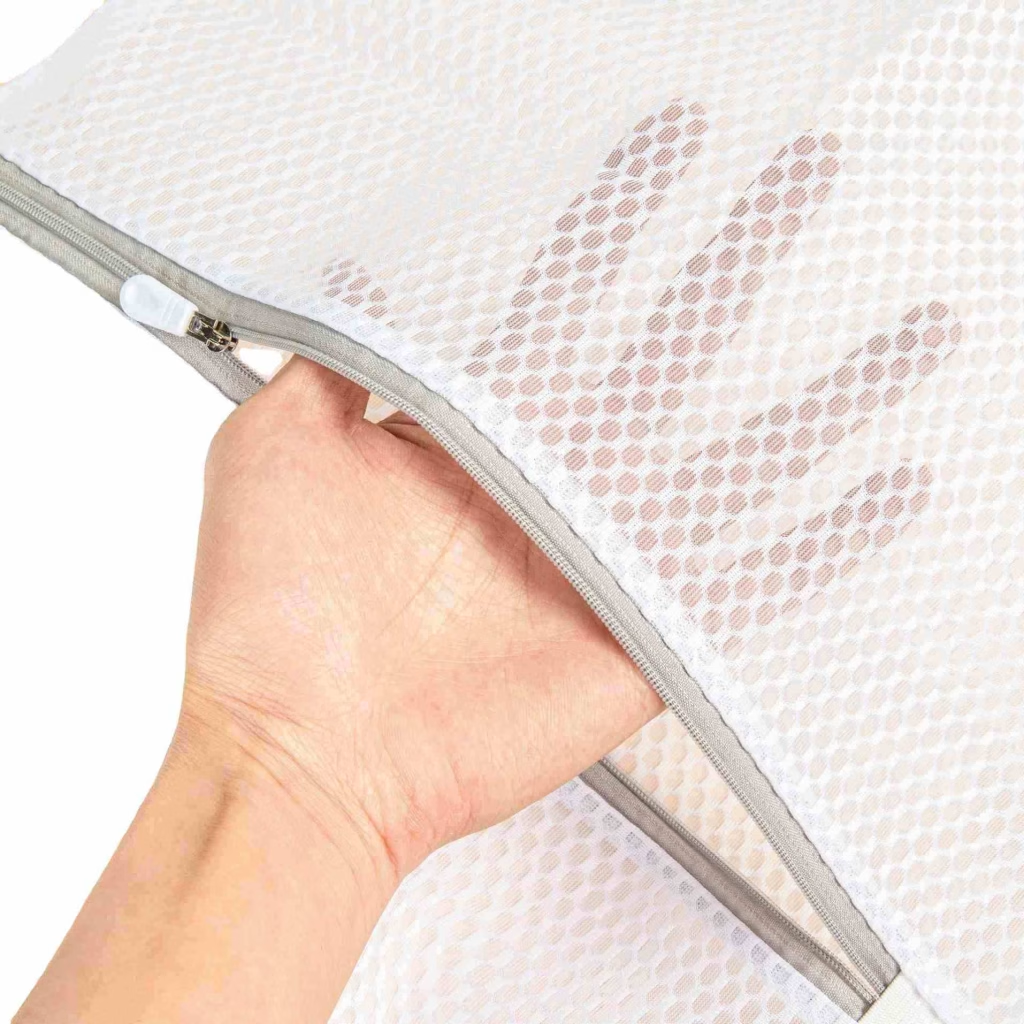
A zipper keeps small garments contained and is easy to operate. Specify the slider material, pull design, tape color, closure direction, and resistance to washing conditions. A covered zipper end or elastic guard helps keep the pull from rubbing against garments or the washer drum. Review the polyester laundry bag with zipper for a simple closure reference.
Do not accept a “non-rusting” claim without knowing the component material and test method. A corrosion-resistant slider may be more accurate wording when the evidence supports it.
Seams and edge binding
Seam failure can begin at the zipper end, bag corner, or drawstring channel. Ask for:
- consistent seam allowance;
- covered raw edges where needed;
- reinforced zipper ends;
- even stitches without skipped sections;
- stress-point reinforcement for larger bags;
- binding that does not curl after washing.
Size and useful capacity
Finished dimensions should be stated after sewing, with an agreed tolerance. Size grading needs to match real garments. Small bags fit socks and underwear; medium bags fit shirts and knitwear; large bags suit trousers, sweaters, or grouped travel items. Shaped bra bags need depth as well as length and width.
A multi-size laundry bag set can help buyers test the size mix before approving a range. Bag capacity should allow movement. Filling a bag tightly may reduce cleaning and increase strain on the zipper and seams.
Which Material Fits Each Use Case?
The same material may serve several uses, but the construction should change with the contents. The table below gives a practical starting point for sample development.
| Use case | Suggested starting specification | Reason |
| Bras and lingerie | Fine polyester mesh or padded sandwich mesh, shaped bag, covered zipper | Limits snag contact and supports shape |
| Hosiery and socks | Small fine-mesh zipper bag | Keeps small items contained |
| Shirts and knitwear | Medium fine or medium mesh bag | Balances separation and water movement |
| Trousers and sweaters | Larger medium or coarse polyester mesh | Gives more space and faster exchange |
| Shoes | Structured coarse or sandwich mesh with reinforced seams | Handles bulk and separates hard parts |
| Travel sorting | Lightweight polyester or nylon mesh, color-coded zipper | Helps identify contents and dries quickly |
| Natural-fiber collection | Cotton net or woven cotton, pretested for shrinkage | Supports fiber positioning and soft hand |
Color coding can make a set easier to use. It may separate household members, garment groups, or bag sizes without printed instructions. The three-piece colorful mesh set offers one reference for this format.
Brand presentation also affects the material decision. Embroidery adds texture and a longer-wearing identity, though backing and thread ends must not create rough contact inside the bag. Printing allows larger artwork but needs wash, rub, and colorfastness checks. The thickened white embroidered mesh bag illustrates an embroidered option across several sizes.
If the program includes delicate garments and travel organization, custom zippered laundry bag sets with mixed sizes may cover more use cases than one large bag. A focused set also gives retailers a clear value story without adding unnecessary parts.
How Buyers Should Test Mesh Laundry Wash Bags
A sample should be evaluated against an agreed use case, not judged only by appearance. Begin with a written specification and record the test condition, number of cycles, detergent, water temperature, load, drying method, and pass criteria.
Practical sample checks
- Incoming measurement: Record bag dimensions, mesh weight or agreed material measure, zipper length, and visible workmanship.
- Repeated washing: Run the agreed number of wash cycles using a representative load.
- Dimensional stability: Measure length and width again, then calculate any change.
- Zipper function: Open and close the zipper before and after washing. Check the guard, slider, tape, and end stops.
- Seam condition: Look for broken stitches, seam opening, fraying, binding curl, and corner distortion.
- Snag review: Inspect both the test garment and the bag surface for pulled yarns or rough points.
- Color and logo review: Check for bleeding, fading, transfer, print cracking, or embroidery distortion.
- Drying check: Record whether the bag dries within the expected process and whether odor remains after storage.
Compliance and claim review
Compliance is market- and product-specific. REACH restrictions may apply to both EU-made and imported articles, so buyers should define restricted-substance needs before sampling. The European Commission’s REACH restrictions overview for clothing, textiles, and imported articles provides a useful regulatory reference.
Care wording also needs evidence. In the United States, the FTC Care Labeling Rule covers textile wearing apparel and certain piece goods. A wash bag may fall outside parts of that scope depending on how it is sold, yet the rule shows why care statements should be accurate and supported. Buyers should obtain legal guidance for the exact product and market rather than copying a competitor’s label.
Ask the supplier which laboratory, method, sample count, and version of the requirement will be used. “Can pass REACH” is not a complete test plan until the chemical scope and acceptance limits are written down.
Product Options for Custom and Wholesale Programs
Product development becomes faster when the inquiry links each use case to a reference construction. Buyers can begin with the full laundry mesh bag product range and then narrow the request by mesh type, quantity per set, size, and branding method.
Useful development paths include:
- Fine-mesh assortment: Use the seven-piece fine mesh bag set as a reference for several garment sizes.
- Coarse-mesh assortment: Compare the five-piece coarse mesh bag set when water exchange and general garment separation lead the brief.
- Logo program: Review the coarse mesh set with a customized logo for private-label planning.
- Color-led range: Consider the colorful thickened fine mesh bag for assortment coding.
- Clean white range: Use the white thickened fine mesh bag where a neutral look supports the pack design.
- Embroidered construction: Review the sandwich fine mesh bag with embroidery for added body and stitched branding.
A complete inquiry should state the destination market, intended garments, material, mesh opening, finished size, color, closure, logo method, set composition, packaging, testing request, target quantity, and delivery window. If one detail remains open, label it as a development choice instead of leaving it unstated.
Request a pre-production sample after the specification is agreed. The approved sample, signed measurement sheet, color reference, logo artwork, and packaging layout should then form the production reference. This approach reduces interpretation gaps between a digital image and the finished shipment.
Image for this section
- Image title: Custom Laundry Bag Development Range
- Image description: A coordinated factory sample range with fine mesh, coarse mesh, colored zippers, embroidery, and retail set packaging.
- SEO file name:
custom-mesh-laundry-bag-product-range.jpg- Alt text: Custom mesh laundry bags in fine mesh, coarse mesh, embroidered, and color-coded set options
- AI image prompt: Square 1:1 textile product development table displaying fine mesh and coarse mesh laundry bags, white and pastel colors, covered zippers, one embroidered sample, size set, packaging mockup without words, organized factory showroom, realistic materials, soft commercial lighting, no brand marks, no visible text
Order Mesh Laundry Wash Bags from the Source
Established in 2014, we manufacture laundry mesh bags, bra laundry bags, washing bags for shoes, storage bags, laundry baskets, and drawstring mesh products. Our customers are located across Europe, North America, South America, Korea, Japan, and other markets. OEM orders and customized designs are available.
We can develop polyester, nylon, or cotton options based on the approved construction and intended use. Environment-friendly raw material choices can be discussed during development, and products can undergo REACH-related and other requested tests according to the agreed scope.
Send your target size, fabric preference, mesh type, closure, logo artwork, quantity, packaging needs, destination market, and testing list. Our team can review the brief, recommend a sample route, and prepare a quotation. Working with the original manufacturer gives you direct access to material selection, sampling, customization, and production details at the source.
Frequently Asked Questions
1. What minimum order quantity applies to custom bags?
The minimum order quantity depends on the material, size, color, logo method, and packaging. Standard fabrics and colors may support a different quantity from custom-dyed mesh or special hardware. Send your specification and target volume so we can confirm the available production route.
2. How can buyers customize mesh laundry bags?
Buyers can customize material, mesh opening, size, shape, color, zipper, drawstring, binding, logo, set composition, and packaging. We can review artwork and use requirements before preparing a sample. Reach out for detailed specifications and available decoration methods.
3. Can products undergo REACH-related compliance testing?
Yes, products can undergo REACH-related and other requested testing based on the agreed scope. The substance list, test method, laboratory, market, and acceptance limits should be confirmed before testing. Send your compliance checklist with the inquiry.
4. How long does production usually take?
Production time depends on material availability, customization, order quantity, testing, and packaging. A repeat order using approved materials is often easier to schedule than a new custom-dyed design. Share your required delivery date so we can assess the timeline.
5. Do you provide samples before bulk production?
Yes, samples are available for material and construction review. Buyers can request an existing sample or a customized prototype, depending on the project. Contact us to request samples and confirm sample cost, preparation time, and shipping details.