
Mesh drawstring bags are among the most versatile products in packaging and storage. They’re used across laundry, retail gifting, travel, produce, and sports equipment — all in one product category. The market is growing fast. Grand View Research valued the reusable bag market at over $10 billion in 2022. It’s projected to grow at 5.4% annually through 2030.
Selecting the right mesh drawstring bags takes more than a quick search. You need to understand mesh weave density, cord materials, and sizing standards before placing an order. Skip that step and problems follow. Bags fray after five washes. Drawstrings slip under load. The mesh ends up too fine or too coarse for the job.
This guide covers what separates quality bags from cheap ones, how sizes map to applications, and what to verify before sourcing in bulk.
Quick Answer: Mesh drawstring bags are open-weave fabric bags closed with a cord threaded through a reinforced channel at the opening. They come in polyester, nylon, and cotton mesh. Sizes range from 4×6 inches (small jewelry pouches) to 24×30 inches (commercial laundry bags). For most bulk orders, polyester mesh is the most cost-effective choice. OEKO-TEX Standard 100 is the benchmark certification for EU and US retail markets.
What Makes Mesh Drawstring Bags Worth Buying
A mesh drawstring bag earns its value when the construction matches the job. Three factors separate durable bags from disposable ones: mesh weave density, channel construction, and cord material. Get any one of these wrong, and the bag fails early.
The bag opening channel is the highest-failure-risk area. It’s the looped hem that the cord runs through. Quality mesh drawstring bags use a lockstitch or overlock seam here. This resists fraying after repeated washing. Bags made for retail gifting can use simpler construction. They don’t go through machine wash cycles. A doubled drawstring cord — two ends pulling in opposite directions — splits the closure load across both sides. This is the standard for laundry and utility bags.
Mesh Type and Weave Density
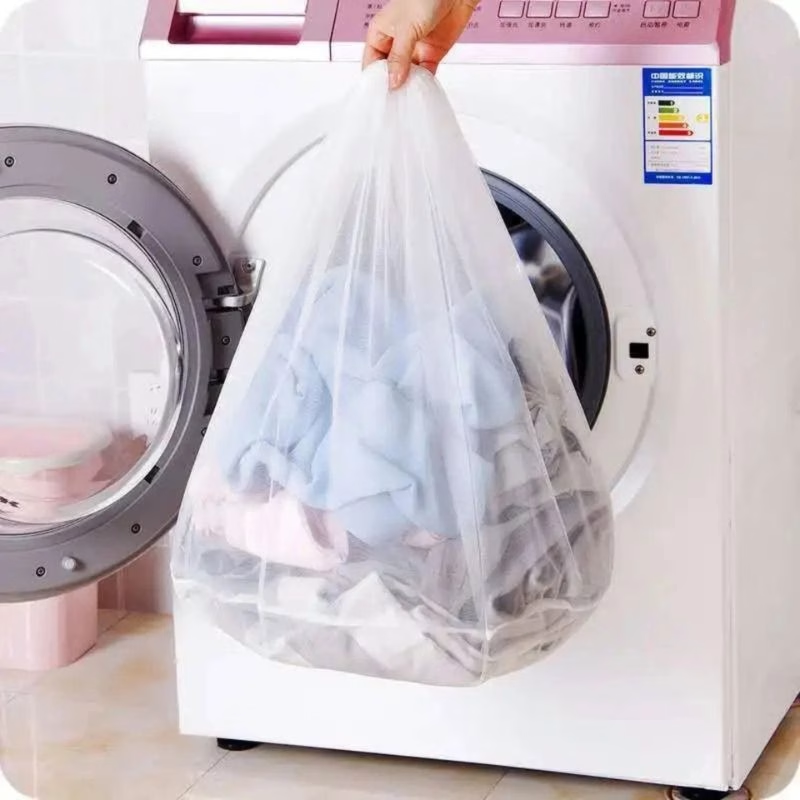
The weave of the mesh determines what a bag can hold. Fine mesh (1–3mm holes) suits delicate laundry, small produce, and cosmetic pouches. Contents shouldn’t slip through, so the weave stays tight. Coarse mesh (5mm+ holes) works better for sports equipment, beach bags, and heavy produce. Here, airflow and drainage matter more than containment.
Weave density also affects drying time. Coarse mesh bags dry in under 30 minutes at 60°C. Dense-weave bags hold moisture much longer. That matters in commercial laundry operations where turnaround speed is a real cost.
Drawstring Mechanism and Durability
Drawstring cords are typically made from polyester braid, nylon rope, or cotton twine, each with distinct performance profiles. Polyester braided cords resist moisture and UV degradation. They’re the default for laundry and outdoor applications. Nylon rope offers higher stretch resistance and suits heavy-load bags, but costs more. Cotton twine is soft but weakens with repeated washing above 40°C. It’s used mostly in eco-friendly or gifting products.
The cord stopper is a knot or clamp at the cord end. It prevents the drawstring from pulling through the channel during washing. Without one, the cord comes out after every wash cycle. In high-volume settings, that’s a real problem.
Mesh Drawstring Bags by Size — Which One Fits Your Use Case
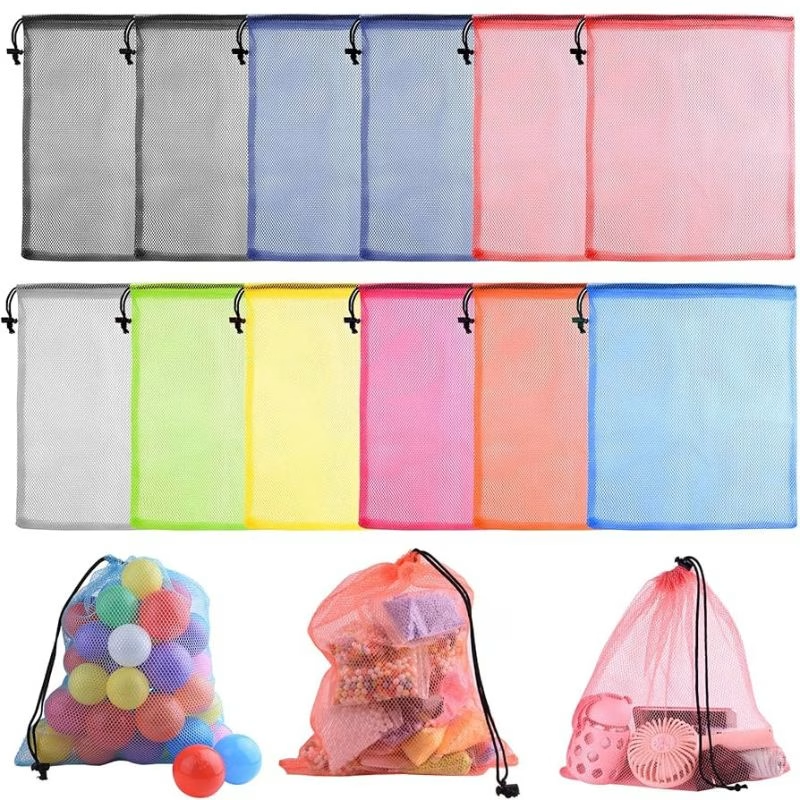
Size selection is rarely arbitrary. Each use case has a standard size range. Order outside that range without a good reason, and you waste material — or end up with poor containment. Small mesh drawstring bags (under 6×8 inches) suit jewelry, herbs, spices, party favors, and delicate lingerie. Medium sizes (8×10 to 12×16 inches) cover most laundry, travel toiletries, and retail packaging. Large mesh drawstring bags (16×20 inches and above) handle bulky loads, sports gear, and oversized produce.
| Size Category | Approx. Dimensions | Common Applications | Typical Material |
|---|---|---|---|
| Small | 4×6 in – 6×8 in | Jewelry, herbs, lingerie, party favors | Fine polyester or nylon mesh |
| Medium | 8×10 in – 12×16 in | Laundry, travel, retail packaging | Polyester or cotton mesh |
| Large | 16×20 in – 20×24 in | Bulky laundry, sports equipment, beach | Coarse polyester mesh |
| Extra Large | 24×30 in and above | Commercial laundry, wholesale produce | Heavy-duty polyester or nylon |
The 4×6 inch size is the highest-volume SKU in retail packaging globally. It’s the standard for party favor bags and gift enclosures, usually in white or solid-color polyester mesh. At the other end, large mesh drawstring bags for commercial laundry need a minimum fiber wall thickness of 0.3mm. That’s what it takes to survive wash cycles above 70°C.
When ordering across multiple sizes, standardize on one mesh material and cord type. It simplifies quality checks, reduces supplier complexity, and speeds up re-ordering.
Materials Used in Mesh Drawstring Bags and How They Differ
Material selection determines washing tolerance, load capacity, environmental credentials, and unit cost. Three materials dominate the global market: polyester, nylon, and cotton or cotton-blend mesh.
Polyester Mesh
Polyester is the most widely used material for mesh drawstring bags. It’s lightweight, resists shrinkage, and tolerates wash temperatures up to 60°C without deformation. Recycled polyester (rPET) mesh is now widely specified by retailers in Europe and North America. It aligns with extended producer responsibility (EPR) regulations and sustainability goals.
OEKO-TEX Standard 100 independently tests finished textiles for harmful substances. It’s the benchmark certification for polyester mesh bags sold in the EU and US. Suppliers who can’t provide this certificate carry more risk for consumer-facing products.
Nylon Mesh
Nylon is stronger than polyester at the same fabric weight. That makes it the preferred choice for heavy sports equipment bags and military-specification laundry bags. Bags made to the ASTM D5034 breaking strength standard are used in industrial laundry. Individual loads often exceed 5kg in those settings.
The trade-off is cost. Nylon runs 15–25% more per unit than polyester at bulk quantities. It also yellows under extended UV exposure. That limits white nylon mesh for outdoor use.
Cotton and Cotton-Blend Mesh
Cotton mesh drawstring bags appeal to eco-focused retail buyers and gifting markets. It’s biodegradable and certifiable under the Global Organic Textile Standard (GOTS). Soft enough for direct skin contact, it’s a natural fit for cosmetic or wellness products. The practical trade-offs are a 30–50% cost premium over polyester and susceptibility to mildew if stored while damp. Cotton-blend mesh — typically 60% cotton / 40% polyester — balances softness and durability. It sits at a mid-range price point, which works well for premium retail packaging.
Mesh Gift Bags with Drawstring — A Niche Worth Understanding
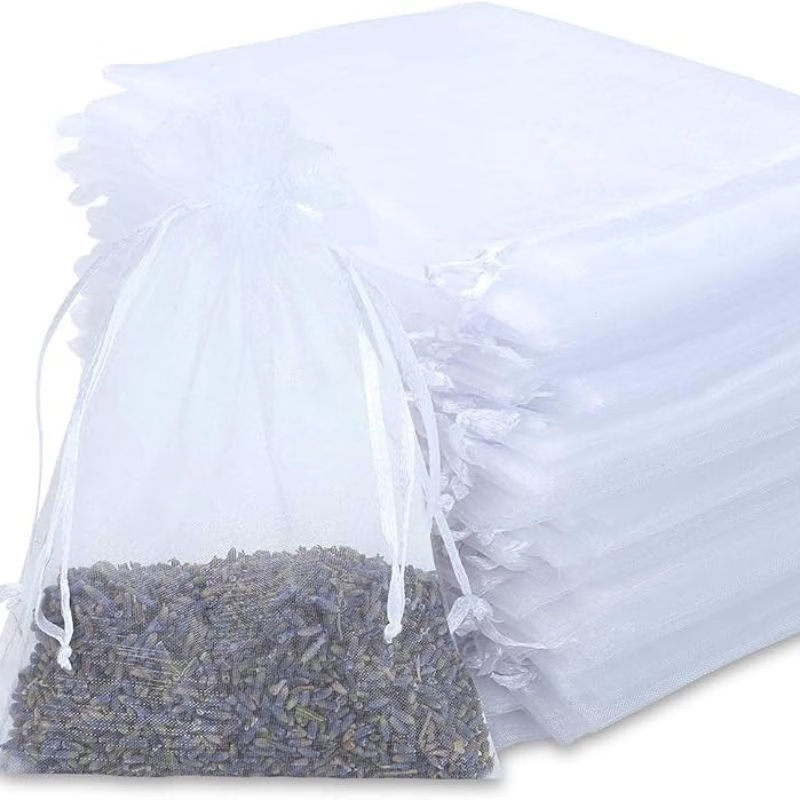
Mesh gift bags with drawstring sit in a distinct product category from laundry and utility bags. Gift mesh bags prioritize visual appeal, color variety, and softness over durability. They’re typically made from fine organza or sheer polyester mesh. Unlike utility bags, they’re not designed for repeated machine washing or heavy loads.
Standard mesh gift bags range from 3×4 inches to 10×14 inches. Smaller sizes suit jewelry or confectionery. Larger ones work for wine bottles, candles, or boxed gifts. The drawstring is usually a satin ribbon or decorative cord — not braided polyester. For retail event buyers, MOQs typically run 100–500 units per color. Per-unit costs range from $0.08 to $0.40, depending on size, material, and cord finish.
One important note for importers: drawstring safety rules apply regardless of where the bag is made. The U.S. Consumer Product Safety Commission restricts exposed cord length on bags marketed to children under 12. This prevents entanglement hazards. It’s a non-negotiable requirement.
How to Order Mesh Drawstring Bags in Bulk
Buying mesh drawstring bags in bulk follows standard textile due diligence. Verify certifications. Request production samples. Confirm lead times, and clarify packaging and labeling specs before issuing a purchase order.
Most manufacturers in Yiwu, Zhejiang Province work with MOQs of 500 to 2,000 pieces per SKU. Yiwu is the world’s largest wholesale market hub. Standard lead times run 15–25 days after order confirmation. Custom designs — logo printing, non-standard colors, or proprietary sizing — extend that to 30–45 days.
If you’re sourcing for laundry use, specify mesh bags for washing machine compatibility upfront. Laundry-rated bags need reinforced seams and heat-tolerant cord materials. Not all suppliers stock these as standard. Confirming this before sampling prevents costly revision rounds.
Always request an OEKO-TEX Standard 100 certificate. It protects against liability when importing into regulated markets. Children’s products require additional documentation per CPSC guidelines. The laundry mesh bags buying guide covers material and spec selection in practical detail. For side-by-side category comparisons, the 2025 mesh laundry bags review is a useful reference before finalizing your order.
Frequently Asked Questions
What are mesh drawstring bags used for?
Mesh drawstring bags are used for laundry protection, produce storage, gift packaging, travel organization, and sports equipment containment. The open-weave mesh allows airflow and water drainage while keeping contents secure. Common uses include delicate garment washing, produce bags, party favor packaging, gym shoe storage, beach gear, and cosmetic pouches.
What size mesh drawstring bag should I buy?
The right size depends on what you’re storing. Small bags (4×6 to 6×8 inches) work for jewelry, herbs, and delicate lingerie. Medium bags (8×12 to 12×16 inches) cover most laundry and travel needs. Large mesh drawstring bags (16×20 inches and above) handle bulky items like sports gear, comforters, and commercial-volume produce.
What is the difference between polyester and nylon mesh drawstring bags?
Polyester mesh drawstring bags are lighter, more affordable, and resistant to shrinkage. They’re the standard choice for laundry and retail packaging. Nylon bags deliver higher tensile strength and suit heavy-duty or industrial applications. At bulk quantities, nylon costs 15–25% more per unit than polyester. Both materials are available with OEKO-TEX Standard 100 certification.
Can I buy mesh drawstring bags in bulk with custom printing or branding?
Yes. Most mesh drawstring bag manufacturers in Yiwu, China offer custom color, sizing, and logo printing. Minimum orders usually start at 500–2,000 pieces per SKU. Screen printing and heat-transfer printing are the most common methods. Custom lead times run 30–45 days from order confirmation. Standard stock designs typically ship in 15–25 days.
Are mesh drawstring bags safe for washing machines?
Polyester and nylon mesh drawstring bags with reinforced seams and locked drawstring channels are compatible with standard washing machines. Choose bags rated to at least 40°C. Make sure the cord is secured with a stopper knot or clamp. This keeps it from pulling loose during the wash cycle. For specific guidance, see mesh bags for washing machine.
Do mesh drawstring bags require safety certifications for import?
Mesh drawstring bags entering the EU need an OEKO-TEX Standard 100 certificate. This confirms the fabric is free from harmful substances. In the US, bags sold for children’s use must meet CPSC drawstring safety guidelines on cord length. Suppliers serving commercial laundry buyers may also need ISO 9001 certification as a pre-qualification requirement.
The Right Mesh Drawstring Bag Specification Saves Money at Scale
Sourcing mesh drawstring bags without a clear specification causes predictable problems. Bags fray early. Drawstrings slip under load. Mesh ends up too coarse to protect delicate items — or too fine to drain properly. These aren’t minor issues at scale. They drive returns, customer complaints, and costly re-orders.
Buyers who define mesh weave, material, size range, and certifications upfront reduce rework and returns. They also build stronger supplier relationships. The right specification is the most cost-effective decision in this category. That holds true whether you need small mesh drawstring bags for retail packaging or large bags for a commercial laundry line.
Browse the Laundry Mesh Bag product catalog to explore the full range. For specification-level detail on the most commonly ordered types, the mesh drawstring bag guide is a good starting point.