
Most people encounter mesh bags for washing machine use the hard way: a ruined bra underwire punches through a drum lining, a silk blouse exits the cycle shredded, or a load of knitwear stretches so badly the items are unwearable. The damage is frustrating because it’s preventable—and the solution costs less than a single ruined garment.
This guide covers exactly how these bags work inside a machine, how to match the right type to the right garment, what to look for when sourcing in volume, and how construction details separate a bag that lasts from one that doesn’t. Whether you’re managing a product line, building a private label assortment, or evaluating a new manufacturer, the details below will help you make a well-informed decision.
What Are Mesh Bags for Washing Machine Use?
A mesh bag for washing machine use is a zippered, breathable bag made from woven polyester or nylon mesh. The weave creates a protective enclosure that absorbs mechanical forces inside the drum—agitation, friction, spin—while still allowing water and detergent to flow freely through the fabric walls.
At its core, the bag does two things: it keeps specific items contained, and it reduces direct contact between those items and the machine’s interior surfaces or other garments in the same load. Water still cleans; the mesh just limits physical punishment.
The concept has been around for decades, but design and material quality have evolved substantially. Today’s washing machine mesh bags range from lightweight fine-mesh pouches sized for hosiery and lingerie, all the way to thickened coarse-mesh sets capable of handling denim, workwear, and activewear in commercial laundry volumes. Sandwich mesh construction—a multi-layer approach that has become especially popular in Korean laundry product markets—adds cushioning and structural support, making it the preferred choice for shaped items like bras with underwires or garments with embellishments.
For buyers evaluating products for retail, hospitality, or private label sourcing, understanding these structural distinctions is where the specification process should start.
How Laundry Bags Mesh Actually Works in a Washer
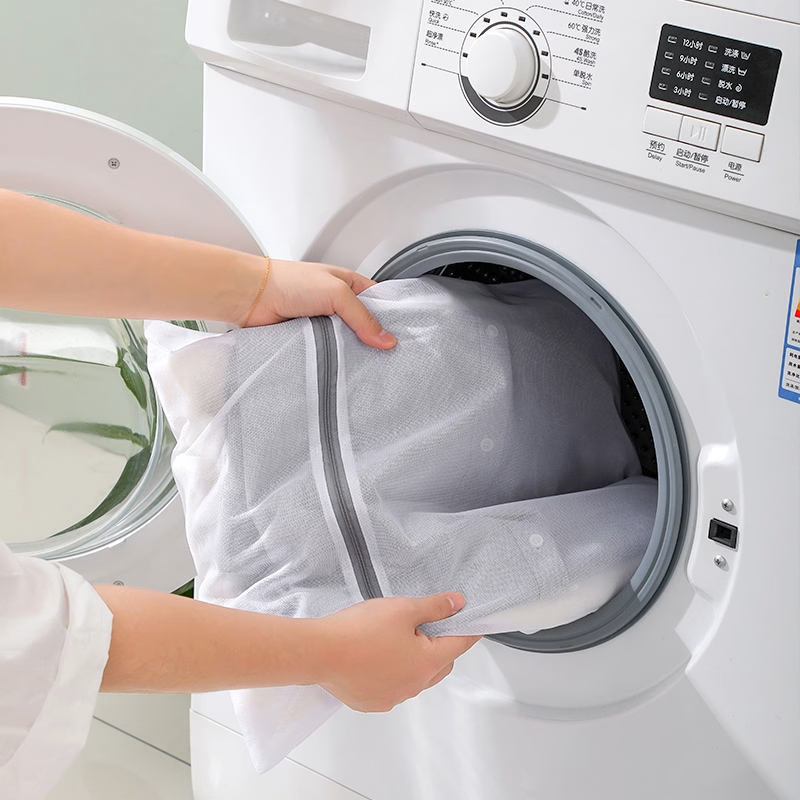
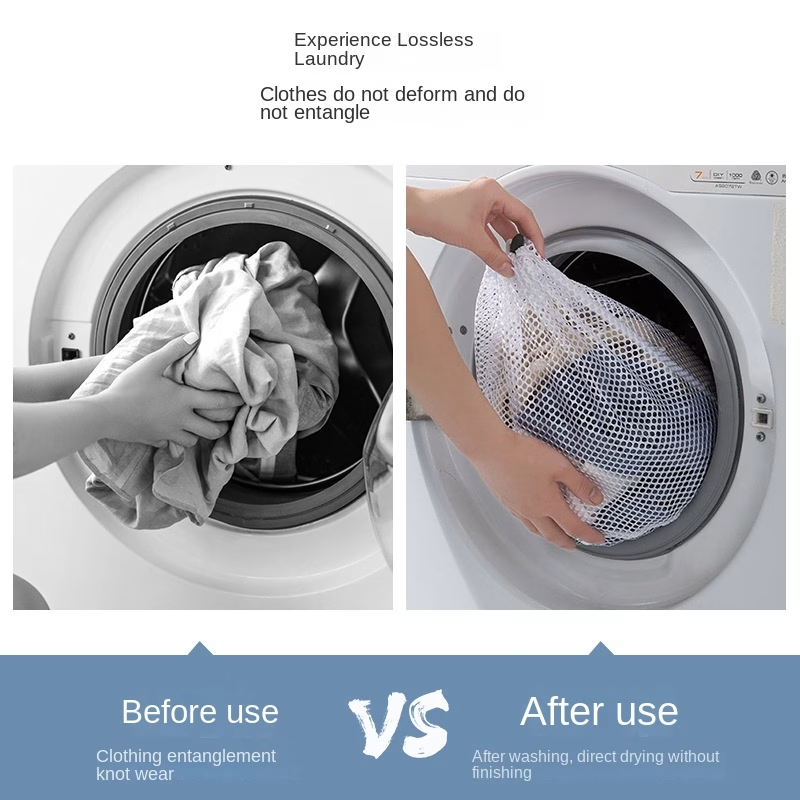
Inside a standard top-loader or front-loader, garments move through water in a continuous cycle of agitation and spin. Fabric rubs against fabric. Zippers catch threads. Delicate weaves drag across drum surfaces. Small items migrate unpredictably and find their way into places they shouldn’t be.
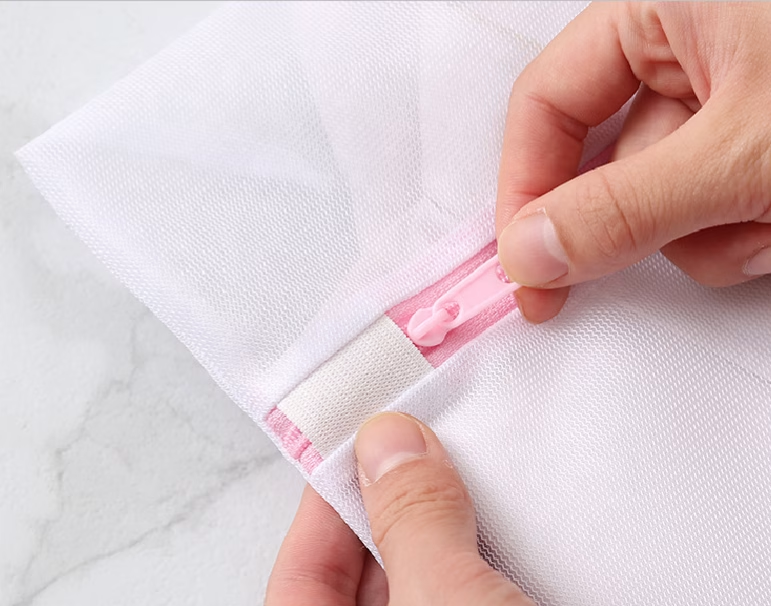
Placing clothing inside laundry bags mesh creates an intermediate layer. The mesh absorbs a share of that mechanical stress. A quality rust-proof zipper, when properly closed, keeps everything contained through the full cycle. Water and detergent still do their job—the mesh is open enough to let cleaning chemistry flow freely. What it limits is the physical wear that otherwise accumulates load by load.
Several things happen inside a bag during a wash that don’t happen without one:
-
Reduced friction — Items rub against mesh, not steel drum surfaces or rough neighboring fabrics
-
Contained movement — Small items can’t migrate, tangle with unrelated garments, or disappear into drum openings
-
Shape support — For structured items like bras, certain bag designs help maintain the item’s form through the full cycle
-
Controlled lint transfer — Fine mesh keeps loose fibers from cross-contaminating other garments in the load
-
Hook and hardware containment — Bra hooks, metal fasteners, and zipper pulls stay inside the bag instead of snagging other fabrics
Heritage Park Laundry Essentials states it plainly: placing items like washable silk, wool, or lace inside a mesh bag can save them from damage during the machine wash cycle. This is why laundry care professionals consistently include mesh bags in their recommendations for delicate garment handling—not as optional accessories, but as baseline protection.
Fine Mesh vs. Coarse Mesh: Choosing the Right Type
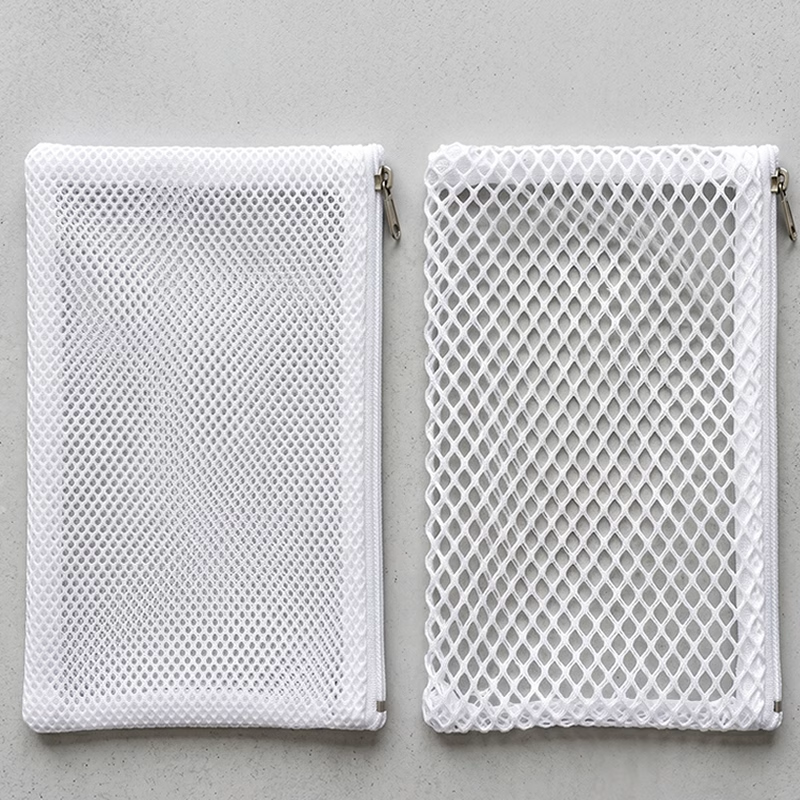
Not all mesh is the same, and the difference has real consequences for garment outcomes. The two primary categories are fine mesh and coarse mesh—each suited to different fabric types and wash conditions.
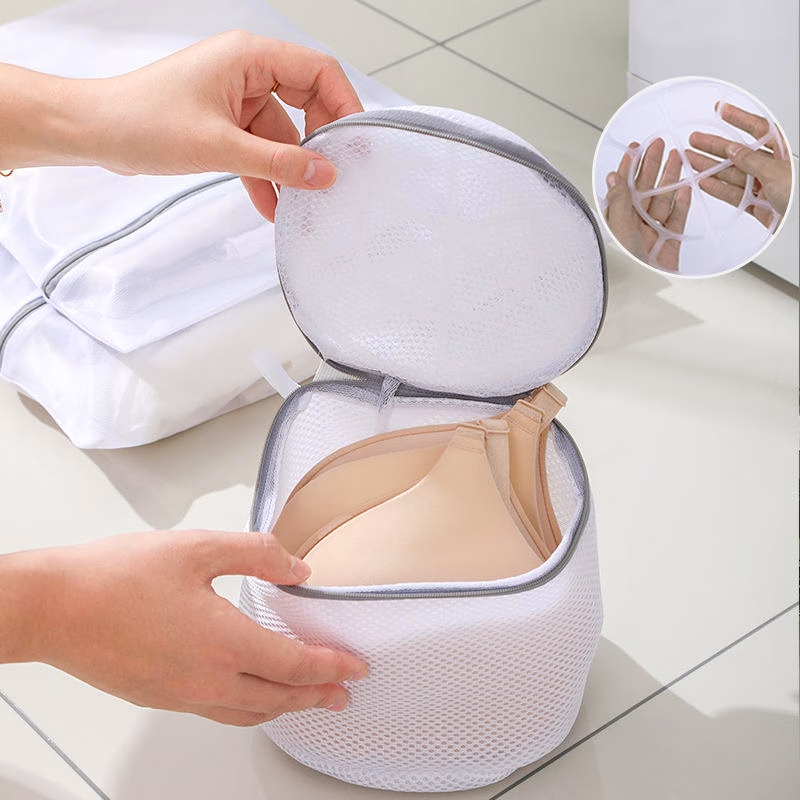
Between these two sits sandwich mesh—a multi-layer bonded construction that adds cushioning and rigidity. This structure is particularly useful for bras with underwires or embellished garments where shape retention is part of the protection requirement. The sandwich mesh laundry bag in Korea style is a good example of this design: the layered construction gives the bag its own structure, which reduces deformation of shaped garments during the spin cycle.
For retail buyers building assortments, the most effective approach is usually a multi-size, mixed-mesh set. End users then have the right option for each garment category without improvising—and without the friction of needing to buy multiple separate products.
A Washing Machine Clothes Bag for Every Garment Type
One of the more common sourcing mistakes is treating mesh laundry bags as a single-category product. They’re not. Different garment types have different protection requirements, and a mismatched bag can underperform—or cause the very damage it was meant to prevent.
Delicates and Lingerie
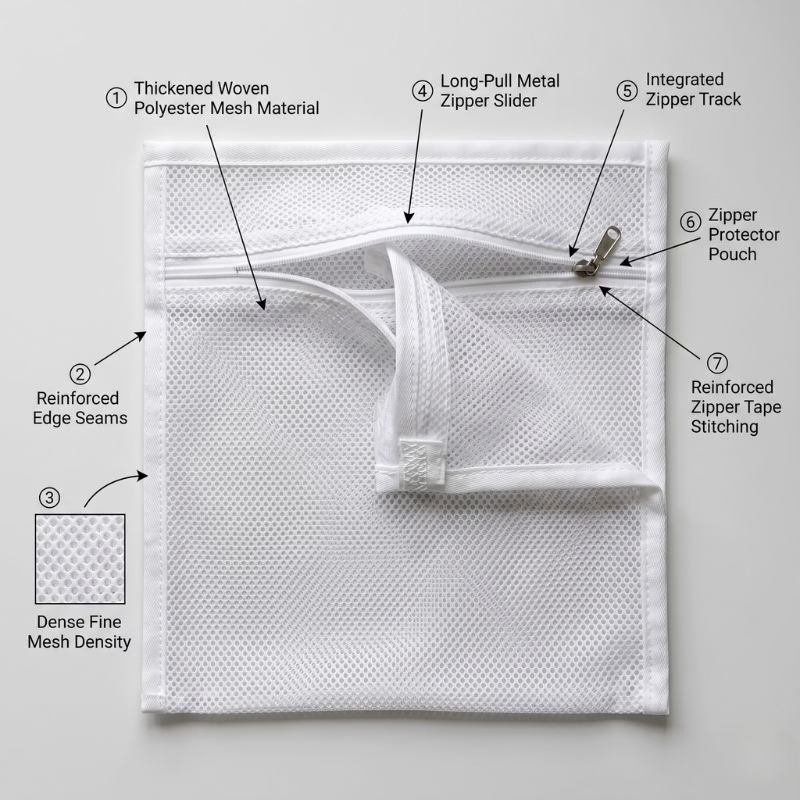
Fine mesh is the right specification here. Bras, hosiery, silk blouses, lace items, and lightweight knits all need maximum protection from snagging. A fine-mesh bag with a rust-proof zipper keeps hooks contained, prevents underwire from puncturing through the bag, and reduces surface friction across every stage of the wash cycle. Look for designs with a zipper garage—a small flap that covers the zipper pull—to eliminate any risk of the metal scratch ing neighboring fabrics.
The thickened white mesh laundry bag with embroidered logo and the sandwich carton cleaning fine mesh laundry bag with embroidery are both strong fits for this category. The thickened construction adds an extra layer of protection without restricting water flow.
Everyday Garments and Activewear
T-shirts, polo shirts, and activewear tolerate more agitation than delicates, but they still benefit from containment—particularly when zippers, drawstrings, embroidered patches, or decorative prints are involved. A medium-to-coarse mesh works well here, offering good water circulation and faster drying while keeping items separated and organized.
The set of 5 thickened coarse mesh laundry bag set handles this range efficiently, with multiple sizes to accommodate different garment volumes within a single wash load.
Socks, Baby Items, and Small Garments
Small items are the ones most likely to disappear—swallowed by drum openings or twisted inside larger garments. Fine-mesh bags in smaller sizes solve this completely. The small laundry bag range keeps these items together from collection through to drying, eliminating the frustration of missing socks and scattered baby clothes.
Denim and Heavier Fabrics
Coarse mesh is appropriate here. The higher water flow and agitation that coarse mesh allows works well through the heavier soil and thicker fabric construction typical of denim and workwear. These bags should be sized generously—overfilling restricts cleaning action regardless of mesh type.
A washing machine clothes bag for heavier items should prioritize water flow first and protection second. The set of 5 thickened white coarse mesh laundry bag meets this specification well, with construction durable enough for repeated use in volume laundry settings.
The Laundry Bag for Inside Washing Machine: Materials and Build Quality
When you’re evaluating a laundry bag for inside washing machine use, the mesh fabric is only one part of the equation. Long-term performance depends on construction details that often separate a durable product from one that fails within a few dozen cycles.
Polyester fiber is the industry standard for machine-use bags. It’s abrasion-resistant, colorfast, and thermally stable at standard wash temperatures—up to around 130°F (54°C). It stays neutral in contact with standard laundry detergents, and its breathability is consistent across both gentle and regular cycles. Our bags are manufactured from abrasion-resistant, breathable polyester fiber that maintains performance through extended use.
Zippers deserve more attention than most product listings give them. A non-rust zipper is non-negotiable for machine washing. Corrosion damages the zipper mechanism and, critically, can transfer rust staining to garments. Quality bags use coil-style or molded zippers that are treated for corrosion resistance, with zipper pulls that resist accidental opening during high-speed spin.
Seams and edging determine how long the bag holds together. Properly reinforced seam stitching at stress points—zipper ends, bag corners, and panel junctions—is what separates a bag that lasts from one that frays after twenty cycles. Once mesh begins to separate from its frame, the bag loses its containment function.
Mesh thickness and density vary considerably across the market, and standard product listings often don’t make these differences clear. Thickened mesh uses higher-denier yarn, which improves both durability and resistance to snag-through from hooks, wires, or sharp garment hardware. For retail products expected to last across seasons of regular use, thickened construction is worth specifying.
From a compliance standpoint: all raw materials used in our manufacturing are environmentally responsible, and our products are designed to pass REACH and related chemical safety tests. The EU’s REACH regulation restricts substances of very high concern (SVHC) in textile products to no more than 0.1% of total product weight —a standard built into our material sourcing from the start. For markets in Europe and beyond, this compliance documentation is available upon request.
How to Use Mesh Bags for Washing Machine Loads Correctly
Even well-specified bags underperform when used incorrectly. Overfilling is consistently the leading cause of cleaning complaints, and mismatching mesh type to garment is a close second.
Step-by-step guide:
-
Sort by garment type and soil level. Fine mesh bags for delicates and lingerie; coarse mesh for heavier garments and workwear. Don’t combine a silk blouse with a gym-worn hoodie in the same bag.
-
Fill to two-thirds capacity. The bag needs interior room for garments to move. A bag packed to capacity restricts water flow and reduces cleaning effectiveness.
-
Close the zipper fully. Confirm the pull is fully seated at the end of the track. If the bag has a zipper garage, tuck the pull under it.
-
Load unbagged items first. Place heavier, unbagged garments at the bottom of the drum, then add mesh bags on top. Water distributes more evenly this way.
-
Select the correct wash cycle. Delicates in fine-mesh bags should run on a gentle or delicate cycle with cooler water. Coarser bags with sturdier garments can handle a standard cycle.
-
Handle drying appropriately. Most polyester mesh bags tolerate low-heat dryer settings. For delicate garments inside the bags, air drying is generally the better option—check individual garment care labels before machine drying.
One practical note for retail buyers and product teams: packaging mesh bag sets with clear, simple usage instructions reduces returns and post-purchase complaints noticeably. Many buyers understand what the bag is but benefit from a quick reference on fill level and cycle selection. A printed insert or care card in retail packaging is a low-cost addition that improves the customer experience.
Why Procurement Teams Choose Mesh Bag Sets
Sourcing mesh laundry bags as sets rather than individual units has become the norm across retail and hospitality procurement. The reason is practical: most end users need multiple sizes, and packaging them together improves value presentation and reduces the number of individual SKUs to manage across a catalog.
Our laundry bag sets range includes multiple size configurations and mesh types, giving buyers the flexibility to build assortments matched to their target market. A set of 7 thickened fine mesh bags provides a complete solution for household buyers who separate laundry by garment category, while a mixed coarse-and-fine set covers a broader range of fabric types in one package.
For wholesale buyers and product managers, a few factors typically drive the specification decision:
-
Consistency across the set — All bags in a set should match in material quality and zipper type. A mixed-quality set creates inconsistent end-user experience and elevates return rates.
-
Size range coverage — A useful set covers at minimum: small (hosiery, lingerie), medium (blouses, light tops), and large (sweaters, activewear, denim). Sets spanning this range serve a wider consumer base without requiring multiple SKUs.
-
Color strategy — Color-coded sets, like the set of 3 colorful mesh laundry bags, give end users an intuitive sorting system—one color per garment category—which adds functional value beyond simple containment.
-
Branding and packaging — Retail sets perform better on shelf when packaging carries a clear brand identity. Our sets are available with customized logos and retail packaging for private label programs.
The set of 5 thickened coarse mesh laundry bags with customized logo and colorful thickened fine mesh laundry bag wholesaler are both frequently chosen by wholesale buyers who want distinctive branding while keeping per-unit costs manageable. The set of 7 fine mesh laundry bag set offers comparable coverage with a finer mesh across all sizes—well-suited to markets where delicate garment care is a primary purchase driver.
OEM and Custom Mesh Bags for Washing Machine Orders
For product teams working on private label lines or buyers who need bags built to specific design requirements, OEM manufacturing opens up options that standard off-the-shelf products don’t offer. This is where direct manufacturer relationships matter most.
Customization areas we support include:
-
Mesh type and density — Fine, coarse, or sandwich/multi-layer construction
-
Bag dimensions — Standard sizes or custom dimensions for specific garment fits
-
Color options — Solid colors, multi-color sets, or brand-aligned palettes
-
Zipper specifications — Coil or molded style, corrosion-resistant treatment, custom pull shapes and colors
-
Logo application — Embroidered logos, heat-transfer prints, woven labels
-
Packaging format — Retail polybag with card header, display box, eco-friendly packaging options
Embroidered logo application—as seen on the thickened white mesh laundry bag with embroidered logo—outperforms printed alternatives in durability across repeated washing cycles. For retail products that end users will wash frequently alongside garments, embroidery holds up significantly better than screen-printed or heat-applied labels.
The sandwich mesh laundry bag in Korea style is a good example of market-driven design customization. The Korean market strongly favors multi-layer construction and structured silhouette—a preference that has influenced demand for premium-positioned laundry bags in European and North American markets as well. If your retail positioning leans toward a higher-end lingerie care or wardrobe maintenance product, sandwich mesh construction is worth considering in your spec.
For a complete view of available product categories across laundry bags, bra bags, shoe washing bags, storage bags, and baskets, the full product range covers all available configurations.
Mesh Bags for Washing Machine: Common Mistakes to Avoid
Even buyers who specify the right products sometimes encounter performance complaints that trace back to avoidable errors in use or specification. The following issues come up most consistently in wholesale and retail contexts.
Matching mesh too coarse to the garment. A coarse mesh bag cleans a denim jacket effectively but will abrade lingerie fabric over repeated cycles. Mesh density selection is the most consequential specification decision, and it’s the one most frequently left to chance.
Overfilling the bag. This is the most common cause of underwhelming cleaning results. A bag packed tightly restricts water and detergent circulation, which means garments clean less thoroughly—and the bag itself wears faster under the increased tension. Two-thirds full is a reliable maximum.
Using bags that are undersized for the garment. A garment compressed or folded to fit an undersized bag won’t wash evenly. For buyers specifying sets, including a large-size bag (24″ × 36″ or similar) gives end users a workable option for bulkier items.
Ignoring zipper quality at scale. In high-volume laundry environments—hotel housekeeping, shared facilities, institutional laundry—zippers go through hundreds of open-close cycles per year. Low-grade zippers corrode, jam, or open mid-cycle. Thickened, rust-resistant zipper construction pays back its added cost quickly in these settings.
Neglecting sorting alongside the bags. A mesh bag creates a protective environment for the items inside it—but it doesn’t neutralize a color-bleeding dark garment washing in the same drum as a white delicate. Bags help. Sorting still matters. For retail packaging, a brief note reminding buyers of this distinction is worth including.
Sustainable Materials and Environmental Responsibility
Product teams and procurement buyers sourcing from international manufacturers face growing scrutiny from their own customers about environmental credentials. The material and compliance choices in mesh bag manufacturing speak directly to this.
High-grade polyester has a long service life—a practical form of sustainability. Fewer replacement cycles mean less material consumed over time. Our manufacturing uses environmentally responsible raw materials, and our products are designed to pass REACH and related chemical safety tests. REACH, the European Union’s chemical regulation framework, restricts the presence of substances of very high concern (SVHC) in textile products to a maximum of 0.1% of total product weight. Compliance with this standard isn’t an export requirement we work around—it’s built into our material sourcing.
The set of 3 colorful mesh laundry bags is made from abrasion-resistant, breathable polyester fiber—a material chosen for durability and washability, not just cost. When a bag holds up through two or three years of regular use, it avoids the replacement cycle that characterizes lower-quality alternatives. For sourcing programs that include environmental criteria, test documentation is available upon request. The white thickened fine laundry bag wholesaler
Frequently Asked Questions
1. What is the minimum order quantity for mesh laundry bags?
Minimum order quantities vary depending on the product style, mesh type, and customization requirements. Standard wholesale orders typically start at a few hundred units per SKU. Reach out to us directly with your target volume and product specifications — we’ll confirm MOQ and lead time based on your exact requirements.
2. Can we order mesh bags with a custom logo or branded packaging?
Yes, OEM and private label orders are fully supported. Logo application options include embroidered logos, woven labels, and heat-transfer prints. Packaging can be customized for retail polybag, header card, or display box formats. The thickened white mesh laundry bag with embroidered logo and the set of 5 thickened coarse mesh laundry bags with customized logo are examples of current custom-branded products. Contact us to request a sample or discuss your design brief.
3. Do your mesh bags pass REACH and chemical safety tests?
Yes. All raw materials used in our manufacturing are environmentally responsible, and our products are designed to pass REACH and related chemical safety requirements. REACH compliance documentation is available upon request for buyers sourcing into European and other regulated markets. If your procurement checklist includes specific test reports or certifications, let us know and we’ll confirm what documentation is available for the relevant product lines.
4. How do fine mesh and coarse mesh laundry bags differ in use?
Fine mesh bags have a tighter weave — typically 0.5–2.0 mm openings — and are best suited for delicates, lingerie, hosiery, silk, and lace. They provide maximum snagging protection and lint control. Coarse mesh bags have a more open weave — around 2–5 mm openings — which allows greater water flow, making them better suited for denim, activewear, towels, and heavier garments. For wholesale buyers building retail assortments, a mixed-mesh set covering both types provides the broadest end-user utility. You can view fine mesh options in our set of 7 thickened fine mesh bags and coarse mesh options in our laundry bag sets.
5. Are product samples available before placing a bulk order?
Yes, samples can be arranged before a bulk order is confirmed. Sample requests allow you to evaluate mesh density, zipper quality, seam construction, and overall feel against your product standards. If you’re developing a private label line or comparing specifications across multiple SKUs, we recommend requesting samples of the relevant styles first. Get in touch with your product requirements and we’ll guide you through the sample process.