
One open bra hook can snag a cashmere sweater in a single cycle. A stray baby sock can slip behind the drum and never come back. These are small losses. But they add up fast for families, hotels, and retailers handling returns. A mesh bag for laundry fixes both problems at very low cost.
Below, you’ll see what these bags are, how they protect clothes, and which mesh type suits each load. You’ll also get a seven-step routine for using them and a buying checklist for sourcing bags in volume. We’ve made laundry mesh bags since 2014, so the advice comes from our production lines and from customer feedback across Europe, the Americas, Korea, and Japan.
What Is a Mesh Bag for Laundry?
A mesh bag for laundry is a reusable pouch made from open-weave fabric, usually polyester. You place clothes inside, close it, and wash it with the rest of the load. The small holes let water and detergent flow in and out. However, the fabric wall keeps the items inside apart from everything else in the drum.
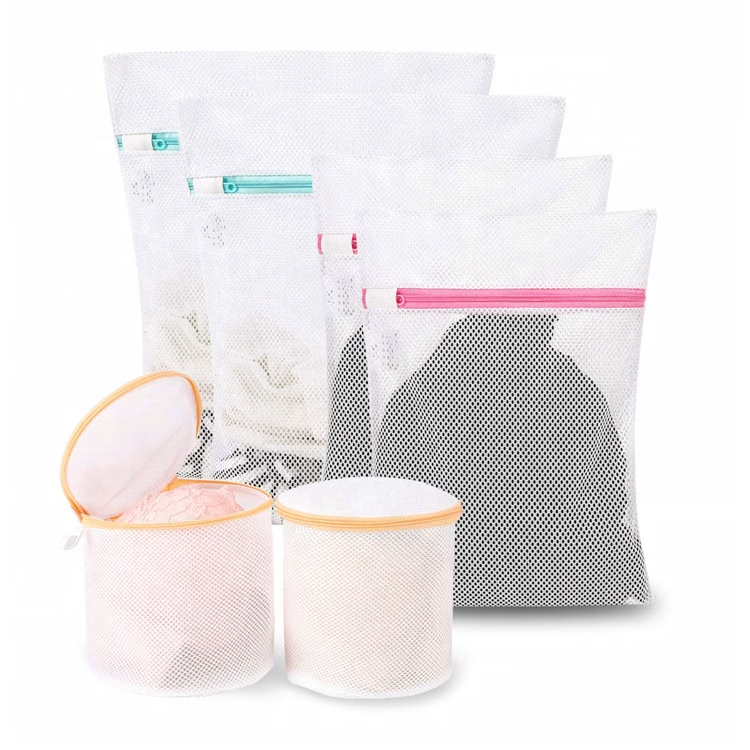
Most bags come in a few common shapes:
- Flat rectangular bags for shirts, leggings, and knitwear
- Round or cylinder bags for bras and bulky items
- Small square pouches for socks, masks, and baby clothes
- Padded shoe bags for sneakers and canvas shoes
Closures vary as well. Zippers are the most common because they seal fully. Drawstrings suit larger bags and quick loading. Some bra bags also have a light frame that helps cups keep their shape.
How Does the Mesh Protect Clothes?
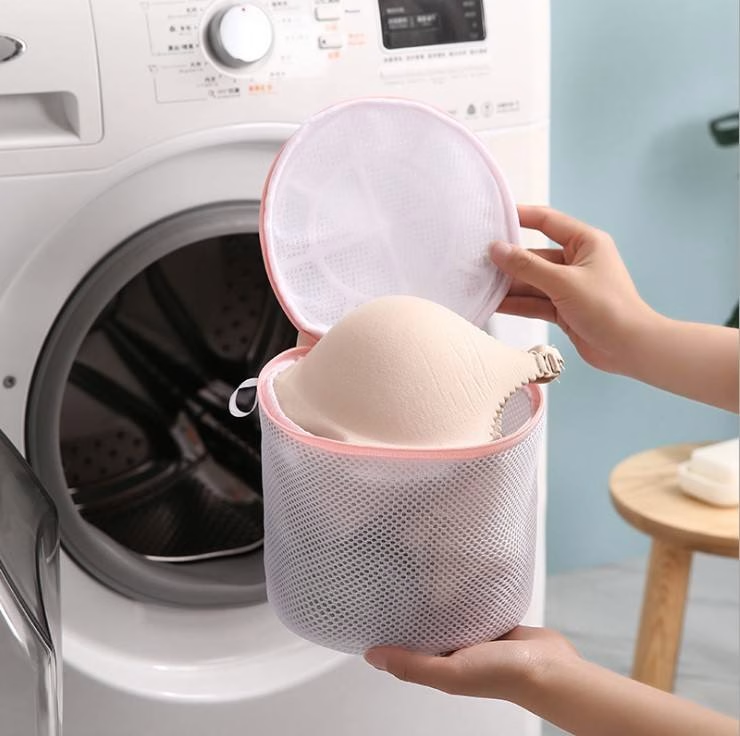
Inside a washer, clothes rub, twist, and wrap around each other. That friction causes pilling, stretching, and pulled threads. A mesh bag cuts down this damage in three ways:
- Separation. Delicate items stay away from jeans, zippers, and buttons.
- Less movement. Clothes can’t twist into long ropes, so straps and seams stretch less.
- Containment. Small items and loose hardware stay inside the bag.
In fact, the bag works like a soft cage. Clothes still come out clean because water moves freely through the mesh. They just take fewer knocks along the way.
Why Use Mesh Laundry Bags? 6 Practical Benefits
Some people see mesh bags as an optional extra. Yet the benefits show up after a few washes, both at home and in commercial laundry rooms.
1. Delicates Last Longer
Lace, silk blends, and fine knits wear out quickly when they rub against heavier fabric. Inside a bag, they face far less abrasion. So bras keep their shape, and lingerie keeps its trim for more cycles.
2. Small Items Stay Together
Socks, baby clothes, and hair ties often go missing. Usually they slip into the door seal or hide inside a sleeve. A small zippered bag keeps the whole set together from washer to dryer to drawer.
3. Fewer Snags From Hardware
Hooks, zippers, and sequins act like tiny blades in the drum. Fastening them and bagging the item keeps them away from soft fabrics. Also, a loose underwire can slip through the drum holes and block the pump. A closed bag stops that from happening.
4. Faster Sorting and Folding
Families can give each person a bag, so sorting after the wash takes seconds. Hotels, gyms, and care homes often use colored bags to keep guest or resident items apart. That simple system saves real labor time.
5. Shape Protection for Bras and Knitwear
Thicker mesh, especially sandwich mesh, adds a cushion around the garment. Molded bra cups and wool sweaters hold their form better. They also stretch less during the spin cycle.
6. Easy Travel and Storage
Mesh bags fold flat and weigh almost nothing. Travelers use them to keep dirty clothes away from clean ones in a suitcase. Plus, the open weave lets air pass, so damp items don’t trap odors as quickly.
See how these features work across our full range of laundry mesh bags.
Fine Mesh vs. Coarse Mesh vs. Sandwich Mesh: Which Fits Each Load?
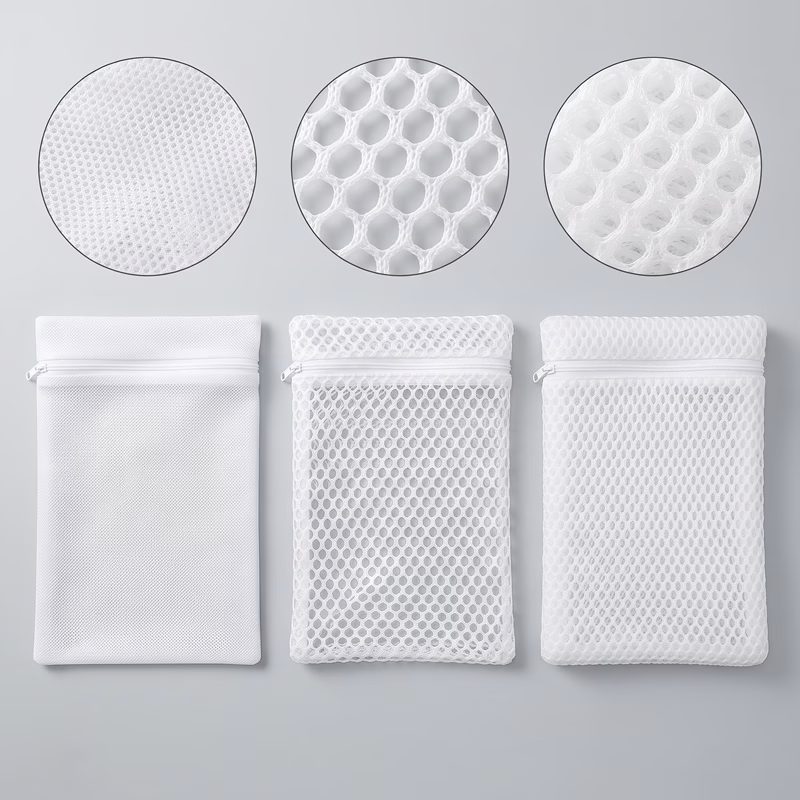
Not all mesh works the same way. When buyers compare laundry bags mesh grades side by side, two things shape the result: hole size and fabric thickness. Here’s how the three main types differ.
Fine Mesh
Fine mesh has small, tight holes. It’s ideal for lingerie, hosiery, and anything with hooks or lace. Tiny items can’t escape, and hooks can’t poke through. Our 7-piece fine mesh laundry bag set covers the most common sizes in one pack. For hotels and laundries that wash daily, the white thickened fine mesh laundry bag uses a heavier fabric that holds up to frequent cycles.
Coarse Mesh
Coarse mesh has larger holes, so water and detergent flow through faster. That suits sportswear, towels, and everyday clothes that need a deeper rinse. It also dries quickly. The 5-piece white coarse mesh laundry bag set is a popular choice for household and retail packs.
Sandwich (3D Air) Mesh
Sandwich mesh has three layers: two outer faces with a soft air layer between them. The result is thick, springy, and cushioned. It holds its shape even when empty. So it works well for bras, sweaters, and structured garments. Shoppers in Korea and Japan know this style well, and our Korean-style sandwich mesh laundry bag follows that design.
| Mesh Type | Hole Size | Feel | Water Flow | Ideal Items |
|---|---|---|---|---|
| Fine mesh | Small | Soft, light | Moderate | Lingerie, socks, hosiery, lace |
| Thickened fine mesh | Small | Firmer, heavier | Moderate | Hotel and laundry use, frequent washing |
| Coarse mesh | Large | Light, open | Fast | Sportswear, towels, everyday clothes |
| Sandwich (3D) mesh | Small to medium | Thick, cushioned | Moderate | Bras, knitwear, structured items |
A quick tip from the factory side: “thickened” mesh simply means a heavier fabric weight. It costs a little more per unit. Still, it lasts much longer under repeated washing, which lowers replacement costs for commercial users. The colorful thickened fine mesh laundry bags give the same durability with color options for sorting.
What to Put in a Mesh Bag for Laundry (and What to Leave Out)
A mesh bag helps most with items that are small, delicate, or fitted with hardware. Use this table as a quick reference.
| Item | Suggested Bag | Why It Helps |
|---|---|---|
| Bras and lingerie | Fine or sandwich mesh, small to medium | Stops hooks from snagging and keeps cups in shape |
| Socks and baby clothes | Small fine mesh with zipper | Keeps pairs and tiny pieces together |
| Knit sweaters | Large sandwich or fine mesh | Reduces stretching and pilling |
| Leggings and activewear | Medium fine mesh | Protects stretch fabric from rubbing |
| Sequined or beaded tops | Fine mesh, turned inside out | Keeps decorations attached |
| Sneakers and canvas shoes | Padded or thick shoe bag | Protects the drum and cuts down on banging |
| Face masks, hair ties, accessories | Small zippered pouch | Prevents loss in the drum or filter |
For tiny pieces, small laundry bags are easier to fill correctly than one oversized bag. And for anything with straps or hooks, laundry bags with zippers seal more securely than drawstrings.
What Should You Leave Out?
Some items gain little from a bag, and a few may clean worse inside one:
- Heavy jeans and thick towels. They’re tough enough on their own. In a crowded bag, they may not rinse fully.
- Very bulky bedding. A duvet needs room to move. Use an extra-large bag only if you bag it at all.
- “Dry clean only” pieces. A mesh bag adds protection, but it doesn’t replace the care label. As Maytag’s guide to mesh laundry bags points out, you should always read the garment’s care tag first.
- Overstuffed loads. Ten items crammed into one bag will come out wrinkled and only half clean.
How to Use a Mesh Bag for Laundry: 7 Practical Steps
Using a mesh bag adds about ten seconds to each load. Still, the order of steps affects the result, so here’s a simple routine.
- Sort first. Group clothes by color and fabric weight before anything goes into a bag. Lights, darks, and delicates should still wash apart.
- Pick the right size. Choose a bag that leaves room for clothes to move. As a rule of thumb, fill it about half to two-thirds full.
- Prepare each garment. Fasten bra hooks, close zippers, and empty pockets. Then turn printed, beaded, or dark items inside out.
- Keep one fabric type per bag. Don’t mix a heavy hoodie with a silk camisole. The heavier item will rub the lighter one, even inside the bag.
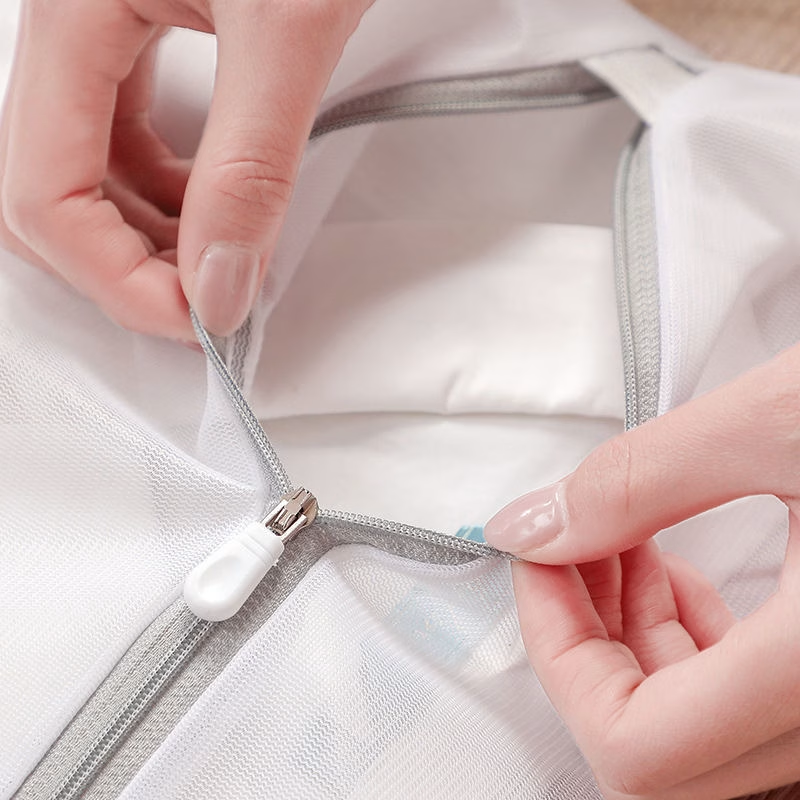
- Close the bag fully. Pull the zipper all the way and tuck the slider under its guard, if there is one. An open slider can scratch the drum or catch other clothes.
- Choose a gentle cycle. Use cool or warm water and a mild detergent. Also, follow the care label of the most delicate item in the load.
- Dry with care. Air-drying suits most delicates. If you use a dryer, pick low heat and check that the bag itself is dryer-safe.
Don’t Forget to Clean the Bags
Mesh bags collect lint and detergent residue over time. Shake them out after each use. Then wash them every few weeks with a regular load, and let them dry fully before storage.
How Buyers Choose Mesh Laundry Bags for Retail and Wholesale
Buying for a store, an online shop, a hotel group, or a private label brand is a different job. Shoppers judge a bag by how it feels in the hand and how long it lasts. So the specs on your purchase order shape your reviews and return rates. Here’s what experienced buyers check.
Mesh Density and Fabric Weight
Ask your supplier for the fabric weight, usually listed in grams per square meter (GSM). Then compare physical samples, because two “fine mesh” fabrics can feel very different. Heavier mesh suits frequent washing. Lighter mesh keeps cost and shipping weight down for value packs.
Zipper and Closure Quality
The zipper usually fails first on cheap bags. Check that it pulls smoothly and that the teeth line up cleanly. Also look for a zipper garage or lock tab, which stops the slider from opening mid-cycle.
Stitching and Edge Finish
Bound edges and double stitching stop mesh from fraying at the seams. Turn a sample inside out and pull gently at the corners. Loose threads at this stage often mean early failures later.
Size Range and Set Options
Sets sell well because they give shoppers a bag for every job. Common packs include three, five, or seven bags in mixed sizes. Our laundry bag sets and the set of 3 colorful mesh laundry bags show how size and color mixing works on the shelf. For heavier use, the 7-piece thickened fine mesh bag set and the thickened coarse mesh laundry bag set offer a firmer build.
Branding and Packaging
A private label line needs a visible brand. Options include embroidered logos, woven labels, printed tags, and custom retail packaging. For example, our thickened white mesh laundry bag with an embroidered logo, the 5-piece coarse mesh set with a custom logo, and the sandwich fine mesh laundry bag with embroidery show how logo placement looks on finished products.
Materials and Compliance
Retailers in Europe need products that meet chemical safety rules. The EU REACH regulation on chemical safety, managed by the European Chemicals Agency, restricts harmful substances in consumer goods. So ask suppliers for recent test reports, not just a statement that the product complies. Other markets, including North America, Korea, and Japan, have their own requirements. Share your target market early.
| What to Check | What to Ask the Supplier | Why It Helps |
|---|---|---|
| Fabric weight | GSM for each mesh type | Predicts durability and feel |
| Zipper | Slider type, plus garage or lock tab | Prevents opening mid-wash |
| Stitching | Edge binding and seam finish | Stops fraying at the seams |
| Sizes | Exact dimensions in centimeters | Matches your set plan |
| Branding | Logo method and placement | Supports private label sales |
| Compliance | REACH and market-specific test reports | Helps clear customs and retailer audits |
Why Source Directly From a Mesh Laundry Bag Manufacturer
Every point above comes down to specs, samples, and consistency. Those are easier to control when you talk to the people who make the product.
We’ve produced laundry mesh bags since 2014. Our range includes mesh laundry bags, bra laundry bags, shoe washing bags, storage bags, laundry baskets, and drawstring mesh. We ship to customers in Europe, North America, South America, Korea, and Japan. Our raw materials are environmentally friendly, and our products can pass REACH and related tests.
Working with the factory directly gives you clear advantages:
- Specs agreed at the source. You confirm mesh type, GSM, zipper, and size with the team that cuts and sews the bags.
- Faster sampling. Changes to color, size, or logo go straight to production, with no middle layer.
- Flexible OEM work. Custom designs, private labels, and mixed sets are all welcome.
- Transparent pricing. You pay factory pricing rather than a reseller’s markup.
Planning a new line or reviewing your current supplier? Send us your target sizes, mesh types, colors, and logo idea. We’ll recommend a suitable construction, prepare samples, and return a detailed quote. Because you’re working with the original manufacturer, every answer comes from the people who build your bags. Browse our laundry mesh bags and request your quote whenever you’re ready.
Frequently Asked Questions
1. What is the minimum order quantity for mesh laundry bags?
It depends on the style, size, and level of customization. Stock designs usually have a lower MOQ, while custom colors, logos, or packaging need a higher quantity. Send us your specs, and we’ll confirm the exact MOQ in your quote.
2. Can you print or embroider our logo on bags?
Yes. We offer embroidered logos, woven labels, printed tags, and custom retail packaging. Share your artwork and target placement, and we’ll suggest the most durable method for your mesh type.
3. Do your mesh laundry bags pass REACH and related tests?
Yes. Our raw materials are environmentally friendly, and our products can pass REACH and related tests. Reach out for current test reports and detailed specifications.
4. How long does production take for a custom order?
Lead time depends on order quantity, customization, and the season. We confirm a clear production schedule with every quote, after you approve samples. Contact us with your target delivery date, and we’ll plan around it.
5. Can we get samples before placing a bulk order?
Yes. We can send stock samples quickly or make custom samples to your specs. Contact us to request samples and compare mesh types side by side.