
A single damaged sweater can cost a clothing brand a return, a refund, and a repeat customer. For buyers who supply hotels, laundromats, retail chains, or apparel labels, that risk multiplies across thousands of garments per wash cycle. So which actually shields clothing better during machine washing: a laundry sack bag or a standard mesh bag?
The short answer is that both reduce wear, but they do it in different ways. A laundry sack bag encloses garments almost completely, limiting friction and snagging. A mesh bag trades some of that enclosure for stronger water and detergent flow. This guide compares the two side by side, explains where each one performs well, and shows procurement teams exactly what to check before placing a bulk order.
Because we manufacture both types in our own factory, we can share what happens on the production line — and why small design choices change how well a bag protects clothes.
What Is a Laundry Sack Bag?
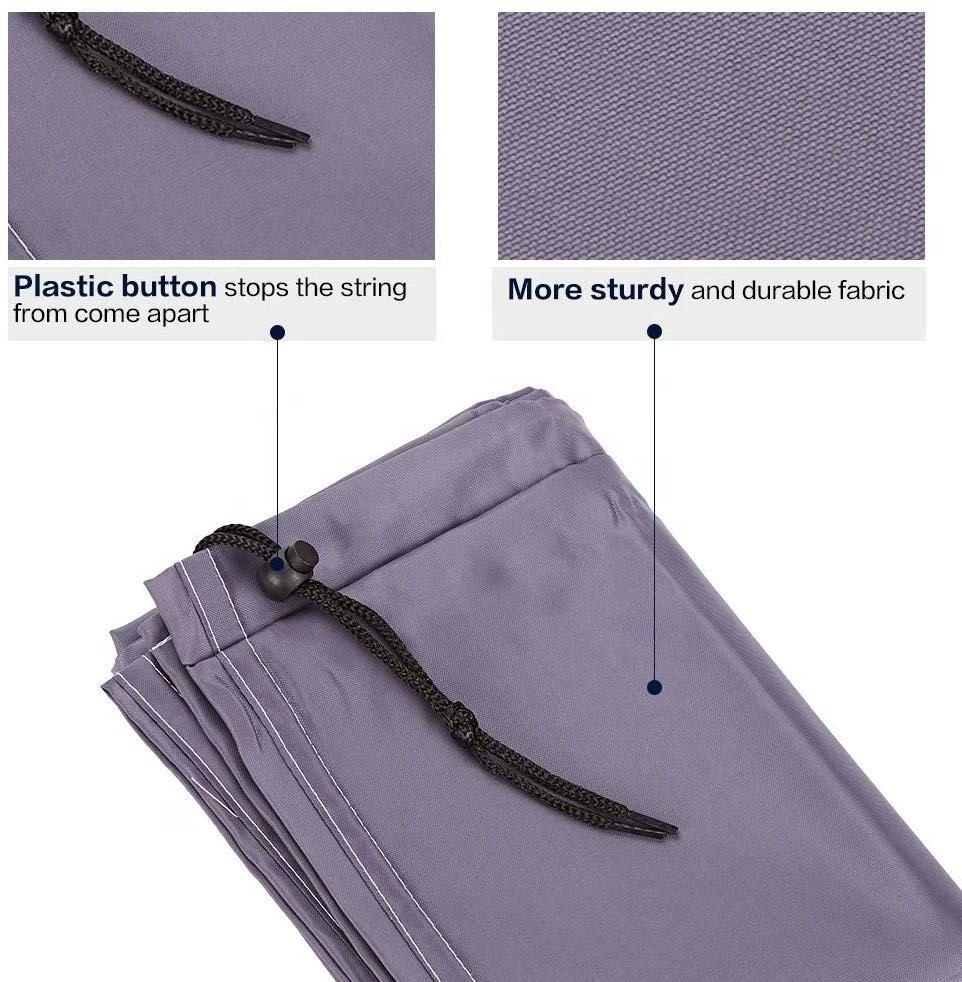
A laundry sack bag is a closed fabric container, usually made from polyester, cotton, or tightly woven technical fabric, designed to hold clothes during transport, sorting, or washing. Think of it as a flexible container with a defined capacity — often between 50 and 120 litres for commercial models — closed by a drawstring, zipper, or press stud.
In practice, the term covers two related products that buyers often group together:
-
Transport sacks. Large, open-topped or drawstring sacks used to move, store, and sort laundry. Hotels, hospitals, dormitories, and commercial laundries rely on these every day.
-
Wash-in sacks. Tighter-weave sacks with secure closures that go directly into the washing machine. These behave like an oversized garment bag and are the focus of the comparison below.
Because the fabric is denser than open mesh, a laundry sack bag creates a stronger physical barrier between the garments inside and the drum. Buttons, hooks, and zippers from other items cannot reach in. At the same time, the denser wall slows water exchange, which is the main trade-off buyers need to weigh.
Most commercial laundry sack bag orders we run are specified in 190T to 210D polyester with reinforced stitching. That construction survives hundreds of industrial wash cycles, which is exactly what institutional buyers test for during sampling.
What Is a Mesh Bag, and How Do Laundry Mesh Bags Work?
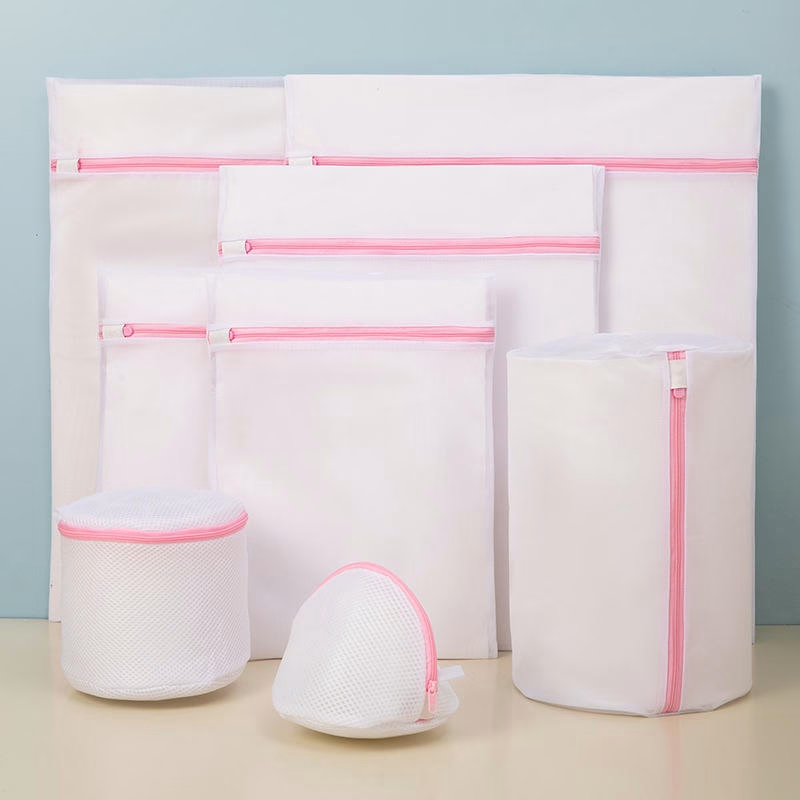
A mesh bag is a washing bag woven with visible openings in the fabric. Those openings let water and detergent move freely through the garment load while the bag still separates delicate items from heavier clothing in the drum.
Laundry mesh bags come in three main constructions, and each protects clothes differently:
-
Fine mesh. Tiny openings for lingerie, hosiery, lace, and knitwear. A set of 7 fine mesh laundry bags is a typical retail configuration, sized for bras, socks, and babywear.
-
Coarse mesh. Larger openings for heavier items like jeans, towels, and sportswear. The wider structure improves water penetration on dense loads — see a thickened coarse mesh laundry bag set for reference.
-
Sandwich mesh. A double-layer construction, often with embroidered branding for the retail shelf. Our sandwich mesh laundry bag in Korea style is a common private-label format in Asian markets.
The protection a mesh bag offers is mechanical. It stops stretching when bra hooks would otherwise catch on nearby garments, keeps small items in one place, and limits direct contact between metal hardware and the drum. You can browse the full range on our laundry mesh bag category.
What mesh cannot do is block detergent contact or slow down agitation. For heavily soiled items that is an advantage. for extremely fragile fabrics like silk satin, the free movement of water still introduces some fiber stress that a dense laundry sack bag would filter out.
Laundry Sack Bag vs Mesh Bag: A Side-by-Side Comparison
Before requesting a quotation, most buyers want a direct comparison. Here is how the two formats perform across the factors that decide garment protection in real washing conditions.
| Factor | Laundry sack bag | Mesh bag (fine or coarse) |
|---|---|---|
| Physical barrier | Dense fabric blocks hooks, zippers, and edges | Openings allow some contact between items |
| Water and detergent flow | Slower exchange through tight weave | Rapid flow, better soil removal |
| Agitation stress | Noticeably reduced | Moderate reduction |
| Garment type it suits | Silk, embellishment wear, hoodies with drawstrings | Bras, lace, knitwear, socks, sportswear |
| Load capacity per bag | Higher; suited for fuller loads | Lower; works better half-filled |
| Drying behavior | Keeps load compact, slower tumble drying | Faster, more even drying |
| Branding surface | Print, heat transfer, embroidery | Embroidery loops and woven labels |
| Typical unit cost in bulk | Slightly higher due to fabric weight | Lower for standard single-layer mesh |
Two points stand out. First, neither format is universally stronger; the question is which damage type you need to prevent. Snagging and abrasion point to the laundry sack bag. Tangling and poor rinsing point to mesh. Second, many retail programs pair both: a small mesh set for delicates sold alongside a larger laundry sack bag for loads and storage. Our colorful mesh laundry bag set of 3 is often combined this way in assortment planning.
Which Option Protects Clothes Better in the Wash?
Protection depends on what goes wrong when clothing meets a washing machine. There are four damage mechanisms, and each format handles them differently.
Friction and abrasion
When garments rub against each other and the drum wall, surfaces pill and edges fray. A laundry sack bag reduces this substantially because its dense wall keeps the load contained and limits relative movement. A mesh bag helps too, but open weave leaves more room for garments to shift.
Snagging and hardware damage
Bra hooks, metal zippers, and decorative rivets catch whatever is close. Both bags isolate hardware from neighboring items. Here the two formats perform almost equally, provided the zipper or closure on the bag itself is shielded. That is why we fold a fabric placket over the zipper head on our thickened white mesh laundry bag with embroidered logo.
Detergent strength and chemical stress
Detergent contact is partly a care-label question. GINETEX care symbols, which follow the ISO 3758 standard, define the maximum wash temperature and mechanical severity a garment tolerates, while ISO 6330 sets standardized domestic washing procedures used to verify garment behavior after repeated washes. For garments labelled with mild-cycle symbols, the reduced mechanical action inside a laundry sack bag closely matches that demand.
Fiber stretching
Knitwear and elastic items stretch when centrifugal forces pull them against moving neighbors. Enclosure helps: the tighter the container, the less stretching occurs. Fine mesh performs respectably here; very coarse mesh should be reserved for woven items like jeans and jackets.
Taken together, a well-made laundry sack bag offers the broader protection envelope for mixed or fragile loads, while mesh delivers a targeted solution for delicates that also need thorough rinsing. Buyers serving both needs usually specify the two formats as a coordinated product family rather than choosing one.
When Should Buyers Choose a Laundry Sack Bag?
A laundry sack bag earns its place in a product line when the target user or the end garment profile fits any of these scenarios:
-
Institutional laundry programs. Hotels, hospitals, and gyms wash mixed loads at scale. Dense sacks protect uniforms and linens from tambour damage while doubling as collection containers.
-
Outerwear and layered garments. Hoodies, padded jackets, and garments with drawcords tangle easily. Enclosure keeps cords contained.
-
Heavily embellished textiles. Sequins, beading, and prints survive longer behind a dense wall.
-
Combined wash-and-store positioning. A printed or embroidered sack sells as both a washing aid and a wardrobe organizer, which raises perceived value on the shelf. Our sandwich carton fine mesh laundry bag with embroidery shows how packaging and product work together for this positioning.
-
Households washing few delicates together. A large closed sack prevents one bra hook from damaging an entire mixed load.
Where enclosure works against you is washed-out performance on very dirty loads. For that segment, a small zipped mesh laundry bag or a set of coarse mesh bags is the technically sound recommendation — and informed buyers appreciate a supplier who says so.
How to Source Laundry Bags That Perform
Whether your assortment features a laundry sack bag, a mesh series, or both, the sourcing checks stay the same. When you evaluate samples from any factory, work through this list:
-
Fabric weight and weave density. Ask for the denier or thread count and inspect mesh openings with a gauge. Weave consistency is the first place cost-cutting shows.
-
Closure engineering. Zippers should have covered heads; drawstring channels should carry double stitching. Closure failure is the most common warranty complaint.
-
Wash-cycle durability. Request in-house wash testing against ISO 6330 procedures, or run your own 30–50 cycle test before confirming an order.
-
Chemical compliance for target markets. If you sell in Europe, your supplier should document conformity with the EU REACH Regulation, which governs chemical substances in manufactured articles. Our raw materials are environment-friendly, and our bags pass REACH and related tests, so this documentation ships with your file of order.
-
Customization scope. Decide early whether you need size adjustments, mesh density changes, colorways, zipper styles, or logo application. Hotel and uniform programs often take the customized coarse mesh laundry bag set route, while retail lines prefer the fine mesh laundry bag set or the colorful fine mesh range for wholesale.
For a broader view of how to structure a laundry bag assortment for retail or institutional use, our laundry bag set overview and zippered laundry bag range are useful starting references.
Talk Directly to the Manufacturer
Established in 2014, our company is a professional manufacturer of laundry mesh bags, bra laundry bags, washing bags for shoes, storage bags, laundry baskets, and drawstring mesh. Customers order from us across Europe, North America, South America, Korea, and Japan. OEM orders are welcome, and customized designs — from mesh density to embroidered logos — are developed with you from sampling through mass production.
Every quotation in this category starts with three questions: what garments will the bag protect, in what wash environment, and at what target volume. Share those answers, and we will recommend whether a laundry sack bag format, a mesh construction, or a coordinated family of both fits your line, then produce counter-samples for your wash testing.
Because you are buying from the source factory rather than a trading intermediary, you get direct control over materials, REACH test documentation, lead times, and cost structure. Send us your specification or even a rough sketch, and our production team will return technical feedback, a clear quotation, and a sampling plan — usually within one working day.
Frequently Asked Questions
1. What is the minimum order quantity for laundry sack bags?
Our standard minimum starts at a few hundred pieces per size or colorway. Exact figures depend on fabric stock and printing method, so reach out for detailed specifications matched to your design.
2. Can we customize size, mesh density, and logo placement?
Yes, all three are fully customizable within our OEM program. Clients frequently adjust dimensions, choose between fine and coarse weave, and add embroidery, woven labels, or print; contact us to request samples of existing executions.
3. Do your laundry bags pass REACH compliance testing?
Yes, our raw materials are environment-friendly and our products pass REACH and related tests. We provide supporting documentation with samples and shipments for European market programs.
4. How long do samples and bulk production usually take?
Standard samples ship within about a week, and bulk production typically runs two to four weeks after approval. Custom tooling or unusual fabric requests can extend this slightly; ask for a schedule tied to your order date.
5. Can we request both sack and mesh formats in one order?
Yes, mixed-format orders are common and often share fabric lots to keep costs consistent. Contact us to request samples of both formats so your team can test them side by side.