
A snagged bra hook can ruin a knit in one cycle. A loose shoe sole can mark a pale towel. Those small failures become returns, complaints, and wasted fabric. A laundry net for washing machine loads will not correct a wrong temperature, but it does give hooks, lace, and small parts a barrier while water and detergent still pass through the mesh.
If you buy, specify, or sell wash bags, hole size, closure, and fill level decide the result more than a catalog photo. Match the net to the item, close it fully, and keep the cycle gentle enough for the fabric.
Why a laundry net for washing machine load still fails
Most damaged loads follow a pattern. The bag was the wrong mesh, it was packed tight, or it opened during the spin. A net is a barrier. It is not protection against hot water, bleach, or a cycle that beats heavy denim against fine synthetics.
Watch for these failures:
-
Lace or hosiery sits in a coarse grid, and threads catch on the openings.
-
A fine bag is stuffed with muddy shoes, so grit stays inside and rubs the fabric.
-
Two bras share one large net, and the straps knot.
-
The zipper stops short of the end, or a drawstring works loose, and a hook escapes.
-
The drum is so full that the bag cannot turn, so soil stays in the folds.
-
A light print shirt shares a load with new dark towels, and color moves through the mesh.
The rest of the load still changes the result. Wash similar weights and colors together. A mesh bag can limit tangling for bras and other delicates, but it cannot sort colors for you. Load a few items at a time instead of dumping a full basket. Leave room for movement. A delicate cycle uses cooler water, shorter agitation, and a lower spin, which limits stretching and tearing.
If a bag is sold with no note on fill level, closure, and cycle, the user will blame the mesh when the setup was the real issue.
What the net changes, and what it does not
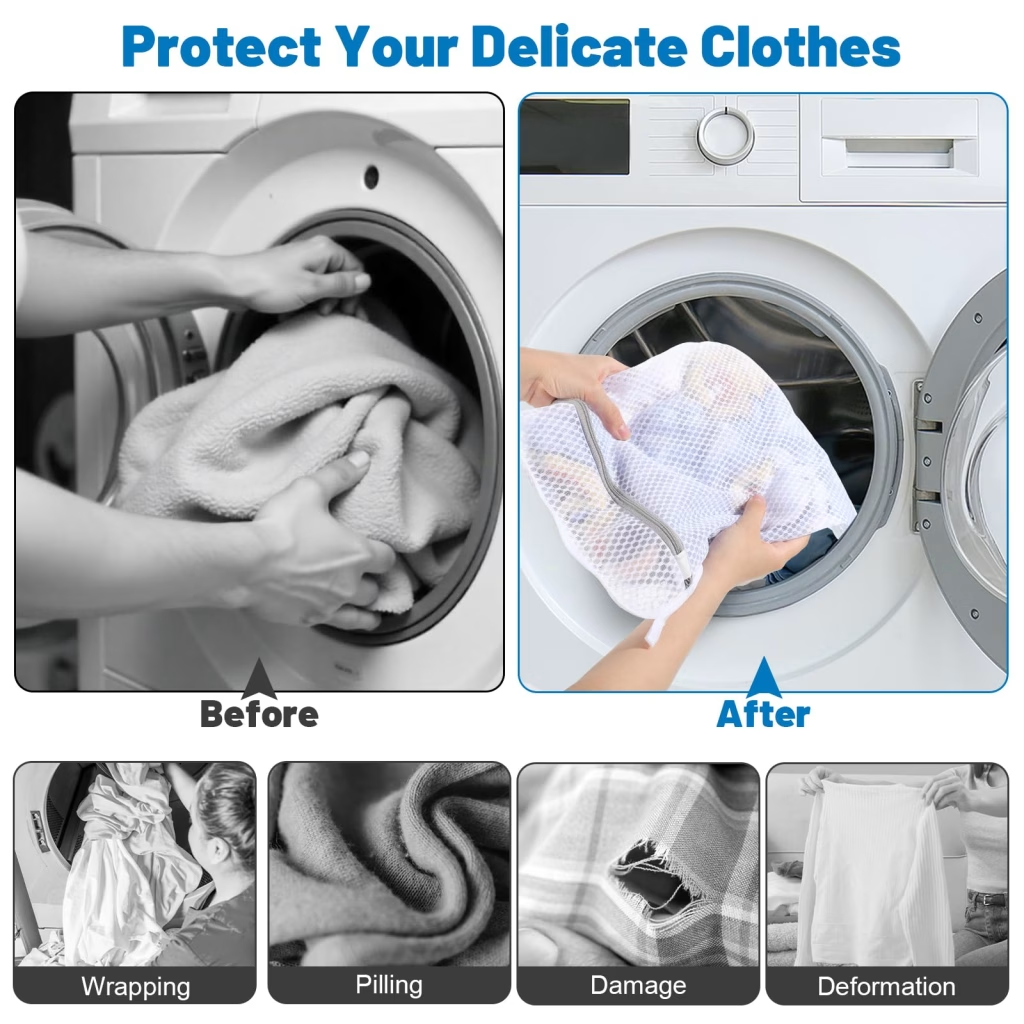
A laundry net keeps garments from rubbing directly on the drum, on zippers, and on other clothes. Water and detergent still pass through the openings. The item still gets wet, still meets the temperature you select, and still goes through spin. That is why a net can lower snags and tangles without changing the fiber.
Use it when the care label allows a machine wash, or when a gentle cycle is already suitable for a fabric that tolerates water. Do not treat the bag as permission to ignore a “do not wash” symbol. A dry-clean mark is a professional-care instruction. A thicker net can soften the feel of water flow for low-movement soaking, but it does not make a dry-clean-only garment safe for a washer.
A net does three jobs:
-
It limits direct impact from the drum and from heavy neighboring items.
-
It contains hooks, straps, buttons, and shoe laces.
-
It keeps a set together so socks, baby items, or a matched lingerie pair are easier to find.
It does not lower the water temperature, stop dye transfer, clean a bag that is packed solid, or replace a mild detergent. It also does not remove the need to fasten hooks on the garment itself. Do not claim it makes every garment machine-washable.
How laundry bags mesh density changes wash results
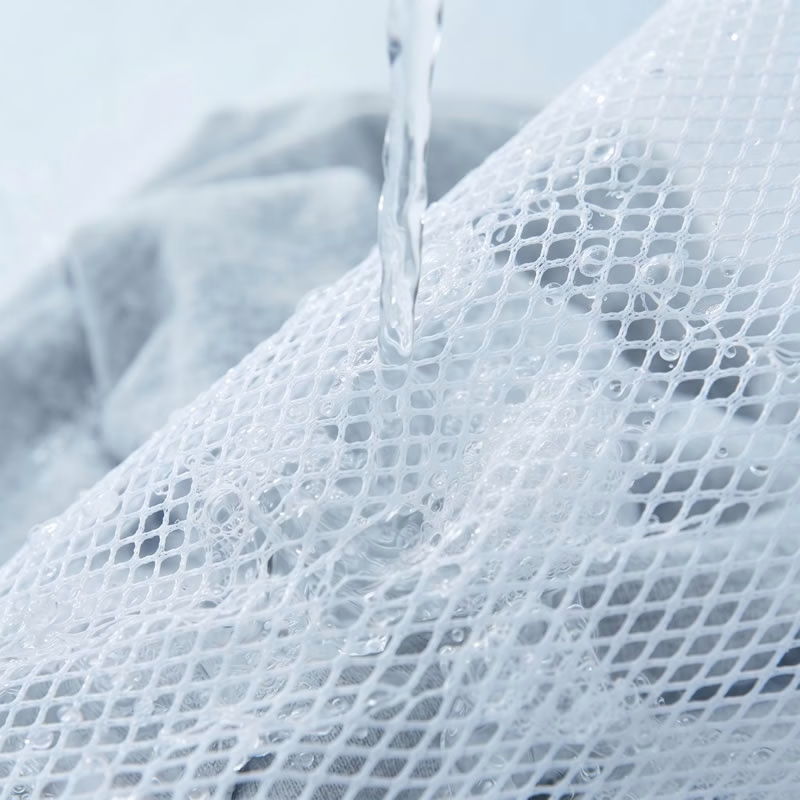
When buyers compare laundry bags mesh options, start with the opening, not the color. Fine mesh slows the water path and cushions small fibers. Coarse mesh lets water and soil move faster, which suits sturdier clothes. A sandwich or double layer adds a buffer for items that snag easily, with slightly slower wetting.
A fine mesh laundry bag is the default for pieces you would rather not see tumbling against a zipper. Put one delicate item in one net, in a bag close to the garment’s folded size. A blouse with buttons or trim should not slam from side to side inside a sack that is far too large.
A coarse mesh laundry bag is the everyday option for shirts and trousers. Many laundry rooms keep large, medium, and small coarse nets so a shirt is not lost in a huge sack and trousers are not crushed into a tiny one. Water moves more freely, which helps rinse detergent from thicker cotton.
Sandwich mesh, including Korea-style constructions, uses layered fabric so the garment is less exposed to sharp contact. That style is common in retail sets for lingerie and daily delicates. You can review a Korea-style option in this sandwich mesh laundry bag.
Color is a sorting tool, not only a design choice. Distinct colors help a household, a hotel linen room, or a retail kit separate bras, socks, and baby clothes before they reach the drum. A set of 3 colorful mesh laundry bags is a simple way to show that system in a catalog.
How to choose size, shape, and closure
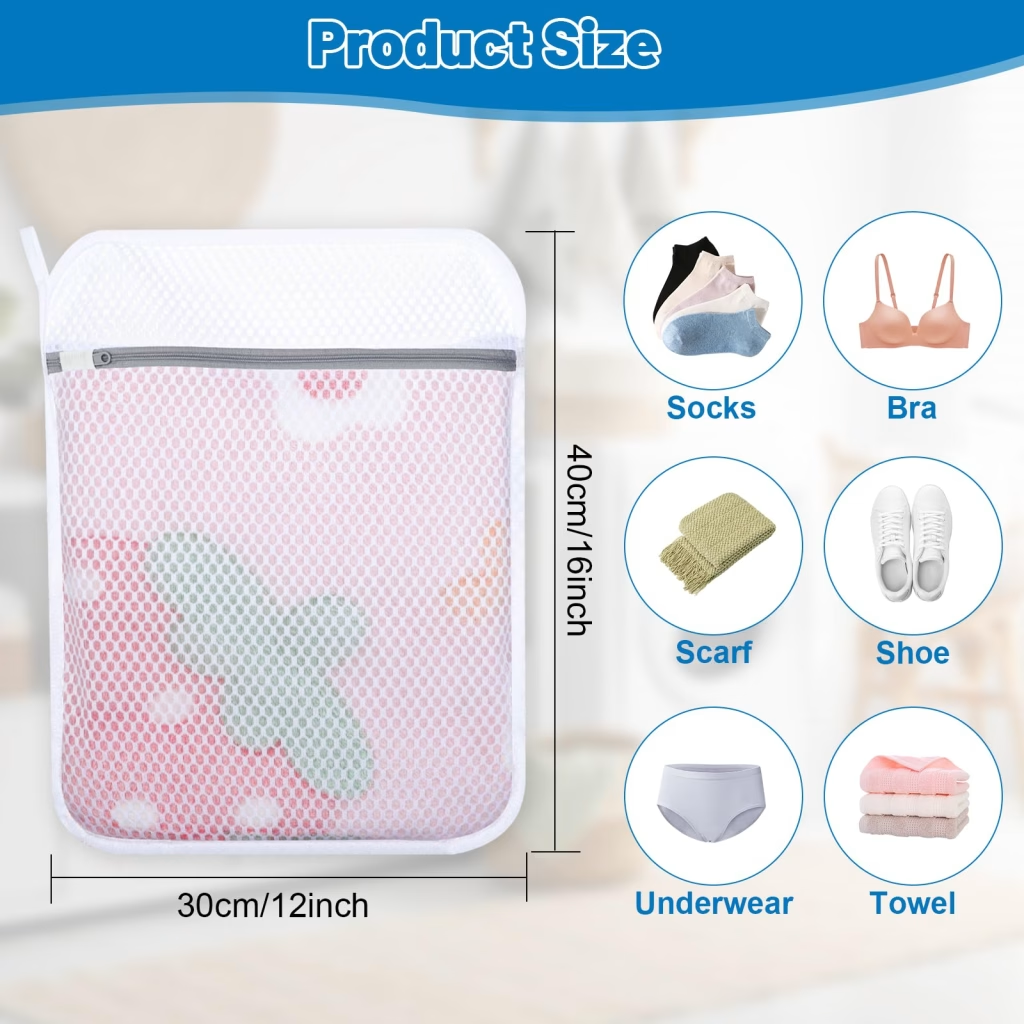
Size should follow the garment. A bag only a little larger than the folded item holds shape. One that is many times larger, however, lets straps twist. Anything smaller than the item forces folds that never open, so the center stays soiled.
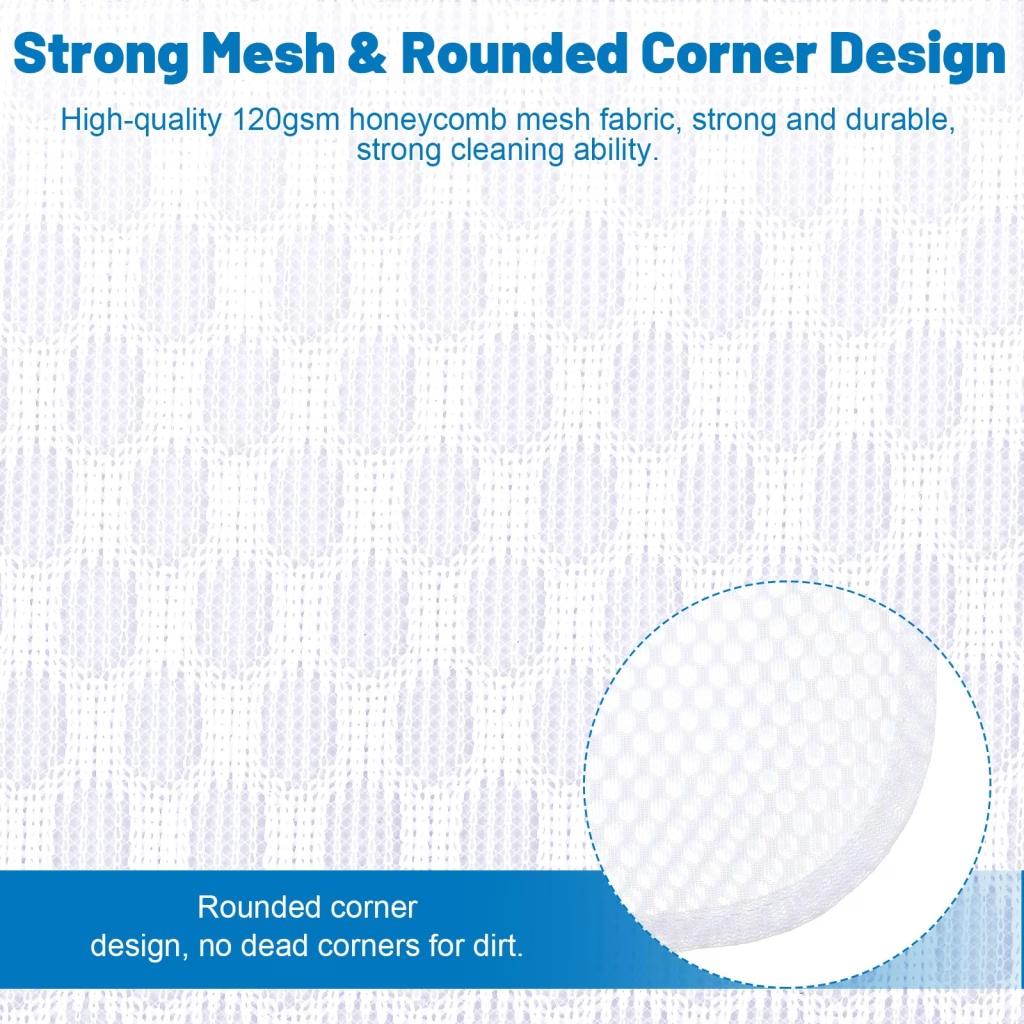
Round nets turn more smoothly than bags with sharp corners. The round edge is less likely to catch on another bag or on a paddle. Small round nets suit socks and other compact pieces. Large round nets are sometimes used for bulky washable textiles, including light blankets, if the machine can balance the weight. Rectangular bags are not a defect. They fold neatly for retail packing and leave a flat face for embroidery.
Closures deserve the same attention as mesh:
-
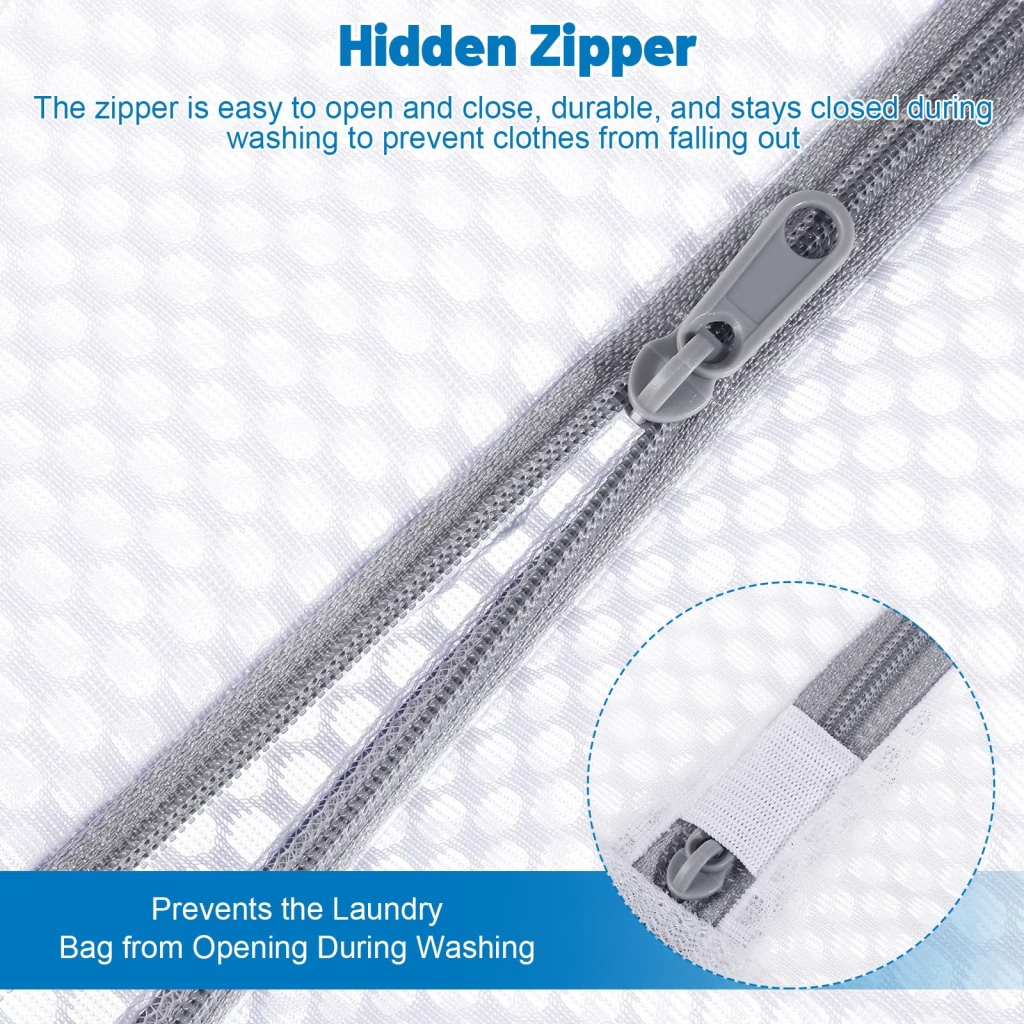
A zipper laundry bag keeps hooks inside when the slider is pulled to the end and the teeth sit behind a fabric guard.
-
A drawstring mesh bag is light and simple. It fails when the cord is too short to knot, or when a frayed end catches lace.
-
Elastic that holds a rolled garment can help low-movement washing. Weak elastic that pops open mid-cycle does not.
-
A hanger frame can be useful in a small retail kit. Any extra hardware must be smooth, or it becomes a new snag point.
Zipper bags are the safer default for bras and any item with metal. Look at the slider, the tape, and the end stop. A pull tab that flaps can tap the drum long before the mesh wears out. Zip-closure options are grouped under laundry bags with zippers.
Small nets stop the missing-sock problem and keep baby items out of the door seal. They also get overfilled fastest. A small laundry bag should still close without stretching the zipper. If the user has to force it, the bag is too full.
Programs often sell a size run rather than one hero size. A laundry bag set lets a buyer offer large, medium, and small in one carton.
How to load a laundry net for washing machine cycle
A repeatable method is easier to teach than a long list of warnings. Use the same order on a care card, in a hotel laundry, or in a warehouse demo.
-
Read the care label before the bag comes out. Temperature, cycle bars, and tumble-dry marks still rule.
-
Sort by color, soil, and fabric weight. A net does not block dye.
-
Empty pockets. Close buttons, hooks, and garment zippers. Turn printed faces and dark new denim inward if fading is a concern.
-
Fold shirts and blouses loosely. Do not ball them up.
-
Place one fragile item in one fine net. For sturdier clothes, group only similar pieces, and stop near two-thirds full so water can move.
-
Close the zipper to the end stop, or tie the drawstring and tuck the cord inside.
-
Load the drum so the net can turn. Do not bury it under a packed mass of towels.
-
Choose the gentlest cycle the label allows. Cool water is the safer start for color and elastic. Use a mild detergent. Skip chlorine bleach unless every item in that drum allows it.
-
Unzip promptly, reshape the garment, and air-dry delicates unless the label clearly allows tumble drying.
-
Check the bag. A bent slider, a loose thread, or trapped grit should be handled before the next wash.
Shirts keep their shape better when buttons stay fastened and the body is folded, not twisted. Even when a blouse is not marked hand wash, a net is still a sensible guard if the fabric is thin or the buttons are decorative. That is protection, not a change to the recommended temperature.
To compare everyday constructions before you write that care card, start with the laundry mesh bags range and match hole size to the garments your customers actually wash.
How care labels should guide the cycle
Care symbols are the agreement between the garment maker and the person washing it. A net sits beside that agreement. It does not rewrite it.
The care labelling guide for clothing and textiles explains the common marks in plain language. A washtub means washing. A number inside the tub is the maximum temperature in Celsius. Bars under the tub mean a milder process. A hand in the tub means hand wash, generally at no more than 40°C. A cross on the tub means do not wash. A crossed tumble-dry mark means the item should not go in the dryer.
Hand-wash symbols are common on lingerie and on some blouses. A fine net plus a short, cool, low-spin cycle is a method some households try when the machine has a hand-wash setting. Elastic, silk, wool, and glued trim can still fail inside a bag if the spin is high or the detergent is harsh. Product copy should say the bag protects during a gentle wash when the label allows washing.
Drying is the second half of the claim. Polyester mesh usually dries quickly on a hanger because it does not hold much water. Shoes, foam cups, and glued trims should not go into a hot dryer even if the bag itself can take the heat.
How to wash bras, shoes, prints, and bulky items
Split the range by job. That keeps returns down and makes a catalog easier to shop.
Bras and lingerie
Wash one bra in one bag. Close the hooks first so they cannot catch the mesh from the inside. Do not crush molded cups under a full load of towels. Fine or sandwich mesh is the usual choice. A colorful thickened fine mesh laundry bag and a white thickened fine laundry bag cover both a color story and a simple white option.
Sets make the one-item rule easier to follow. A set of 7 thickened fine mesh bags and a set of 7 fine mesh laundry bags give a size mix for bras, underwear, and small delicates. The user is less likely to stuff every piece into one pouch.
Shoes and slippers
Shoes belong in their own washing bag for shoes, not in a clothing net. Soles carry grit. Eyelets and laces act like hooks. Wash them with dark or already sturdy items, never with white shirts. Remove insoles that are not meant to be soaked. Pick a cycle that will not throw a heavy pair off balance. Then air-dry the shoes and the bag. A thick net can also keep a pair of slippers contained.
Shirts, prints, and everyday clothes
Fasten buttons. Fold rather than twist. Turn printed areas inward so the print rubs the inside of the shirt, not the drum. Coarse mesh is usually enough, and it rinses faster than a very tight weave. White coarse sets are easy to private-label. Review the set of 5 thickened white coarse mesh laundry bags, the set of 5 thickened coarse mesh laundry bags, and the set of 5 with a customized logo when the program needs both a plain pack and a branded pack.
Bulky washable items
A large round or large rectangular net can keep a light blanket, a washable mat, or a pair of curtains from winding around other clothes. The weight still has to suit the machine. An unbalanced spin is a machine problem, and a bag will not correct it. If the label says do not wash, leave the item out.
Embroidery and carton presentation show up clearly when the bag is a retail SKU. A thickened white mesh laundry bag with an embroidered logo and a sandwich fine mesh bag with embroidery show two paths: a mark on the bag, and a packed carton program.
What buying teams should confirm before a repeat order
A sample in the hand is more useful than a long adjective on a listing. Ask for the checks you would want if the bags were entering your own warehouse.
Many nets are polyester mesh because it dries quickly and holds shape when wet. Confirm the fiber, the mesh style, and any coating on the spec sheet for that SKU. That supports a compliance file. It does not replace the report your market asks for.
The European Commission overview of REACH describes the EU system for registration, evaluation, and restriction of chemicals. Textile articles placed on the EU market need to respect those restrictions. If you ship to Europe, ask which test list the lot was checked against, and keep the document with the purchase order. Candidate lists change. Read the report date before you reuse an older file.
Established in 2014, our company is a professional manufacturer of laundry mesh bags, bra laundry bag, washing bags for shoes, storage bag, laundry basket and drawstring mesh. Our customers are located worldwide, with key markets in Europe, North America, South America, Korea, and Japan. OEM orders are welcome, and customized designs are available. Our raw materials are environment-friendly, and our products can pass REACH and related tests.
Custom work usually starts with mesh type, size run, closure, and mark. A hotel program may want durable coarse nets in a few large sizes. A marketplace seller may want a 5-piece or 7-piece set with a simple embroidered mark. Name the channel when you ask for a sample, so it matches the pack you will reorder.
How a direct factory order keeps specs consistent
A middle layer can blur a spec. Hole size changes, zipper tape is substituted, or a logo shifts, and the reorder no longer matches the approved sample. Working with the manufacturer keeps mesh, stitch, and pack on one sheet.
Send the garment types you want the bag to protect, the markets you sell into, and whether the pack is retail, club, or a plain export carton. We can align fine mesh, coarse mesh, sandwich constructions, bra laundry bags, shoe washing bags, and drawstring styles to that brief. Custom colors and embroidered or printed marks are part of normal OEM work.
Wash the sample the way your customer will: one bra, one shirt, one pair of washable shoes, on the cycle you plan to recommend. Check for color transfer from the bag, a zipper that stays closed, and seams that do not shed thread. Then ask for a quote against that approved sample, including the test papers your destination requires.
We manufacture these nets ourselves. An inquiry reaches the source, so mesh, size, logo, and packing can be confirmed before production, not explained after a substitute part has already shipped. Share the quantity range, the destination market, and whether you need a plain pack or a customized design. We will reply with specifications, sample options, and a quote you can file with the order.
Frequently Asked Questions
1. What mesh opening should buyers specify?
Name fine, coarse, or sandwich mesh in the spec, not only in the photo. Fine mesh suits lingerie and lace. Coarse mesh suits shirts, trousers, and faster rinsing. Reach out for detailed specifications if you need a swatch before the sample order.
2. Can logos be embroidered on wash bags?
Yes. Embroidery, print, and woven labels can be added when the mark must survive washing. Send the artwork, bag color, and size run with the inquiry. Contact us to request samples of the mark on the mesh you plan to reorder.
3. Do laundry bags pass REACH tests?
Our products can pass REACH and related tests, and raw materials are environment-friendly. The report should match the destination market and the date of the order. Ask for the test scope with your quote if you ship to Europe.
4. How long do sample orders usually take?
Lead time depends on mesh type, logo work, quantity, and packing. There is no single calendar for every order. Share the destination and whether you need a plain pack or a customized design, and we will include a schedule with the quote.
5. Why wash shoes in a separate bag?
Shoe soles carry grit, and laces can catch clothing. A washing bag for shoes keeps that wear away from shirts and towels. Wash shoes with darker, sturdier items, then air-dry the pair and the bag.