
If you’ve ever dealt with broken hamper handles, spilled clothes in a hallway, or a “mystery odor” that spreads from a laundry corner, you already know this: laundry storage is not just a home problem. The right container affects labor time, hygiene, damage rates, and how cleanly items move from room to washer to shelf. This guide compares hampers, tote bags, and laundry bags with drawstring so you can pick what fits your space, your wash process, and your ordering standards—without overbuying features that don’t match your day-to-day needs.
Professional buyers also face a second issue: the same product name can hide very different construction. “Mesh bag” might mean soft and airy—or it might mean thin seams that fail after a few cycles. We’ll make the differences clear, with easy checks you can use when requesting samples or writing a purchase spec.
What you’re comparing: bags, hampers, and totes
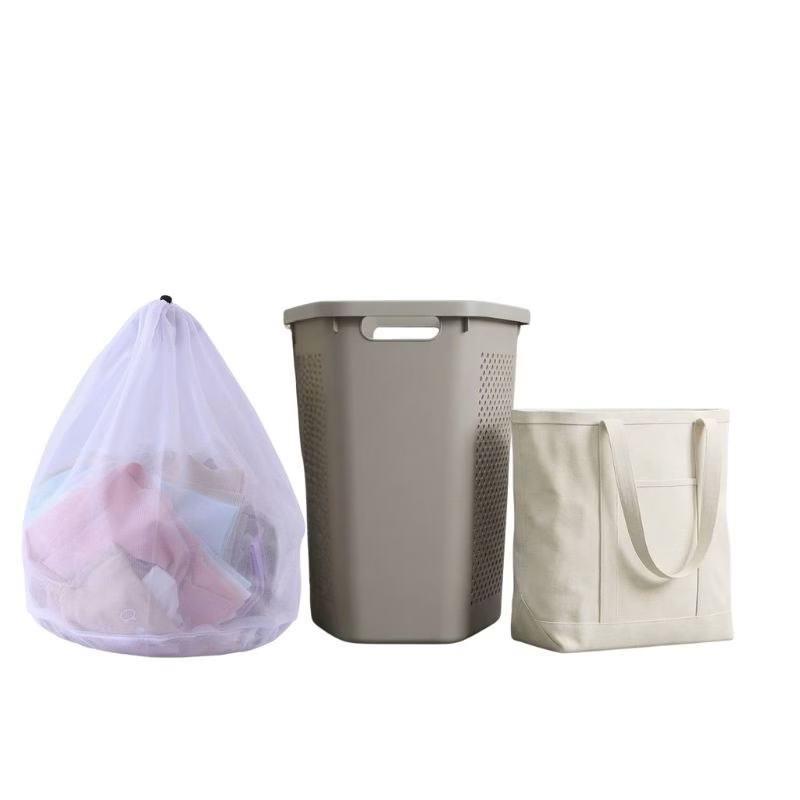
Choosing between a drawstring laundry bag, a rigid hamper, and a tote bag is mostly about how laundry moves in your operation:
- Collection: Where the laundry starts (guest room, locker room, dorm, home bedroom, cleaning cart)
- Containment: How you prevent spills, lint spread, and cross-contact
- Transport: How it moves to a washer or central point (hands, carts, chutes, elevators)
- Sorting: Whether you sort at the source or at a station
- Washing compatibility: Whether the container goes into the wash, stays outside, or is wiped clean
- Storage: Whether it stacks, folds, hangs, or lives on a cart
Let’s define each option in plain terms.
Drawstring laundry bag (soft-sided, closeable)
A drawstring laundry bag is a soft container that closes by pulling a cord. It can be made from mesh, woven fabric, or plastic film. Many designs are meant to be carried by hand, hung from hooks, or placed inside a bin frame.
You’ll see related names like:
- drawstring wash bags (often used for washing smaller items inside the washer)
- drawstring mesh laundry bag (ventilated, common for laundry sorting and carrying)
- Disposable drawstring sacks (common in hospitality and dry cleaning flow)
Hamper (rigid or semi-rigid bin)
A hamper is usually a container that keeps its shape—plastic, metal frame with fabric liner, wicker, or composite. Hampers are strong at “standing up” in a room and holding volume without collapsing.
Tote bag (open-top or zip-top carry bag)
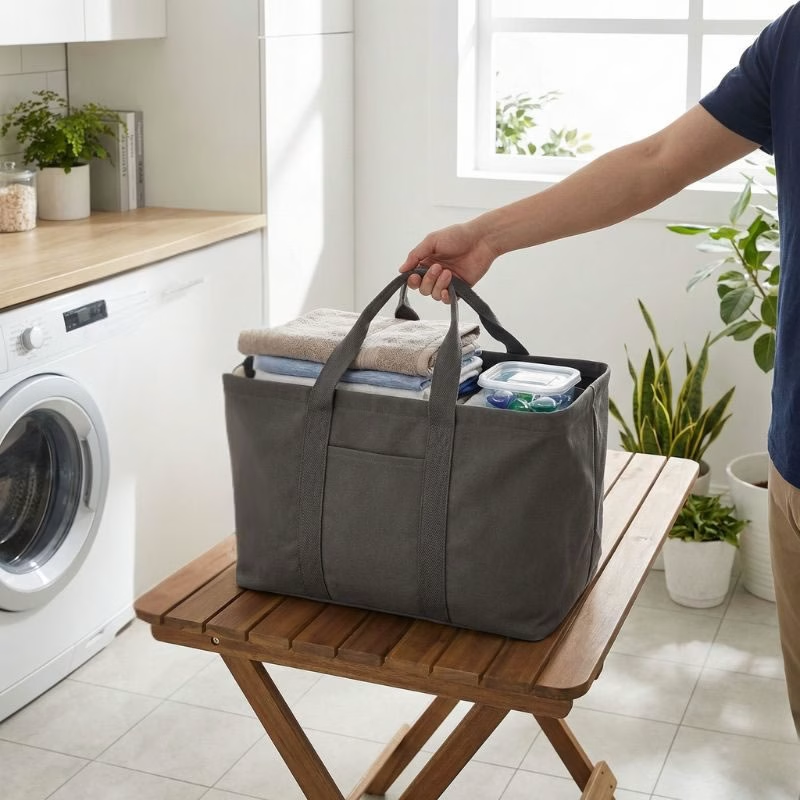
A tote is a carry bag with handles. Some are open-top, some have zippers, and some use snaps. Totes are popular for personal transport and mixed-use carry (laundry + supplies).
Quick “fit check” (before you read further)
If your main problem is spills and hallway mess, you’ll lean toward a drawstring closure.
If your main problem is appearance and structure, a hamper often wins.
If your main problem is grab-and-go transport, a tote is a strong middle choice.
Comparison table: what each option does best
| Option | Best at | Not ideal for | Typical users |
|---|---|---|---|
| Drawstring laundry bag | Closing, hanging, flexible storage, reducing spills | Standing upright without support (some designs) | hotels, dorms, gyms, travel, laundries |
| Hamper | Structure, room presentation, high-volume collection | Tight containment (many are open-top) | homes, dorms, guest rooms, changing areas |
| Tote bag | Carry comfort, mixed-use transport, personal loads | Odor control if left open, sorting in bulk | commuters, gyms, small laundry routes |
When laundry bags with drawstring beat hampers
A hamper is great when you want structure. But when your process involves movement—rooms to carts, lockers to washers, floors to elevators—drawstring bags often do better because they close and flex around the load.
1) You need containment during transport
Open-top hampers can shed socks, towels, and lint in hallways. If staff carry laundry against clothing or bump into walls, open containers also raise hygiene concerns. A drawstring closure reduces the chance of items falling out and helps keep the load together.
In settings where soiled linens need careful handling, bagging and closing the load is also a recognized control method. The CDC’s infection control guidance discusses placing contaminated textiles into bags or containment and closing them to prevent leakage and reduce spread during handling. (CDC)
2) You want breathable storage for damp items
Mesh drawstring options allow airflow. That helps when items are damp from pools, gyms, or rainy transport. Breathability does not “solve” odor by itself, but it reduces the worst-case scenario: wet fabric sealed in a non-breathable container for hours.
This is where a mesh laundry bag drawstring design is practical. The mesh supports airflow while the drawcord still closes the top.
3) You want the bag to hang, not sit
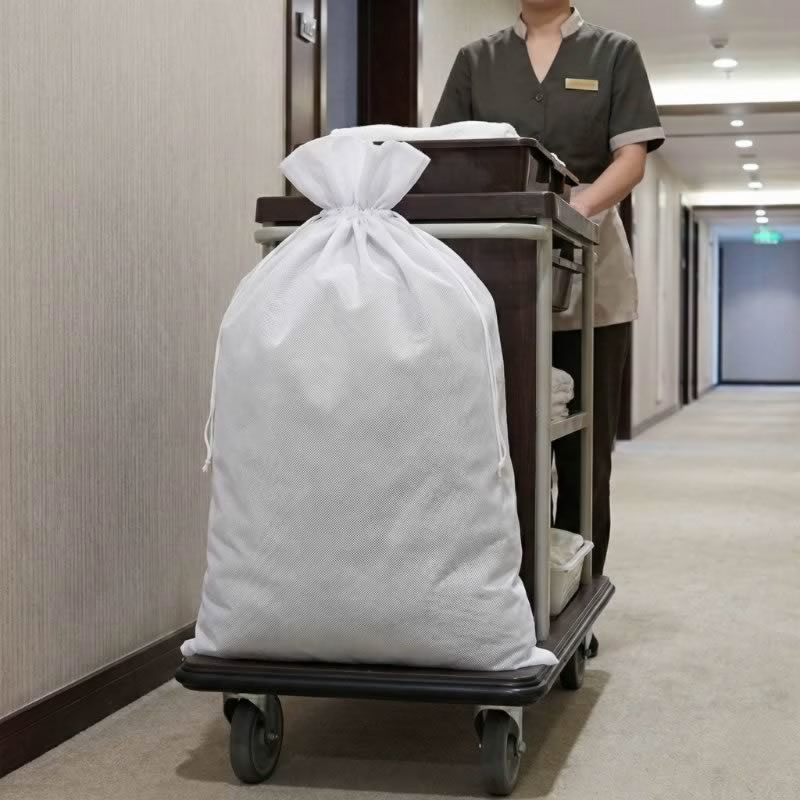
Many facilities don’t have floor space for hampers in every corner. A hanging drawstring bag can be mounted on:
- Wall hooks
- Doors
- Cleaning carts
- Locker room pegs
- Bathroom rails (with the right hanger design)
Hanging also keeps laundry off the floor, which many teams prefer for housekeeping standards.
4) You need sorting without extra bins
Color-coded or labeled drawstring bags can support sorting by:
- Room number / guest group
- Fabric type (towels vs sheets)
- Department (spa vs housekeeping)
- Temperature needs (warm wash vs cold wash)
- Special handling (delicate items, shoe wash bags, etc.)
Sorting at the source saves time at the station. It also helps reduce rewash cycles caused by mixed loads.
5) You need packaging that ships and stores well
Rigid hampers take space in cartons and warehouses. Drawstring bags fold flat. That can reduce storage volume and simplify inventory.
Where hampers still win (even if you like drawstrings)
A hamper is still useful when you need:
- A “nice-looking” room fixture
- A container that stands open for quick drop-in
- A rigid shape that fits a tight corner or cabinet
Some buyers solve this by combining both: a hamper frame with a removable drawstring liner bag.
Hampers: where rigid containers win
Hampers can look “simple,” but for many buyers, they serve a clear purpose: structure. If your laundry is collected in one spot for long periods, a hamper can keep the area tidy and predictable.
1) Room presentation matters
In guest rooms, dorms, or residential settings, hampers can blend into furniture. A drawstring bag hanging from a hook may be functional, but it can look temporary in a premium space.
2) Easy “drop-in” behavior
People use what feels easy. A hamper with a wide open top encourages fast drop-in. If you rely on guests, residents, or gym members to use the container correctly, the open-top hamper can increase compliance.
3) Heavy, bulky loads stay stable
Rigid bins handle:
- Thick towels
- Heavy bedding
- Bulk uniforms
- Mixed loads with shoes or gear (when allowed)
A soft bag can sag or drag on the floor when overloaded. Hampers reduce that risk.
4) Cleaning and wipe-down routines
Plastic hampers can be wiped down quickly. In locations with frequent spills (cleaning chemicals, wet towels, pool areas), wipeable surfaces can be useful.
What to check when buying hampers
For professional purchasing, these details reduce complaints:
- Base strength: Does it crack when loaded?
- Vent holes: Helpful for airflow, but can release lint
- Handle design: Handles should not pinch fingers or snap under load
- Liner compatibility: Can it fit a removable bag for sorting and transport?
- Stacking / nesting: Storage and shipping efficiency
A practical hybrid: hamper + removable drawstring liner
Many facilities want the best of both:
- Hamper stays in place and looks tidy
- Liner bag lifts out, closes, and moves to wash
This is also a good path if your staff wants closure but your rooms need structure.

Tote bags: the flexible option for mixed tasks
Tote bags sit between hampers and drawstring bags. They are easy to carry, and users already understand them. For some buyers, tote bags also reduce training needs: people know how to pick up a tote and go.
1) Best for personal transport
Totes shine when laundry is carried:
- From dorm room to shared laundry
- From gym to home
- From apartment to laundromat
- On short delivery routes
Handles distribute weight better than gripping a gathered drawcord (depending on design).
2) Good for “laundry + supplies”
Some users carry detergent, dryer sheets, and small personal items together. Totes can handle that mix better than a mesh bag intended only for laundry.
3) Fast loading and unloading
A tote opens wide. That makes loading faster at the source, and unloading faster at the washer.
Where totes struggle
- Containment: Many are open-top. Spills happen.
- Odor control: If damp items sit in a closed tote with low airflow, odor can build.
- Sorting: One tote often becomes “everything mixed,” unless you use multiple units.
When a tote is still the right pick
If your core need is carry comfort and the load is mostly personal clothing (not bulk linens), a tote can be the most accepted option.
Improving tote performance (simple design upgrades)
If you prefer totes, consider:
- Zip-top closure
- Water-resistant lining
- Vent panel (mesh insert)
- ID label window for sorting
Materials and construction that change performance
Two bags can look the same in a catalog photo and perform very differently after 20 wash cycles. Material choice impacts airflow, durability, lint control, and how the bag feels in daily handling.
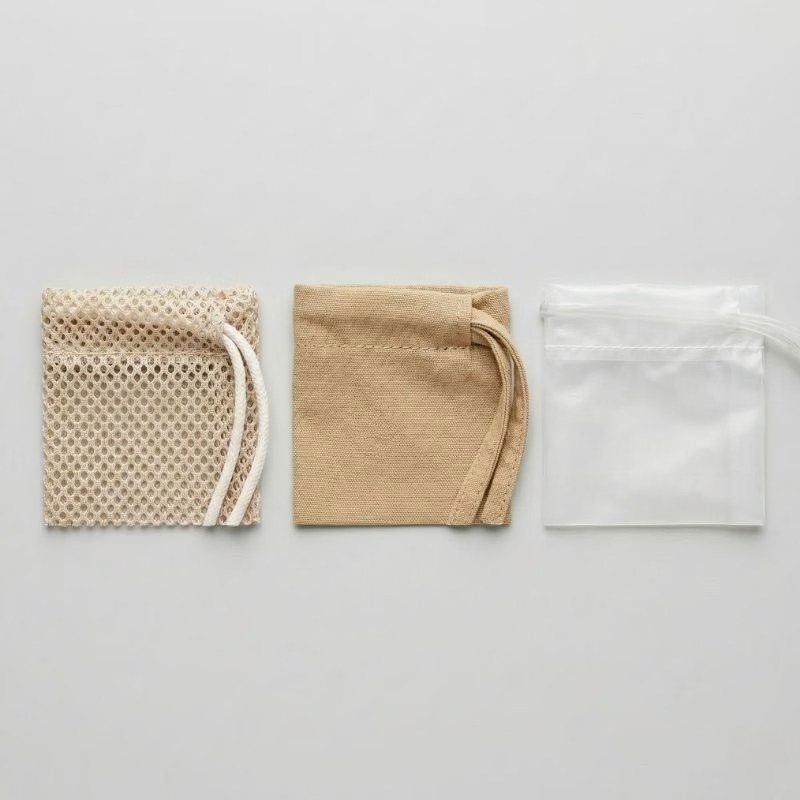
Mesh vs woven fabric vs plastic film (simple overview)
- Mesh (polyester or nylon mesh): breathable, good for damp items and sorting visibility
- Woven fabric (polyester, cotton blends): less see-through, can be softer, can trap moisture if packed wet
- Plastic film (PE disposable): leak resistance, often used where single-use or barrier handling is preferred
If you’re buying for repeated use, you also need to check:
- Seam type (overlock, binding, reinforced stitching)
- Drawcord channel strength (this area fails first in many low-cost bags)
- Cord quality (flat tape vs round cord)
- Load-bearing points (corners, handles, hanger loops)
Where secondary keyword designs fit
drawstring mesh laundry bag
This is the classic “airflow + closure” combination. It works well for:
- Gym and swim items
- Sorting in facilities
- Storage where ventilation helps
mesh laundry bag drawstring
This phrase is often used for bags that go into the washer with items inside (delicates, socks, small garments). In that case, mesh size matters:
- Too open: small items can slip out
- Too tight: water flow reduces, cleaning can be weaker
drawstring wash bags
These are usually smaller than “carry bags.” Buyers use them for:
- Bra and lingerie protection
- Baby socks and small garments
- Shoe washing (when paired with padding and proper closures)
If your goal is washing protection, ask for:
- Zipper protection (zipper garage or cover)
- Rounded edges (less snagging)
- Strong mesh that won’t tear when wet
Disposable PE drawstring bags (where they make sense)
In hospitality and dry cleaning workflows, disposable bags are often used for:
- Single-guest separation
- Short-term containment
- Situations where bag return and reuse is not realistic
When choosing PE disposable bags, confirm:
- Thickness range (microns)
- Tie strength
- Leak resistance for damp loads
Compliance and chemical safety (what buyers ask for)
If you source into markets with chemical restrictions, your supplier may discuss REACH testing. The EU’s REACH regulation is designed to improve protection of human health and the environment from chemical risks, and it affects a wide range of products and materials. (ECHA)
For buyers, the practical approach is not to memorize every restricted substance. Instead, set a clear requirement:
- Ask what tests are available (REACH and related)
- Request documentation based on your destination market
- Align material selection with your end user and wash process
Sizing, capacity, and handling flow
Capacity is not just “how much it holds.” It’s also about how the bag behaves when full, how it fits carts, and how staff lifts it without strain.
Think in loads, not liters
A useful way to size laundry containers is by load type:
- Personal load: 1 person, 2–4 days
- Small facility batch: one room or one department shift
- Bulk collection: multiple rooms, towel rounds, linen change cycles
When a large drawstring laundry bag is the right call
A large drawstring laundry bag works best when:
- You collect in bulk before moving to a central station
- You use carts and want a flexible liner bag
- You handle linens (towels, sheets) more than delicate garments
What to check:
- Bottom seam reinforcement
- Cord channel stitching (double stitch helps)
- Lift points (do you need handles or a loop?)
- Bag weight when full (staff handling)
Mesh size and “visibility sorting”
Mesh bags support quick sorting because staff can see what’s inside. That can reduce mistakes, especially when:
- Multiple departments share a wash area
- Different temperatures and chemicals are used
- You separate whites, colors, microfiber cloths, and guest items
If privacy matters (guest laundry or uniforms), woven fabric may be preferred.
Fit with carts, chutes, and shelving
Ask yourself:
- Does the bag need to hang on a cart hook?
- Do you drop it into a chute? (avoid cords that snag)
- Does it need to stand upright? (consider a frame or hamper support)
- Does it need to stack? (hampers win here)
A simple sizing table (useful for spec writing)
| Use scenario | Suggested capacity approach | Preferred format |
|---|---|---|
| Guest room / dorm | personal load size | hamper + liner, tote, or medium drawstring |
| Gym / swim | ventilation first | mesh drawstring carry bag |
| Housekeeping cart | removable containment | drawstring bag as cart liner |
| Laundry service bulk | heavy linen handling | large drawstring with reinforced seams |
How to choose laundry bags with drawstring for your workflow
This section is written for buyers who need fewer returns, fewer replacements, and fewer “we didn’t expect that” complaints after rollout.
Step 1: Map the real laundry path
Write the path in one line:
- Start point → transport method → wash point → storage point
Examples:
- Guest room → cart → central laundry → shelf
- Locker room → carried by user → home washer → closet
- Spa → bins → elevator → laundry service zone → folding
Your path tells you what matters most:
- Containment (closure)
- Breathability (mesh)
- Structure (frame/hamper)
- Carry comfort (handles/totes)
Step 2: Decide what “closure” means for you
Not every drawstring closure is the same.
- Cinch-only closure: closes the top, but gathered fabric can still gap
- Cinch + cord lock: tighter closure, easier one-hand use
- Cinch + cover flap: helps reduce lint escape
- Tie closure (PE bags): simple, often used for short-term containment
If your biggest issue is spills and lint, ask for a closure that stays closed in motion.
Step 3: Set minimum construction requirements
A sample that looks good on day one can fail at day twenty. Put these into your checklist:
- Stitch count and seam finish
- Reinforced top channel (where cord runs)
- Cord strength and feel (does it cut into hands?)
- Mesh tear resistance (especially when wet)
- Colorfastness if you plan color-coding
Step 4: Plan labeling and identification
Many teams underestimate this. Labeling reduces lost items and speeds sorting.
Common options:
- Heat transfer label area
- Sewn-in tag
- Clear ID window (common in facility flow)
- Printed size / department marking
Step 5: Confirm test needs and destination requirements
If you sell or distribute in multiple regions, align compliance early.
- For chemical compliance discussions, many buyers reference REACH requirements for materials and finished goods sold in Europe.
- For hygiene handling, guidance in healthcare settings highlights closed containment for contaminated laundry to reduce leakage and spread during transport. (CDC)
Even if you are not in healthcare, the principle is useful: contain the load, reduce leakage, reduce mess.
Step 6: Request samples that match real use
When you request samples, don’t test them gently. Test them like real staff will:
- Load to expected weight
- Pull the drawcord 50–100 times
- Wash and dry repeatedly (even 5–10 cycles shows early issues)
- Hang it, drag it, and cart it (if that’s your real flow)
Step 7: Decide how you’ll order (standard vs custom)
Standard sizes can work. Custom sizes can work better when:
- Your cart dimensions are fixed
- Your shelving needs a specific fold
- Your branding requires a label panel or color match
If you manage multiple sites, standardizing one or two sizes can also reduce training and simplify inventory.
Where our drawstring options fit (and how buyers use them)
Once you know whether you need closure, structure, or carry comfort, the product choice becomes simpler. Below are practical ways buyers match bag types to real tasks, with examples from our range.
1) General drawstring bag options for sorting and transport
If you want a broad look at drawstring styles and common formats, review our drawstring bag product range for sizing ideas, materials, and typical use cases.
- Learn more: drawstring bag product range
2) Bulk collection and cart liner use
For higher-volume collection, buyers often select larger formats with reinforced seams. This is common in housekeeping, laundries, and service routes.
How it’s used:
- As a removable cart liner
- As a department batch bag (towels, sheets, uniforms)
- As a collection bag that closes before transport
3) Reusable mesh options for repeated wash cycles
When teams want airflow and repeated use, a mesh design is often chosen.
- Example: set of 4 cleaning drawstring mesh laundry bag
- Example: thickened white drawstring mesh laundry bag
Where it fits:
- Sorting and staging in laundries
- Gym and spa laundry flow
- Household laundry organization (by person or by fabric type)
This is also where the terms drawstring mesh laundry bag and mesh laundry bag drawstring show up most often—buyers want airflow plus a closure that keeps items together.
4) Disposable PE bags for hotels and dry cleaners
For settings that prefer single-use handling, PE drawstring bags are common.
Where it fits:
- Short-term containment
- Guest separation
- Situations where return and reuse is unlikely
5) Multi-purpose drawstring mesh sets for sorting systems
Some buyers use drawstring mesh sets beyond laundry: color-coded sorting, storage, or even supply organization.
If you’re building a sorting system, sets help you assign a bag per category (colors, departments, item type).
6) Explore the broader catalog (for matching sets and cross-products)
If you’re sourcing multiple laundry handling items at once (mesh bags, shoe washing bags, storage bags, baskets), it helps to review the full line for consistent sizing and material choices.
Buying notes buyers often overlook (but should not)
- Drawcord feel: round cord can bite into hands under heavy load; flat tape can feel better for staff carry
- Cord lock vs tie: cord locks can speed daily use; ties can be simpler and lower-cost
- Seam stress points: top channel and bottom corners fail first if underbuilt
- Label plan: without labeling, sorting becomes “tribal knowledge,” and mistakes rise
A practical decision guide (fast scenarios)
Pick the statement that matches your situation:
- “We need to stop hallway spills.” → closed drawstring carry bag or removable drawstring liner
- “People ignore the laundry point unless it looks like a bin.” → hamper or frame + liner
- “Users carry laundry long distances.” → tote bag or drawstring with handles
- “Items are often damp.” → mesh drawstring
- “We need bulk collection.” → reinforced large drawstring formats
- “We need short-term separation.” → disposable PE drawstring bags
Closing note
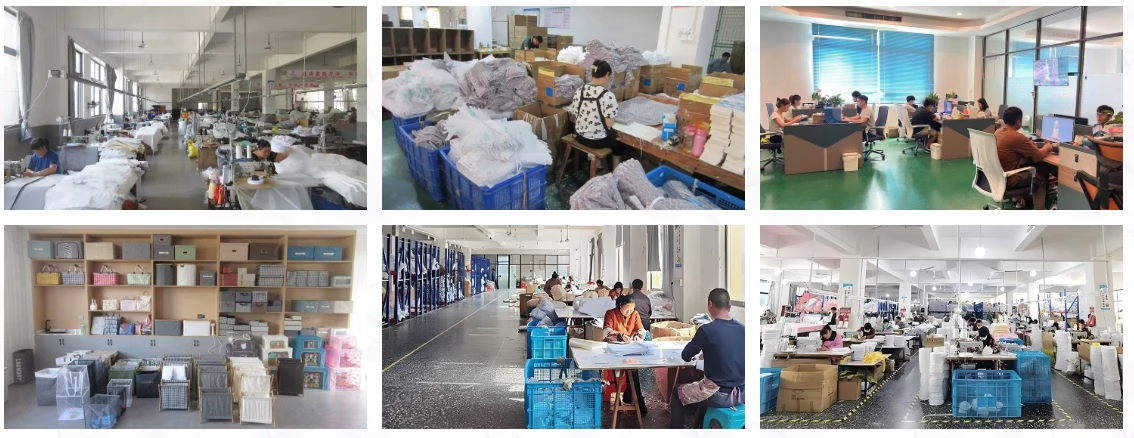
Established in 2014, our company is a professional manufacturer of laundry mesh bags, bra laundry bag, washing bags for shoes, storage bag, laundry basket and drawstring mesh. Our customers are located worldwide, with key markets in Europe, North America, South America, Korea, and Japan. OEM orders are welcome, and customized designs are available. Our raw materials are environment friendly, and our products can pass REACH and related tests.
If you’re comparing options for a facility, a retail program, or a wholesale order, the fastest way to avoid mismatch is to share your use path (where it starts, how it moves, and how often it’s washed). We can recommend the right size, mesh level, and closure style, then provide samples and specifications so your team can test performance before you commit to volume pricing.
Frequently Asked Questions
1. How do you support custom sizes and logos?
We offer OEM and customized designs based on your size, material, and labeling needs. Reach out with your target dimensions and use case to request specifications and options.
2. Do you offer samples before bulk ordering?
Yes, samples are available so your team can test stitching, drawcord strength, and wash performance. Contact us to request samples and recommended test methods.
3. Can your products pass REACH and related tests?
Yes. Our raw materials are environment friendly, and our products can pass REACH and related tests. Share your destination market so we align the right documentation.
4. What lead time should buyers expect for production?
Lead time depends on material, size, printing, and order volume. Send your target quantity and packaging needs and we’ll provide a clear production schedule.
5. How should we choose mesh size for wash use?
Match mesh size to item size and wash goals: smaller mesh helps keep small items contained, while larger mesh improves water flow. Ask for samples to confirm performance in your machines.