
A zipper that pops open in the third wash looks like a small defect. Multiply it by 20,000 units, though, and it becomes a returns problem and a lost reorder. That is the real risk in laundry bag wholesale. The product looks simple, so buyers often compare unit price and skip the details that decide how it performs.
We’ve manufactured laundry mesh bags since 2014 for buyers in Europe, North America, South America, Korea, and Japan. So the advice below comes from the factory floor, not a sales deck. You’ll see which mesh types sell and how to plan sizes and sets. You’ll also learn what custom options involve and which tests to request before you commit to volume.
What Does Laundry Bag Wholesale Include?
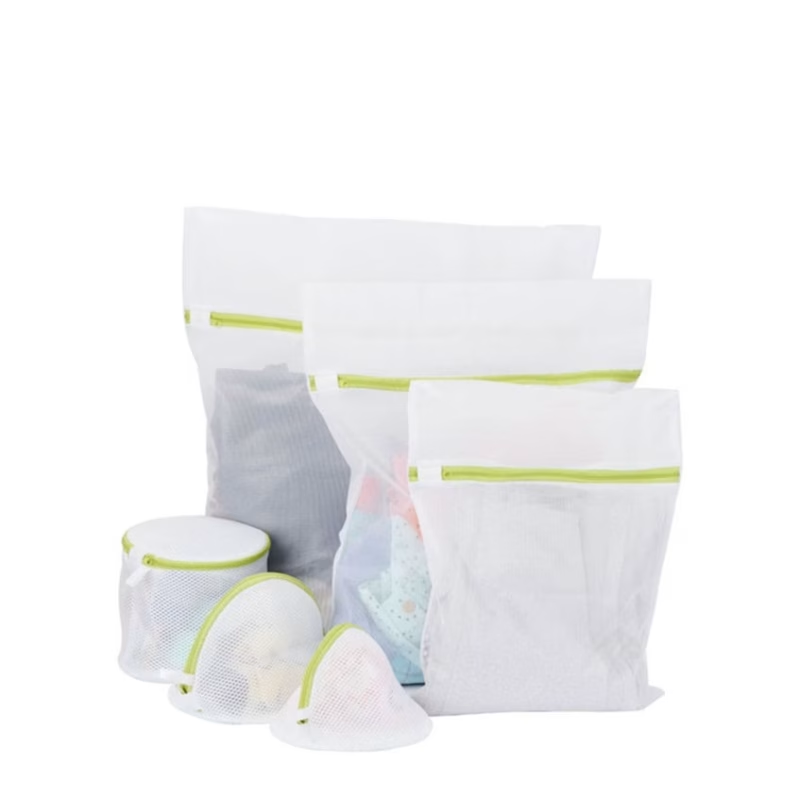
Laundry bag wholesale means buying wash bags in bulk, at volume pricing, for resale or business use. Most orders cover polyester mesh bags, sold as single pieces or multi-size sets. Buyers usually add their own logo, label, or packaging.
The category is wider than many first-time buyers expect. A typical program can include:
- Zippered laundry mesh bags for delicates, knitwear, and baby clothes
- Bra laundry bags with a structured shape
- Washing bags for shoes
- Drawstring mesh sacks for larger loads
- Storage bags and laundry baskets that round out a home-care range
You can browse the main styles in our laundry mesh bag range.
Who buys laundry bags in bulk?
Demand comes from several kinds of buyers:
- Retail chains and supermarkets building a private-label home-care line
- Online sellers who need a steady, repeatable product
- Importers and distributors serving regional stores
- Hotels, gyms, and laundries that sort guest or member items
- Promotional companies adding a brand logo for campaigns
- Apparel and lingerie brands that bundle a wash bag with their garments
Each group wants something different. A supermarket buyer cares about shelf price and packaging. A lingerie brand, however, cares more about soft mesh and a tidy logo. So define your use case first, and then ask for quotes. The spec should follow the customer, not the other way around.
Why Buy Mesh Bags Direct From the Manufacturer?
Buying direct removes a layer between you and the people who make the product. That sounds like a pricing point only. In practice, it affects far more than cost.
First, you get clear answers. When you ask about mesh weight or zipper type, the reply comes from the team that runs the sewing lines. Second, you control the spec. A factory can change the mesh, binding, zipper, and label. A reseller, in contrast, usually offers what is already in stock. Third, you get consistency, because the same workshop that made your sample also makes your reorder.
| Factor | Direct from the manufacturer | Through a trading company or reseller |
|---|---|---|
| Price structure | Factory price with no extra margin layer | Includes the middle party’s margin |
| Customization | Mesh, size, zipper, logo, and packaging can all change | Often limited to stock designs |
| Communication | Direct line to production staff | Messages pass through a third party |
| Quality control | Samples and standards are set at the source | Harder to trace where goods were made |
| Test reports | Requested for your exact materials | May be generic or out of date |
| Reorders | Same materials and workmanship | The source factory may change without notice |
There is a fair caveat here. Resellers can make sense for very small or mixed orders, because they hold stock from many factories. But once your volume grows, direct supply usually gives you a lower unit cost and tighter control. For most laundry bag wholesale buyers, that point arrives sooner than expected.
What should you ask a supplier before you commit?
A few direct questions show whether you are talking to a real factory:
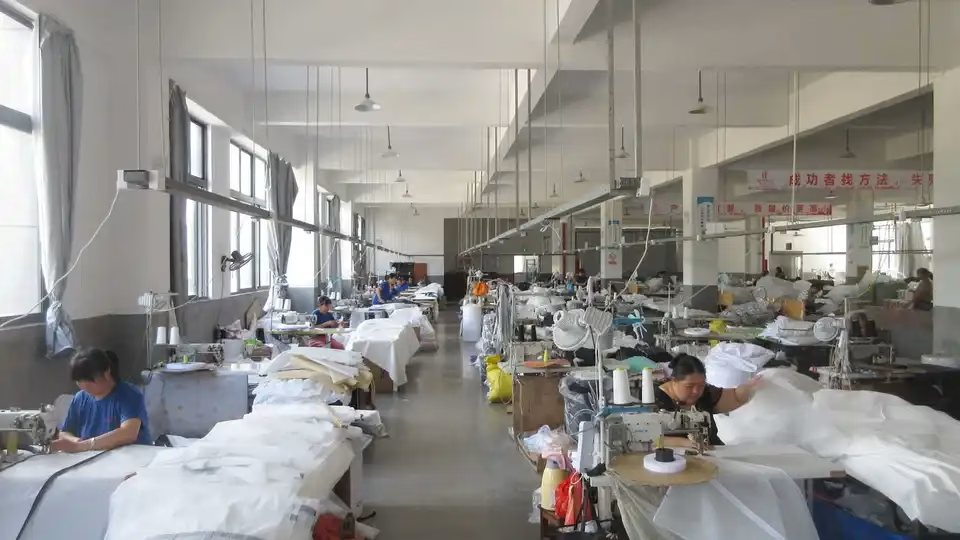
- Do you run your own cutting and sewing lines?
- Can you share photos or video of the workshop?
- Which markets do you ship to most often?
- Can you provide test reports for the materials in my order?
- Who will handle my reorder six months from now?
Clear, specific answers are a good sign. Vague ones usually mean there is another party behind the quote.
Which Laundry Mesh Bags Sell Well in Bulk? Mesh Types Compared
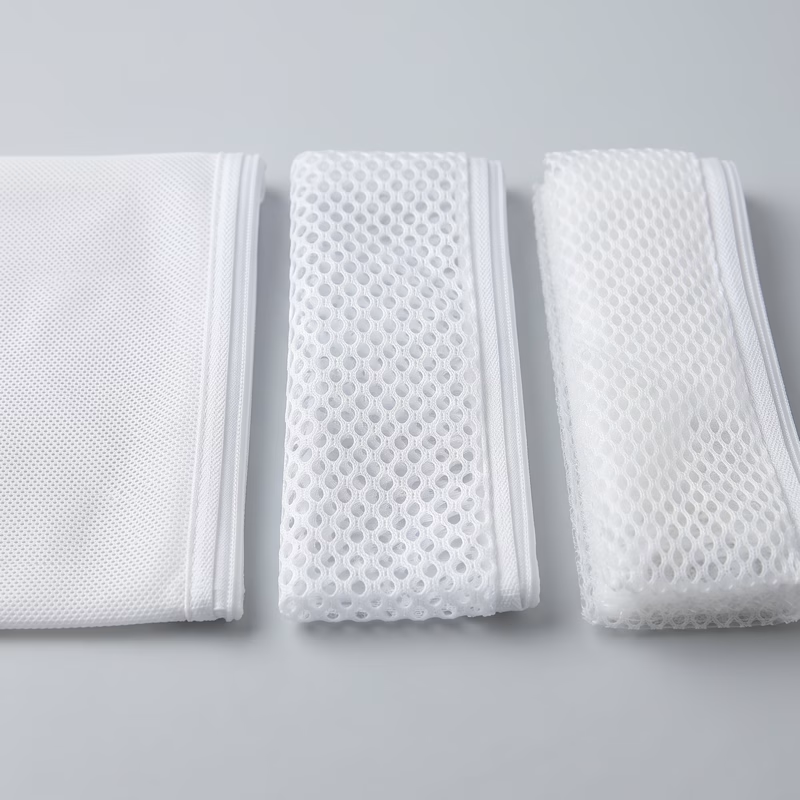
Mesh type is the first spec to settle in any laundry bag wholesale order, because it decides what the bag can protect. Three structures cover most bulk demand: fine mesh, coarse mesh, and sandwich mesh.
| Mesh type | Structure | Works well for | Trade-off |
|---|---|---|---|
| Fine mesh | Small, tight holes | Lingerie, hosiery, lace, items with hooks or beads | Slightly slower water flow |
| Coarse mesh | Larger, open holes | Shirts, towels, knitwear, everyday loads | Small hooks and straps can poke through |
| Sandwich mesh | Thicker, cushioned knit | Bras, shaped garments, higher-priced retail lines | Higher material cost and more bulk |
Nearly all of these bags are made from polyester. The fiber resists abrasion, breathes well, and dries fast. It also takes color well, which helps with custom ranges.
Fine mesh for delicates
Fine mesh keeps small parts inside the bag. Bra hooks, thin straps, and tights stay contained, so they don’t snag other clothes. For that reason, it is the usual choice for lingerie and baby items.
Our set of 7 thickened fine mesh bags covers a full household range in one pack. We also make a set of 7 fine mesh laundry bags with three main sizes plus a small bra wash bag. For retail shelves, buyers often pick between a colorful thickened fine mesh laundry bag and a clean white thickened fine mesh laundry bag.
Coarse mesh for everyday loads
Coarse mesh lets water and detergent pass through quickly. So it suits sturdier garments that still need to stay separate. Many buyers choose a thickened version, because the heavier yarn tends to hold its shape over repeated washes.
Options include a set of 5 thickened white coarse mesh laundry bags and a mixed-size set of 5 thickened coarse mesh laundry bags
Sandwich mesh for extra protection
Sandwich mesh is a thicker, cushioned knit with a soft, padded feel. It shields shaped items and also looks more substantial on the shelf. Our Korean-style sandwich mesh laundry bag shows the typical build. For a gift-ready look, the sandwich fine mesh laundry bag with embroidery adds a stitched design.
Not sure which mesh to choose? Start with the garment. Choose fine mesh for items with hooks, lace, or thin straps. Sturdy garments that only need sorting can go in coarse mesh. For items with shape or padding, sandwich mesh is the safer choice.
Sizes, Sets and Closures: How to Build Your Range
Once the mesh is settled, the range comes together through three choices: size, set count, and closure.
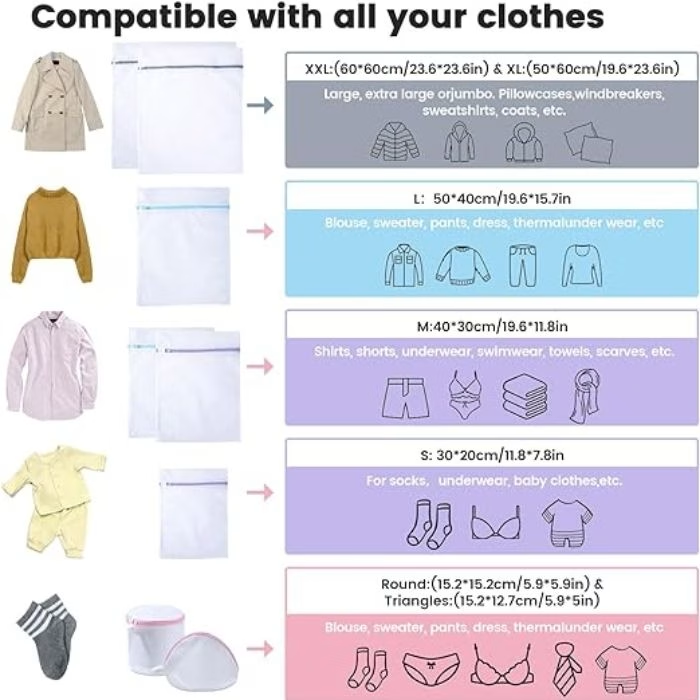
Common sizes and what they hold
| Size (cm) | Typical contents |
|---|---|
| 15 × 18 (bra wash bag) | One or two bras, small delicates |
| 22 × 33 | Socks, underwear, baby items |
| 30 × 40 | Lingerie, tights, light tops |
| 40 × 50 | Shirts, blouses, knitwear |
| 50 × 60 | Sweaters, jeans, larger loads |
These sizes anchor most laundry bag wholesale ranges. Custom dimensions are also available for OEM orders, so share your target garment if none of them fit.
Single bags or sets?
Sets raise the value of each sale, and they are easier for shoppers to understand. One pack covers the whole wash. For example:
- A set of 3 colorful mesh laundry bags works as an entry-price item.
- A set of 5 fits most family laundry routines.
- A set of 7 suits online listings, where a bigger count stands out.
- A six-size laundry bag set gives wide coverage in one pack.
- A small laundry bag set with zippers keeps the focus on delicates.
Single bags still have a place, though. Hotels, laundries, and promotional buyers often need one size in large volume.
Zipper or drawstring?
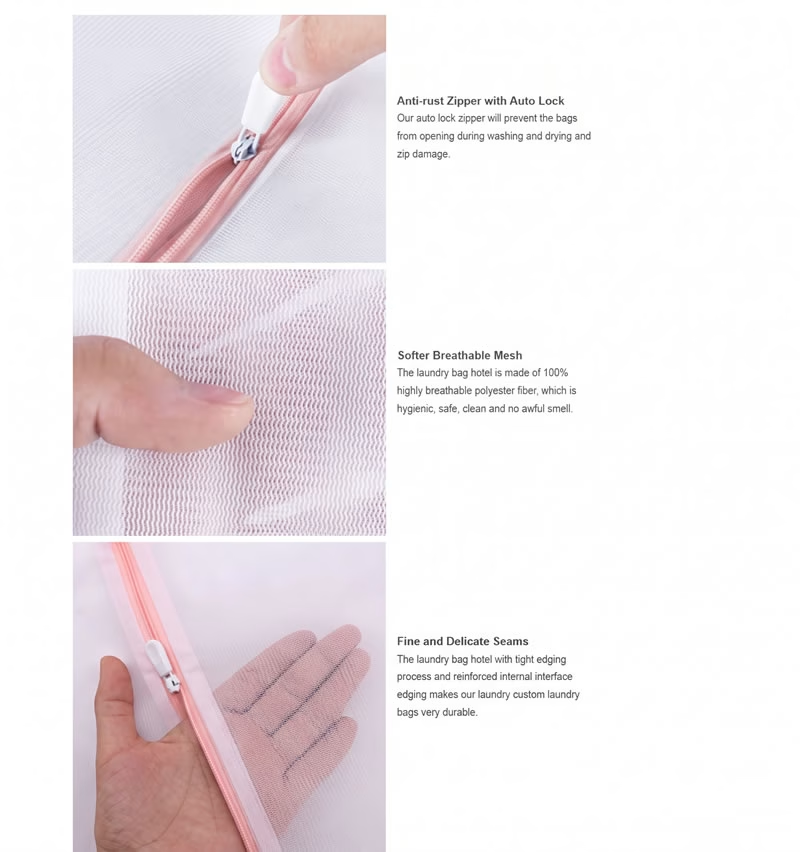
Zippers keep small items secure through the spin cycle. So most retail lines use a laundry bag with zipper closure. Look for a rust-proof zipper and an elastic cover at the end of the track. The cover tucks the pull away, so it can’t catch on other garments or scratch the drum.
Drawstrings cost less and suit large sacks for sorting or transport. However, a cord can loosen in the wash unless it has a lock. So drawstrings are a weaker choice for small delicates.
Custom Logos and Packaging for Bulk Orders
Customization is what makes a generic wash bag your own product. OEM orders are welcome at our factory, and most parts of the bag can change.
| Element | Options | Good to know |
|---|---|---|
| Logo | Embroidery, printing, or a sewn-in label | Embroidery holds up well in the wash; printing suits fine detail |
| Mesh color | White, transparent, or custom colors | Custom colors can raise the minimum quantity |
| Zipper and binding | Matching or contrast colors | A color accent helps shoppers tell sizes apart |
| Size and shape | Flat, cylindrical, or shaped for bras | Share the garment you want to protect |
| Packaging | Polybag, header card, paper band, or printed box | Packaging affects shelf appeal and carton volume |
Embroidery is a popular choice, because the logo is stitched into the bag and stays put. Our thickened white mesh laundry bag with an embroidered logo shows how it looks on a finished piece.
A few habits keep custom laundry bag wholesale projects on track:
- Send vector artwork, and state the logo size and position.
- Ask for a pre-production sample with your real logo and packaging.
- Confirm barcode, label, and language needs for each market.
- Decide packaging early, because it changes carton size and freight cost.
What Should You Check Before a Bulk Order? Quality and Compliance
A sample tells you more than any catalog. When it arrives, check these five points:
- Seams. Pull gently along the binding. Stitches should be even and tight, with no loose threads.
- Zipper. Run it ten times. It should glide without catching, and the cover should hold the pull.
- Mesh. Stretch it lightly. It should spring back, with no thin or uneven spots.
- Size. Measure it against your spec. Small differences are normal with hand measurement, so agree on a tolerance.
- Wash test. Run several cycles with real garments. Then check the shape, zipper, and color again.
What does REACH mean for laundry mesh bags?
REACH is the European Union’s main chemicals regulation. It makes companies responsible for the safety of the chemicals in the products they sell. That includes the dyes and finishes used in textiles. So for laundry bag wholesale shipments into Europe, importers need proof from the supplier.
The European Commission publishes a plain overview of the REACH regulation. The European Chemicals Agency also explains how REACH works for companies.
For buyers, three steps cover most cases:
- Ask for a recent test report from a recognized third-party lab.
- Check that it covers the materials in your order, including mesh, zipper, binding, and prints.
- Confirm it matches your sales market, because rules differ between regions.
Our raw materials are environment friendly, and our products can pass REACH and related tests. If your market needs a specific test, tell us at the quote stage. Then we can plan it into the order instead of adding it at the end.
What about markets outside Europe?
Rules differ by region. Buyers in North America, Korea, and Japan often have their own test lists or retailer standards. So send your requirement sheet with the inquiry. These are key markets for us, and we can match the report to the destination.
How Does a Laundry Bag Wholesale Order Work, Step by Step?
Most orders follow the same six steps. Knowing them helps you plan stock and launch dates.
- Share your brief. Tell us the mesh type, sizes, set count, color, logo, and packaging. Also add your target quantity and destination market.
- Receive a quote. Pricing reflects materials, workmanship, customization, and volume.
- Review samples. Check them against the five points above, and request changes if needed.
- Approve the pre-production sample. This sample becomes the standard for the full run.
- Production and inspection. Bags are cut, sewn, checked, and packed to your spec.
- Shipping. Cartons are labeled for your warehouse or forwarder.
What should your inquiry include?
A complete inquiry gets a faster and more accurate quote. So include:
- Product type and mesh (fine, coarse, or sandwich)
- Sizes and pieces per set
- Color of the mesh, zipper, and binding
- Logo method and artwork
- Packaging style
- Order quantity and target delivery date
- Destination country and any required tests
How do quantity and lead time work?
Minimum quantities and lead times depend on the spec. Stock colors with a simple label usually need less volume and less time. Custom-dyed mesh, special shapes, and printed boxes need more of both. Larger runs also spread setup costs across more units, so the unit price drops as volume rises.
If you’re testing a new market, say so. A laundry bag wholesale trial in standard white mesh with your own label is often a sensible start. Then you can add colors and packaging once sales data comes in.
How Can You Control Cost Without Cutting Corners?
Price pressure is normal in laundry bag wholesale. Still, the cheapest quote is not always the lowest cost. A bag that fails early brings refunds, bad reviews, and wasted freight.
| Cost driver | Lower-cost choice | Higher-cost choice |
|---|---|---|
| Mesh | Standard weight | Thickened or sandwich mesh |
| Size | Smaller bags | Larger bags that use more fabric |
| Closure | Drawstring | Zipper with a protective cover |
| Logo | Printed label | Embroidery with a high stitch count |
| Color | White or stock colors | Custom-dyed colors |
| Packaging | Polybag with an insert card | Printed box |
So spend where the end user feels it. The zipper and seams take the most stress, and the mesh decides how well garments are protected. Save on the parts that shoppers notice less. For example, an online seller rarely needs a printed box, while a supermarket line usually does.
Freight deserves a look too. Mesh bags are light and fold flat, so cartons pack densely. However, bulky packaging can raise carton volume fast.
Five costly mistakes to avoid
- Comparing quotes on unit price alone, without matching the specs
- Skipping the wash test on samples
- Starting production before a pre-production sample is approved
- Choosing packaging late, after freight has been budgeted
- Leaving compliance tests until the goods are already packed
Each of these is easy to prevent. In our experience, most laundry bag wholesale problems trace back to a rushed spec, not to the product itself.
Start Your Laundry Bag Wholesale Order at the Source
A good wash bag program rests on a few clear decisions. Choose the mesh for the garment, and build sizes into sets that make sense. Brand the bag so it carries your name. Then check samples and test reports before the full run.
That process is simpler when you talk to the people who make the product. We are the original manufacturer, so your message reaches the team that cuts, sews, and inspects every order. There is no middle layer, and no guesswork about where your goods come from.
Send us your target sizes, mesh type, logo file, and quantity. We’ll reply with a clear quote, sample options, and honest advice for your market. You can start from our laundry mesh bags catalog and tell us which styles fit your range. Request your laundry bag wholesale quote, and let’s build your order together at the source.
Frequently Asked Questions
1. What is the minimum order for laundry bag wholesale?
The minimum order depends on the mesh, size, and level of customization. Stock designs usually need less volume than fully custom bags with dyed mesh or printed boxes. Reach out with your spec, and we’ll confirm the exact quantity.
2. Can you add our logo to laundry mesh bags?
Yes, OEM orders are welcome and custom logos are a standard request. Options include embroidery, printing, and sewn-in labels, plus custom zipper colors and packaging. Send your artwork, and we’ll suggest the method that suits your design.
3. Do your mesh bags pass REACH testing?
Yes, our products can pass REACH and related tests. Our raw materials are environment friendly, and testing can be planned into your order. Tell us your sales market, so the report matches local rules.
4. How long does a bulk mesh bag order take?
Lead time depends on quantity, customization, and the season. Stock colors with a simple label move faster than custom-dyed mesh or printed boxes. Share your delivery date early, and we’ll confirm a schedule with your quote.
5. Can we get samples before placing an order?
Yes, samples are available before you commit to volume. We recommend running them through several wash cycles with real garments. Contact us to request samples in the mesh and sizes you need.