
A single wash cycle can ruin a bra underwire, snap a delicate lace hem, or turn a wool sweater into a shrunken version of itself. For buyers sourcing protective laundry products or product managers looking for reliable wash-care solutions, the question is rarely whether to use a laundry bag for washing machine loads — it’s knowing which items genuinely need one and why.
This guide covers eight categories of items that consistently benefit from mesh bag protection, what types of laundry bags mesh construction works best for each, and what to look for when sourcing these products at volume.
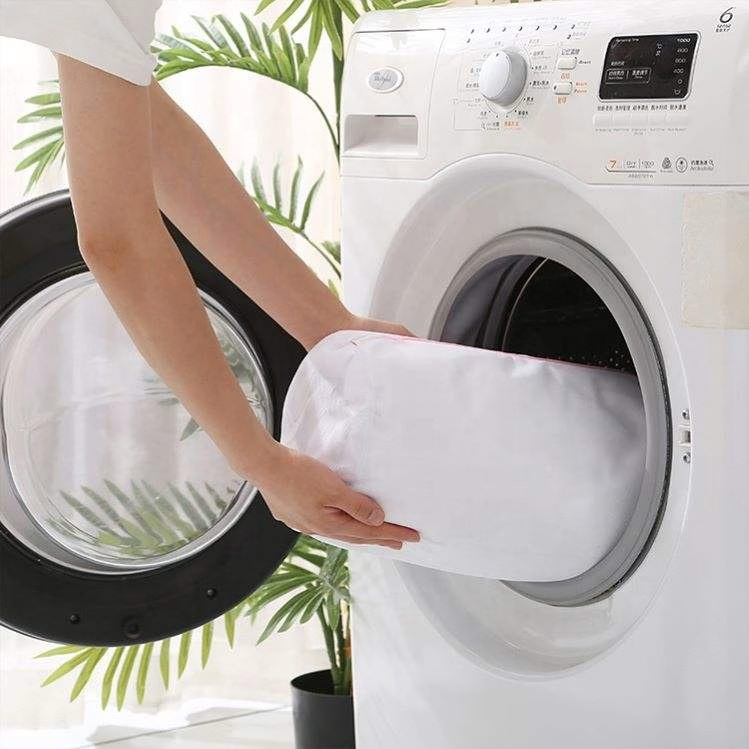
Why a Laundry Bag for Washing Machine Use Actually Works
Before diving into the specific items, it helps to understand the mechanics. A washing machine drum rotates at speeds ranging from 600 to 1,600 RPM. During that process, fabrics rub against each other and against the drum’s inner surface repeatedly — every wash cycle is a controlled collision environment.
A mesh laundry bag creates a physical buffer zone. Items inside are protected from direct contact with zippers, clasps, and drum walls from other garments. The open mesh structure still allows water, detergent, and heat to pass through freely, so cleaning effectiveness isn’t compromised — protection is simply layered on top.
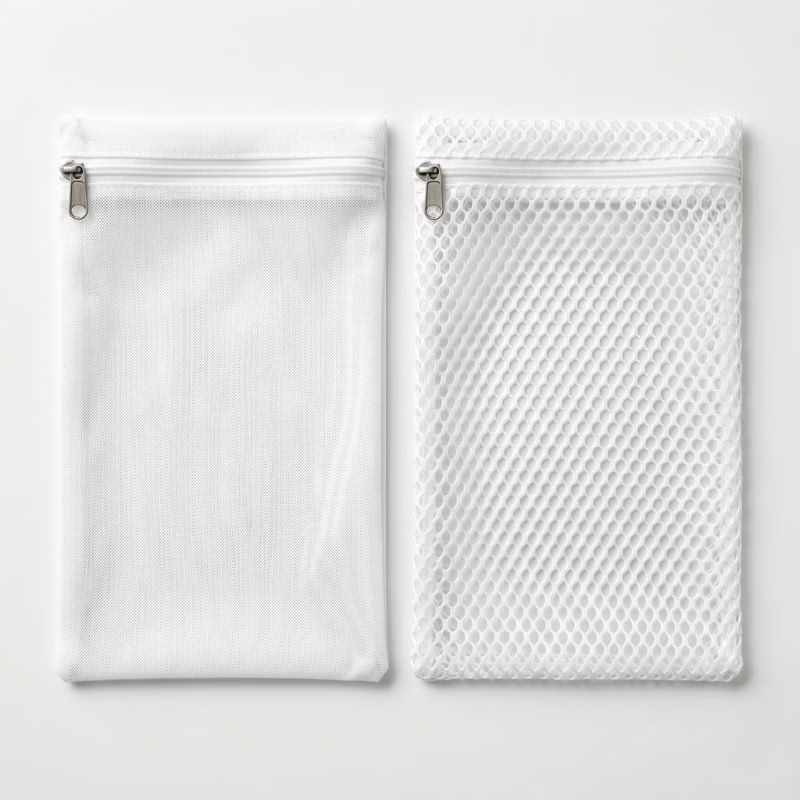
There are two primary mesh types that matter when selecting bags for different item categories:
Understanding this distinction helps procurement teams match the right product to the right application — and avoid returns or damage complaints down the line.
1. Bras and Underwire Lingerie
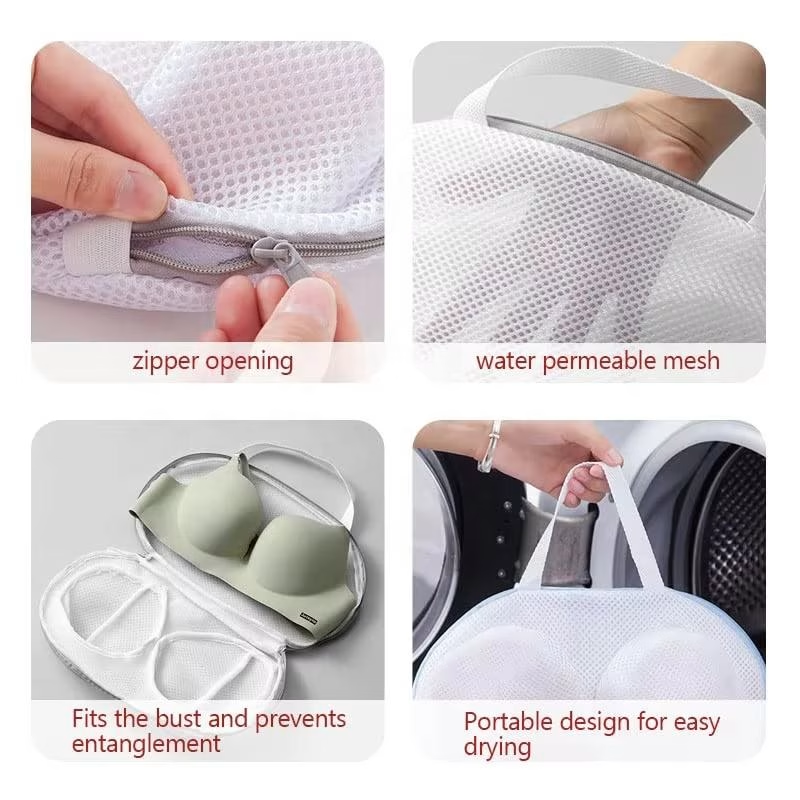
Bras are the most commonly cited reason people start using laundry bags mesh products in the first place — and with good reason. Underwire can bend or puncture through fabric when tumbling freely. The hooks and clasps on the back of bras catch on other garments, causing pulls and snags across an entire load.
A fine mesh bra laundry bag keeps the bra contained and prevents its hardware from becoming a hazard for everything else in the drum. Look for bags with a semi-rigid structure or padded compartments for the cups, which prevents the bra from losing shape during agitation. The sandwich mesh bra laundry bag set uses a layered construction specifically designed to hold bra cup shape while washing — a design detail that matters to end consumers.
For retail buyers sourcing a range, the 15*16cm sandwich bra mesh laundry bag offers fine mesh construction in a consumer-friendly multi-pack format suited to lingerie care.
2. Socks and Hosiery
Socks vanish in the wash — it’s such a universal experience that it’s become a cliché. But the real problem isn’t disappearance; it’s that socks pair-separate, tangle inside trouser legs, and stretch in awkward directions when tumbling loose.
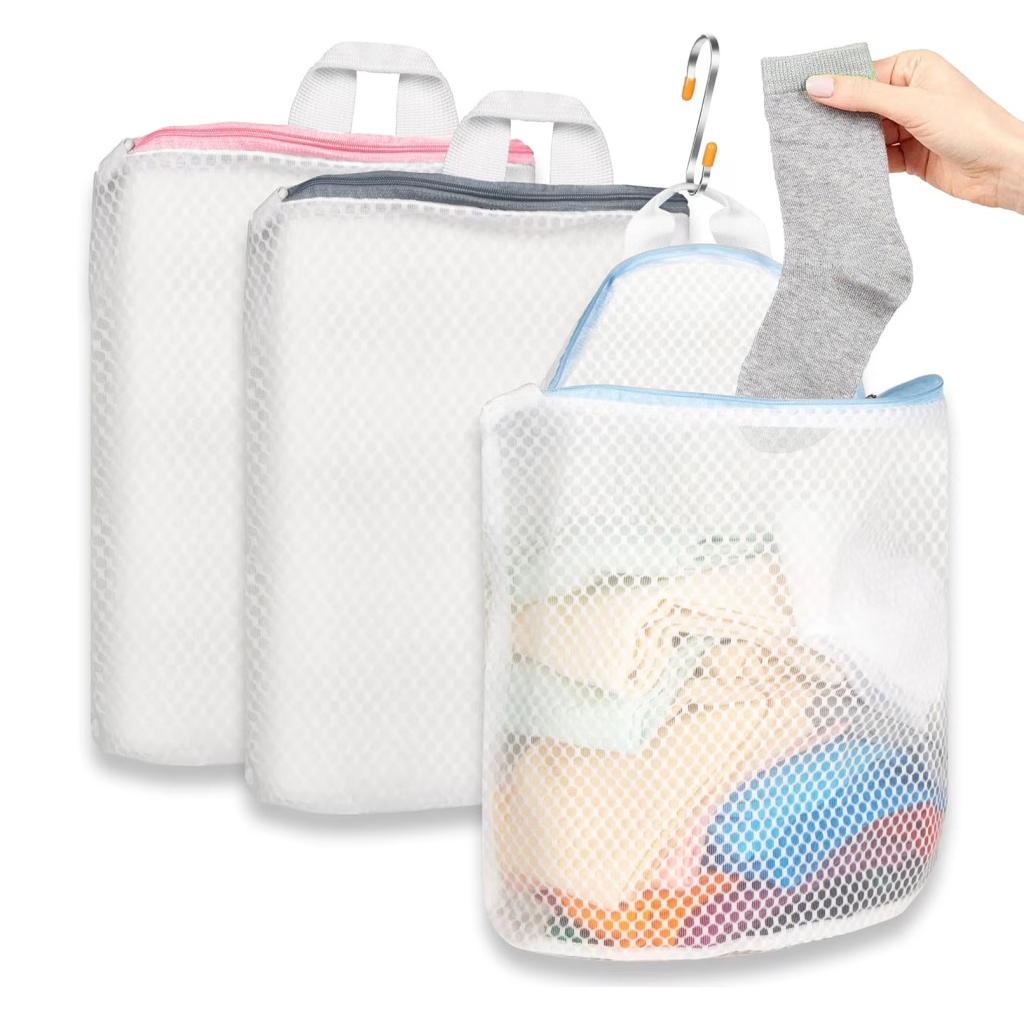
A dedicated sock bag — typically a fine mesh bag in a small format — keeps pairs together and reduces stretching from uneven agitation. This is especially relevant for wool socks, compression socks, and fine hosiery, all of which can lose elasticity fast under mechanical stress.
For businesses stocking laundry accessories, a small laundry bag in fine mesh is the right starting point for hosiery applications. The bag’s compact size means it doesn’t take up drum space unnecessarily and can be dedicated solely to socks per load.
3. Swimwear and Athletic Wear
Lycra, spandex, and elastane-based fabrics — the core materials in swimwear and athletic wear — are particularly vulnerable to heat and agitation. These synthetic fibers lose elasticity when exposed to high-spin cycles and friction.
Using a laundry bags mesh option for swimwear also addresses another issue: chlorine-treated swimsuits can transfer residual chlorine to other garments in the wash if left to tumble freely. A mesh bag contains that residue while still allowing rinse water to flush through.
For volume buyers, the set of 5 thickened coarse mesh laundry bags offers the durability needed for heavier athletic gear while still providing meaningful protection for synthetic stretch fabrics.
4. Delicate Knitwear and Wool Items
Wool and fine knitwear items are among the most frequently damaged items in machine washing. The combination of mechanical agitation and heat causes the fibers to felt — a process where scales on wool fibers interlock permanently, resulting in irreversible shrinkage and stiffening.
A mesh bag reduces the physical agitation transferred to knitwear by keeping the garment in a contained space. Paired with a cold, gentle cycle and a wool-safe detergent, it’s an effective way to machine-wash items that might otherwise need hand-washing or professional cleaning.
For product teams sourcing a full laundry care range, consider the set of 7 thickened fine mesh bags — a set that covers multiple garment types across one household or laundry facility.
5. Baby Clothes and Children’s Garments
Baby clothes are small, soft, and often decorated with buttons, snaps, or embroidered patches. In a standard machine wash, these items can stretch, tangle, or get caught on adult garments — and small buttons can work loose and become hazards if lodged in drum seals.
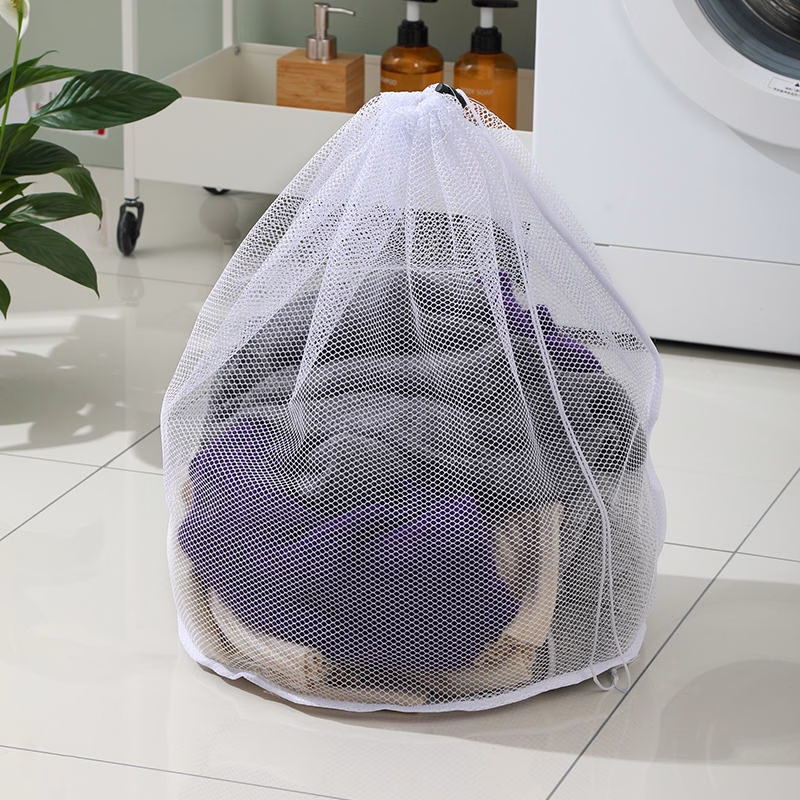
Keeping infant and toddler clothing in a laundry bag for washing machine loads solves all of these issues at once. The bag keeps tiny items together, prevents tangling, and stops small decorative elements from snapping off under agitation.
From a retail perspective, this is a strong selling point for any laundry bag set targeting family households. The set of 7 fine mesh laundry bag set includes multiple size options that map directly to sorting baby clothes by type — ideal for parents who do daily laundry in volume.
6. Embroidered and Decorated Garments
Embroidery, sequins, beading, and iron-on patches add texture and decorative value to garments — but they’re also the first things to snag, fray, or detach in a machine wash. The abrasion from tumbling repeatedly against other garments and the drum is enough to loosen thread ends and pull sequins free within a few cycles.
A fine mesh laundry bag creates a contained wash environment where embroidered surfaces are shielded from external friction. For institutional buyers — hotels, resorts, uniform suppliers — this matters significantly when garments with branded embroidery need regular laundering without degradation.
Our thickened white mesh laundry bag with embroidered logo is itself an example of how durable construction and embroidered detailing can coexist — a product that demonstrates quality visually while protecting the contents inside.
7. Shoes and Sneakers
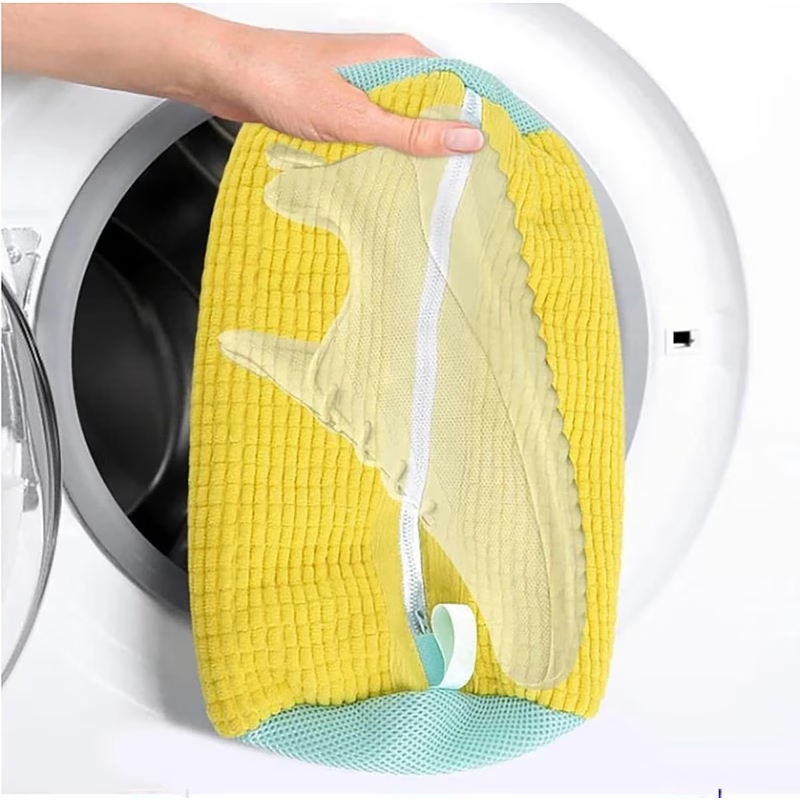
Shoes in a washing machine are a source of noise, uneven drum loading, and potential drum damage if they’re allowed to tumble freely. Canvas sneakers, sports trainers, and fabric shoes can be machine-washed — but only with proper containment.
A mesh washing bag designed for shoes serves two functions: it keeps the shoes contained to reduce drum impact, and it keeps laces from tangling around the agitator or other garments. The coarser mesh options work better here since shoes need ventilation and the mesh needs to handle heavier weight without tearing.
For procurement teams buying laundry products for hospitality or sports facilities, the shoes with shoe bag wash provides the structural integrity needed for shoe washing at volume.
8. Items with Zippers, Velcro, or Metal Hardware
Zippers, metal buttons, Velcro strips, and decorative hardware are among the biggest sources of damage in a mixed laundry load. A metal zipper left open during a wash can scratch glass drum doors and snag adjacent fabrics within a few rotations.
Containment in a laundry bag for washing machine cycles means that any hardware-bearing garment — denim jackets, hooded sweatshirts, utility vests — is isolated from softer fabrics in the same load. This is a simple operational habit that reduces returns and damage complaints significantly in commercial laundry settings.
The laundry bag with zipper category is worth noting here: the bag’s own zipper should be rust-proof and non-slip, so the containment solution doesn’t introduce the same hazard it’s designed to prevent. All products from our range use rust-proof zipper closures to address exactly this concern.
How to Choose the Right Laundry Bags Mesh Type for Your Range
Selecting the right mesh bag product comes down to four variables: mesh density, bag size, closure type, and material thickness. Getting this combination right matters whether you’re building a retail product line or sourcing for institutional laundry applications.
Mesh Density
Fine mesh (tight weave) is appropriate for lingerie, hosiery, and embroidered items where the protection barrier needs to be close. Coarse mesh (open weave) works for shoes, larger garments, and items that need ventilation to prevent odor buildup during the wash.
Bag Size
Matching bag size to item category is something buyers often overlook. An oversized bag allows too much internal movement, which partially defeats the protection purpose. A bag that’s too small can stress seams and prevent proper water circulation. A laundry bag set that includes multiple sizes in one package is the most practical option for varied consumer or institutional use.
Closure Type
Zipper closures outperform drawstrings for most machine-washing applications because they stay secure under agitation. Look for rust-proof, non-slip zippers — this is standard on our product range and is particularly important for longevity in high-frequency commercial use.
Material Thickness
Thicker mesh resists abrasion from the drum and from repeated washing far better than single-layer mesh. For institutional buyers or private-label customers, the colorful thickened fine mesh laundry bags and white thickened fine laundry bags offer the thickness and durability profile suited to higher wash frequencies.
What Buyers and Procurement Teams Should Know Before Ordering
Sourcing laundry bags mesh products at volume requires a slightly different evaluation process than individual retail purchasing. Here’s what matters most at the procurement stage.
OEM and Customization Options
For brands that want their own product identity — logo on the bag, custom packaging, or specific color codes — OEM manufacturing is the practical route. Our facility has offered OEM production since 2014, with the option for embroidered logos (see the sandwich carton cleaning fine mesh laundry bag with embroidery) and fully customized designs across mesh type, size, and color.
The set of 5 thickened coarse mesh laundry bags with customized logo is a ready example of what a private-label product looks like within our standard range.
Material Safety and Compliance
Our raw materials are environment-friendly, and our products are tested to pass REACH and related standards — the European Chemical Agency’s regulation on chemical substances that affects any product sold in EU markets. For buyers supplying into Europe, North America, or Japan, this compliance documentation matters and is available on request.
Market Coverage
Our current customer base spans Europe, North America, South America, Korea, and Japan — markets with distinct consumer expectations around product quality and packaging. If you’re sourcing for a market-specific retail line, it helps to work with a manufacturer who already understands those market requirements from experience rather than assumption.
Minimum Order and Lead Times
Specific MOQ figures and lead times vary by product configuration and customization level. The clearest path to accurate information is to request a quote directly — but most buyers find that our wholesale pricing structure is competitive for orders at mid-to-high volume, and sample availability makes the evaluation process practical before committing to a full order.
Explore the full range on our products catalog to get a complete picture of available configurations.
Using Laundry Bags for Washing Machine Loads: Step-by-Step
For content teams or product packaging writers looking for clear usage guidance to accompany product listings, here’s a concise walkthrough:
-
Sort before bagging. Group items by fabric type and care requirement, not just color. Delicates go into fine mesh; heavier items go into coarse mesh.
-
Fill to 70–80% capacity. A bag that’s too full restricts water circulation. Items need room to move slightly inside the bag for cleaning to work effectively.
-
Secure all closures. Close zippers on the bag and on any items inside the bag (jacket zippers, for example) before loading. This prevents internal snagging.
-
Place in the drum without cramming. The mesh bag can go in alongside other items. Avoid jamming it against the drum wall or agitator.
-
Select the appropriate cycle. Fine mesh loads typically align with gentle or delicate cycles; coarse mesh loads for shoes or heavier items can often handle a standard or sports cycle. Follow the garment care label.
-
Remove promptly after the cycle. Leaving wet items in a sealed mesh bag encourages mildew. Open the bag and either air-dry or move items to the dryer based on care instructions.
-
Clean the bag itself periodically. Detergent residue and lint build up in mesh over repeated washes. A monthly rinse of the bags keeps them functioning properly.
When to Replace Your Mesh Washing Bag
Mesh bags don’t last indefinitely. Over time, zippers corrode, mesh holes enlarge or develop tears, and the seam stitching weakens. Using a damaged bag can transfer those damage risks directly to the garments inside.
The general indicators for replacement are: visible tears in the mesh, a zipper that no longer closes fully or securely, or seam separation at any corner. In commercial and institutional settings where bags are used multiple times per week, a scheduled replacement cycle — reviewing bags every 3–6 months — is worth building into the procurement process.
Thickened mesh construction extends service life significantly compared to standard single-layer bags, which is why our wholesale range emphasizes thickened options. For buyers looking to reduce per-unit replacement frequency, the initial cost difference between standard and thickened bags pays back quickly in longevity.
Ready to Source Directly from the Manufacturer?
Established in 2014, our facility manufactures laundry mesh bags, bra laundry bags, washing bags for shoes, storage bags, laundry baskets, and drawstring mesh products for buyers and brands across Europe, North America, South America, Korea, and Japan. Every product is made with environment-friendly raw materials and can pass REACH and related compliance testing.
When you source directly from the manufacturer, you skip the intermediary margin, get access to OEM and custom design options, and work with a team that understands both product specifications and market expectations across multiple regions.
If you’re evaluating suppliers, requesting samples is the fastest way to assess construction quality firsthand. Reach out through our website to request a catalogue, discuss specifications, or start a sample order — we’re set up to support both wholesale accounts and private-label programs.
Frequently Asked Questions
1. What minimum order quantity is available?
Minimum order quantity depends on size, material, color, logo, and packaging. Standard mesh laundry bags usually have easier order planning than fully customized designs. Reach out with your target specification to receive a clear MOQ and quotation.
2. How can we customize laundry bags mesh products?
You can customize size, mesh type, color, zipper, logo, set combination, and packaging. Options include printed logos, embroidered logos, woven labels, custom color mesh, and retail-ready packing. Contact us to request samples based on your product plan.
3. Why request samples before bulk production?
Samples help confirm mesh feel, zipper function, stitching, size, logo placement, and packaging. They also help your team compare options before order approval. Sample review is useful for both new product launches and repeat order updates.
4. Do mesh laundry bags support compliance testing?
Yes, testing can be arranged based on buyer requirements and target market. Products can pass REACH and related tests when required. Reach out for detailed specifications, testing needs, and available material options.
5. Can we order mixed-size laundry bag sets?
Yes, mixed-size sets are common for retail and private label programs. A set can include small, medium, large, and extra-large bags in fine mesh, coarse mesh, or thickened mesh. Contact us to build a set around your sales channel.