
Knowing how to wash a hat starts with its construction. A baseball cap combines fabric, stitching, a sweatband, brim reinforcement and sometimes foam or printed graphics. Those parts may respond differently to water and machine movement. A washable fabric exterior does not mean the complete cap can be soaked or put through a washer.
Choose between spot cleaning, hand washing and machine washing according to the care label and the cap’s condition. A mesh bag belongs only in the machine-washing route when that route is permitted. It cannot guarantee shape retention. How you handle the cap while damp, and how you support it during drying, also matter.
Check the Care Label and Cap Construction Before Washing
Read the care label before selecting a detergent or filling a basin. Follow its washing, temperature and drying restrictions. If the label is missing or unclear, check the cap maker’s care instructions before attempting immersion.
Then inspect the cap itself:
- Brim: Some older caps contain cardboard or paperboard reinforcement, which can swell, split or deform after soaking. Do not assume the brim contains plastic simply because its outer fabric looks modern.
- Crown: Check for existing dents, loose seams, fragile lining and crumbling foam.
- Decoration: Look for cracked graphics, lifting patches or loose embroidery.
- Fabric: Delicate wool and vintage materials need particular care. A general washing method may be unsuitable.
A plastic brim does not establish that the rest of the cap tolerates machine washing. Machine movement can distort the crown, crack graphics and worsen deterioration in older components.
Use localized cleaning when the dirt is limited to a small area and the care instructions allow it. Choose hand washing only when washing is permitted. Reserve the washer for caps with clear machine-washing instructions. For valuable vintage or delicate wool caps, consult a cleaner experienced with hat construction and ask whether the particular cap is suitable for treatment.
Start with Spot Cleaning for Sweatbands and Localized Dirt
A dirty sweatband does not always call for soaking the whole cap. Localized cleaning lets you work on the affected area without wetting every component.
- Remove loose dirt. Gently brush away surface dust before applying a cleaning solution.
- Choose a compatible cleaner. Use the cap’s care instructions and the cleaner’s directions to select and dilute it. Avoid applying concentrated detergent directly unless instructed.
- Check a hidden area. Apply a little solution and inspect for color transfer or a change in appearance before treating visible surfaces.
- Work on the sweatband. A soft toothbrush can reach the inner band and seams. Use light strokes rather than scrubbing the entire cap aggressively.
- Remove the cleaner. For a cap that allows damp cleaning, wipe the treated area with a clean damp cloth, repeating as needed to remove residue without saturating the brim.
Stop if color transfers, a graphic starts lifting or the fabric surface changes. Do not keep scrubbing an old sweat mark simply because it remains visible. Some marks persist even after cleaning.
How to Hand Wash a Cap That Allows Washing
Hand washing is an option for a washable cap whose instructions permit it. It is not a workaround for a no-wash label or an unidentified vintage brim.
- Prepare the water and detergent. Follow the cap label for water temperature and the detergent label for dilution. There is no single temperature or detergent dose suitable for every hat.
- Clean gently. Support the crown and brim as you move the cap through the water. Do not twist, wring or fold the brim.
- Address remaining dirt locally. Use gentle brush or sponge contact on suitable areas. Avoid forceful rubbing over prints and fragile components.
- Rinse carefully. Use clean water and continue until the cleaning solution has been removed. Keep supporting the cap instead of pulling it around by the brim.
- Remove excess water. Gently blot with a clean towel without flattening the crown, then begin reshaping.
Do not add a long soak by default. Follow any soaking instructions supplied for the cap and cleaner; do not soak a cardboard-brimmed vintage cap.
During hand cleaning, support the crown while gently brushing or sponging suitable areas, then rinse until the cleaner has been removed. This is a separate approach for maintaining support during cleaning. It does not demonstrate that a mesh bag preserves cap shape, and it should not override the cap’s care instructions.
When to Use a Mesh Bag for Machine Washing
Use a mesh bag only after confirming that the cap permits machine washing. A hand-wash-only instruction still applies when a bag is available.
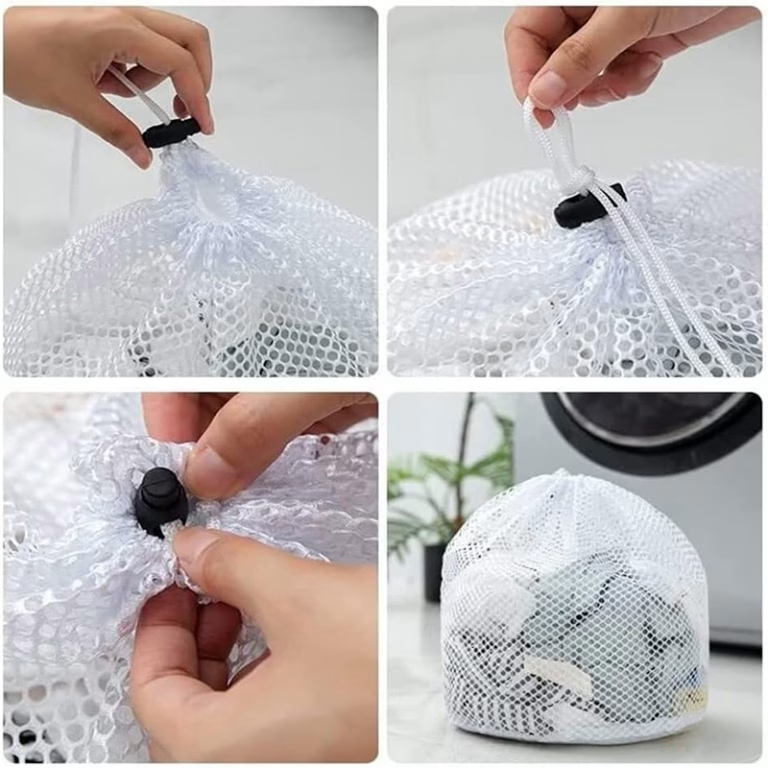
A mesh bag keeps the cap contained during the wash. However, a soft bag does not hold the crown and brim in a fixed position. The cap still experiences water, detergent, drum movement and spin extraction, so deformation remains possible.
- Pretreat suitable dirty areas. Clean the sweatband or localized marks gently before loading.
- Check the bag. Inspect its seams and closure. Choose enough space to enclose the cap without folding the brim or crushing the crown.
- Close it securely. Make sure no part of the cap is caught in the closure.
- Follow the permitted settings. Where compatible with the cap’s instructions, choose gentle machine movement and brief spin extraction. Do not assume a program name alone establishes suitability.
- Remove and reshape promptly. Open the bag after the cycle and inspect the damp cap before drying.
For general bag selection, see the mesh laundry bag selection guide. Material options are discussed in the laundry-bag material comparison. Neither bag material nor mesh thickness should be treated as proof that a particular cap can withstand machine washing.
Reshape While Damp and Support the Crown During Air Drying
A cap can look acceptable straight after washing and become visibly misshapen as it dries. Inspecting it while wet is only part of checking the outcome.
While the cap is still damp, gently smooth the crown and guide the brim toward its original curve. Correct distortion at this stage rather than waiting until the brim has dried in a warped position, when recovery is harder. Avoid forcing a sharp crease in the opposite direction.
Support the crown over a rounded object, such as a clean bowl or ball, that fits without stretching it. Let the brim rest in its intended shape. Choose a stable position where the support does not push the crown outward.
Air dry according to the care instructions. Once fully dry, inspect the crown profile, brim curve, seams and decoration again. For retailers assessing a laundry accessory, the fully dried result is more useful than a photograph taken immediately after removal from the washer.
Troubleshooting: Distorted Brims, Persistent Stains and Permanent Wear
The brim is beginning to warp
If it is still damp, gently guide it toward its original shape and support it during drying. Do not repeatedly bend it back and forth. A brim that has already dried unevenly may be harder to recover, especially if its internal reinforcement has deteriorated.
The crown has dents or looks collapsed
Adjust the damp crown over a suitable rounded support without stretching it. Check whether the problem is temporary distortion or damaged internal material. Crumbling foam cannot be repaired by another wash.
Sweat marks remain after cleaning
Old sweat marks may remain. Before repeating treatment, inspect the fabric and decoration and review the cleaner’s directions. More detergent, stronger rubbing or a longer soak should not be the automatic response.
The cap still looks old
Cleaning has limits. Sun fading, deep yellowing and deteriorated foam can be largely permanent. Removing surface dirt does not restore lost color or rebuild damaged components. For a cap with sentimental or financial value, seek advice from a specialist familiar with hats before further treatment.
What Retailers Should Explain About Cap-Washing Bags
Customer-care content should make the decision sequence clear: check the cap, confirm the permitted cleaning method, select a suitable bag if machine washing is allowed, and reshape during drying. Avoid presenting any bag as permission to wash every cap.
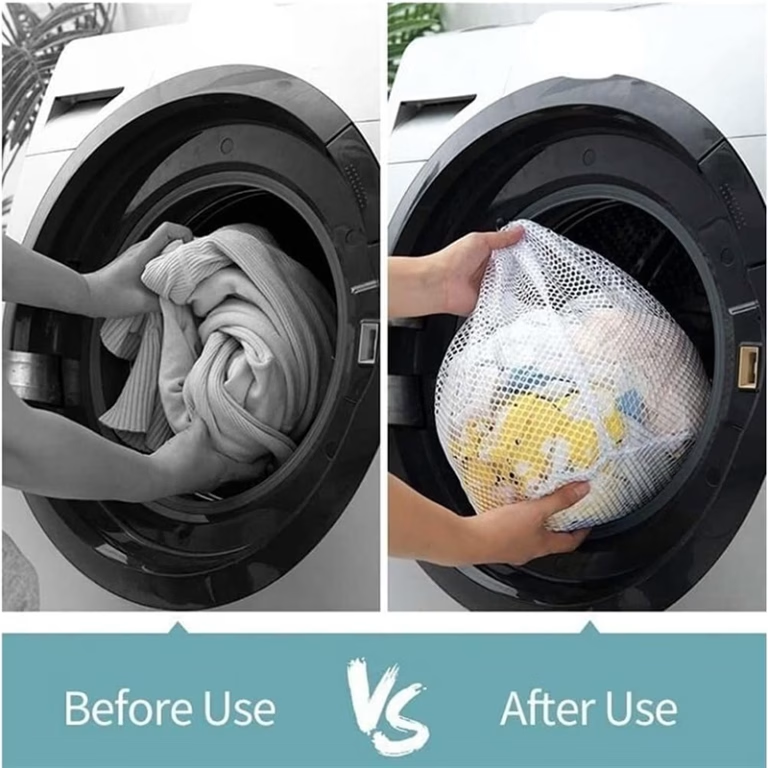
Yiwu Yihang Daily-Use Commodity Co., Ltd. has manufactured laundry mesh bags and other laundry and storage products since 2014 in Yiwu, Zhejiang, China. Its polyester laundry-bag range includes fine, coarse, honeycomb, sandwich/3D and thickened mesh. These are available constructions; they do not establish that one option protects caps better than another.
Retailers can review the product catalog and discuss OEM orders, custom designs and embroidered or custom-logo bags. Europe and Japan are among the company’s main markets. For localized care inserts, keep the distinction between baseball caps and knitted hats clear, and preserve the care-label conditions in every language.
FAQ
Can a hat safely go through a washing-machine cycle?
Some caps permit machine washing, but the label and condition must guide the decision. Follow the permitted settings and use a mesh bag where appropriate. A bag does not eliminate distortion risk or make a hand-wash-only, fragile or cardboard-brimmed cap machine washable.
Is dishwashing liquid suitable for cleaning a hat?
Do not assume it is suitable for every cap. Follow the cap maker’s cleaning guidance and the cleaning product’s directions. If dishwashing liquid is not specifically recommended, choose a cleaner identified as suitable for the cap’s material and intended washing method.
Can a hat be sanitized without a full wash?
Spot cleaning addresses dirt, but it does not establish sanitizing performance. Any sanitizing treatment needs instructions covering both its intended use and compatibility with the cap. Do not assume that ordinary detergent, freshening sprays or air drying provide sanitization.
Is tumble drying suitable for hats?
Use a tumble dryer only if the cap’s care instructions explicitly permit it, and follow the specified settings. A laundry bag’s dryer suitability does not establish the hat’s suitability. For caps intended for air drying, reshape while damp and support the crown as it dries.