
Sheets should come out of the dryer dry, loose, and easy to fold. Instead, many people open the dryer and find one tight fabric knot: a fitted sheet wrapped around pillowcases, a damp corner hiding inside, and wrinkles set deep into the fabric. A mesh laundry bag for sheets can help reduce this problem by keeping bedding contained while still allowing air to move through the load.
For buyers, product managers, and wholesale teams, this is more than a home laundry tip. It is a product opportunity. Large bedding-friendly laundry bags solve a common pain point for households, laundromats, hotels, dorm suppliers, and linen care programs.
Why Sheets Twist and Ball Up in the Dryer
Sheets twist in the dryer because they are large, light, and flexible. A flat sheet can spread wide, fold over itself, and wrap around smaller items. A fitted sheet adds another challenge because its elastic corners can catch fabric and pull pillowcases or clothing into the center. Once that ball forms, warm air cannot reach the inner layers evenly.
The problem usually comes from a few common causes:
- The dryer is loaded too full.
- Sheets are dried with small garments.
- Fitted sheets trap other items inside the elastic corners.
- The load has too little open space for tumbling.
- Heat is too high, causing fabric to dry unevenly.
- Sheets are placed in the dryer already twisted from the washer.
Dryer airflow is the main issue. The U.S. Department of Energy recommends avoiding overdrying and using dryer features that help stop the cycle when items are dry, because overdrying can add fabric wear while wasting energy.
For commercial product planning, this pain point is easy to understand. A customer may not know fabric engineering, zipper grades, or mesh density, but they know the frustration of wet bedding stuck inside a dry outer layer. That makes sheet-friendly laundry bags easy to explain on retail packaging, online product pages, and wholesale catalogs.
A mesh laundry bag is not a magic drying machine. It will not fix an overloaded dryer or a poor heat setting. It can, however, help control fabric movement. When the bag is sized correctly, sheets have room to move inside the bag instead of wrapping around every item in the dryer.
Common Sheet Drying Problems and Causes
| Problem | Likely Cause | Practical Fix |
|---|---|---|
| Damp center after drying | Sheet rolled into a tight ball | Use a large mesh bag and reduce load size |
| Heavy wrinkles | Fabric dried while twisted | Shake sheets before drying |
| Pillowcases trapped inside fitted sheet | Elastic corners catch smaller items | Dry bedding items separately |
| Long drying time | Poor airflow | Clean lint filter and avoid overloading |
| Fabric wear | Too much heat or overdrying | Use a suitable heat setting and check care labels |
For buyers, the main lesson is simple: the product must balance containment and airflow. If the bag is too small, it can create a new problem instead of solving one. Weak construction may cause it to fail after repeated use, while the wrong mesh can restrict airflow too much. The right design makes the difference between a useful bedding accessory and a product customers stop using.
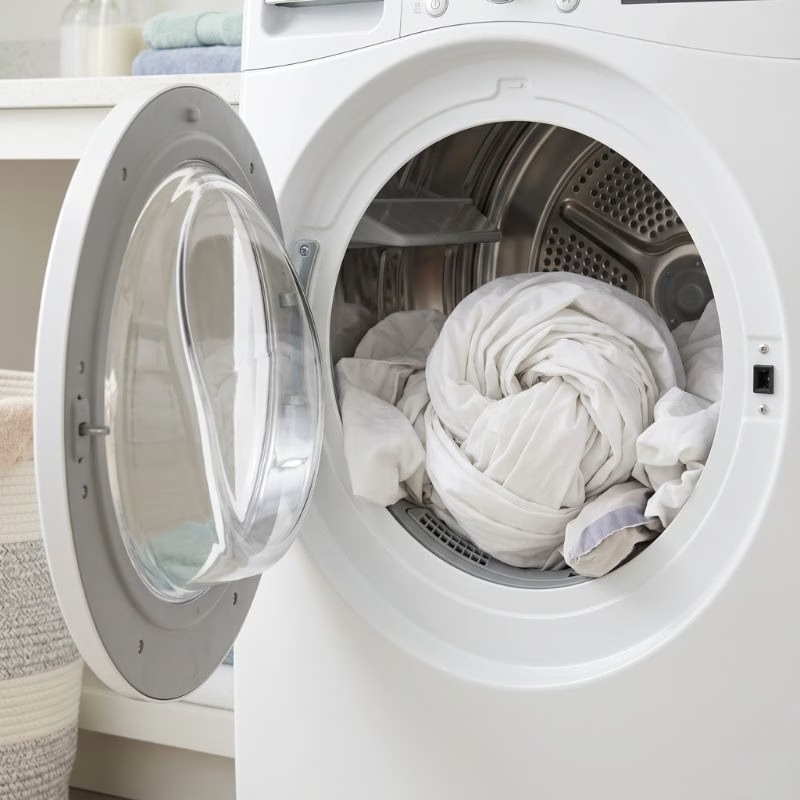
Why a mesh laundry bag for sheets Reduces Dryer Twisting
A mesh laundry bag for sheets helps by giving large fabric items a soft boundary. Instead of spreading across the whole dryer drum, the sheet stays inside a breathable bag. The mesh lets warm air pass through while the zipper or closure keeps the sheet from wrapping around pillowcases, socks, towels, or clothing.
The key is controlled movement. The sheet should still tumble, but it should tumble inside a defined space. That reduces the chance of a fitted sheet forming a tight fabric pocket around smaller items.
For bedding, size is the first buying factor. A bag must be large enough to hold a folded or loosely placed sheet without packing it tightly. If the sheet is pressed into a small bag, airflow drops and drying may take longer. If the bag is too open or weak, it may not manage the load well.
A well-designed mesh laundry bag can support:
- Better separation between bedding and garments
- Less twisting during the drying cycle
- Lower risk of small items hiding inside fitted sheets
- Easier sorting for shared laundry spaces
- Cleaner handling for hotels, dorms, and laundromats
- More organized washing and drying routines
For procurement teams, the value is not only in home use. Sheet-sized laundry bags can be sold as part of bedding care sets, dorm move-in kits, hospitality laundry programs, apartment laundry accessories, and household storage lines.
A mesh laundry bag also fits well with customer education. Simple packaging instructions can improve user satisfaction:
- Shake the sheet loose before placing it in the bag.
- Do not stuff the bag too tightly.
- Zip the bag fully before washing or drying.
- Dry bedding separately from small garments.
- Pause the cycle once to loosen the sheet if needed.
What Mesh Does in the Dryer
| Bag Feature | Function | Buyer Benefit |
|---|---|---|
| Breathable mesh | Allows air to pass through | Helps sheets dry more evenly |
| Large size | Gives bedding room to move | Reduces tight bunching |
| Zipper closure | Keeps sheets contained | Prevents smaller items from being trapped |
| Reinforced seams | Handles repeated tumbling | Better fit for repeat-use programs |
| Soft fabric edge | Reduces harsh friction | Better user experience |
Not every mesh laundry bag is suitable for sheets. Small garment bags are made for bras, socks, underwear, or baby clothes. Bedding needs a larger format, stronger seams, and smooth zipper protection. That is why buyers should review dimensions, mesh weight, seam style, zipper type, and packing options before placing bulk orders.
You can review general product categories through the laundry mesh bag product range to compare sizes, mesh types, and packaging styles.
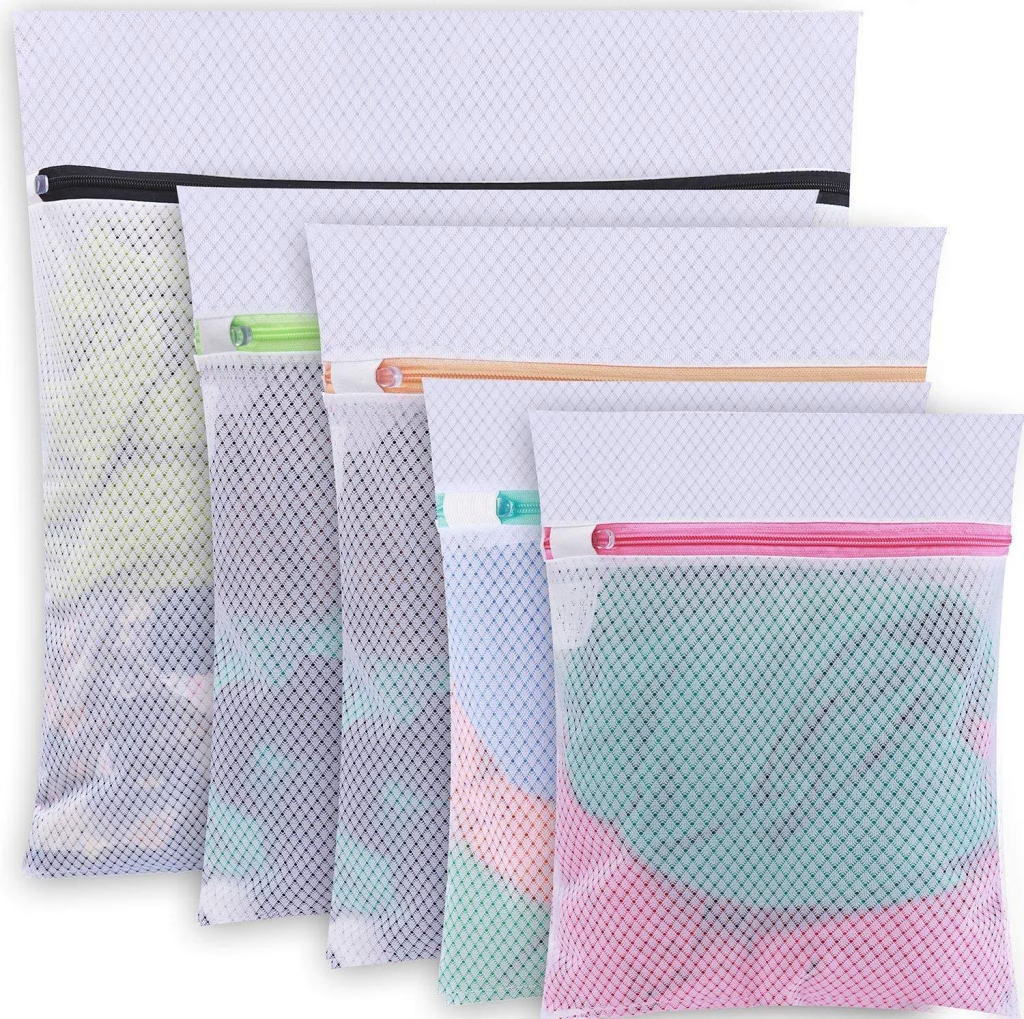
How to Use a mesh laundry bag for sheets in the Dryer
Using a mesh laundry bag for sheets is simple, but small habits affect the result. The goal is not to pack the sheet tightly. The goal is to guide the sheet so it dries with less twisting.
Start by removing the sheet from the washer and shaking it open. This step helps release any knots formed during washing. If the sheet goes into the dryer already twisted, the dryer may keep that twist in place.
Next, fold the sheet loosely. Do not roll it into a tight bundle. Place it inside a large mesh bag with room for movement. Close the zipper fully and tuck the zipper pull under the cover if the design includes one. A zipper cover helps protect both the bag and the dryer drum.
For fitted sheets, pay attention to the corners. Elastic edges are useful on the bed, but they can catch fabric in the dryer. Before placing a fitted sheet in the bag, hold two corners, shake it open, and loosely fold the elastic inward. This lowers the chance of the elastic acting like a pocket.
Step-by-Step Dryer Method
- Shake the sheet open after washing.
- Check the care label for drying temperature.
- Fold loosely, leaving air space.
- Place one sheet or one light bedding set in the mesh bag.
- Close the zipper fully before drying.
- Use a moderate load size so the bag can tumble.
- Pause halfway and shake the bag if the dryer load is heavy.
- Remove soon after drying to reduce wrinkles.
Some customers may ask whether a sheet can dry inside a bag. The answer depends on size, mesh openness, load volume, and dryer setting. A breathable mesh bag can help airflow, but it should not be overfilled. For very large bedding, buyers may consider larger bag formats or advise customers to dry one bedding item at a time.
Do and Do Not Guide
| Do | Do Not |
|---|---|
| Use a large breathable bag | Stuff a king sheet into a small bag |
| Shake sheets before drying | Dry sheets already twisted |
| Zip the bag fully | Leave the zipper partly open |
| Keep the dryer load moderate | Mix sheets with many small garments |
| Check care labels | Use high heat for every fabric |
For wholesale packaging, this type of simple instruction is useful. It lowers misuse and helps customers get better results. A product insert or printed care card can explain how to use a dryer bag for sheets in plain language. That small addition can support repeat orders, fewer complaints, and better reviews.
Image for this section
- Image title: Step-by-Step Sheet Bag Dryer Use
- Image description: A clean visual showing a sheet being shaken, folded loosely, placed into a mesh bag, and loaded into a dryer.
- SEO friendly file name: how-to-use-mesh-laundry-bag-for-sheets.jpg
- Alt text: Step-by-step use of a mesh laundry bag for sheets before drying bedding
- AI image generation prompt: Four-step instructional product scene, hands shaking a white bed sheet, loosely folding the sheet, placing it inside a large zipper mesh laundry bag, loading it into a dryer, bright home laundry room, clean layout, realistic photography, no text overlay.
Choosing the Right mesh laundry bag for sheets for Wholesale Programs
A mesh laundry bag for sheets should be selected with real user behavior in mind. Many customers will not measure sheets before buying. They will rely on product images, size labels, and package claims. Buyers need to choose a design that is forgiving enough for daily use.
The first decision is size. For bedding, a larger bag is usually easier to use than a compact garment bag. A sheet needs room to shift as the dryer drum turns. If the bag is too small, the sheet may stay folded in a thick mass and dry slowly.
The second decision is mesh type. Fine mesh offers more protection for delicate items, while coarse mesh allows more open airflow. For sheets, coarse or medium mesh is often practical because bedding needs movement and air passage. Fine mesh can still work for lightweight sheets, pillowcases, and storage sets, but buyers should test drying performance with the intended fabric.
The third decision is closure design. Zippers are common because they keep items contained. For dryer use, the zipper should feel smooth, close securely, and include protection around the puller. A weak zipper can open during tumbling, which defeats the purpose of the bag.
Key Specification Factors
| Specification | Why It Counts | Buyer Review Point |
|---|---|---|
| Bag dimensions | Must fit bedding without tight packing | Test with twin, queen, and king samples |
| Mesh density | Affects airflow and protection | Choose based on use case |
| Zipper type | Keeps sheets contained | Check puller, cover, and stitching |
| Seam strength | Handles load weight | Review repeated wash and dry cycles |
| Fabric hand feel | Affects customer perception | Confirm softness and thickness |
| Custom branding | Supports private label programs | Review logo and packaging options |
Storage-focused sets may work well with either drawstring or zipper designs. When the bag is intended for dryer use, zipper styles often provide more secure containment. Retail buyers may also choose multiple bag sizes so customers can use one set for sheets, pillowcases, socks, and delicate garments.
A product such as the set of 5 thickened coarse mesh laundry bag set can support assorted laundry needs, while larger or thickened options may be better suited for bedding care programs. Buyers comparing fine and coarse mesh can also review the set of 7 fine mesh laundry bag set for delicate wash categories.
For brand programs, customization can include size, logo, fabric color, zipper style, packaging card, barcode label, and carton packing. A supplier with manufacturing experience can help match product structure to the buyer’s sales channel.
Our company was established in 2014 and manufactures laundry mesh bags, bra laundry bags, washing bags for shoes, storage bags, laundry baskets, and drawstring mesh. Customers are located worldwide, including Europe, North America, South America, Korea, and Japan. OEM orders are welcome, customized designs are available, raw materials are environment friendly, and products can pass REACH and related tests.
Product Options: Matching Mesh Laundry Bag Designs to Sheet Care Needs
Different buyers need different product formats. A household brand may want a soft white bag with clean packaging. A dorm supplier may want a colorful set. A hotel supply buyer may prefer stronger white coarse mesh with a simple logo. A storage brand may need a set that works for both washing and closet organization.
A mesh laundry bag used for bedding should feel durable enough for large fabric loads. It should also be easy to explain. A customer should be able to look at the package and know which bag fits sheets, pillowcases, bras, shoes, or small garments.
Product Selection Table
| Use Scenario | Suggested Product Type | Relevant Product Link |
|---|---|---|
| Bedding and general laundry | Thickened coarse mesh set | set of 5 thickened coarse mesh laundry bag set |
| Retail variety pack | Colorful multi-size set | set of 3 colorful mesh laundry bag |
| Logo-focused wholesale program | Embroidered logo mesh bag | thickened white mesh laundry bag with embroidered logo |
| Coarse mesh private label | Customized logo coarse mesh set | set of 5 thickened coarse mesh laundry bag with customized logo |
| Fine mesh garment care | Fine mesh laundry set | set of 7 thickened fine mesh bags product |
| Korea-style retail design | Sandwich mesh style | sandwich mesh laundry bag in Korea style |
For buyers building a full product line, one bag is rarely enough. Customers often want a set. A larger bag can be used for sheets or towels, medium bags for shirts and underwear, and small bags for socks or delicate items. This set structure helps increase basket value while making the product easier to use.
Other useful product references include:
- set of 5 thickened white coarse mesh laundry bag for clean white assortments
- laundry bag set for multi-size retail planning
- laundry bag with zipper for secure closure designs
- small laundry bag for add-on sizes in a set
- colorful thickened fine mesh laundry bag wholesaler for color-coded programs
- white thickened fine laundry bag wholesaler for simple white product lines
- sandwich carton cleaning fine mesh laundry bag with embroidery for branded embroidery options
When planning a product range, buyers should test real bedding loads. A queen flat sheet, queen fitted sheet, and two pillowcases can behave differently from a lightweight summer sheet. Fabric thickness, weave, and moisture level can affect drying. Testing helps confirm which bag size and mesh structure fit the target market.
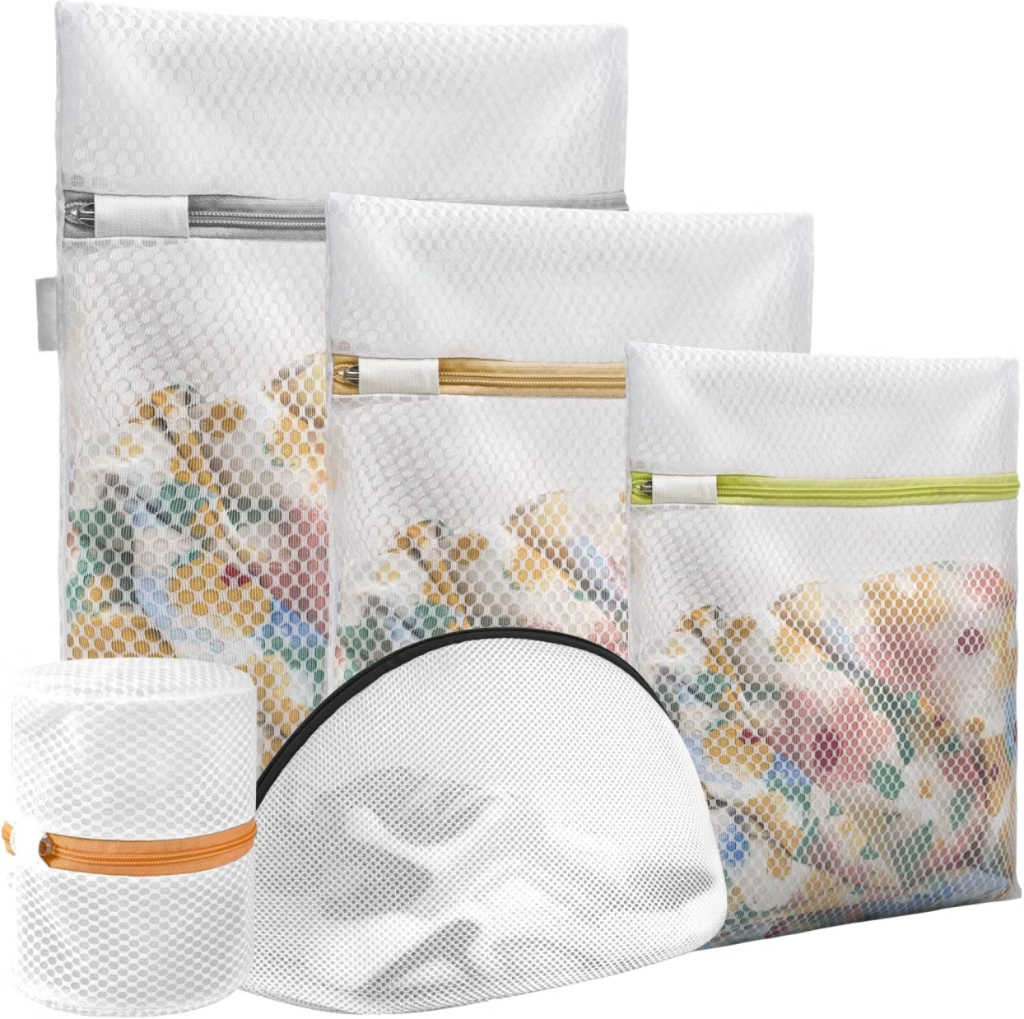
Material, Mesh, and Compliance Points Buyers Should Review
Laundry bags look simple, but buyers know simple products still need careful specification. Material, mesh density, zipper design, stitching, labeling, and compliance all affect the final product.
For sheet use, polyester mesh is common because it is light, washable, and suitable for repeated laundry cycles. Nylon mesh can also be used in some designs. The right choice depends on the target price, expected use, fabric feel, and buyer requirements.
Fine Mesh vs. Coarse Mesh
| Mesh Type | Better For | Buyer Notes |
|---|---|---|
| Fine mesh | Delicates, baby items, small garments | More protection, less open airflow |
| Coarse mesh | Sheets, towels, larger garments | More airflow and movement |
| Sandwich mesh | Thicker product feel, retail presentation | Good for structured designs |
| Thickened mesh | Repeat-use programs | Useful for heavier loads |
For bedding, coarse mesh or medium mesh often gives a practical balance. It contains the sheet while allowing more open air movement. Fine mesh may be better for delicate pillowcases, lingerie, or mixed sets where customers value protection.
Zipper quality deserves close review. A laundry bag may fail not because of the mesh, but because the zipper opens, snags, or breaks. A covered zipper pull is useful because it helps keep the puller from catching on fabric or hitting the dryer drum repeatedly.
Seams should be checked under repeated wash and dry cycles. Buyers can request samples and test them with real loads. For wholesale programs, a small sample test can prevent later issues in bulk orders.
Compliance is another key point for global buyers. The European Commission explains that REACH is the EU regulation for Registration, Evaluation, Authorisation and Restriction of Chemicals, and it includes a consumer right to know under Article 33 for certain harmful substances in products.
For laundry bag sourcing, this means buyers should ask for material details, test options, and documentation where needed. Products aimed at Europe, North America, Korea, Japan, and other markets may require different labeling or testing expectations.
Buyer Sample Testing Checklist
- Check actual size after washing.
- Test zipper movement before and after drying.
- Load the bag with bedding, not only small garments.
- Review seam strength after several cycles.
- Confirm logo durability if printing or embroidery is used.
- Check packaging strength for retail display.
- Ask about REACH and related test options.
- Review carton packing for warehouse handling.
A well-specified washable mesh bag for linens should feel practical, not overbuilt. Heavy construction may raise cost and drying time. Thin construction may reduce customer trust. The goal is a balanced product that matches the use case.
How Buyers Can Position a Laundry Bag for Bedding Care
A laundry bag for bedding has a clear customer story: fewer tangled sheets, easier laundry sorting, and better fabric handling. Buyers can position the product for several channels without changing the core design too much.
Home organization brands can place the product beside laundry baskets, dryer balls, garment bags, and closet storage items. College and dorm programs can offer a set with one large bag for bedding and smaller bags for socks or underwear. Hotels and serviced apartments can use laundry bags to separate linens by room, size, or washing group.
The message should stay practical. Customers respond well to clear claims they can understand:
- Helps reduce sheet twisting in the dryer
- Keeps bedding separate from small garments
- Useful for washing, drying, sorting, and storage
- Large size for sheets, pillowcases, and light linens
- Breathable mesh supports airflow
- Zipper closure keeps items contained
Avoid overpromising. A bag cannot guarantee perfectly wrinkle-free sheets in every dryer. Dryer size, load volume, fabric type, and user habits still matter. A more reliable claim is that the bag helps reduce twisting and supports better separation.
Packaging Copy Ideas
| Product Benefit | Customer-Friendly Copy |
|---|---|
| Less tangling | Helps keep sheets from wrapping around smaller items |
| Better organization | Separate bedding, garments, and delicates by bag size |
| Breathable design | Mesh fabric allows air and water to pass through |
| Easy use | Zip, wash, dry, and store |
| Wholesale branding | Custom logo, color, size, and packing available |
A strong product page should include clear dimensions, use cases, mesh type, closure type, care instructions, and real photos. If a bag is suitable for dryer use, state it clearly with usage guidance. If a design is mainly for washing and storage, say that as well. Clear product scope protects both buyers and end users.
For online marketplaces, image content is also valuable. Show the bag beside a sheet, not only as an empty folded product. A customer should be able to judge scale within seconds. For wholesale catalogs, include a simple table with size, material, color, logo method, packing, and MOQ notes if available.
Common Mistakes That Keep Sheets Twisted
Even with a mesh bag, user habits still affect drying results. Buyers can reduce returns and complaints by including simple instructions with the product.
The first mistake is overloading. A dryer needs space for fabric to lift and fall. If the drum is packed full, the bag cannot tumble well. Sheets may stay damp, and the user may blame the product instead of the load size.
The second mistake is using the wrong bag size. A small mesh laundry bag may be perfect for socks or underwear, but it is not enough for bedding. Buyers should clearly label sizes for sheet use. A “large” label alone may not be enough; dimensions are better.
The third mistake is mixing bedding with small items. Socks, pillowcases, and children’s clothing often get trapped inside fitted sheets. If the customer uses a mesh bag for sheets, they should either place the sheet alone in the bag or use separate smaller bags for smaller items.
The fourth mistake is skipping the shake-out step. Sheets often leave the washer twisted. If the user moves that twist directly into the dryer, the drying cycle starts with a problem already formed.
The fifth mistake is drying too hot. High heat can set wrinkles and dry outer layers before inner layers have enough airflow. Care labels should guide the final setting.
Better User Instructions for Product Inserts
- Shake sheets loose before washing or drying.
- Use the largest bag for sheets and light bedding.
- Do not fill the bag tightly.
- Dry bedding separately from small garments when possible.
- Clean the dryer lint filter before the cycle.
- Remove sheets soon after drying.
- Store the bag dry and zipped between uses.
This instruction style is short enough for packaging and clear enough for online listings. It also supports generative search because it answers practical questions in direct language.
For buyers, education is part of product design. The bag, packaging, product photos, and instructions should work together. If customers know how to use the product, they are more likely to see value in it.
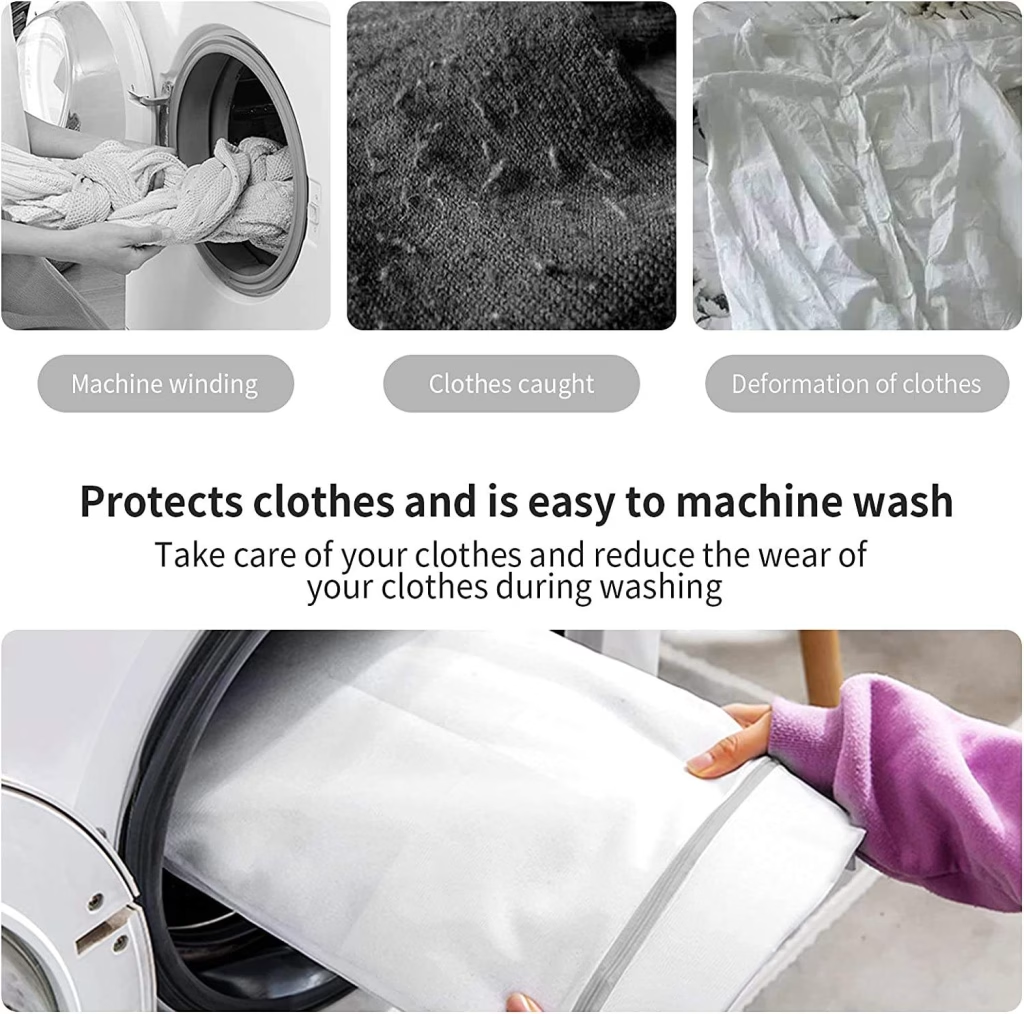
Sourcing Direct from the Manufacturer
When buyers source a mesh laundry bag for sheets, direct factory communication can save time. You can discuss size, mesh type, zipper design, color, logo, packaging, carton packing, and test needs with the team that makes the product.
As the original manufacturer, we support OEM orders and customized designs for customers worldwide. Product options include laundry mesh bags, bra laundry bags, shoe washing bags, storage bags, laundry baskets, and drawstring mesh. Raw materials are environment friendly, and products can pass REACH and related tests when required for the order.
Direct sourcing is useful when you need:
- Custom dimensions for bedding programs
- Logo printing or embroidery
- Retail-ready packaging
- Multi-size laundry bag sets
- Fine mesh, coarse mesh, or sandwich mesh options
- Sample review before bulk production
- Export packing for global shipment
A sheet-friendly laundry bag should be easy for customers to use and easy for buyers to explain. The right design can fit retail shelves, online stores, hotel supply catalogs, dorm kits, and private label laundry care ranges.
If you are planning a new laundry bag program or improving an existing product line, send your target size, material preference, logo idea, packaging needs, and estimated order quantity. You will get direct access to the manufacturing source, practical product suggestions, and sample options for review before production.

Frequently Asked Questions
1. Can we order custom mesh bag sizes?
Yes, custom sizes are available for sheet care, garment care, storage, and mixed laundry sets. Share your target dimensions, intended use, and market channel so the bag can be designed around real customer needs.
2. Do you offer logo customization?
Yes, logo customization is available through printing, embroidery, or packaging design depending on the product style. Contact us to request samples and review which branding method fits your order.
3. How do we check REACH compliance?
You can request material and testing information during sourcing. Products can pass REACH and related tests based on order requirements, market needs, and agreed specifications.
4. Can we request samples before bulk orders?
Yes, sample review is recommended before bulk production. Samples help buyers test size, mesh feel, zipper strength, drying use, packaging, and logo placement.
5. What mesh type works for sheets?
Coarse or medium mesh is often practical for sheets because it supports airflow and movement. Fine mesh may suit delicate items, pillowcases, and smaller garment care sets.