
A single underwire can snap loose in a washing drum and scratch the steel. One stray sock can vanish for good. A lace bra can come out stretched and tangled with jeans. These are small losses, but they add up week after week.
The fix is simple: bag laundry before it goes into the machine. A mesh laundry bag holds delicates, small items, and sorted loads in one place. It keeps them apart from heavy fabrics, zippers, and hooks. So clothes last longer, and laundry day runs faster.
Below, you’ll find 10 clear reasons homes rely on mesh bags. You’ll also see how mesh types compare, how to use them step by step, and what buyers should check before placing an order. Since 2014, we’ve made laundry mesh bags for customers in Europe, North America, South America, Korea, and Japan. So the advice here comes from the factory floor, not just the shop shelf.
What Does It Mean to Bag Laundry?
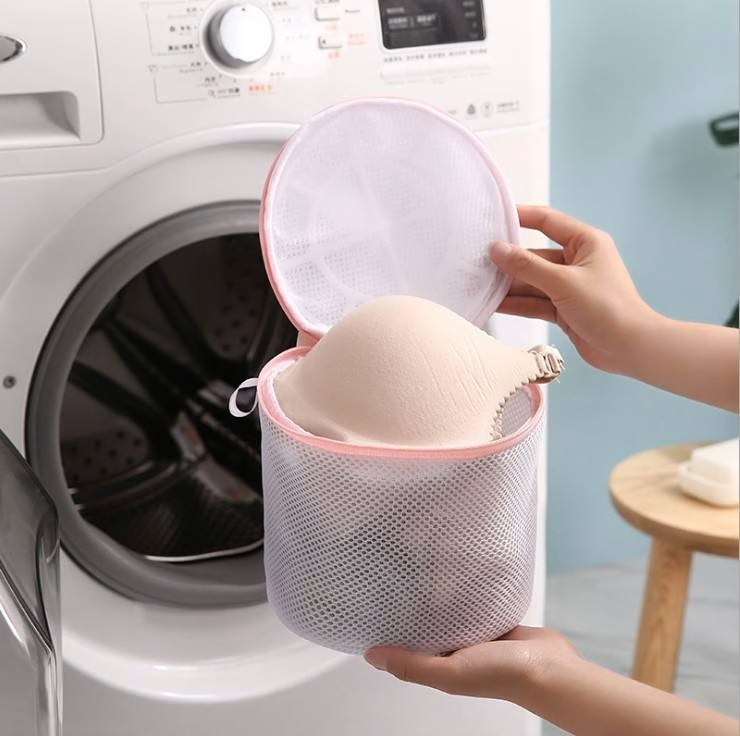
To bag laundry means placing clothes inside a breathable mesh or fabric bag before washing, drying, or storing them. The bag acts as a shield. Water and detergent flow through the holes, but the fabric inside stays separated from the rest of the load.
There are two main uses:
- Wash bags. These go straight into the washing machine. They’re usually made of polyester mesh with a zipper.
- Collection and storage bags. These hold dirty clothes before wash day, or store shoes, toys, and linens. Some have drawstrings or handles.
Many homes use both. A large bag collects clothes in the bedroom. Then smaller mesh bags sort delicates, socks, and baby items before the wash starts.
Mesh is the most common material for wash bags, and for good reason. It’s light, it dries fast, and it lets water move freely. Canvas and cotton bags work well for collection, but they hold water and take longer to dry. So they rarely go inside the machine.
You can browse the full range of laundry mesh bag styles to see how shape and size change with each use.
10 Reasons Every Home Should Bag Laundry
Each reason below links to a real problem in daily laundry. Some save money. Others save time. A few also help retailers explain the product to shoppers.
1. It Protects Delicate Fabrics
Lace, silk, chiffon, and fine knits are easy to damage. In an open drum, they rub against denim, buttons, and zippers. That friction causes pills, snags, and holes.
A fine mesh bag keeps these items in their own space. The fabric still gets clean, but it moves less and touches fewer rough surfaces. This is why a laundry bag for delicates is often the first one people buy.
2. It Keeps Bras in Shape
Underwire bras face two risks in a washer. First, hooks catch on other clothes and pull threads. Second, the wire can work loose and damage both the bra and the machine.
A zipped mesh bag holds the cups in place and keeps hooks closed off. Many users also choose a sandwich mesh laundry bag in Korean style, since the padded layer gives extra shape support.
3. Socks and Small Items Stop Disappearing
Socks slip into the gap between the drum and the door seal. Baby socks, face masks, and hair ties do the same. Over a year, that’s a lot of lost pairs.
When you bag laundry by type, small items stay together. You load one bag, and you unload one bag. Nothing gets stuck, and nothing needs matching later. A small laundry bag is ideal for this job.
4. Laundry Day Takes Less Time
Sorting usually happens twice: once before washing and once after drying. Mesh bags cut that work in half.
For example, each family member can have their own bag. Clothes go in all week, the bag goes in the wash, and it comes out sorted. Color-coded sets help even more. The set of 3 colorful mesh laundry bags works well for this kind of system.
5. It Reduces Tangles and Wrinkles
Long straps, drawstrings, and sleeves wrap around each other during the spin cycle. The result is a knot of clothes that takes time to pull apart. It also leaves deep wrinkles.
A bag limits how far each item can move. So straps stay loose, and clothes come out flatter. Less ironing follows.
6. It Helps Protect the Washing Machine
Loose bra wires, coins, and small buttons can block drain pumps. Repairs are costly, and machine downtime is a real problem in hotels and laundromats.
Bagging small and risky items lowers this risk. The mesh holds hard parts inside, so they can’t slip into the pump or scratch the drum.
7. It Keeps Clothes Fresh Before Washing
Dirty clothes kept in a closed plastic hamper can start to smell. Moisture has nowhere to go.
Mesh lets air move through the pile. So sweat and damp fabrics dry out a little while they wait. Odor builds up more slowly, and mildew is less likely.
8. It Saves Space at Home and While Traveling
Mesh bags fold flat and weigh almost nothing. They fit in a drawer, a suitcase pocket, or a gym bag.
Travelers use them to keep worn clothes away from clean ones. Students use them in shared laundry rooms. And small apartments use them in place of bulky baskets.
9. It Works Beyond Clothes
A good mesh bag has many jobs. Homes use them to wash sneakers, soft toys, pet blankets, and reusable cleaning cloths. Some use them to store toys at the beach or produce in the kitchen.
This range of uses is one reason retailers like the product. A single SKU can serve several shopper needs.
10. It’s Low Cost With Long-Term Value
A mesh laundry bag costs little compared with the clothes it protects. One saved silk blouse or one avoided washer repair covers the cost many times over.
Thicker mesh and strong zippers extend this value. A thickened white mesh laundry bag with an embroidered logo can last for hundreds of wash cycles when made well.
Laundry Bags Mesh Guide: Fine, Coarse, and Sandwich Mesh
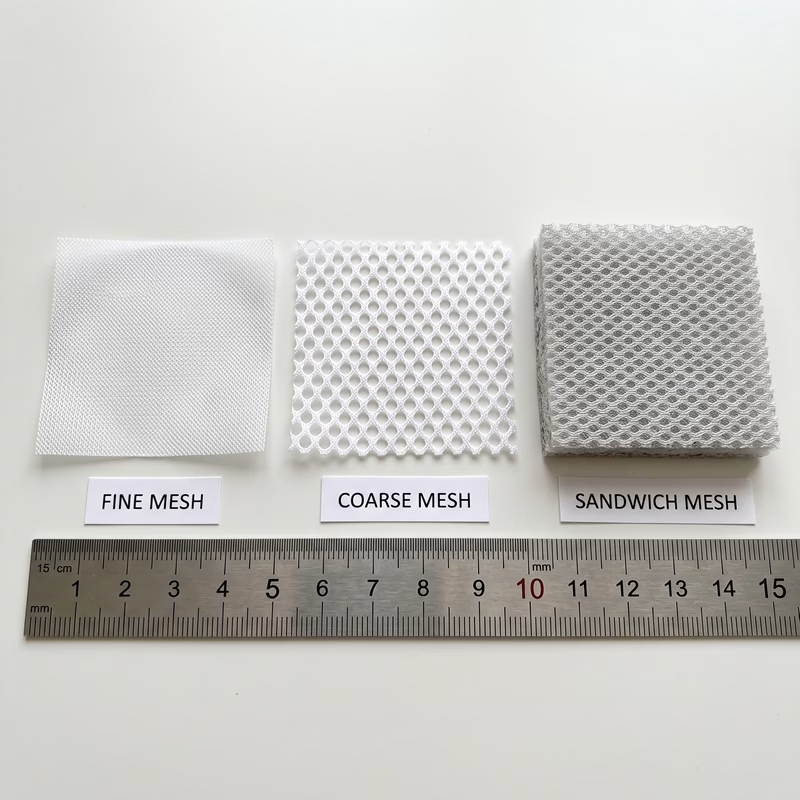
Not every bag suits every load. The mesh type decides how well water flows and how much protection the fabric gets. When buyers compare laundry bags, mesh choice is often the first spec to settle.
Here’s how the three main types compare:
| Mesh type | Typical hole size | Fits best for | Main benefit | Things to watch |
|---|---|---|---|---|
| Fine mesh | Small, tight weave | Lingerie, silk, hosiery, baby clothes | Stops snags and tiny item loss | Slightly slower water flow |
| Coarse mesh | Larger open weave | Towels, sportswear, jeans, bedding | Strong water flow for a deeper clean | Not ideal for hooks or lace |
| Sandwich mesh | Layered, padded structure | Bras, shoes, structured items | Shape support and cushioning | Bulkier; takes longer to dry |
When to Choose Fine Mesh
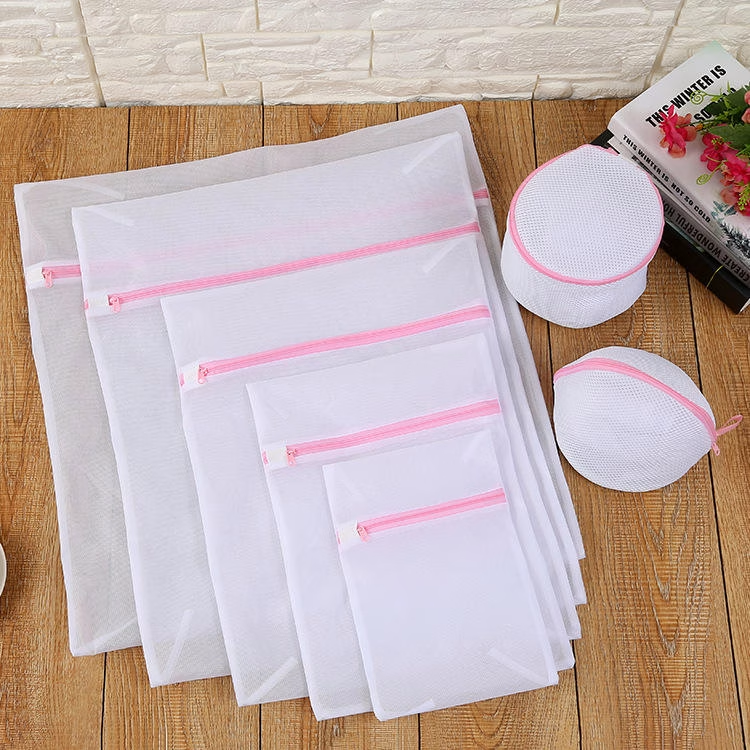
Fine mesh suits anything that can snag. It also keeps tiny items like baby socks from slipping out. For retail sets, many buyers pick mixed sizes in fine mesh. The set of 7 fine mesh laundry bags covers most home needs in one pack. For a heavier feel, the set of 7 thickened fine mesh bags adds strength without losing softness.
When to Choose Coarse Mesh
Coarse mesh lets more water pass through. That makes it a good match for heavy or very dirty items. Hotels, gyms, and sports teams often use it. The set of 5 thickened white coarse mesh laundry bags is a common choice for hospitality buyers who want a clean, uniform look.
When to Choose Sandwich Mesh
Sandwich mesh has a cushioned middle layer. It protects bra cups and sneakers from bending and bumping. It also keeps its shape on store shelves, which helps product display. The sandwich cartoon cleaning fine mesh laundry bag with embroidery shows how this mesh can carry a playful design for retail.
How to Bag Laundry Step by Step
Using a mesh bag is easy. Still, a few habits make the results much better. Here’s a simple routine that works for homes, hotels, and laundromats.
- Read the care label first. Some items need hand washing only, even in a bag. The FTC’s guide to the Care Labeling Rule explains what common care symbols mean.
- Sort by fabric and color. Keep darks, lights, and delicates in separate bags. This stops dye transfer.
- Close hooks and zippers on the clothes. Fasten bra hooks and zip up jackets before they go in. This protects the bag mesh too.
- Don’t overfill the bag. Fill it about half to two-thirds full. Clothes need space to move so water and detergent can reach them.
- Close the bag fully. Pull the zipper all the way and tuck the pull into its guard if the bag has one.
- Pick the right wash cycle. Use a gentle cycle and cool water for delicates. Use a normal cycle for coarse mesh loads.
- Balance the drum. Mix bagged items with a few loose ones of similar weight. This avoids an off-balance spin.
- Air dry when you can. Mesh dries fast. Hang the bag or lay items flat to protect elastic and lace.
A laundry bag with a zipper makes steps 4 and 5 much easier. A covered zipper also stops the pull from scratching other clothes in the drum.
What Buyers Should Check Before Ordering Mesh Laundry Bags
For retailers, brand owners, and hotel suppliers, the bag itself is only part of the decision. Quality control, materials, and compliance shape how well the product sells and how long it lasts.
Key Quality Points
| Spec | What to ask the supplier | Why it affects your order |
|---|---|---|
| Mesh weight | Is the mesh standard or thickened? | Thicker mesh lasts more wash cycles |
| Zipper | Plastic or metal? Is there a zipper guard? | A guard protects clothes and drums |
| Seams | Single or double stitched? Bound edges? | Weak seams are the most common failure point |
| Material | What polyester grade is used? | Affects shrinkage, color, and feel |
| Compliance | Can the product pass REACH tests? | Needed for sales into the EU |
| Customization | Logo, color, size, and packaging options? | Builds brand identity on shelf |
Material Safety and Compliance
If you sell into Europe, chemical safety is a must. The EU’s REACH rules limit harmful substances in consumer goods, including textiles. You can read more on the European Chemicals Agency’s REACH overview.
Our raw materials are environment friendly, and our products can pass REACH and related tests. This helps buyers avoid delays at customs and gives retail partners clear paperwork.
Customization and OEM
Private-label buyers often want more than a plain bag. Common requests include:
- Embroidered or printed logos
- Custom mesh colors to match a brand palette
- Mixed-size sets packed in branded boxes or pouches
- Special zipper colors or pull tabs
The set of 5 thickened coarse mesh laundry bags with a customized logo is a good example of how branding can sit on a practical product. For broader set options, see our laundry bag set range and the set of 5 thickened coarse mesh laundry bags.
Why Mesh Laundry Bags Sell Across Global Markets
Mesh laundry bags look like a simple product. Yet buying habits differ from one region to the next. Knowing these patterns helps buyers choose the right range.
Europe
European shoppers care about fabric care and material safety. Fine mesh sets for delicates sell well. REACH compliance is often a firm requirement from retail chains.
North America
Larger households and front-loading machines drive demand for multi-size sets. Bags for sneakers and sports gear are also popular.
Korea and Japan
These markets favor neat design and gentle washing. Sandwich mesh bra bags and soft pastel colors are common choices. Small, well-shaped bags fit compact homes and washers.
South America
Value packs and colorful sets do well here. Thick, long-lasting mesh is a strong selling point for families.
Hotels, Laundromats, and Institutions
Commercial users want strength first. Thickened mesh, double stitching, and plain white colors make tracking and washing easier. Our colorful thickened fine mesh laundry bag and white thickened fine laundry bag are both built for this kind of heavy, repeated use.
Across all these markets, one point holds steady. Shoppers who start to bag laundry rarely stop. That repeat use builds steady sell-through for retailers and repeat orders for suppliers.
Work With the Factory Behind the Product
Every bag in this guide comes from our own production lines. We’ve manufactured laundry mesh bags, bra laundry bags, shoe washing bags, storage bags, laundry baskets, and drawstring mesh since 2014. When you work with us, you deal directly with the source. That means clear pricing, direct control over materials, and faster answers on custom designs.
If you’re planning a new range, refreshing a private label, or sourcing for hotels, send us your size list, mesh preference, and logo files. We’ll come back with a quote, sample options, and a production plan built around your market. Reach out through our inquiry form, and our team will reply with full specifications.
Frequently Asked Questions
1. What is the minimum order quantity for mesh laundry bags?
MOQ depends on size, mesh type, and custom features. Standard designs usually start at lower quantities than fully custom ones. Contact us with your item list for an exact figure.
2. Can you add our logo to laundry bags?
Yes. We offer embroidery, printing, custom labels, and branded packaging. Send your logo file, and we’ll suggest the method that suits your mesh type.
3. Do your mesh laundry bags pass REACH testing?
Yes. Our raw materials are environment friendly, and our products can pass REACH and related tests. We can share test details for your market on request.
4. How long does production usually take for custom orders?
Lead time depends on quantity and customization. Sample approval comes first, then mass production. Reach out with your timeline, and we’ll confirm a schedule.
5. Can we request samples before placing a bulk order?
Yes. Samples help you check mesh feel, stitching, and zipper quality. Contact us to request samples of the styles you’re considering.