
Yes, putting underwear in a protective pouch before machine washing is one of the easiest ways to extend garment life and prevent fabric distortion. A single 45-minute wash and spin cycle generates intense mechanical friction inside a washing machine drum. Without a barrier, delicate elastic waistbands stretch out, lace trims snag on metal zippers, and thin synthetic fibers pill within just a few washes. For everyday households, using an underwear wash bag stops premature wear. For retail buyers, apparel brands, and wholesale procurement teams, this everyday laundry habit drives consistent, year-round demand for durable protective accessories.
Understanding how an underwear wash bag works helps both garment makers and home goods merchandisers stock better products. When consumers spend money on seamless microfiber briefs, silk camisoles, or structured bras, they look for simple tools that keep those items intact. Pairing delicate apparel with a properly constructed mesh bag solves a real laundry headache while creating strong add-on sales opportunities at checkout.
Why Should You Put Underwear in an Underwear Wash Bag?
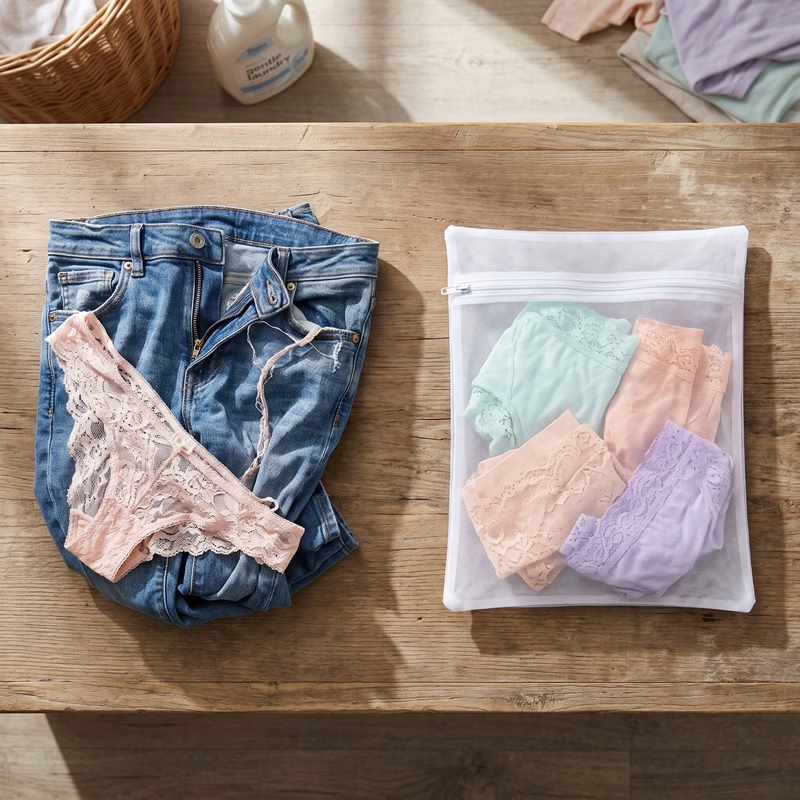
Modern washing machines clean clothes through water agitation, detergent chemistry, and physical tumbling. While heavy cotton jeans and bath towels handle high-speed drum rotation without trouble, lightweight undergarments rely on fine spandex, nylon, modal, and lace yarns that break down quickly under direct friction. Placing delicates inside an underwear wash bag creates a breathable shield that lets water and soap pass through while blocking physical abuse.
Protecting Elastic Waistbands and Delicate Lace
Elastic fibers lose their recovery strength when pulled repeatedly while wet. Inside a full laundry load, underwear waistbands and leg openings wrap around heavier items like wet sweatshirts or denim trousers. During the spin cycle, centrifugal force pulls those tangled garments in opposite directions. Over time, waistbands ripple, lose tension, and sag.
Lace trims and mesh panels face an even faster threat. Exposed bra hooks, jean rivets, and jacket zippers act like tiny saws inside a spinning drum. One sharp metal tooth can tear a delicate lace border in seconds. Storing intimates inside protective laundry mesh bags keeps sharp hardware completely separated from fragile threads.
Preventing Tangling, Stretching, and Misshapen Cups
Anyone who has pulled a knotted ball of straps and sleeves out of a washer knows how aggressively clothes twist together. Thin bra straps and camisole ties stretch well beyond their original length when wrapped around heavier laundry. Once those thin straps stretch out, adjusting the slider no longer restores a proper fit.
Molded bra cups and padded bralettes also suffer when crushed against wet towels. Foam padding creases permanently, and metal underwires can bend or poke through fabric channels. Placing structured pieces inside a dedicated underwear wash bag keeps cups supported and prevents straps from knotting around other garments.
Blocking Lint Transfer and Microfiber Shedding
Dark cotton socks and fleece sweatshirts shed thousands of tiny lint fibers during every wash cycle. When loose underwear tumbles alongside lint-heavy fabrics, fine polyester and nylon surfaces trap those stray fuzz balls. Light-colored briefs quickly look gray and worn, even when the fabric itself is still new.
According to laundry care guidelines from the American Cleaning Institute, separating delicate items and using mesh laundry pouches reduces surface abrasion and lint buildup. A tightly woven mesh bag acts as a physical filter, keeping lint off smooth intimates while preventing small items like ankle socks or removable bra pads from disappearing inside washing machine drain filters.
How Does a Mesh Bag Protect Different Types of Undergarments?
Not every undergarment reacts the same way to water, detergent, and spin speeds. Product developers and category buyers need to match bag shapes, mesh weights, and internal padding to the specific garments their customers wear most often. A basic flat pouch works well for everyday briefs, whereas structured intimates need three-dimensional support.
Cotton Briefs, Boxers, and Everyday Basics
Everyday cotton briefs, trunks, and boxer shorts are sturdy compared to silk or lace, yet they still benefit from containment. Cotton knits shrink and twist when agitated heavily, and printed care labels or heat-transfer logos crack faster under direct drum friction. Grouping five to seven pairs of everyday underwear inside a medium-sized mesh bag keeps small items organized from washer to drying rack. Users no longer have to dig through damp sheets to find missing pairs.
Seamless Microfiber, Silk, and Modal Pieces
Laser-cut seamless underwear relies on bonded edges rather than stitched hems. High friction and heat cause bonded edges to peel or curl after just a handful of washes. Modal, bamboo viscose, and natural silk fabrics also weaken significantly when wet, making them prone to pilling and snagging.
For these ultra-smooth textiles, a soft, fine-knit underwear wash bag prevents surface rubbing against rougher fabrics. Choosing a compact small laundry bag gives seamless intimates a smooth, low-friction interior environment where water circulates gently without roughing up the fibers.
Padded Bras, Underwires, and Shapewear
Bras and compression shapewear combine multiple materials—foam cups, metal wires, hook-and-eye closures, and high-tension power mesh—into a single garment. Tossing an unfastened bra into a standard load almost guarantees bent wires and snagged sweaters.
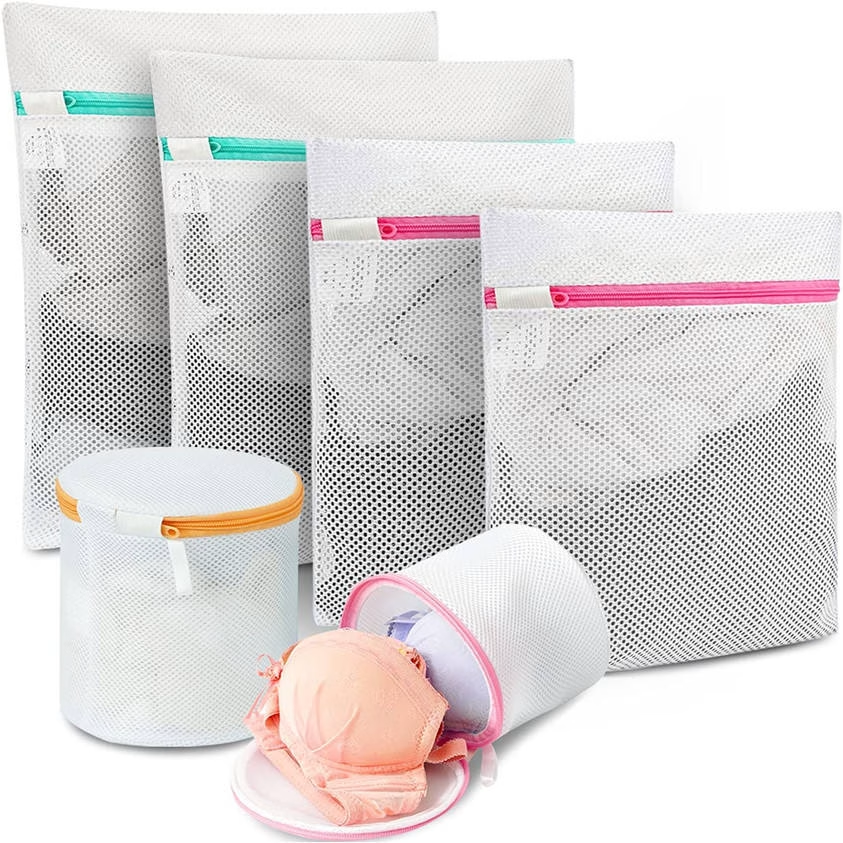
Structured bags built with cushioned side walls or dome shapes shield padded cups from compression. For example, a Korea-style sandwich mesh laundry bag uses a three-layer padded fabric structure that absorbs impact during the spin cycle while keeping water flowing freely through the cups.
| Garment Type | Primary Washing Risk | Recommended Mesh Structure | Ideal Pouch Shape & Size |
| Cotton Briefs & Boxers | Waistband elastic fatigue, twisting, misplaced pairs | Medium or coarse honeycomb mesh for fast rinsing | Flat rectangular pouch (30 × 40 cm) |
| Lace & Seamless Microfiber | Snagging on zippers, edge peeling, surface pilling | Ultra-fine tight weave mesh to block hooks and lint | Small flat pouch (22 × 30 cm) |
| Underwire & Padded Bras | Bent wires, crushed foam cups, hook entanglement | Padded 3-layer sandwich mesh with internal frame | Cylindrical or dome bag (16 × 18 cm) |
| Shapewear & Bodysuits | High-tension elastic breakdown, strap stretching | Thickened fine mesh with strong double seams | Medium rectangular pouch (30 × 40 cm) |
Fine Mesh vs. Coarse Mesh: Which Fabric Works Best for Laundry Mesh Bags?
When procurement teams evaluate laundry mesh bags for private-label lines or retail assortments, fabric structure is one of the first technical specifications to review. Most commercial wash pouches are knitted from 100% polyester filament yarns because polyester resists water absorption, dries rapidly, and holds its dimensional shape through hundreds of wash cycles. However, the knit pattern determines how the bag performs in the machine.
When Fine Mesh Bags Deliver Better Protection
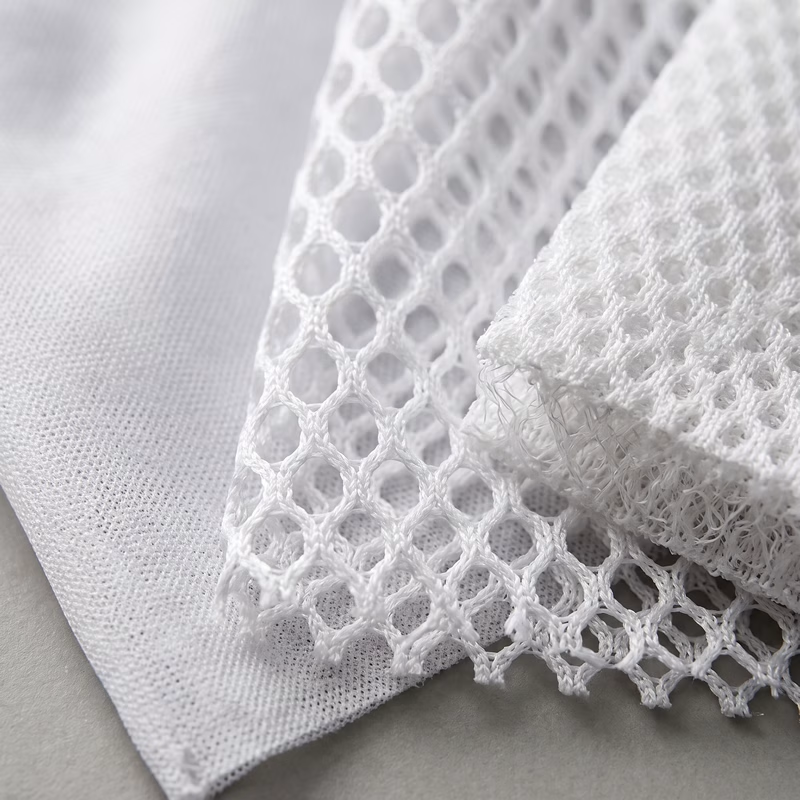
Fine mesh features tightly knitted, microscopic pores—typically around 0.5 mm to 1 mm wide—with a smooth, silky surface feel. Because the holes are so small, bra hooks, stray threads, and pet hair cannot poke through the fabric wall. Fine mesh is the safest option for delicate lace, silk undergarments, hosiery, and baby clothes.
Retailers targeting apparel and lingerie shoppers often stock white thickened fine laundry bags alongside colorful thickened fine mesh laundry bags to give shoppers visual color-coding options for sorting lights, darks, and delicates. Thickened fine mesh—usually knitted at 90 to 120 GSM—offers strong tear resistance without feeling stiff against fragile fabrics.
When Coarse Honeycomb Mesh Makes Sense
Coarse mesh, often constructed in a hexagonal honeycomb pattern with 3 mm to 5 mm openings, prioritizes rapid water exchange and maximum detergent flushing. Larger openings let suds and rinse water surge through the interior, making coarse mesh effective for heavily soiled cotton underwear, athletic socks, activewear, and multi-piece family loads.
While coarse mesh does not block tiny bra hooks as completely as fine mesh, thickened coarse variants provide excellent durability for heavier laundry loads. Many wholesale buyers include a standard set of 5 thickened coarse mesh laundry bags or a set of 5 thickened white coarse mesh laundry bags in their core household utility assortments because customers appreciate the sturdy, open-weave feel for everyday sorting.
Sandwich Mesh Construction for Structured Support
Sandwich mesh combines two outer layers of breathable netting with a middle layer of vertical polyester spacer filaments. This three-dimensional knit creates a springy, cushioned wall that bounces back when pressed. For an underwear wash bag designed specifically for molded bras, delicate embroidery, or structured lingerie, sandwich mesh prevents mechanical crushing without trapping detergent residue inside the pouch.
| Mesh Fabric Type | Pore Size & Water Flow | Primary Garment Match | Typical Fabric Weight | Key Merchandising Advantage |
| Fine Micro-Mesh | 0.5–1.0 mm pores; steady, gentle water circulation | Lace underwear, silk, hosiery, seamless briefs | 90–120 GSM | Blocks hooks, lint, and snags; soft hand-feel |
| Coarse Honeycomb Mesh | 3.0–5.0 mm pores; rapid water and detergent flushing | Cotton briefs, socks, gym wear, everyday basics | 100–130 GSM | Fast rinsing and quick drying for bulky loads |
| 3-Layer Sandwich Mesh | Cushioned spacer knit; balanced flow with impact buffer | Padded bras, underwires, delicate embroidered pieces | 180–240 GSM | Protects 3D cup shapes from drum compression |
What Hardware and Stitching Details Define a Reliable Underwear Wash Bag?
A well-knitted mesh body only performs as well as the zipper and seams holding it together. When product managers inspect samples from potential factories, small hardware flaws often explain why low-cost bags receive poor customer reviews. Addressing three core construction points ensures an underwear wash bag survives years of weekly washing.
Rust-Proof Auto-Lock Zippers and Elastic Zipper Guards
Standard metal zippers corrode after repeated exposure to water, bleach alternatives, and alkaline detergents. Worse, metal sliders scratch painted washing machine drums and chip glass front-loader doors. Reliable laundry mesh bags use molded resin or nylon coil zippers paired with non-rusting plastic or coated auto-lock sliders.
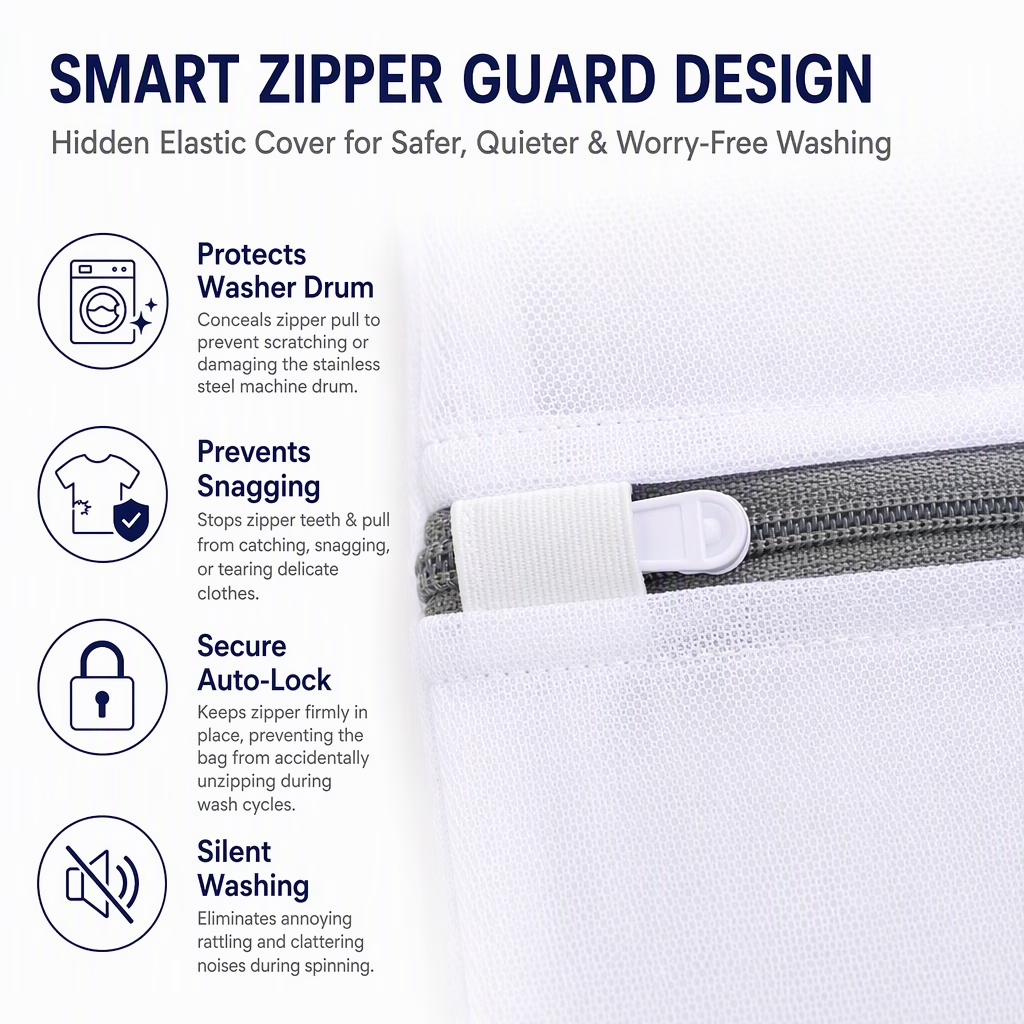
An auto-lock slider contains an internal pin that locks into the zipper teeth whenever the pull tab lies flat. Without an auto-lock mechanism, drum vibration causes standard zippers to slide open mid-cycle, spilling underwear into the main load. Equally important is the elastic zipper guard—a small fabric hood stitched at the top end of the zipper track. Tucking the slider beneath this elastic band keeps the pull tab from catching on other clothes and prevents loud clicking noises against the washer drum. Buyers sourcing a durable laundry bag with zipper closure should always verify both auto-lock functionality and elastic guard tension during sample testing.
Overlock Seam Binding and Double-Stitched Edges
During a 1,200 RPM spin cycle, wet garments press outward against the seams of the pouch with considerable force. Single-needle stitching on raw mesh edges unravels quickly once a single thread breaks. Durable bags finish all interior seams with dense overlock stitching wrapped in woven polyester binding tape, reinforced with a secondary straight lockstitch.
Clean seam binding also improves the visual appearance of the bag on retail shelves and prevents rough cut edges from snagging delicate lace inside the pouch.
Hanging Loops and Color-Coded Trim Options
Practical user details often drive repeat purchases. Adding a sturdy woven hanging loop to the corner of an underwear wash bag lets users hang damp bags on a hook or drying rack immediately after unloading the washer.
Color-coded zipper trims and piping also help multi-person households keep laundry organized—for instance, assigning blue trim to everyday basics, pink trim to delicates, and gray trim to athletic socks. Offering a set of 3 colorful mesh laundry bags gives retail customers an instant organizational system in a single package.
How to Use an Underwear Wash Bag Properly: Step-by-Step Washing Rules
Even a well-made underwear wash bag cannot protect garments if it is overloaded or packed carelessly. Many apparel brands and home goods retailers print simple care instructions right onto their hangtags or woven care labels to help consumers get reliable results. Sharing these practical steps reduces product returns and extends garment lifespan.
Preparing and Sorting Undergarments Before Washing
-
Fasten all hooks, clasps, and zippers: Hook bra closures together before placing them inside the pouch so sharp metal prongs cannot catch on adjacent lace briefs or snag the interior netting.
-
Sort pieces by color and fabric weight: Keep white and pastel delicates separate from dark dyes. Avoid mixing heavy cotton socks with fragile silk or sheer mesh underwear inside the same mesh bag.
Packing the Underwear Wash Bag and Securing the Zipper
-
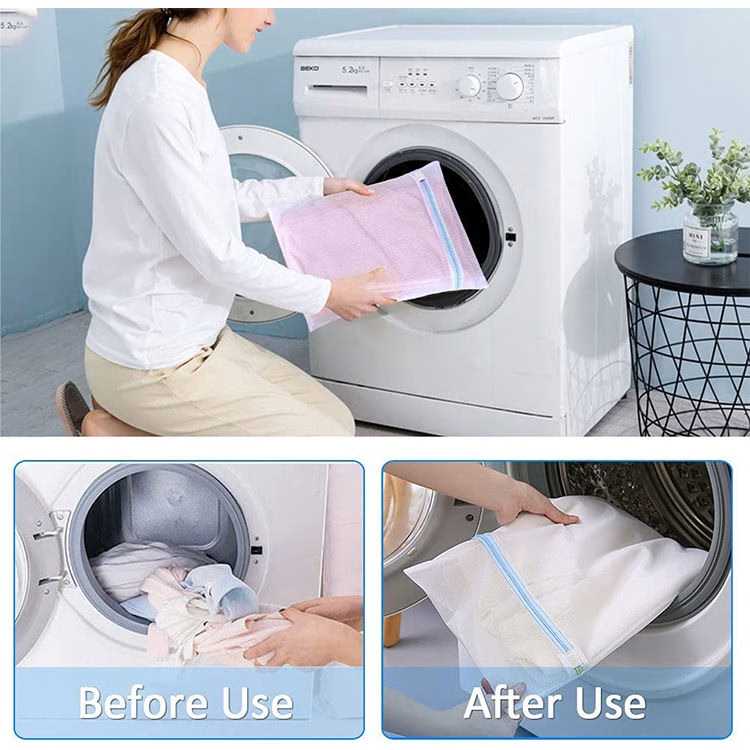
Follow the two-thirds fill rule: Leave at least one-third of the pouch empty so water and liquid detergent can circulate freely around every garment. Overstuffing an underwear wash bag traps soap inside folded fabric and reduces cleaning performance.
-
Tuck the zipper pull under the elastic safety cover: Slide the zipper completely closed and push the pull tab firmly beneath the elastic band at the end of the track. This keeps the slider locked throughout the spin cycle and prevents clicking against the washer drum.
Selecting Machine Settings and Drying Safely
-
Use a gentle wash cycle and air-dry: Wash delicates in cold or lukewarm water (30°C / 86°F or below) on a gentle or delicate setting. Remove undergarments from the mesh bag right after the cycle finishes and lay them flat or hang them to dry, since high tumble-dryer heat degrades spandex elasticity.
How Retail Buyers and Product Teams Source Custom Laundry Mesh Bags
For retail buyers, lingerie brands, and household goods importers, an underwear wash bag represents a practical, lightweight, high-margin category with steady replenishment demand. Unlike seasonal fashion items that carry markdown risks, protective laundry accessories sell consistently twelve months a year across supermarkets, department stores, e-commerce marketplaces, and specialty apparel boutiques.
Direct Factory Manufacturing and Global Market Experience
Working directly with an experienced production facility removes middleman markups and gives product teams direct control over fabric weight, zipper quality, and packaging specifications. Established in 2014, our company is a professional manufacturer of laundry mesh bags, bra laundry bag, washing bags for shoes, storage bag, laundry basket and drawstring mesh. Our customers are located worldwide, with key markets in Europe, North America, South America, Korea, and Japan. OEM orders are welcome, and customized designs are available. Our raw materials are environment friendly, and our products can pass REACH and related tests.
Because regional preferences vary across global markets, production flexibility helps brands tailor SKUs to local buyers:
-
Korea and Japan: Shoppers favor soft, ultra-fine textures, pastel color palettes, and structured sandwich-mesh designs with refined embroidery.
-
Europe and North America: Buyers frequently look for multi-size value bundles, neutral minimalist colors, recycled polyester options, and clear eco-compliance documentation.
-
South America: Retailers often prioritize durable, thickened coarse and fine mesh sets that withstand frequent machine washing at competitive price points.
OEM Customization: Logos, Embroidery, and Multi-Piece Sets
Custom branding turns a simple utility pouch into a recognizable brand asset. Apparel and intimates brands frequently include a branded underwear wash bag as a gift-with-purchase for online bra orders, or sell coordinated laundry sets alongside their core underwear collections.
Procurement teams can customize several visual and functional elements:
-
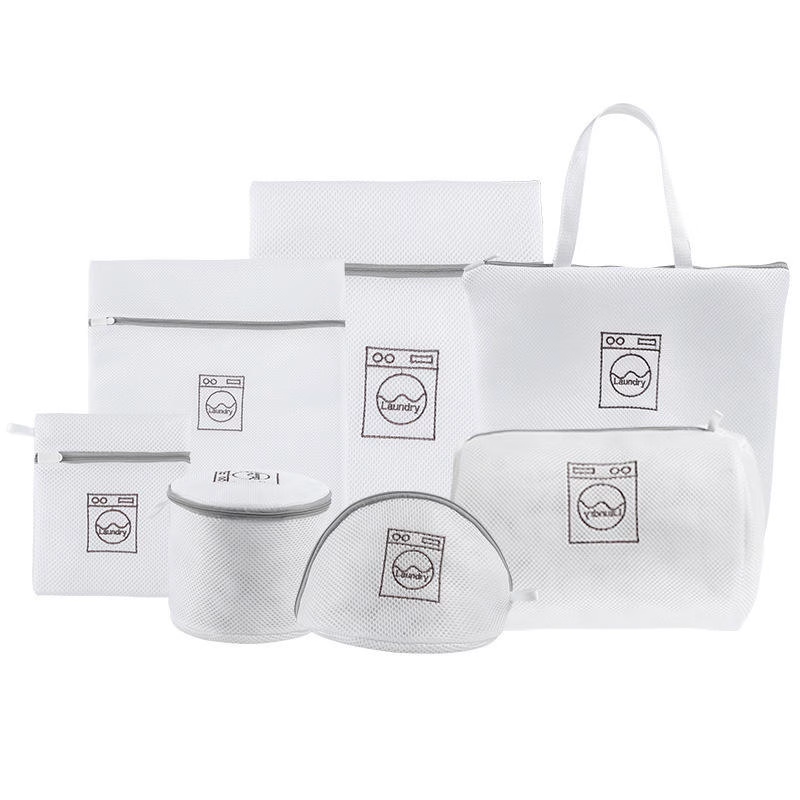
Embroidered and Woven Branding: Adding stitched logos directly onto reinforced fabric panels creates a clean, durable brand mark that will not peel off in hot water. Options like a thickened white mesh laundry bag with an embroidered logo or an embroidered sandwich fine mesh laundry bag show how clean stitching elevates shelf appeal.
-
Custom Multi-Piece Bundling: Selling coordinated multi-size laundry bag sets increases average order value while solving multiple household sorting needs at once. Popular configurations include a 5-piece thickened coarse mesh bag set with a customized logo, a set of 7 fine mesh laundry bags, and a 7-piece thickened fine mesh bag assortment that combines small underwear pouches, cylindrical bra bags, and large garment bags in one retail box.
-
Retail-Ready Packaging: Factories can pack sets into printed Kraft paper belly bands, frosted zipper storage pouches, color-printed cartons, or barcoded polybags ready for direct warehouse distribution.
Eco-Friendly Materials and REACH Chemical Compliance
Modern retail compliance requires strict oversight of raw materials, dyes, and plastic zipper components. Products entering European Union and North American retail channels must meet chemical safety thresholds covering restricted substances such as phthalates, heavy metals, and azo dyes. According to the European Chemicals Agency (ECHA) REACH framework, manufacturers and importers must ensure consumer textiles and accessories do not contain hazardous levels of regulated chemicals.
Sourcing from a factory that uses verified, environment-friendly virgin or recycled polyester yarns—and can provide REACH-compliant test reports—protects importers from customs delays, retail chargebacks, and product recalls.
Building a Dependable Supply Line for Protective Underwear Wash Bags
Protecting delicate underwear in the washing machine is a simple habit that saves garments from stretched elastic, snagged lace, and lint buildup. For consumers, an underwear wash bag pays for itself after saving just one favorite bra or pair of silk briefs from drum damage. For retail buyers, product managers, and wholesale distributors, offering well-constructed laundry mesh bags provides a dependable, low-return product line that pairs naturally with apparel, intimates, and home organization categories.
Success in this category comes down to consistent manufacturing details: smooth, thickened polyester mesh, rust-proof auto-lock zippers with elastic guards, reinforced double-stitched seams, and verified REACH-compliant materials. As an original factory established in 2014, we produce these items directly on our own production lines—giving your team direct access to the manufacturing source without intermediary markups. Whether you need ready-to-ship wholesale assortments or custom OEM designs with private-label embroidery and tailored retail packaging, reach out to our team to request product catalogs, physical evaluation samples, or a custom production quote for your upcoming order.
Frequently Asked Questions
1. What is your minimum order quantity for custom underwear wash bags?
Our standard minimum order quantity starts at 500 to 1,000 pieces per style depending on mesh fabric availability and custom logo requirements. For stock white or colored designs without custom printing, smaller trial quantities are available so buyers can test market demand. Contact us to request our current stock sheet and MOQ breakdown.
2. Can we customize bag sizes, zipper colors, and brand logos?
Yes, we welcome full OEM customization including tailored bag dimensions, fine or coarse mesh weights, dyed zipper trims, embroidered logos, woven labels, and custom retail packaging. Our design team can work directly from your tech pack or adapt existing patterns to match your brand aesthetic. Reach out for detailed specifications and customization templates.
3. Do your laundry mesh bags pass REACH chemical safety testing?
Yes, all raw polyester yarns, elastic bands, sewing threads, and resin zippers are produced from environment-friendly materials designed to pass European REACH and related chemical safety tests. We can provide existing test documentation or coordinate third-party lab testing on bulk production samples upon request.
4. How long does sample production and bulk delivery take?
Standard pre-production samples with custom embroidery or woven labels take approximately 5 to 7 working days to complete. Once samples are approved, bulk production typically requires 20 to 30 days depending on order volume and packaging complexity. Contact us to request samples and confirm current production schedules.
5. How can buyers request physical samples before placing a bulk order?
Procurement teams and product managers can request physical evaluation samples of our fine mesh, coarse honeycomb mesh, and sandwich mesh bags directly from our factory team. Evaluating our zipper locking mechanism and seam stitching in person helps your team verify quality before finalizing bulk specifications.