
A customer returns a lace bra with a bent underwire. Another leaves a one-star review because a zipper snagged her silk blouse. Neither problem started with the garment. Both started with the wrong mesh bag for washing.
For buyers and product managers, the bag looks simple. It’s a pouch of polyester net with a zipper. Yet the mesh grade, size, closure, and stitching decide whether clothes come out safe or damaged. They also decide whether your listing earns repeat orders or returns.
This guide explains the main types of laundry mesh bags, how each one performs, and how to match them to real garments. You’ll also find comparison tables, a six-point selection checklist, and the custom options worth raising with a factory. So by the end, you’ll know how to build a range that protects clothes and sells well.
What Is a Mesh Bag for Washing, and How Does It Protect Clothes?
A mesh bag for washing is a zippered or drawstring pouch made from open-weave fabric, usually polyester. You place garments inside, close the bag, and put it in the machine. Water and detergent flow through the holes, so clothes still get clean. However, the bag stops them from rubbing, twisting, and tangling with the rest of the load.
Here is what the bag does during a wash cycle:
- Cuts friction. Delicate fibers rub against soft mesh, not against jeans and towels.
- Stops tangling. Straps, strings, and hooks stay inside one pouch.
- Protects shape. Bras, knitwear, and lace keep their form for longer.
- Keeps small items together. Socks, baby clothes, and face masks don’t get lost in the drum or caught in the door seal.
- Shields the machine. Loose underwires and metal hooks can’t slip into the gap around the drum.
Because of these benefits, the product sells across many channels. Supermarkets stock it beside detergent. Online stores bundle it with lingerie. Hotels and laundromats use it to keep guest items apart. Sneaker owners also use a padded washing bag for shoes to cut scuffs and noise.
Still, not every bag fits every job. A bag that suits towels can damage a silk camisole. So the real buying question isn’t “Do we need mesh bags?” Instead, it’s “Which mesh, which size, and which closure?”
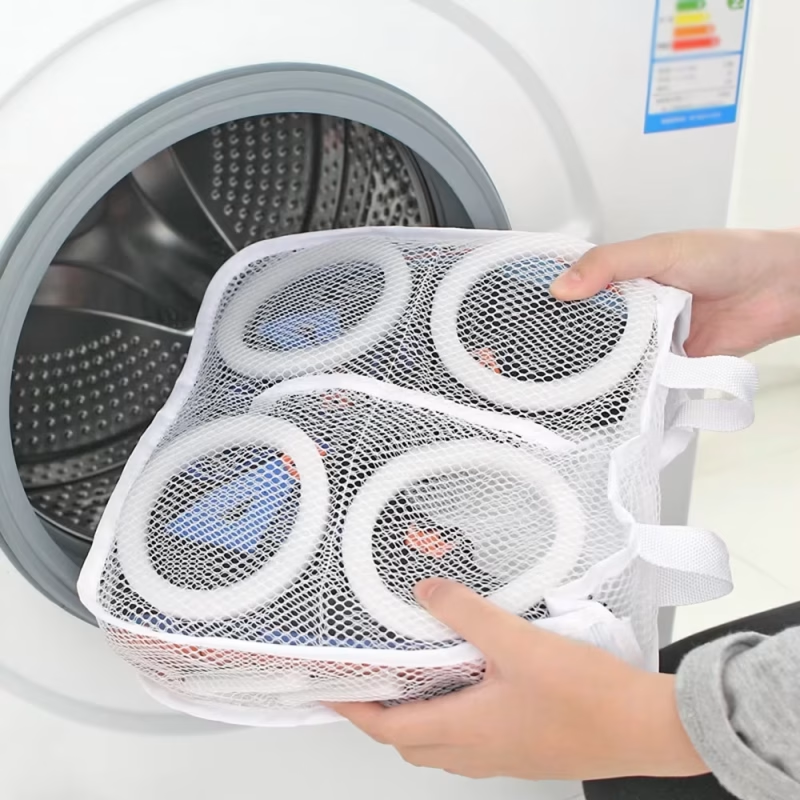
Types of Laundry Mesh Bags by Mesh Grade
Mesh grade describes the size of the holes and the feel of the fabric. Check it first, because it controls both protection and cleaning power. Most laundry mesh bags fall into four groups.
Fine Mesh: For Delicates and Small Items
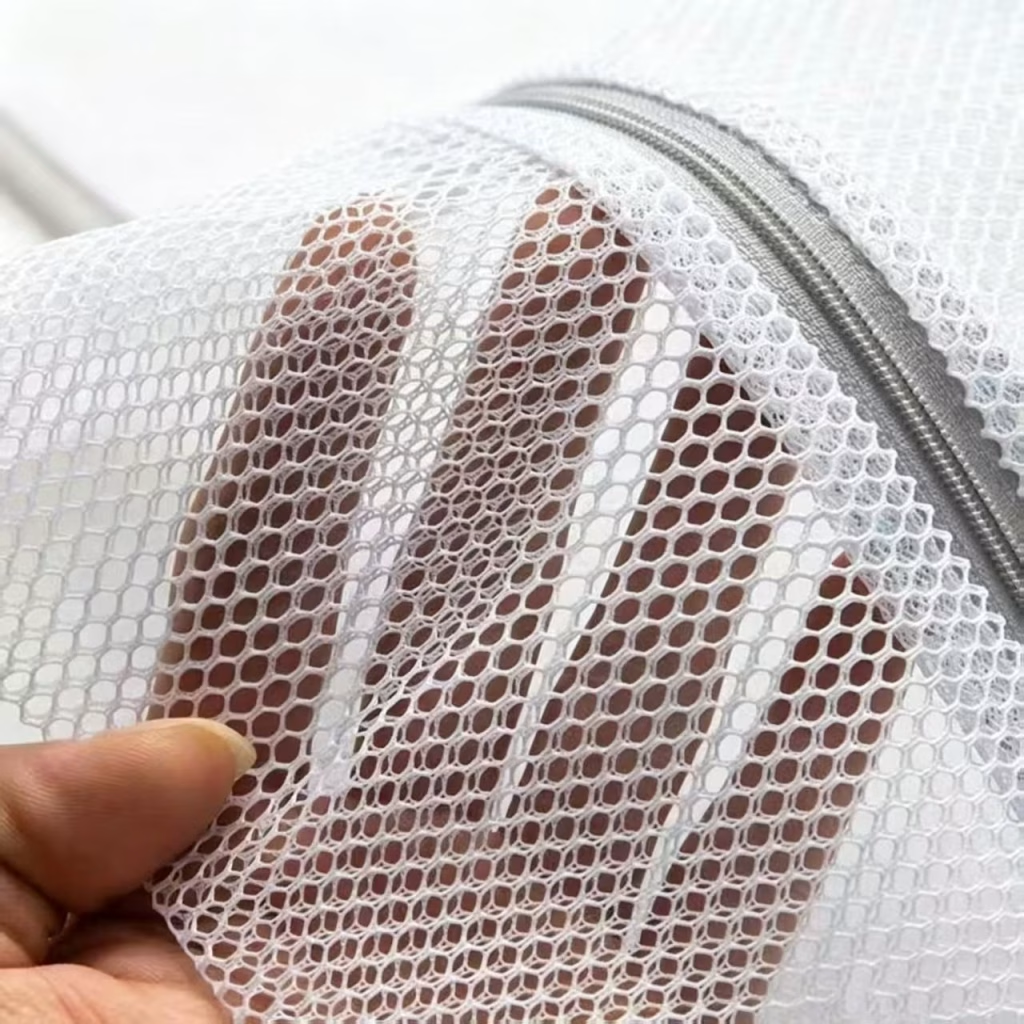
Fine mesh has tiny, tight holes and a soft, smooth feel. Because the holes are small, hooks, beads, and lace edges can’t poke through and catch. That makes fine mesh the right choice for lingerie, silk, chiffon, hosiery, and baby clothes.
The trade-off is water flow. Fine mesh lets water through a little more slowly, so heavily soiled items may need a longer cycle. For delicate garments, though, that gentle flow is part of the protection.
Two popular choices are the white thickened fine mesh laundry bag and the colorful thickened fine mesh laundry bag. The colorful version also helps shoppers color-code their loads.
Coarse Mesh: For Bulky and Everyday Loads
Coarse mesh has larger, open holes. Water and detergent move through it fast, so it cleans thick items well. Use it for towels, jeans, sweatshirts, bed sheets, and sports kits.
But coarse mesh is not for lace or hooks. Fine details can push through the bigger holes and snag. For family loads, hotel linen sorting, or dorm kits, a set of 5 thickened white coarse mesh laundry bags is a practical fit.
Sandwich (Three-Layer) Mesh: For Shape and Cushioning
Sandwich mesh, also called honeycomb or 3D mesh, has two outer layers joined by a spacer layer. The result is thicker and springier. It holds its shape in the drum and wraps the garment in a soft cushion.
This style is very popular in Korea and Japan for bras, knit tops, and wool. Buyers who target those markets often start with the Korea-style sandwich mesh laundry bag. It costs more per unit than flat mesh. Even so, it usually supports a higher shelf price too.
Thickened Mesh: For Longer Life
“Thickened” refers to a heavier fabric weight, not a different hole size. So you can find both thickened fine mesh and thickened coarse mesh. A heavier fabric resists tearing and keeps its shape after many washes. It also feels sturdier in the hand, which shoppers notice. For hotels, laundromats, and repeat-purchase retail lines, thickened mesh is often worth the small extra cost.
Mesh Grade Comparison Table
| Mesh grade | Hole size | Best suited for | Water flow | Protection |
|---|---|---|---|---|
| Fine mesh | Small and tight | Bras, lingerie, silk, hosiery, baby clothes | Moderate | High |
| Coarse mesh | Large and open | Towels, jeans, sheets, sportswear | Fast | Moderate |
| Sandwich mesh | Small, with a cushion layer | Bras, knitwear, wool, shaped items | Moderate | Very high |
| Thickened mesh | Fine or coarse | Hotel, laundromat, and heavy home use | Varies by grade | High, with longer life |
Many shoppers search for “laundry bags mesh” without knowing these grades exist. A clear grade label on your packaging helps them pick the right bag. It also cuts returns.
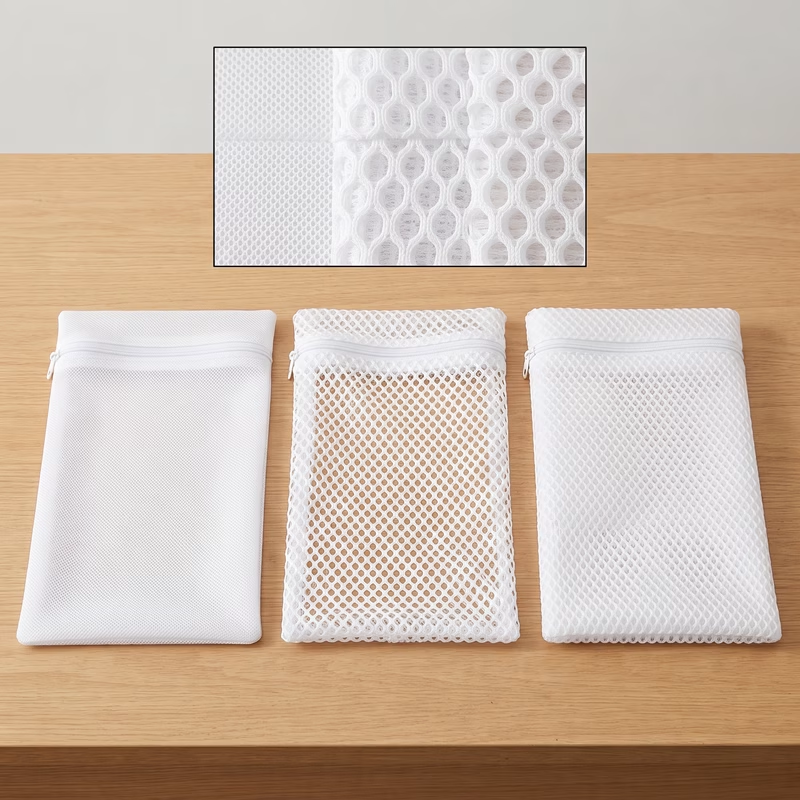
Types of Mesh Laundry Bags by Shape and Use
Once you’ve set the mesh grade, shape and size decide how the bag fits the garment. Here are the formats buyers stock most often.
Flat Rectangular Bags
This is the most common shape. Sizes run from small pouches for socks to extra-large bags for bed linen and curtains. Flat bags also pack neatly, so they work well in multi-size sets.
Round and Cylinder Bags
A round base gives bulky knits room to move without crumpling. Cylinder bags also stand upright, so they double as a small hamper in a bathroom or dorm.
Bra Laundry Bags
These are usually sandwich mesh or framed fine mesh. Their shape holds the cups in place, so underwires don’t bend and hooks don’t catch on other fabrics.
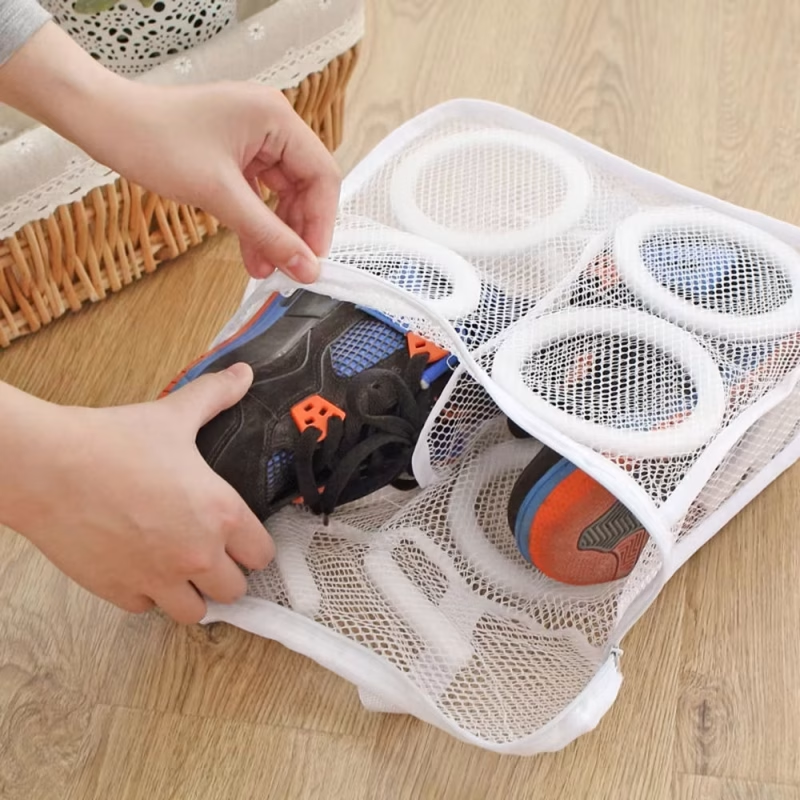
Shoe Washing Bags
Thick, padded mesh protects both the sneakers and the drum. It also softens the banging sound during the spin cycle.
Small Bags for Socks, Masks, and Travel
Compact pouches keep tiny items together in the wash. They’re handy for packing a suitcase, too. You can compare sizes in the range of small laundry bags, which suit both retail shelves and travel kits.
Use-Case Matching Table
| Item to wash | Recommended bag | Mesh grade | Closure |
|---|---|---|---|
| Underwire bras | Bra bag or sandwich bag | Sandwich or fine | Zipper with guard |
| Lace, silk, hosiery | Small flat bag | Fine | Zipper |
| Knit sweaters, wool | Round or large flat bag | Sandwich or fine | Zipper |
| Towels, jeans | Large flat bag | Coarse | Zipper or drawstring |
| Bed sheets, curtains | Extra-large flat bag | Coarse | Zipper |
| Sneakers | Shoe washing bag | Padded or sandwich | Zipper |
| Socks, baby items, masks | Small bag | Fine | Zipper |
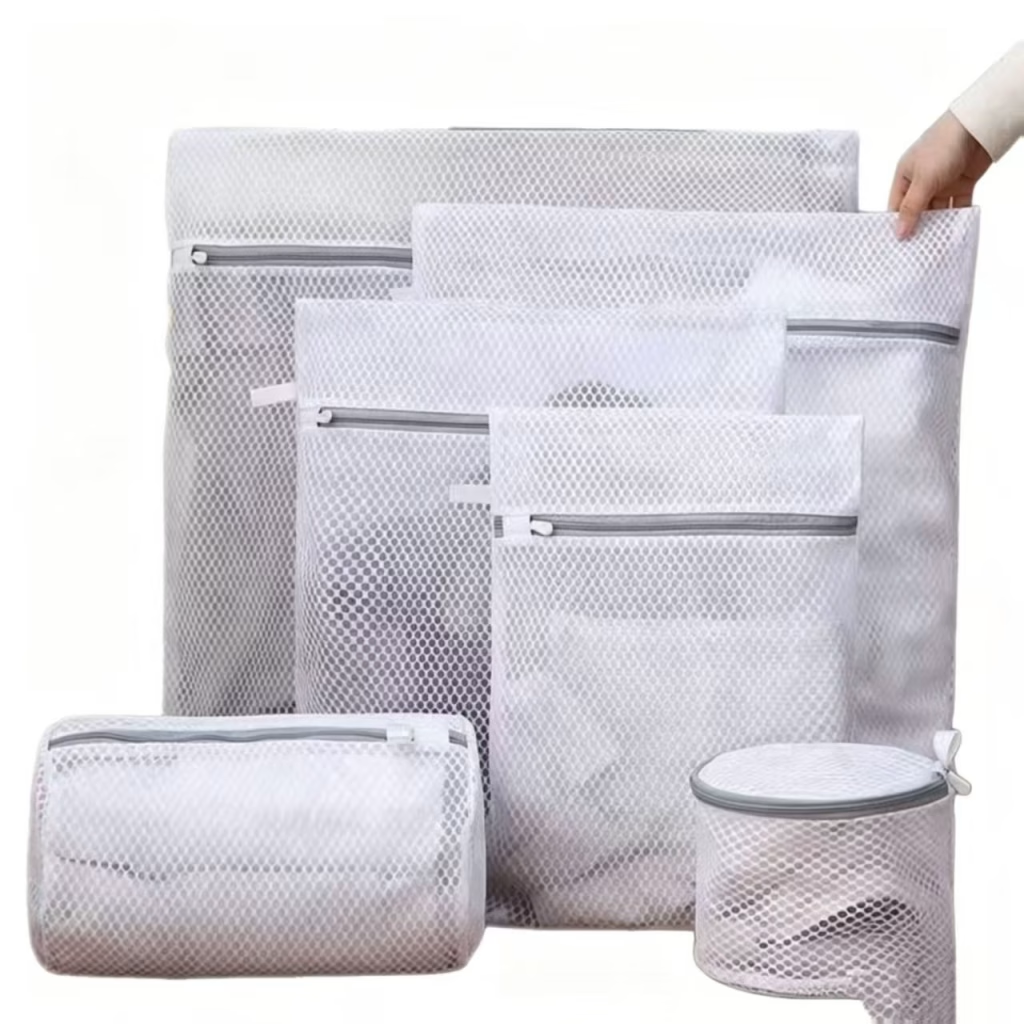
How to Use Laundry Mesh Bags Step by Step
Good bags still fail when shoppers use them the wrong way. A short how-to card in the package, or a few lines on your product page, can cut complaints. Here is a simple routine you can share with your customers:
- Sort first. Group clothes by color and fabric weight. Then pick a fine or coarse bag for each group.
- Prepare each garment. Close zippers, fasten bra hooks, and flip knits and printed tops inside out. That way, metal parts can’t catch on the mesh.
- Load lightly. Fill each bag about halfway, so water can reach every part of the fabric.
- Zip it fully. Tuck the zipper pull under its guard, so it can’t scratch other items.
- Balance the drum. Mix bagged items with loose ones, because one heavy bag can throw the spin off balance.
- Pick a gentle cycle. Use cool or warm water for delicates, and follow the garment’s care label.
- Dry with care. Take items out of the bag to air-dry, or use low heat if the label allows it.
- Rinse and hang the bag. Shake out lint and let the bag air-dry, so it lasts longer.
These steps also add value to your listing. Shoppers can see that you understand how the product works, and that builds trust before the first order.
How to Choose a Mesh Bag for Washing: 6 Buyer Checks
The right bag protects clothes and earns repeat orders. The wrong one brings complaints and refunds. Use these six checks when you compare supplier samples.
1. Match the Mesh to the Garment’s Care Label
Start with the garment itself. Care labels show which items need a gentle or hand-wash cycle. Those items need fine or sandwich mesh. In the United States, the Federal Trade Commission’s guidance on the Care Labeling Rule for apparel explains how these instructions are set. If you sell bags next to clothing, link each bag type to the care symbols your customers already know.
2. Size the Bag to the Load
A bag works only when clothes can move inside it. An overstuffed bag traps dirt and leaves detergent behind. As a simple rule, fill the bag about halfway, and never past two-thirds. Offer several sizes, so customers can pick a bag that fits the garment.
3. Inspect the Zipper and Closure
The zipper is where many failures start. When you test samples, look for:
- A smooth nylon or plastic coil zipper that won’t rust
- A zipper guard or lock tab that keeps the pull from opening and scratching fabric
- Even, tight stitching at both ends of the zipper
Drawstring closures suit bulky items and laundromat use. However, they can loosen during a spin, so they work less well for small or delicate pieces. Browse the range of laundry bags with zipper to compare closure styles side by side.
4. Check Fabric Weight and Material
Most laundry mesh bags use polyester, because it dries fast, resists mildew, and holds up in warm water. Ask each supplier for the fabric weight, then compare samples by hand. A thin, scratchy mesh can look fine in photos but tear after a few months of use.
5. Look at Edge Binding and Stitching
Flip the sample inside out. Edges bound with tape keep raw mesh from fraying. Double stitching at the corners stops splits when the bag is full. Loose threads, though, are a warning sign about the whole batch.
6. Confirm Compliance Testing
If you sell into the EU, the materials must meet chemical safety rules. The European Chemicals Agency’s overview of the REACH regulation explains what the rules cover. Ask for test reports before you place a bulk order. Then keep them on file for customs checks and retail audits.
Single Bags vs Sets: Which Format Fits Your Range?
Sets sell well because they solve several laundry jobs at once. A shopper buys one pack and gets bags for bras, socks, shirts, and towels. For sellers, sets also raise the average order value.
Here’s how the common formats compare:
| Format | Typical contents | Strong sales channels | Why buyers choose it |
|---|---|---|---|
| Single bag | One size, one mesh grade | Supermarkets, add-on items, hotels | Low price point and easy reorders |
| Set of 3 | Small, medium, and large | Online stores, gift bundles | Simple starter bundle |
| Set of 5 | Mixed sizes, often coarse mesh | Family retail, dorm kits | Covers most home loads |
| Set of 7 | Mixed sizes plus small pouches | E-commerce, lingerie brands | Covers delicates and bulky items |
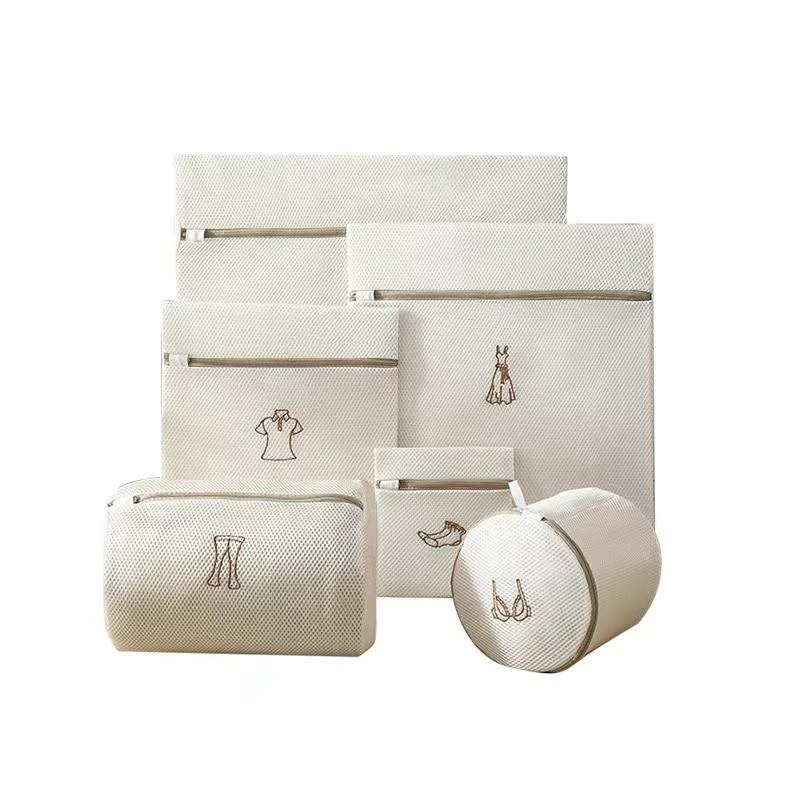
A few examples show the range. The set of 3 colorful mesh laundry bags works as a bright starter pack. Meanwhile, the 5-piece thickened coarse mesh laundry bag set suits everyday family washing. For delicates, the 7-piece fine mesh laundry bag set and the set of 7 thickened fine mesh bags cover everything from socks to blouses.
You can compare more mixed packs in our laundry bag set range.
One tip from experience: mix mesh grades within a set when your customers wash both delicates and bulky items. A pack with fine mesh small bags and coarse mesh large bags fits real household loads better than a pack of one grade.
Customization Options for Private Label Mesh Laundry Bags
Private label is where a basic mesh bag becomes a brand product. When you plan a custom range, these are the options to discuss with your factory:
- Logo: Embroidered logos last the longest. Woven labels and printed tags cost less and suit large runs. The thickened white mesh laundry bag with embroidered logo shows a clean, simple finish.
- Color: Use color to code sizes or uses, for example white for whites and gray for darks.
- Size and shape: Adjust the dimensions to fit your target garment or your packaging.
- Mesh grade: Choose fine, coarse, sandwich, or thickened fabric for each bag in a set.
- Zipper color and pull: Match the zipper to your brand colors.
- Packaging: Options include PVC pouches, header cards, kraft paper sleeves, and color boxes.
- Set structure: Pick the number of bags and the size mix for each pack.
Two examples of finished custom work stand out. The 5-piece coarse mesh set with customized logo suits retail brands. The sandwich mesh laundry bag with embroidery fits gift and children’s lines.
A note on timing: custom logos and packaging add steps, so start approvals early. Ask for a pre-production sample, and approve it in writing before bulk production begins.
5 Sourcing Mistakes Buyers Make With Laundry Mesh Bags
Even experienced buyers slip on a few details. Watch for these:
- Ordering one mesh grade for every product. Coarse mesh costs less, but it snags lingerie. Match the grade to the use.
- Judging by photos alone. Mesh softness, zipper feel, and stitching only show up in a physical sample.
- Skipping zipper guards. An exposed zipper pull is a common source of “it ruined my sweater” reviews.
- Leaving packaging until the end. Late packaging changes can delay shipping. So settle the packaging along with the product spec.
- Forgetting test reports. Without REACH or related reports, a shipment can stall at customs or fail a retailer audit.
Why Source Laundry Mesh Bags Directly From the Manufacturer
Every check above is easier when you speak with the people who make the bags. A factory can adjust the mesh, zippers, and packaging on the production line. A trader, by contrast, can only pass messages along.
Established in 2014, our company is a professional manufacturer of laundry mesh bags, bra laundry bags, washing bags for shoes, storage bags, laundry baskets, and drawstring mesh. Our customers are located worldwide, with key markets in Europe, North America, South America, Korea, and Japan. OEM orders are welcome, and customized designs are available. Our raw materials are environment friendly, and our products can pass REACH and related tests.
When you work with us directly, you get:
- Factory pricing, with no middle layer
- Faster answers on specs, samples, and changes
- Direct control over mesh grade, logo, and packaging
- Test reports on request for your target market
Explore our full laundry mesh bag collection to see current styles. Then send us your target garments, order quantity, and sales market. We’ll suggest the right mesh, sizes, and set mix, and quote you straight from the source. Because you’re talking to the original manufacturer, every answer comes from the team that cuts, sews, and packs your bags.
Ask for a quote or a sample set now. Compare it side by side with your current supplier, and judge the mesh, zipper, and stitching in your own hands.
Frequently Asked Questions
1. What is the minimum order quantity for mesh laundry bags?
It depends on the style and the level of customization. Stock designs usually allow smaller orders than full custom logo and packaging runs. Share your target style and quantity, and we’ll confirm the current MOQ.
2. Can you add our logo to laundry mesh bags?
Yes, we offer embroidered logos, woven labels, printed tags, and custom packaging. We can also match mesh and zipper colors to your brand. Contact us to request a logo mockup.
3. Do your mesh bags pass REACH and related tests?
Yes, our products can pass REACH and related tests, and our raw materials are environment friendly. Reach out for detailed reports and specifications for your target market.
4. How long does production take for a custom order?
Lead time depends on order quantity, customization, and the season. We confirm a clear schedule with your quote, once the sample is approved. Ask us for a timeline based on your launch date.
5. Can we get samples before placing a bulk order?
Yes, we provide samples so you can check mesh, zipper, and stitching first. Custom samples can include your logo and packaging. Contact us to request samples