
Mesh laundry bags protect fabric, keep small items together, and make sorting faster. But they only work when they’re chosen and used the right way. Households, hotels, and retailers often repeat the same small errors. So the bags wear out early, clothes still get damaged, and end users blame the product.
Below, we break down nine common mistakes, each with a simple fix. We also share what buyers and product teams should check before ordering mesh bags in volume. These notes come from our work as a mesh laundry bag manufacturer since 2014.
Why a Bag of Laundry Is Worth Getting Right
A mesh laundry bag looks like a basic accessory. However, it does a lot of work inside a washing machine. The drum spins, tumbles, and pulls fabric in every direction. A good bag acts as a buffer between delicate items and that force.
Here’s what a well-chosen mesh bag does for the person using it:
- Protects delicate fabrics. Lace, silk, and knitwear rub less against zippers, buttons, and denim.
- Stops hooks and straps from tangling. Bras, tights, and drawstrings stay contained.
- Keeps small items together. Socks, baby clothes, and face masks don’t vanish into the drum seal.
- Speeds up sorting. Users can pre-sort by color, person, or fabric type before wash day.
- Extends garment life. Less friction means less pilling, stretching, and fading over time.
- Works beyond washing. The same bag can carry shoes on a trip or store toys and towels.
For retailers and brand owners, there’s a second layer. When a mesh bag fails, the customer rarely blames their own washing habits. Instead, they blame the bag. So a product that tears at the seam or snags clothes can lead to returns and poor reviews.
That’s why the mistakes below matter on both sides. Users need to pack and wash bags correctly. Buyers need to source bags that hold up when users don’t.
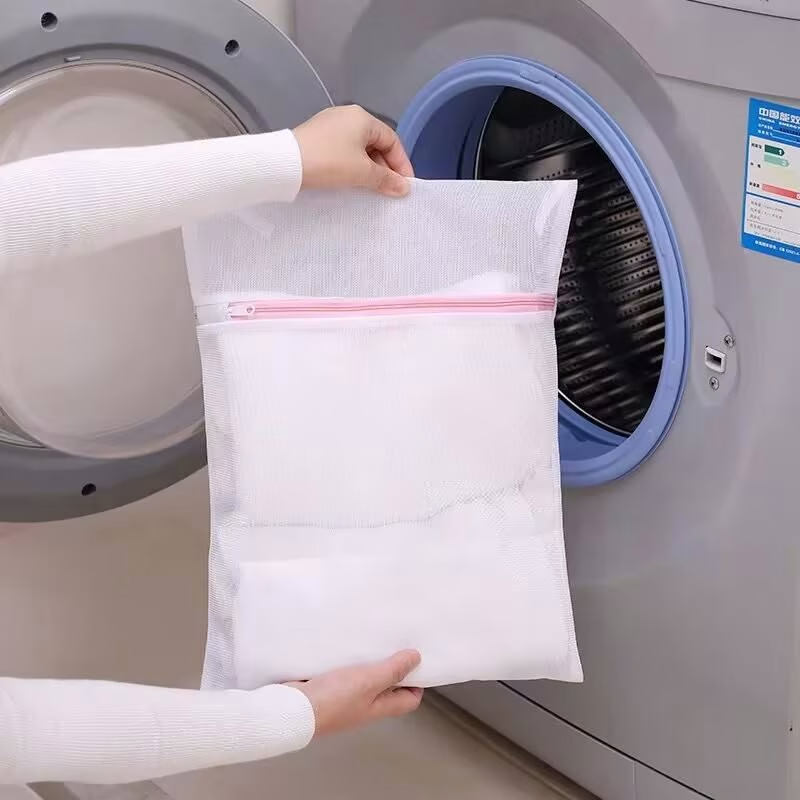
Loading Mistakes: How to Pack a Bag of Laundry the Right Way
Most damage happens before the machine even starts. How the bag is packed decides how well it protects what’s inside.
Mistake 1: Overfilling the Bag
This is the most common error. People stuff a bag until the zipper barely closes. Then the clothes can’t move, water can’t flow through, and detergent stays trapped in the folds.
Why it causes problems:
- Clothes come out still dirty or with soap residue.
- Fabric creases hard and may stretch at the seams.
- The zipper and stitching take extra strain, so the bag fails sooner.
The fix: Fill each bag about half to two-thirds full. Clothes should shift freely when you shake the bag. If the load is bigger, split it into two bags rather than forcing one closed.
Mistake 2: Mixing Heavy and Delicate Items
A lace bra and a pair of jeans should not share a bag. Heavy items act like a weight during the spin cycle. They press and rub against lighter fabrics, which defeats the purpose of using a bag at all.
The fix: Group items by weight and fabric:
- Bras, lingerie, and silk in one fine-mesh bag
- Socks and underwear in a small bag
- Towels, sweatshirts, or bedding in a larger coarse-mesh bag
Also, keep rough items like hook-and-loop fasteners out of delicate bags. Close those fasteners first, or wash them in a separate bag.
Mistake 3: Leaving the Zipper Open or Unguarded
An open zipper lets small items escape. Even a closed zipper can cause trouble if its metal pull slips out. During the spin, that pull can scrape the drum or snag other clothes in the load.
The fix: Close the zipper fully and tuck the pull into its guard or cover. Many well-made bags include a fabric zipper garage for this exact reason. When sourcing, look for this detail. Our laundry bags with zippers and protective pull covers are designed so the slider stays tucked during long wash cycles.
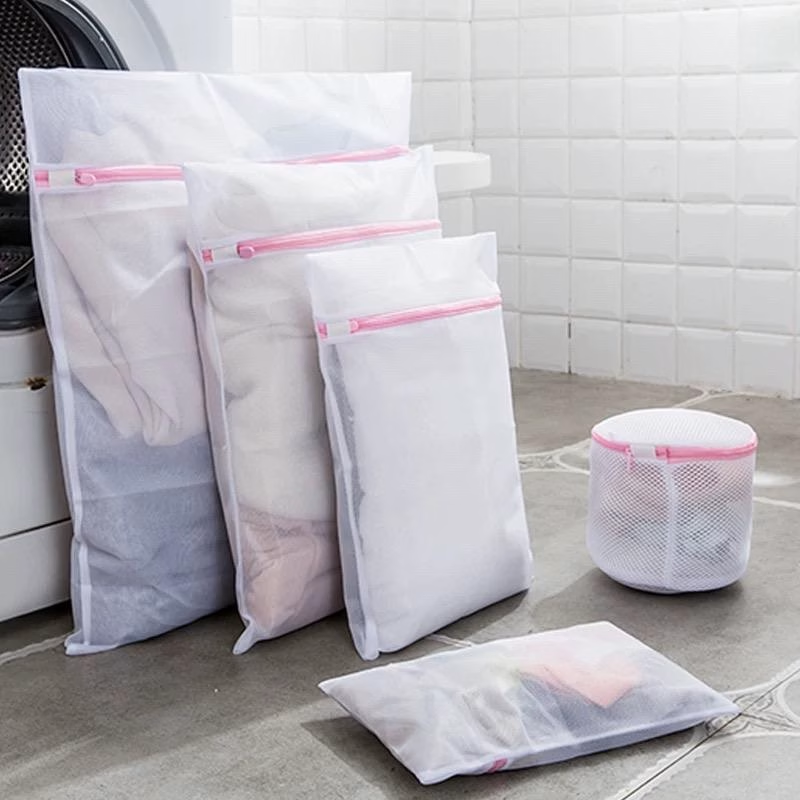
Laundry Bags Mesh Choice: Fine, Coarse, or Sandwich?
Not all laundry bags mesh the same way. The mesh structure controls two things: how much protection the bag gives, and how much water reaches the clothes. Pick the wrong one, and you either get damage or poor cleaning.
Mistake 4: Picking the Wrong Mesh Type
Many people buy one type of mesh and use it for everything. That’s like using one pan for every recipe. It works, but not well.
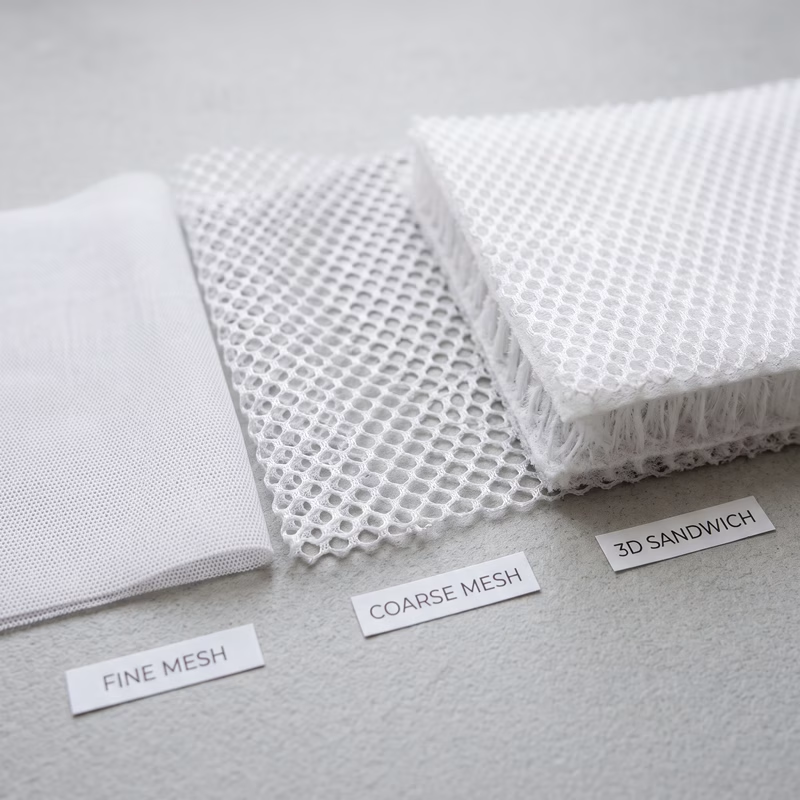
Here’s a simple comparison of the three main mesh types we produce:
| Mesh Type | Hole Size | Feel | Ideal For | Main Trade-off |
|---|---|---|---|---|
| Fine mesh | Small, tight weave | Soft, smooth | Bras, lingerie, silk, baby clothes, tights | Slower water flow, so better for lighter loads |
| Coarse mesh | Larger openings | Firmer, open | Towels, sweaters, sportswear, bedding | Less protection for items with hooks or lace |
| Sandwich (3D) mesh | Layered, cushioned | Thick, padded | Molded bras, sneakers, structured items | Bulkier, takes longer to dry |
How to choose:
- Start with the fabric. Delicate and small items need fine mesh. Bulky items need coarse mesh for water flow.
- Check for hardware. Hooks, underwires, and beads call for fine or sandwich mesh.
- Think about shape. Padded bras and shoes keep their form better in cushioned sandwich mesh.
For delicates, a set of 7 fine mesh laundry bags gives users a size for nearly every item. For bulkier loads, a set of 5 thickened coarse mesh laundry bags allows better rinsing. And for structured pieces, our Korean-style sandwich mesh laundry bag adds a cushioned layer.
Mesh thickness also plays a role. Thickened mesh resists stretching and tearing, so it lasts through more cycles. That’s useful for hotels, laundromats, and families who wash daily.
Washing and Drying Mistakes That Shorten Bag Life
Even a well-packed bag can fail early if the wash settings are wrong. These two mistakes hit both the clothes and the bag itself.
Mistake 5: Ignoring the Garment Care Label
A mesh bag reduces friction, but it can’t change the fabric’s limits. If a sweater says “hand wash only,” a bag won’t make a hot machine cycle safe. Many users assume the bag covers everything.
The fix: Read the care label first, then use the bag as extra protection. In the US, the FTC’s Care Labeling Rule guidance for clothing explains what those care instructions mean and why makers include them. Follow the lowest temperature and gentlest cycle listed for the most delicate item in the bag.
Mistake 6: Using High Heat for Washing and Drying
Most mesh laundry bags are made from polyester. Polyester handles regular washing well. But very hot water and high dryer heat can weaken the fibers and stitching over time. The zipper tape may also warp.
The fix:
- Wash in cold or warm water, ideally below 40°C (104°F).
- Choose a gentle or delicate cycle for fine-mesh loads.
- Remove items from the bag before tumble drying, or dry on low heat only.
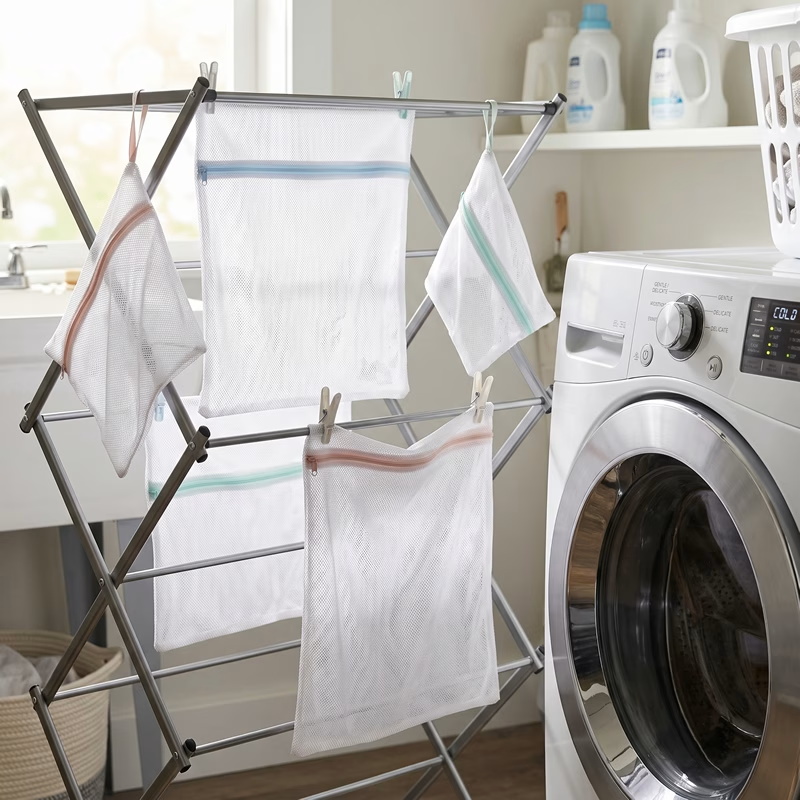
- Air dry the empty bag by hanging it up.
Because the mesh is open, bags dry fast in the air. So there’s rarely a reason to put them through a hot dryer cycle.
Sorting and Storage Mistakes
The final user mistakes happen outside the wash cycle. They’re easy to miss, yet they affect hygiene and daily convenience.
Mistake 7: Using One Bag for Everything
One bag for the whole family’s delicates leads to mix-ups. It also means items with very different needs share the same space. Then sorting after the wash takes longer than it should.
The fix: Use sets in different sizes or colors. For example:
- One color per family member
- One size for bras, one for socks, one for sweaters
- A separate bag for workout clothes
A colorful set of 3 mesh laundry bags makes color coding simple. Our wider range of laundry bag sets covers mixed sizes for households and hotels. And for socks, masks, and baby items, a small laundry bag stops them from slipping away.
For retailers, multi-piece sets also tend to sell well. They offer clear value and suit gift or bundle displays.
Mistake 8: Storing Bags While Damp
Wet bags folded into a drawer can develop odor or mildew. Damp fabric also attracts dust and lint. Next time, the bag carries that smell into a clean load.
The fix: Shake out each bag after washing and hang it to dry fully. Once dry, store bags flat or hang them on a hook. Clean out lint caught in the mesh now and then with a soft brush.
Sourcing Mistakes Buyers Make With Mesh Laundry Bags
The first eight mistakes belong to the user. This last one belongs to the buyer. And it often decides whether the user’s experience is good or poor.
Mistake 9: Buying on Unit Price Alone
A cheaper bag can look identical in a product photo. But the gaps show up after a few washes. Thin mesh stretches. Single stitching unravels. Zippers rust or split. Then the retailer handles complaints, refunds, and lost repeat orders.
Before placing an order, procurement and product teams should review these points:
| What to Check | What to Look For | Why It Counts |
|---|---|---|
| Mesh material | Polyester with even weave and consistent thickness | Resists stretching and tearing |
| Mesh density | Fine or coarse matched to the target use | Balances protection and water flow |
| Stitching | Bound edges, double stitching at stress points | Prevents seam failure in the spin cycle |
| Zipper | Smooth nylon or rust-resistant pull with a cover | Stops snags and early zipper failure |
| Compliance | Materials able to pass REACH and related tests | Required for many EU and global markets |
| Customization | Logo printing, embroidery, labels, packaging | Supports brand identity on retail shelves |
| Packaging | Retail-ready options with clear size info | Reduces handling at your warehouse |
Compliance deserves extra attention for European markets. The EU’s REACH regulation controls chemical substances in products sold there. The European Chemicals Agency’s overview of REACH explains what it covers and who it applies to. Our raw materials are environmentally friendly, and our products can pass REACH and related tests.
Branding is another area where buyers leave value on the table. A plain bag competes on price. A branded bag builds recognition every time a customer does a load of laundry. Options include our thickened white mesh laundry bag with embroidered logo and the set of 5 thickened coarse mesh laundry bags with customized logo.
Wholesalers looking for stock styles can compare our white thickened fine mesh laundry bag and the colorful thickened fine mesh laundry bag. You can also browse our full laundry mesh bag product range for sizes, shapes, and mesh options.
Order Mesh Laundry Bags Directly From the Factory
Every mistake above has a simple fix on the user side. But the strongest fix starts earlier, with a bag built to handle real-world use. Thick mesh, reinforced seams, covered zippers, and tested materials all help a bag of laundry protect clothes wash after wash.
That’s the part we control. Since 2014, we’ve manufactured laundry mesh bags, bra laundry bags, shoe washing bags, storage bags, laundry baskets, and drawstring mesh. Our customers span Europe, North America, South America, Korea, and Japan. Because we’re the original manufacturer, you deal with the source, not a middleman. That means clearer pricing, direct answers on materials, and full flexibility on OEM and custom designs.
Whether you need a stock set for wholesale or a branded line with your own logo, our team can help you match mesh type, size, and packaging to your market. Send us your target quantities and specifications, and we’ll come back with options, samples, and a detailed quote.
Frequently Asked Questions
1. What is the minimum order quantity for mesh laundry bags?
MOQ depends on the style, size, and level of customization. Stock styles usually start lower than fully custom designs. Contact us with your target quantity, and we’ll confirm the MOQ for your exact item.
2. Can you add our logo to laundry bags mesh products?
Yes. We offer embroidered logos, printed logos, custom labels, and branded packaging. Share your artwork, and we’ll suggest the method that suits your mesh type and budget.
3. Do your mesh laundry bags pass REACH testing?
Yes. Our raw materials are environmentally friendly, and our products can pass REACH and related tests. Reach out for detailed specifications and test documentation for your target market.
4. How long does production take for custom orders?
Lead time depends on quantity, mesh type, and customization details. Simple stock orders move faster than new OEM designs. Tell us your schedule, and we’ll give a confirmed timeline with your quote.
5. Can we get samples before placing a bulk order?
Yes. Samples let your team check mesh feel, stitching, and zipper quality first. Contact us to request samples of stock styles or a custom prototype.