
A buyer who orders 10,000 mesh laundry bags expects every unit to hold up in commercial washing machines, protect delicate garments, and survive repeated use. When even one batch fails—stretched hems, broken zippers, torn mesh—the cost lands directly on that buyer’s reputation and bottom line. The difference between a reliable custom mesh bag and a defective one comes down to three factors: material grade, size specification, and intended use case.
Established in 2014, we are a professional manufacturer of laundry mesh bags, bra laundry bags, washing bags for shoes, storage bags, laundry baskets, and drawstring mesh products. Our customers are located worldwide, with key markets in Europe, North America, South America, Korea, and Japan. We welcome OEM orders, offer customized designs, use environment-friendly raw materials, and our products pass REACH and related compliance tests. This guide draws on that production experience to walk you through every specification you need to evaluate when sourcing a custom mesh bag for your business.
What Is a Custom Mesh Bag?
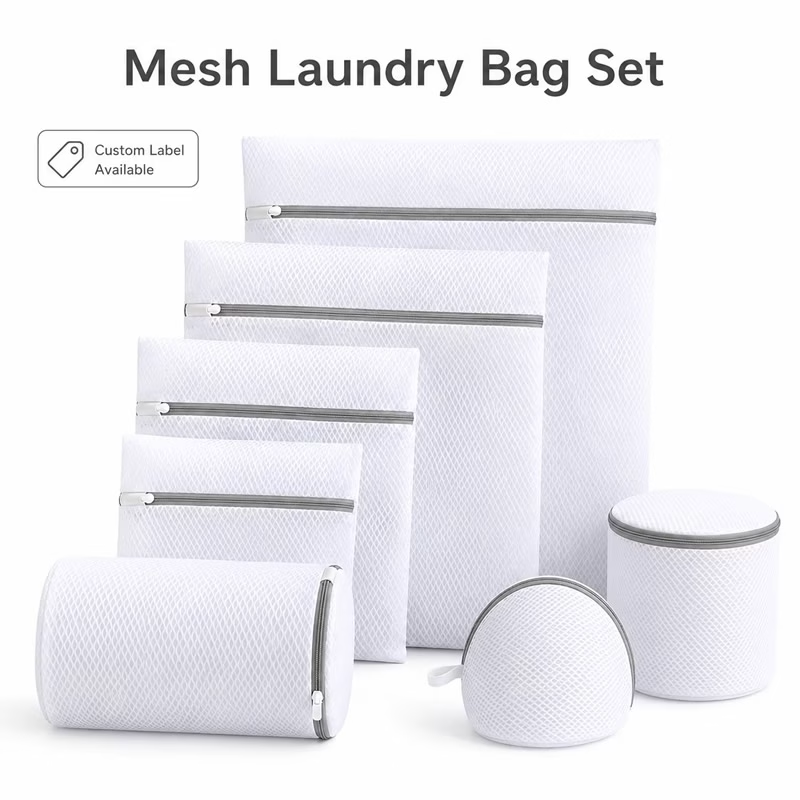
A custom mesh bag is a washable, breathable pouch made from netted or woven synthetic fabric, produced to a buyer’s specifications for dimensions, mesh density, color, closure type, and branding. Unlike off-the-shelf mesh bags, a custom mesh bag is manufactured to exact requirements—whether that means a 60 × 50 cm coarse-mesh bag for heavy garments or a 20 × 20 cm fine-mesh bag for delicate undergarments.
The customization process typically covers four areas:
-
Material selection — polyester, nylon, or sandwich mesh in various thicknesses
-
Size and shape — from small pouches to oversized hampers
-
Closure type — zipper, drawstring, or button
-
Branding — embroidered logos, woven labels, or screen-printed designs
For wholesale buyers and procurement teams, understanding each of these variables helps ensure the finished product matches its intended application—whether that’s household laundry, commercial hospitality use, retail resale, or promotional giveaways.
What Materials Are Used in Custom Mesh Bags?
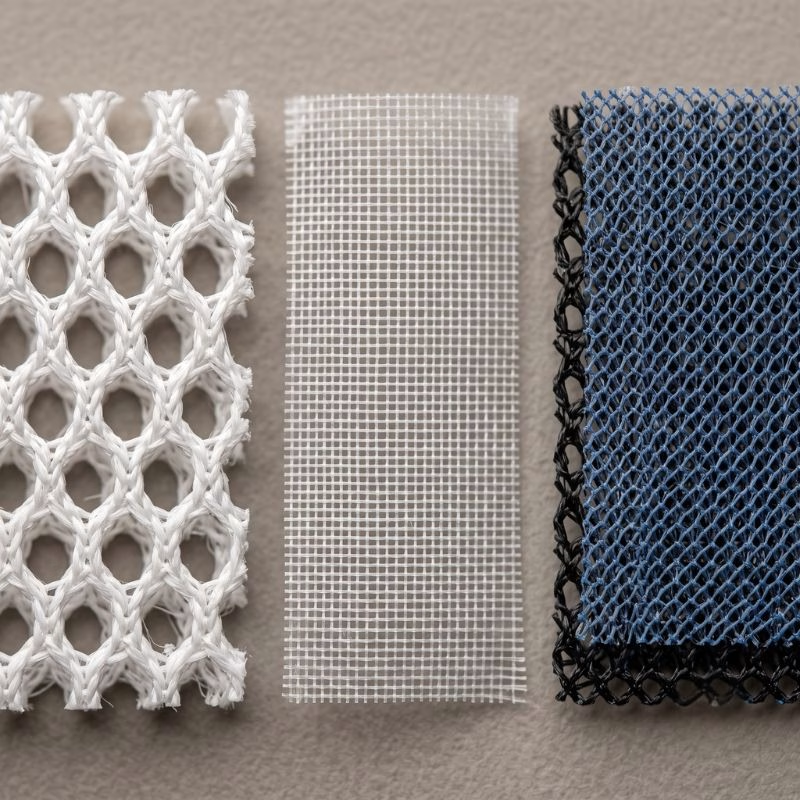
The material you choose for a custom mesh bag directly affects durability, wash performance, garment protection, and cost. Most mesh bags on the market use one of three primary fabrics, each with distinct properties suited to different applications.
Polyester Mesh
Polyester is the most common material for mesh laundry bags, and for good reason. It resists shrinking, holds its shape after repeated washing, and withstands high water temperatures commonly used in commercial laundering. Polyester mesh comes in multiple thicknesses—typically measured in grams per square meter (GSM)—ranging from lightweight 30 GSM sheer mesh to heavy-duty 100+ GSM coarse mesh.
Key characteristics:
-
High tensile strength and tear resistance
-
Excellent colorfastness for dyed variants
-
Affordable price point for bulk orders
-
Compatible with REACH-compliant dyes and finishes
Polyester mesh is the default choice for most custom mesh bags because it balances performance and cost. If your buyers need a general-purpose laundry bag for household or hospitality use, polyester is typically the right call.
Nylon Mesh
Nylon mesh is softer and more flexible than polyester, which makes it well-suited for protecting very delicate items like silk blouses, lace bras, or fine hosiery. It also dries faster than polyester, reducing mildew risk in humid environments.
However, nylon comes with trade-offs:
-
Lower heat tolerance than polyester—may deform at very high wash temperatures
-
Slightly higher cost per unit
-
Greater elasticity, which can cause sagging over time if the mesh gauge is too thin
For buyers sourcing bags specifically for delicate garment care, nylon or a nylon-polyester blend offers a compelling balance. Our thickened white fine mesh laundry bag is a good example of a fine-mesh product designed for delicate protection.
Sandwich Mesh
Sandwich mesh—also called 3D mesh or air mesh—is a layered fabric with a structured middle layer that creates thickness without adding weight. This material is popular in premium mesh bags because it offers a refined appearance, excellent breathability, and a soft hand feel.
Sandwich mesh bags often appear in gift sets, retail-packaged laundry products, and higher-end promotional items. Our sandwich mesh laundry bag in Korea style showcases how this material can be styled for visually appealing retail-ready products.
Material Comparison Table
The European Chemicals Agency provides detailed guidance on REACH compliance for textile products, which is essential reading for buyers sourcing mesh bags for European markets.
What Sizes Are Available for Custom Mesh Bags?
Size is one of the most important specifications when ordering a custom mesh bag because it determines what the bag can hold and how it performs in a washing machine. A bag that’s too small won’t accommodate the intended garments, while a bag that’s too large may tangle or fail to protect items properly during the wash cycle.
Standard Size Categories
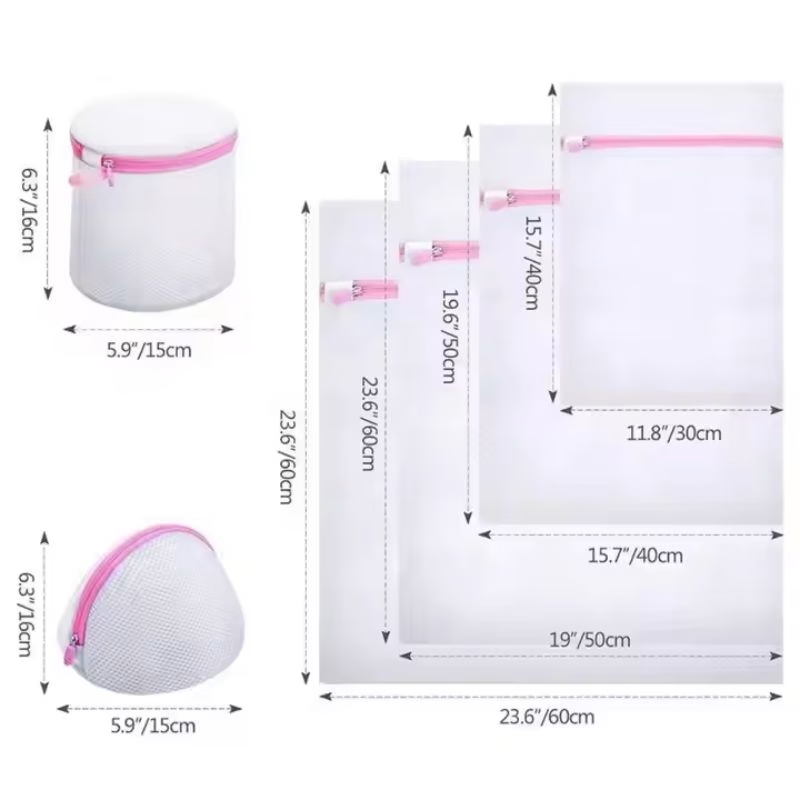
Mesh laundry bags generally fall into five size tiers:
Small (15 × 20 cm to 25 × 30 cm): Designed for socks, underwear, baby clothes, and small accessories. These bags keep tiny items from getting lost in the wash and prevent stretching during spinning. Our small laundry bag collection includes options in this size range.
Medium (30 × 40 cm to 40 × 50 cm): The most common size for everyday household use. Medium bags accommodate t-shirts, blouses, and everyday tops. They fit comfortably in standard residential washing machines and are a staple in retail laundry product sets.
Large (45 × 55 cm to 50 × 60 cm): Suitable for sweaters, jeans, trousers, and larger knitwear. Large bags are frequently used in households that wash bulky items regularly and in hospitality settings where staff launder uniforms and bedding.
Extra Large (55 × 70 cm and above): Built for bulky items like jackets, blankets, pillows, and comforters. Extra large bags require front-loading commercial machines for best results and are commonly used in hotels, laundromats, and institutional laundry facilities.
Specialty Shapes: Some custom mesh bags are designed with specific dimensions for non-standard applications. For example, bra laundry bags use rounded or structured shapes to maintain cup form during washing, while shoe washing bags may feature reinforced bases and divider panels.
Size Selection Guidelines
When specifying sizes for a custom mesh bag order, consider these factors:
-
Target garment type: Match bag dimensions to the largest item it will hold, with 5–10 cm of clearance
-
Washing machine drum size: Ensure bags fit comfortably without overcrowding
-
Retail packaging constraints: If bags will be sold in sets, consider how sizes nest for compact packaging
-
Shipping efficiency: Standardized sizes optimize container loading and reduce freight costs per unit
Our laundry bag sets demonstrate how multiple sizes can be combined into a single retail-ready package, giving end users flexibility while streamlining production and logistics.
What Are Common Uses for Custom Mesh Bags?
The versatility of mesh bags extends well beyond simple laundry protection. Understanding the full range of applications helps buyers and product teams identify market opportunities and specify the right bag for each use case.
Household Laundry Protection
The primary use for any custom mesh bag is protecting garments during machine washing. Mesh bags prevent delicate fabrics from snagging on zippers, hooks, and rough surfaces of other garments. They also keep small items organized and reduce tangling, which extends garment life and maintains fabric appearance.
Common household applications include:
-
Washing lingerie and bras without deforming cups or snagging straps
-
Protecting silk and fine knitwear from abrasion
-
Keeping socks paired and preventing loss
-
Washing baby clothes separately from adult laundry
-
Protecting items with embellishments, sequins, or delicate embroidery
Our set of 7 fine mesh laundry bags provides a range of sizes specifically for household use, allowing families to sort and protect different garment types in a single wash load.
Commercial and Hospitality Laundry
Hotels, hospitals, fitness centers, and commercial laundries use mesh bags at a much larger scale than households. In these settings, bags serve several operational functions:
-
Sorting linens by type or room number during collection and transport
-
Protecting staff uniforms and specialty garments during industrial washing
-
Separating contaminated or soiled items during handling
-
Organizing clean linens for efficient distribution
Commercial use demands heavier construction—reinforced seams, larger zippers, and higher GSM mesh. Our set of 5 thickened coarse mesh laundry bags is engineered for exactly this type of demanding environment, with thicker mesh that withstands repeated commercial wash cycles.
Retail and Promotional Products
Mesh bags have found a growing market in retail and promotional spaces. Brands purchase custom mesh bags to:
-
Bundle laundry accessories into gift sets
-
Include branded bags as purchase incentives with washing machines or appliances
-
Sell standalone laundry care products under private labels
-
Create promotional giveaways at trade shows and corporate events
For retail applications, visual presentation matters as much as function. Color options, logo placement, and packaging all contribute to shelf appeal. Our set of 3 colorful mesh laundry bags and colorful thickened fine mesh bags show how color variation can enhance retail-ready product lines.
Specialty and Niche Applications
Beyond laundry, custom mesh bags serve a variety of specialty purposes:
-
Sports equipment storage: Ventilated bags for gym clothes, reducing odor buildup
-
Travel organization: Packing cubes and laundry separation in luggage
-
Produce and grocery transport: Reusable mesh bags replacing single-use plastic
-
Toy storage: Breathable bags for bath toys, pool accessories, and outdoor toys
-
Shoe care: Dedicated bags for washing and storing footwear
When specifying a custom mesh bag for a niche application, the material, mesh density, and closure type should align with the specific use case. For shoe washing, for example, reinforced mesh and structured dividers prevent shoes from tumbling freely and damaging both the shoes and the washing machine drum.
How to Choose the Right Custom Mesh Bag for Your Needs
Selecting the right specifications for a custom mesh bag requires balancing performance requirements, budget constraints, and end-user expectations. The decision process breaks down into a few clear steps.
Step 1: Define the Primary Use Case
Start by identifying what the bag will hold and how it will be used. A bag designed for protecting silk blouses in a household washing machine has very different requirements from one built for sorting hotel linens in an industrial laundry.
Ask yourself:
-
What garments or items will the bag hold?
-
What washing temperature and cycle type will it face?
-
How frequently will the bag be washed—weekly, daily, or multiple times per day?
-
Will the bag be sold to end consumers or used internally?
Step 2: Select the Appropriate Material and Mesh Density
Mesh density—measured as the number of holes per square inch—determines how much protection the bag provides. Fine mesh (smaller holes) offers greater protection for delicate items but restricts water flow. Coarse mesh (larger holes) allows better water circulation but provides less protection against snagging.
Our thickened white coarse mesh bags represent the coarse end of this spectrum, while our set of 7 thickened fine mesh bags covers the fine-mesh category. Both use “thickened” construction, meaning the individual fibers are heavier than standard mesh, adding durability without changing the mesh density.
Step 3: Determine Size and Closure Specifications
Match the bag size to the largest item it will contain, and select a closure type that suits the user. Zippers provide secure closure and are standard for most commercial applications. Drawstrings offer simplicity and are common in promotional products and budget ranges. Our laundry bags with zippers cover the most widely requested closure type.
Step 4: Plan Branding and Customization
If the bags will carry a brand identity, decide on the branding method early in the process. Embroidered logos offer a professional, durable finish suitable for retail products. Woven labels are cost-effective for large runs. Screen printing works for simple, single-color designs on lighter mesh fabrics.
Our thickened white mesh laundry bag with embroidered logo and sandwich carton cleaning fine mesh bag with embroidery demonstrate how embroidery can be integrated into different mesh constructions.
Why Order Custom Mesh Bags from a Direct Manufacturer?
Working directly with a manufacturer eliminates intermediaries and gives buyers more control over specifications, quality, and cost. When you source a custom mesh bag through a trading company or distributor, you’re paying for additional margins and introducing communication layers that can lead to specification drift and quality issues.
Direct Specification Control
When you work with us, your specifications go directly to the production floor. This means:
-
Material grade is specified and verified at the raw fabric stage
-
Dimensions are cut to exact tolerances, not approximated
-
Mesh density is confirmed before production runs begin
-
Logo placement and branding details are locked in before sampling
Quality Consistency Across Orders
For buyers who place repeat orders, consistency is everything. A bag ordered in January should match a bag ordered in June—in color, dimensions, mesh density, and construction quality. Direct manufacturing control makes this possible because we maintain raw material records, production parameters, and quality inspection data for every order.
Our set of 5 thickened coarse mesh bags with customized logo is an example of a product where logo placement, mesh specification, and construction details are all managed under one roof.
Faster Lead Times
Direct manufacturing reduces lead times because there’s no back-and-forth between a trading company and a factory. Production scheduling, sampling, quality inspection, and shipping all happen within our facility, which means we can provide accurate timelines and respond to adjustments quickly.
Cost Efficiency
When you remove intermediary margins, the per-unit cost of a custom mesh bag drops—sometimes significantly. This is especially noticeable on larger orders where the margin difference compounds across thousands of units. Direct manufacturing also allows for flexible order quantities, which helps buyers managing inventory budgets or testing new product lines.
What Customization Options Are Available?
A truly custom mesh bag can be tailored across multiple dimensions. Understanding the full range of customization options helps buyers specify products that meet their exact needs.
Material and Thickness Customization
Buyers can specify:
-
Fabric type: Polyester, nylon, or sandwich mesh
-
Mesh density: Fine, medium, or coarse weave
-
Fabric weight (GSM): From lightweight 30 GSM to heavy-duty 100+ GSM
-
Color: White is standard; custom colors available with minimum order quantities
Size and Shape Options
-
Standard rectangular sizes in any dimension
-
Rounded or shaped bottoms for specific garment types
-
Structured designs for bras, shoes, or specialty items
-
Multi-bag sets combining complementary sizes
Closure Types
-
Zipper closures: Available with rust-resistant metal or plastic zippers, including auto-locking designs
-
Drawstring closures: Simple, cost-effective, with cord lock options
-
Button closures: Less common but available for specific applications
Branding and Logo Integration
-
Embroidered logos: Durable, professional appearance, suitable for retail products
-
Woven labels: Sewn-in fabric labels with brand name and care instructions
-
Screen-printed designs: Cost-effective for simple, single-color logos
-
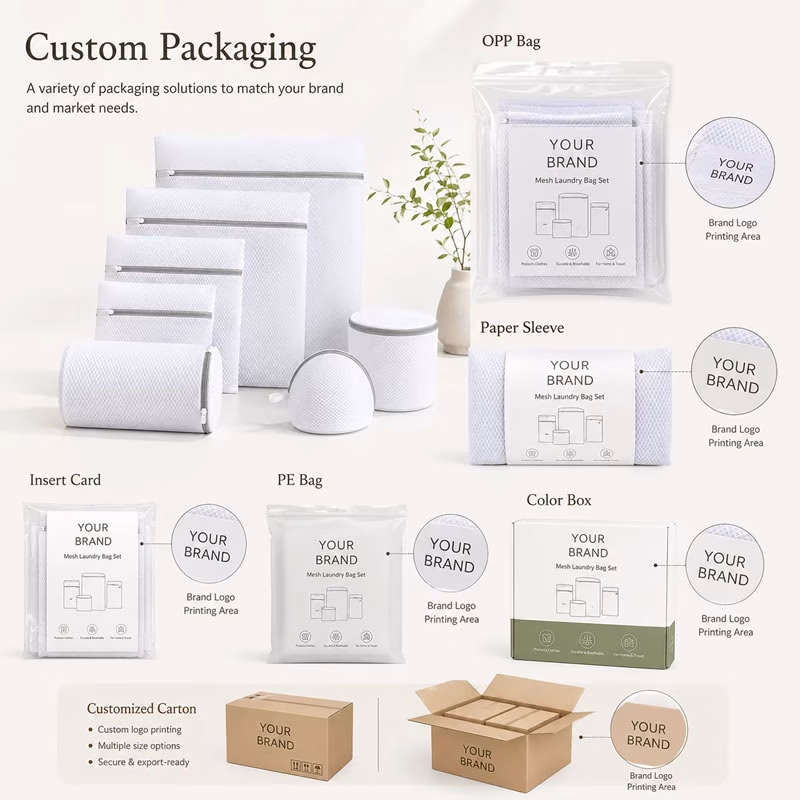
Hang tags and packaging: Custom retail-ready packaging with branded headers
Packaging and Presentation
For retail buyers, packaging is part of the product. Options include:
-
Individual polybag packaging
-
Multi-bag set packaging in branded boxes
-
Header card display packaging for retail shelving
-
Bulk packaging for wholesale distribution
When requesting a quote, providing detailed specifications for each of these categories helps ensure accurate pricing and minimizes sampling iterations.
How to Evaluate Mesh Bag Quality Before Ordering
Quality assessment is a skill that every procurement professional and product manager should develop. When evaluating a custom mesh bag sample, there are specific construction details to inspect that reveal whether the product will perform reliably over its intended lifecycle.
Seam Construction
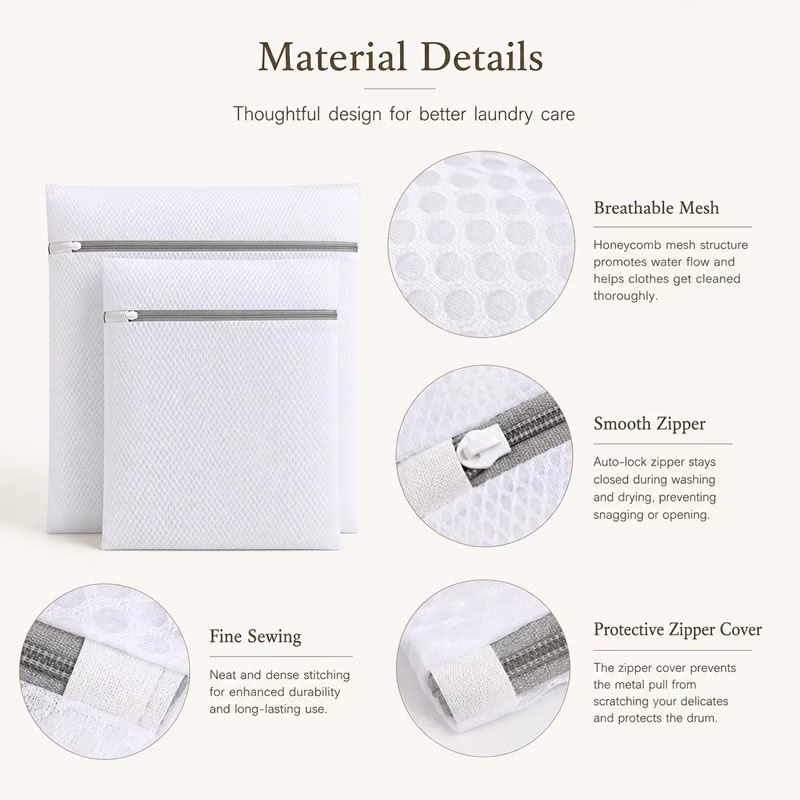
Examine the seams along all edges of the bag. Quality mesh bags use overlock (serged) stitching or flat-felled seams that prevent fraying. The stitch density should be even, with no skipped stitches or loose threads. Pay particular attention to stress points—corners, zipper attachments, and handle connections—where seam failure most commonly occurs.
Mesh Integrity
Stretch the mesh gently between your hands. The fabric should stretch slightly and return to its original shape without distortion. If the mesh sags or doesn’t recover, the fabric is likely too thin or made from low-grade yarn. Check for consistent weave—holes should be uniform in size and spacing throughout the bag.
Closure Quality
For zipper closures, test the zipper multiple times. It should move smoothly without catching. The zipper tape should be securely stitched to the mesh with reinforced stitching at both ends. For drawstring closures, the cord should be thick enough to withstand repeated pulling, and the channel through which it runs should be reinforced to prevent tearing.
Color Consistency
If you’ve ordered colored mesh, compare the sample against a Pantone reference or your brand color specification. Color variation between samples or within a single bag indicates inconsistent dye processes, which will only worsen at production scale.
Dimensional Accuracy
Measure the sample against your specification. Tolerances of ±1 cm are acceptable for most applications; anything beyond that suggests the cutting process needs adjustment. Check that all corners are square (unless a shaped design is specified) and that the bag lies flat without puckering.
Odor and Chemical Testing
A quality mesh bag should have no strong chemical odor. Persistent odors may indicate incomplete washing of dyes or finishes, which can be a compliance concern. For orders requiring REACH certification, request test reports from accredited laboratories before approving production.
What Affects the Price of a Custom Mesh Bag?
Pricing for custom mesh bags depends on several interrelated factors. Understanding these variables helps buyers make informed decisions and avoid unexpected costs during production.
Raw Material Costs
The base fabric—polyester, nylon, or sandwich mesh—represents the largest portion of the per-unit cost. Within each material category, GSM (fabric weight) directly affects price. A 100 GSM coarse mesh bag costs more to produce than a 30 GSM fine mesh bag of the same size because it uses more yarn per square meter.
Order Quantity
Volume is the single most significant factor in unit pricing. A 1,000-unit order will have a substantially higher per-unit cost than a 50,000-unit order because fixed costs—pattern making, machine setup, sampling—are spread across fewer units.
Typical pricing tiers:
Lead times are estimates and vary based on current production schedules and material availability.
Customization Complexity
Each customization element adds to the production cost:
-
Custom colors require minimum order quantities and dye setup
-
Embroidered logos require digitization and machine programming
-
Non-standard sizes require new cutting patterns
-
Specialty closures or hardware add per-unit cost
-
Multi-bag sets require additional sorting and packaging labor
Packaging and Shipping
Individual polybag packaging adds minimal cost per unit. Branded retail packaging, header cards, and display boxes add more. Shipping costs depend on order volume, destination, and freight method (air vs. sea). For large orders, sea freight significantly reduces per-unit shipping costs but requires longer lead time planning.
How to Place a Custom Mesh Bag Order
The ordering process for a custom mesh bag follows a structured path that ensures specifications are clearly communicated and production runs smoothly from start to finish.
- Submit Your Requirements
- Receive Quotation and Sample
- Sample Approval and Production
- Shipping and Delivery
If you’re ready to explore options for your next custom mesh bag order, reach out with your specifications and we’ll prepare a detailed quotation and sample plan tailored to your requirements. As the original manufacturer since 2014, we offer direct access to production expertise, material knowledge, and quality control—no middlemen, no markups, no communication gaps. Let’s discuss your project and build the right product for your market.
Frequently Asked Questions
1. What is the minimum order quantity for custom mesh bags?
Minimum order quantity varies by product type and customization level. For standard mesh laundry bags with minor customization, the MOQ typically starts at 500–1,000 units. For fully customized designs with unique colors, specialized materials, or complex branding, the MOQ may be higher. Reach out with your specifications and we’ll provide exact MOQ details for your project.
2. Can you add our logo to custom mesh bags?
Yes, we offer multiple logo application methods including embroidery, woven labels, and screen printing. Embroidered logos are our most popular option for retail and promotional products because they provide a durable, professional finish. Our thickened white mesh bag with embroidered logo is one example of this customization.
3. Do your mesh bags pass REACH compliance tests?
Yes, our products pass REACH and related compliance tests. We use environment-friendly raw materials and can provide test reports from accredited laboratories upon request. For buyers supplying European markets, we ensure all relevant documentation accompanies each shipment.
4. How long does sampling and production take?
Sampling typically takes 5–7 business days after specification confirmation. Production lead time depends on order volume—generally 2–3 weeks for orders under 5,000 units and 4–6 weeks for larger orders. We’ll provide a specific timeline with your quotation.
5. Can you produce custom sizes and shapes?
Yes, we manufacture custom mesh bags to any specified dimensions. Whether you need standard rectangular bags, shaped designs for bras or shoes, or multi-size sets, we produce to your exact requirements. Contact us with your size specifications and we’ll confirm production feasibility.