
Cleaning shoes by hand can feel safe, but it often takes more time, uses more effort, and gives uneven results. A shoe laundry bag offers a practical middle path: it allows machine washing while helping protect shoes from hard drum movement, rubbing, and damage. For buyers, product managers, and wholesale teams, the real question is not only “Does it clean?” but also “Can it protect the shoes, reduce effort, and fit repeat customer use?”
The answer depends on shoe material, bag design, mesh strength, zipper quality, and washing habits. When used correctly, a shoe washing bag can be more convenient than hand washing for many washable sneakers, trainers, and fabric shoes.
Why a shoe laundry bag Can Beat Hand Washing
Hand washing gives control. You can scrub small stains, treat delicate areas, and avoid machine movement. But hand washing isn’t always the best choice for daily sneakers or washable trainers. It can take more time, result in inconsistent cleaning, and soap can be left behind if you don’t rinse well enough.
A shoe laundry bag is a laundry bag designed to keep shoes in a protective covering while the washing cycle is taking place. Tis taking placehe bag does not clean the shoes by itself. The water, detergent, and machine movement do that job. The bag helps control the movement so shoes do not hit the washer drum too directly.
For households, gyms, dormitories, sports teams, and retail customers, this is a useful benefit. For buyers and product teams, it also creates a product that solves a clear daily problem: people want clean shoes without spending too much time scrubbing.
A good shoe bag for washing machine use can help with:
- Reducing direct impact inside the washer
- Keeping shoes paired during washing
- Protecting laces from tangling
- Helping customers wash sneakers with less effort
- Supporting repeat use when the material and zipper are durable
Hand washing still has a place. Leather, suede, wool, heavily decorated shoes, and shoes with weak glue should usually be cleaned by hand or with special care. A shoe laundry bag is not a magic shield for every shoe type. It works well when the shoe itself is suitable for machine washing.
Shoe laundry bag vs hand washing
| Cleaning Method | Main Strength | Main Limit | Better For |
|---|---|---|---|
| Shoe laundry bag | Saves time and protects shoes during machine washing | Not suitable for every shoe material | Washable sneakers, trainers, canvas shoes |
| Hand washing | More control over delicate areas | Takes more time and effort | Leather, suede, special materials, spot cleaning |
| No bag in washer | Fast but risky | Shoes can hit the drum and lose shape | Not recommended for repeat shoe care |
For buyers, the value is clear. A shoe laundry bag is easy to explain, easy to display, and easy for customers to understand. The product does not need heavy education because most users already know the pain of noisy, messy shoe washing.
What Is a shoe laundry bag and How Does It Work?
A shoe laundry bag is a mesh bag to wash shoes in washing machine and keep shoes protected. It usually has a zipper closure, breathable mesh and a size that can fit one pair of shoes or one shoe depending on the style.
The mesh allows water and detergent to pass through, while also acting as a buffer between the shoes and the washing machine’s drum, protecting them from direct impact, friction and entanglement with other laundry.
Polyester mesh, nylon mesh and other synthetic materials can be used to make a shoe washing bag . Some designs add foam layers, inner dividers, reinforced seams or covered zipper heads, which can improve protection and user experience.
Common design features
| Feature | Purpose | Buyer Benefit |
| Mesh fabric | Lets water and detergent flow through | Supports cleaning while protecting shoes |
| Zipper closure | Keeps shoes inside the bag | Reduces slipping out during washing |
| Zipper cover | Helps protect washer drum and other items | Adds a cleaner finish to the product |
| Reinforced seams | Improves strength during repeated use | Better for repeat customer use |
| Larger size | Fits bulkier shoes | Useful for trainers and sports shoes |
| Inner divider | Separates shoes inside the bag | Helps reduce rubbing between shoes |
A shoe bag for washer use should not be too tight. Shoes need space for water movement. If the bag is too small, cleaning may be weaker and pressure on the zipper may increase. If the bag is too large, the shoes may move too much inside the bag. The right balance depends on the shoe size range and target market.
For product teams, this makes sample testing valuable. A bag that looks fine in a photo may perform differently during washing. Checking mesh weight, zipper pull, seam finish, and bag dimensions before bulk production can prevent complaints later.
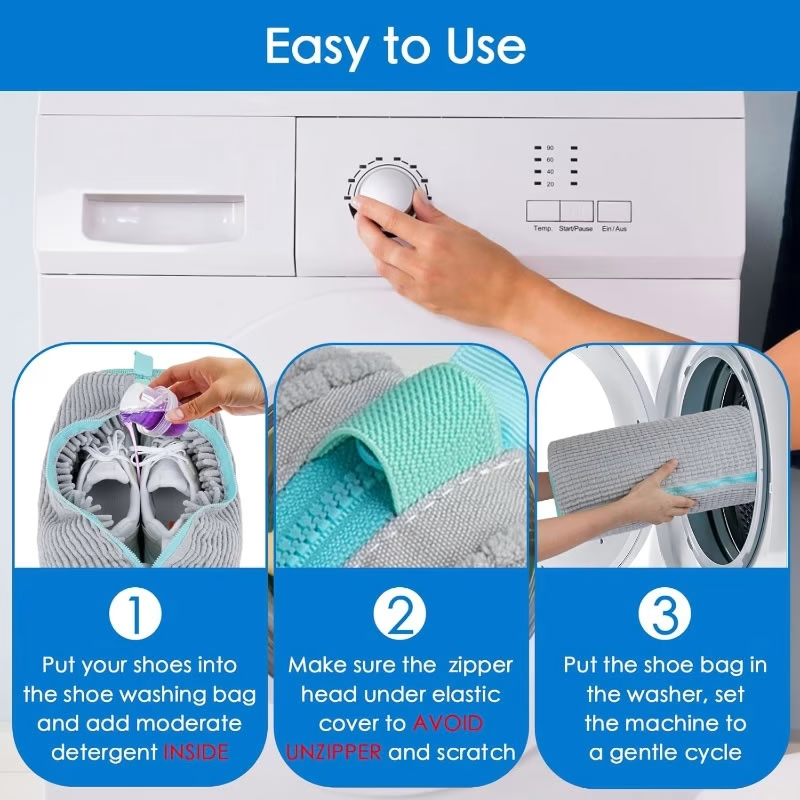
When Is a Shoe Washing Bag Better Than Hand Cleaning?
If the shoes are washable, lightly to moderately dirty and made of fabric, canvas, polyester or mesh materials, a shoe washing bag is often better than hand cleaning. It is also better when users need a repeat cleaning method that saves time.
Hand cleaning may work well for one pair of shoes, but it becomes tiring when several pairs need washing. Families, sports users, school students, gym members, and travel users often need a faster way to manage shoe hygiene. A shoe washing bag gives them a repeatable routine.
A shoe washing bag works well for:
- Canvas sneakers
- Fabric trainers
- Mesh running-style shoes that allow machine washing
- Children’s washable shoes
- Indoor sports shoes
- Travel shoes that need cleaning after use
- Lightly muddy shoes after brushing off dry dirt
Before machine washing, users should remove loose dirt, take out insoles if needed, and remove laces when possible. Laces can be placed in the same bag or a smaller mesh pouch.
Machine washing without a bag can make shoes hit the drum. This may create noise, scuff marks, and extra stress on both shoes and washer parts. A bag reduces that direct contact. It also helps keep shoes together, which is useful when washing more than one pair.
When hand washing is still better
Hand washing is better for materials that react badly to water, pressure, or detergent. This includes suede, leather, wool, silk details, shoes with glued decorations, and shoes with sensitive soles. Some performance shoes may also need careful cleaning to protect foam and structure.
A good product description should explain this clearly. Buyers do not want customers to misuse the product and blame the bag. Transparency on usage builds trust and decreases after-sale problems.
For brands that sell shoe care products, the messaging can be simple: a shoe laundry bag is great for washable shoes, but delicate materials need to be cleaned in a way that’s specific to the material.
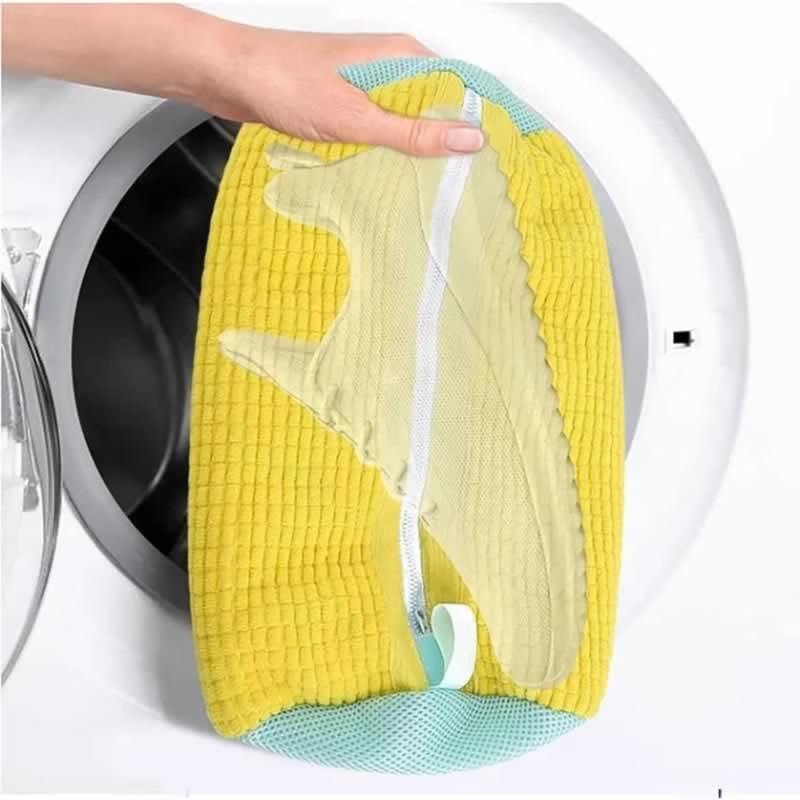
Pros and Cons of Using a Shoe Laundry Bag
A shoe laundry bag has many practical advantages, but it should be sold with clear expectations. Buyers should understand both the strengths and limits so they can position the product correctly in packaging, listings, and customer guides.
Pros of using a shoe laundry bag
1. Saves cleaning time
Hand washing shoes can take several steps: brushing, soaking, scrubbing, rinsing, and drying. A shoe laundry bag helps users place washable shoes into the machine after basic preparation.
2. Helps protect shoes during washing
The bag reduces direct contact between the shoe and the washer drum. This can help protect shape, surface finish, laces, and softer parts of the shoe.
3. Reduces washer noise
Shoes hitting the drum can be loud. A shoe bag for washing machine use helps contain the shoes and reduce direct banging. Adding towels can improve balance during washing.
4. Keeps shoes together
A bag keeps shoes paired in one place. This is useful for families and shared laundry spaces.
5. Adds product value for retailers
A shoe laundry bag is easy to pair with sneakers, laundry accessories, travel products, sports items, and household cleaning goods.
6. Supports repeat use
When made with durable mesh, secure stitching, and a reliable zipper, the bag can be used many times.
Cons of using a shoe laundry bag
1. Not suitable for every shoe
Some shoes should not be machine washed, even inside a bag. Leather, suede, wool, and decorated shoes need special care.
2. Cleaning may be weaker for heavy dirt
A bag helps protect shoes, but heavy mud, oil stains, or deep marks may need pre-treatment or hand brushing first.
3. Poor zipper quality can cause problems
A weak zipper may open during washing. A covered zipper head and smooth slider can improve product reliability.
4. Wrong size affects performance
A bag that is too small puts pressure on shoes and zipper. A bag that is too large may allow too much movement.
5. Low-grade mesh may tear
Thin mesh can break after repeated washing, especially with heavy shoes. Mesh weight and seam strength should match the intended use.
Practical view for buyers
| Point | Positive Side | Limit to Explain |
| Convenience | Easier than hand washing | Needs basic preparation |
| Protection | Helps reduce direct drum impact | Does not protect unsuitable shoes |
| Cleaning | Good for washable shoes | Heavy stains need pre-treatment |
| Retail value | Easy add-on product | Quality must match repeat use |
| Customization | Size, color, logo, zipper options | Sampling is needed before bulk order |
A balanced product message often performs better than a promise-heavy one. Customers appreciate clear instructions, and buyers gain a product with fewer complaints.
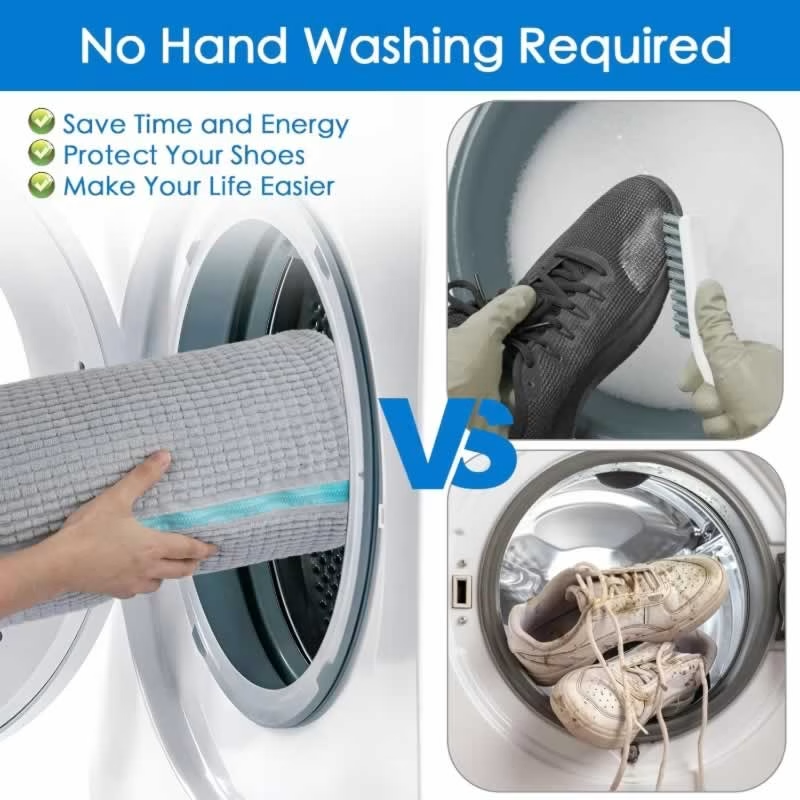
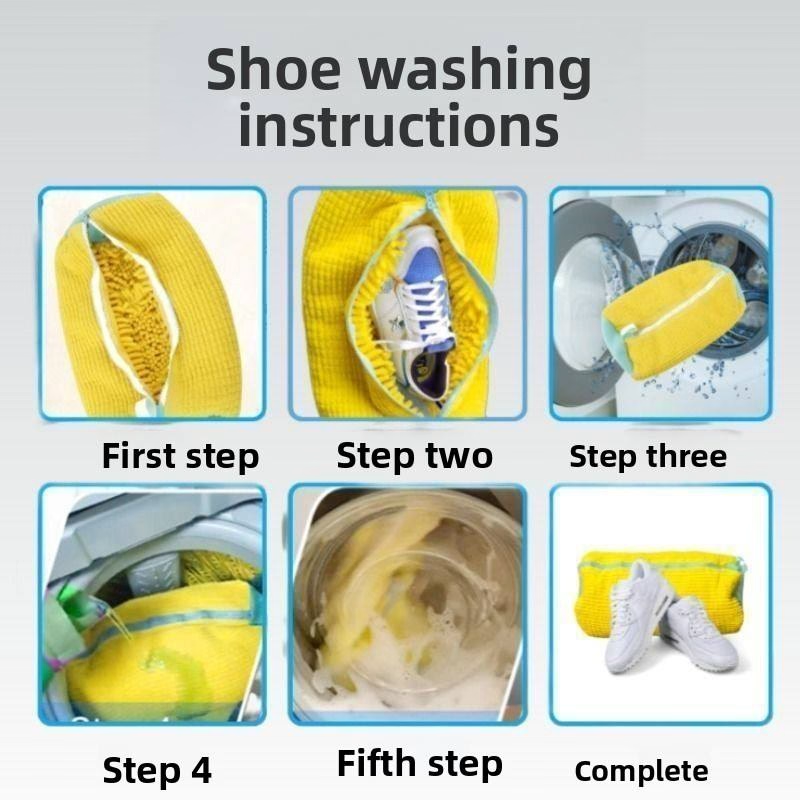
How to Use a Shoe Bag for Washing Machine Cleaning
Using a shoe bag for washing machine cleaning is simple, but small steps can affect the result. Good instructions make the product easier to use and reduce customer mistakes.
Step 1: Check the shoe material
The user should first check whether the shoes can be machine washed. Fabric, canvas, polyester, and mesh shoes are more suitable. Leather, suede, wool, and heavily decorated shoes should be cleaned with special methods.
Step 2: Remove dry dirt
Mud, stones, grass, and sand should be brushed off before washing. This helps protect the machine and improves the final wash.
Step 3: Remove laces and insoles
Laces can tangle if left loose. They can be placed inside the same bag or inside a smaller mesh pouch. Insoles may need hand washing, depending on material and care instructions.
Step 4: Place shoes into the bag
Put the shoes into the shoe bag for washing machine use. Do not force the zipper closed. The shoes should fit comfortably inside.
Step 5: Add towels for balance
A few old towels can help balance the washer load and reduce impact. They also help stop shoes from moving too hard inside the drum.
Step 6: Use cold water and gentle cycle
Cold water and a gentle cycle are safer for most washable shoes. Strong heat can affect glue, shape, and fabric finish.
Step 7: Air dry
Air drying is safer than high heat. Users can place paper or cloth inside the shoes to help keep shape while drying. Direct heat should be avoided.
Customer instruction card idea
A small printed instruction card can increase product value. It can include:
- Suitable shoe types
- Washing steps
- Drying advice
- Warning for leather and suede
- QR code for full care guide
- Brand or importer information
For online listings, the same instructions can be shown in images. This helps customers understand the product before purchase.
For more product context, buyers can review the main category page for washing bags for shoes.
How to Choose a shoe laundry bag for Buyer Programs
Choosing the right shoe laundry bag for a product line is not only about size or price. Buyers should review design, durability, mesh type, packaging, and target customer use.
A buyer sourcing for supermarkets may prefer a simple and cost-efficient design. A sports brand may need a thicker mesh, stronger zipper, and custom logo. A travel accessory brand may want a lightweight foldable version. A laundry product brand may prefer a full set with other mesh bags.
Key buying points
Material
Polyester mesh is widely used because it is durable, washable, and suitable for repeated laundry use. Nylon mesh can also be used depending on cost and performance needs.
Mesh density
Open mesh allows strong water flow. Fine mesh gives more surface protection. For shoes, the balance should allow cleaning while reducing rubbing.
Size
The bag should match the intended shoe range. Children’s shoes, women’s sneakers, men’s trainers, and bulky sports shoes may need different dimensions.
Zipper
A reliable zipper is a major quality point. Buyers should check zipper teeth, slider smoothness, puller strength, and whether the zipper head has a cover.
Seams
Shoes are heavier than garments, so seam strength is important. Reinforced stitching can improve repeated use.
Shape
Flat bags are easy to store and pack. Structured bags may offer more space and better shoe positioning.
Packaging
Retail packaging can include a header card, color box, paper sleeve, polybag, or custom insert card. Packaging should match the sales channel and price position.
Buyer review table
| Buying Factor | What to Check | Why It Helps |
| Mesh material | Polyester or nylon, mesh weight | Affects strength and water flow |
| Size | Length, width, depth | Helps fit target shoe types |
| Zipper | Smooth slider and covered puller | Reduces opening during wash |
| Seams | Reinforced stitching | Supports heavier shoes |
| Branding | Logo label, printed card, custom color | Helps retail identity |
| Testing | Wash test, zipper test, seam check | Supports stable bulk orders |
Established in 2014, our company is a professional manufacturer of laundry mesh bags, bra laundry bag, washing bags for shoes, storage bag, laundry basket and drawstring mesh. Our customers are located worldwide, with key markets in Europe, North America, South America, Korea, and Japan. OEM orders are welcome, and customized designs are available. Our raw materials are environment friendly, and our products can pass REACH and related tests.
For chemical safety context in European markets, buyers can refer to the European Commission REACH Regulation overview.
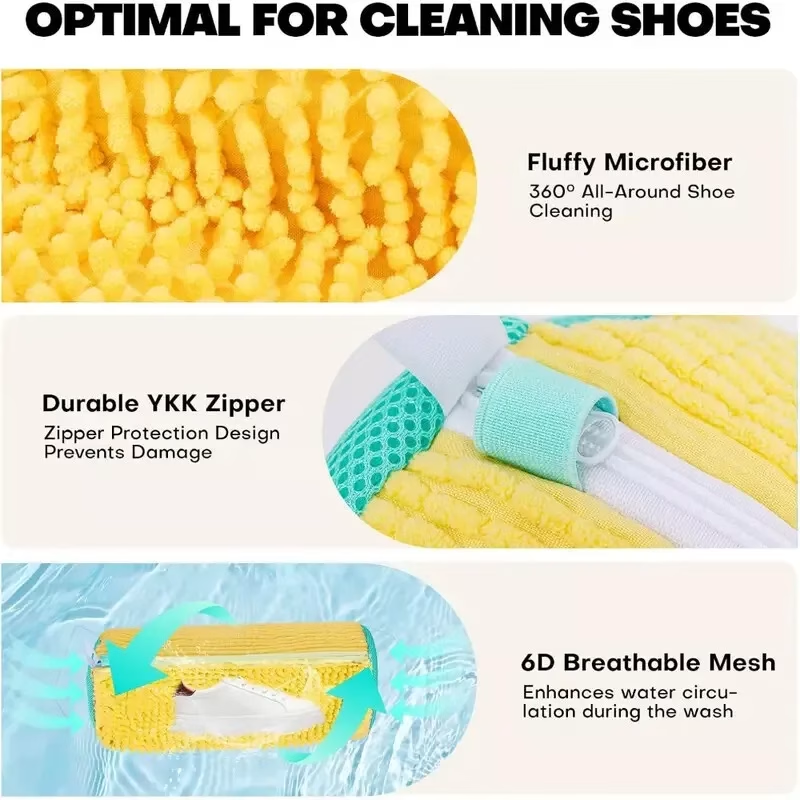
Product Options for Shoe Bag for Washer Programs
A shoe bag for washer programs can be developed in several styles. The right choice depends on customer group, retail price target, order quantity, and branding needs.
Some buyers prefer a simple mesh laundry bag for shoes. Others want a thicker sneaker wash bag with padding or a more structured form. The product can also be positioned for trainers, sneakers, travel shoes, children’s shoes, or household laundry use.
Product links for buyer review
| Product Type | Suggested Use | Product Link |
| Trainer washing machine bag | Trainers and sports shoes | trainer washing machine bag |
| Sneaker washing machine bag | Daily sneakers | sneaker washing machine bag |
| Mesh laundry bag for shoes | General washable shoes | mesh laundry bag for shoes |
| Sneaker laundry bag | Sneaker care range | sneaker laundry bag |
| Laundry bag shoes | Basic laundry accessory line | laundry bag shoes |
| Shoe washing bag | Shoe cleaning collection | shoe washing bag |
| Sneaker wash bag | Sports and lifestyle shoes | sneaker wash bag |
| Trainer washing bag | Gym and sports trainers | trainer washing bag |
| Mesh bag for washing shoes | Durable zipper design | mesh bag for washing shoes |
| Shoe bag wash | Everyday home laundry | shoe bag wash |
| Shoe bag washer | Washer-focused shoe care | shoe bag washer |
| Shoe bag cleaner | Shoe cleaning accessory | shoe bag cleaner |
| Shoe bag for washing machine | Machine wash shoe protection | shoe bag for washing machine |
How buyers can select from these options
For a basic retail item, a simple mesh design may be enough. When the focus is on sports or sneakers, a stronger bag with reinforced seams and a more secure zipper is often a better choice. Private label programs can also benefit from custom size, color, logo label, card design, and packaging so the product fits neatly into the existing brand line
A shoe bag for washer use can also be sold in sets. For example:
- One large shoe bag plus one small lace bag
- Two shoe bags in one pack
- Shoe bag plus laundry mesh bag set
- Shoe bag plus travel storage pouch
- Shoe bag with printed care instruction card
Set design can increase order value while giving customers a fuller solution.
Shoe Laundry Bag Materials, Sizes, and Customization
Material and size choices affect both product performance and market fit. A shoe laundry bag for children’s shoes will not need the same size as one made for men’s trainers. A budget retail pack may use a lighter mesh, while a sports-focused item may need stronger material and stitching.
Common material options
Polyester mesh
Polyester mesh is widely used for laundry bags because it keeps its shape well and handles repeated washing. It is a practical choice for shoe washing bags.
Nylon mesh
Nylon can be flexible and smooth. It may be used when buyers want a softer feel or a different hand touch.
Foam-supported mesh
Some shoe bags include foam or thicker panels. These can help reduce impact inside the washer, though they may cost more and take more space in packaging.
Fine mesh
Fine mesh offers more surface coverage and helps reduce rubbing. It may reduce water flow slightly compared with wider mesh.
Large-hole mesh
Large-hole mesh allows better water movement. It may be suitable for shoes that need stronger water flow.
Size planning
Sizing should match the target market. A buyer selling in Europe or North America may need larger sizes for bulky trainers. A children’s product line may need smaller bags with colorful trims.
Common size planning questions include:
- What shoe size range should the bag fit?
- Will the bag hold one pair or one shoe?
- Will the shoes be placed side by side or sole to sole?
- Does the zipper opening allow easy loading?
- Is there enough space for water movement?
- Does the package need to fit shelf display limits?
Customization options
OEM and custom orders can include:
- Custom size
- Custom mesh color
- Custom zipper color
- Logo label
- Printed logo
- Header card
- Paper insert
- Retail box
- Barcode sticker
- Multi-pack set
- Wash instruction card
For procurement teams, it is better to confirm samples before bulk order. Sample checks should include loading shoes, closing the zipper, washing with towels, drying, and checking the bag after the cycle.
Quality Checks Before Bulk Orders
Quality checks are important because a shoe laundry bag must handle heavier items than normal clothing bags. Shoes create more pressure during washing. This means the mesh, zipper, seams, and shape need proper review.
Practical sample tests
1. Fit test
Place target shoe sizes inside the bag. Check whether the zipper closes smoothly without pulling.
2. Wash test
Wash the shoes inside the bag using normal customer conditions. Check mesh, seams, zipper, and shape after drying.
3. Zipper pull test
Open and close the zipper many times. Check whether the slider moves smoothly and whether the puller feels secure.
4. Seam strength check
Look closely at seam lines after washing. Weak seams may open around corners or zipper ends.
5. Color check
If using colored mesh or zipper tape, check for color bleeding during washing.
6. Packaging review
Check whether folding affects the bag shape. Review barcode placement, care instructions, and retail display appearance.
Quality review table
| Test Area | What to Review | Possible Issue |
| Mesh | Tear resistance and water flow | Mesh may rip or block cleaning |
| Zipper | Slider, puller, teeth, cover | Zipper may open during washing |
| Seams | Stitching strength | Corners may split |
| Size | Fit for target shoes | Bag may be too tight or too loose |
| Color | Dye stability | Color may transfer |
| Packaging | Retail display and instructions | Customer may misuse product |
A clear specification sheet helps avoid confusion. It should include material, mesh weight, size, zipper type, color, logo position, packing method, carton details, and testing requests.
For washing practice, buyers may also compare customer instructions with the Whirlpool guidance on washing shoes in a washing machine, which includes placing shoes in a mesh garment bag and preparing shoes before washing.
Buying Guidance for Retail, Wholesale, and Private Label
A shoe laundry bag can fit many sales channels because it is small, useful, and easy to explain. It can be sold as a single item, a multipack, or part of a shoe care or laundry care set.
Retail buyers
Retail buyers often need clear packaging and simple customer instructions. A header card or paper sleeve can show the product benefit in a few seconds. The product should be easy to hang, scan, and display.
Good retail messages include:
- Protect washable shoes in the machine
- Helps reduce shoe impact during washing
- Suitable for sneakers, trainers, and canvas shoes
- Reusable mesh laundry accessory
- Follow shoe care label before washing
Wholesale customers
Wholesale customers may focus on unit cost, carton quantity, lead time, and repeat order stability. For this group, consistent material, stable sizing, and clear packing are important.
Product managers
Product managers may care more about customer reviews, return rate, visual design, and how the bag fits a wider product collection. A shoe washing bag can pair well with laundry mesh bags, bra laundry bags, storage bags, and travel organizers.
Private label programs
Private label buyers often need logo, packaging, and custom color. They may also request sample approval before order confirmation. Custom options can help the product match a larger brand range.
Recommended buying process
- Confirm target shoe size and customer group
- Choose mesh type and zipper design
- Request sample with desired size and packaging
- Test with real shoes and washing conditions
- Confirm logo, label, and print details
- Approve pre-production sample
- Check bulk packing and carton marks
This process keeps sourcing organized and helps both buyer and manufacturer avoid repeated revisions.
Image for this section
- Image title: Private Label Shoe Washing Bag Program
- Image description: Branded shoe washing bag packaging mockups with sample bags and sneakers on a sourcing table.
- SEO friendly file name: private-label-shoe-washing-bag-program.jpg
- Alt text: private label shoe washing bag packaging and sample review
- AI image generation prompt: Create a realistic 1:1 image of private label shoe washing bag packaging mockups, mesh bag samples, logo labels, and sneakers on a sourcing table, clean office and factory hybrid setting, professional product development style.
Is a Shoe Laundry Bag Worth Adding to Your Product Line?
If your customers are already buying laundry accessories, sneaker care products, storage items, travel organizers, or home cleaning supplies, a shoe laundry bag is worth considering. It solves a common problem, and it doesn’t require a complicated explanation.
For washable shoes, it offers a practical advantage over hand washing: less time, less effort, and better control inside the washing machine. For buyers, it can be developed in different price ranges through material, size, zipper, and packaging choices.
The strongest product programs usually combine:
- Correct size for target shoes
- Durable mesh
- Reliable zipper
- Clear instructions
- Honest care warnings
- Good packaging
- Sample testing before bulk order
A shoe bag for washing machine use also gives room for product extensions. Buyers can create sneaker wash bag sets, trainer washing bag packs, laundry accessory bundles, or travel shoe care kits.
Because we are the original manufacturer, inquiry gives direct access to the source. You can discuss size, mesh, zipper, logo, packaging, sample needs, and order planning with the production side directly. If you are preparing a shoe laundry bag program for retail, wholesale, or private label, send your target size, quantity, and packaging idea so we can help review the most suitable production option.
Frequently Asked Questions
What MOQ is available for shoe laundry bags?
MOQ depends on size, material, color, logo, and packaging. Standard designs usually allow more flexible order planning, while custom color or packaging may need a higher quantity. Contact us to share your target specification and quantity.
How can buyers request custom sizes?
Buyers can provide shoe size range, bag dimensions, sample photo, or target market details. We can review whether the size works for sneakers, trainers, or children’s shoes. Reach out for sample development before bulk order.
Do you support logo and packaging customization?
Yes, OEM orders are welcome. Custom options may include logo label, printed card, zipper color, mesh color, paper insert, barcode sticker, and retail packaging. Send your artwork or packaging idea for review.
Can products pass REACH related tests?
Our raw materials are environment friendly, and our products can pass REACH and related tests. Buyers can share market requirements before production so the needed testing direction can be reviewed early.
Why choose direct manufacturer sourcing?
Direct manufacturer sourcing helps buyers discuss size, material, zipper, packaging, samples, and order planning with the production source. It reduces communication layers and supports clearer product development.