
A mesh drawstring bag can look simple at first glance, but poor choices show up fast in daily use. Seams split, cords wear out, fabric snags, and sizes fail to match the job. For buyers, procurement teams, and product managers, that means avoidable complaints, reorders, and wasted stock. The right choice starts with a clear review of material, stitching, size, use case, wash performance, and factory capability. When you compare these points early, you can source a bag that fits the product, the end user, and the order plan.
For laundry, storage, hotel use, retail packaging, and promotional programs, mesh bags offer a useful mix of airflow, visibility, and light weight. Still, not every design performs the same way. Some work better for shoe washing, some for garment sorting, and some for produce or general storage. A good buying decision depends on how well the bag matches the real use environment, not just the photo on a product page.
Established in 2014, our company is a professional manufacturer of laundry mesh bags, bra laundry bag, washing bags for shoes, storage bag, laundry basket and drawstring mesh. Our customers are located worldwide, with key markets in Europe, North America, South America, Korea, and Japan. OEM orders are welcome, and customized designs are available. Our raw materials are environment friendly, and our products can pass REACH and related tests.
Why a mesh drawstring bag stays popular
A mesh drawstring bag remains popular because it solves several practical needs at once. It is light, easy to store, and simple to open and close. The mesh body allows airflow, which helps reduce trapped moisture and makes contents easier to identify. For laundry handling, that matters. For storage and retail packaging, visibility matters too.
Professional buyers often choose these bags for five common reasons:
- They help sort items by size, color, user, or department
- They allow better airflow than solid fabric bags
- They reduce the need for single-use packaging in many settings
- They are easy to customize for size, color, label, or logo
- They fit both consumer and institutional use
Common applications include:
- Home laundry
- Hotel and housekeeping use
- Dry cleaning collection
- Shoe washing
- Garment protection
- Toy or accessory storage
- Produce and shopping use
- Travel organization
When teams evaluate product fit, they should look beyond the words “mesh” and “drawstring.” The real question is this: what type of mesh drawstring bag fits the end use with the least friction?
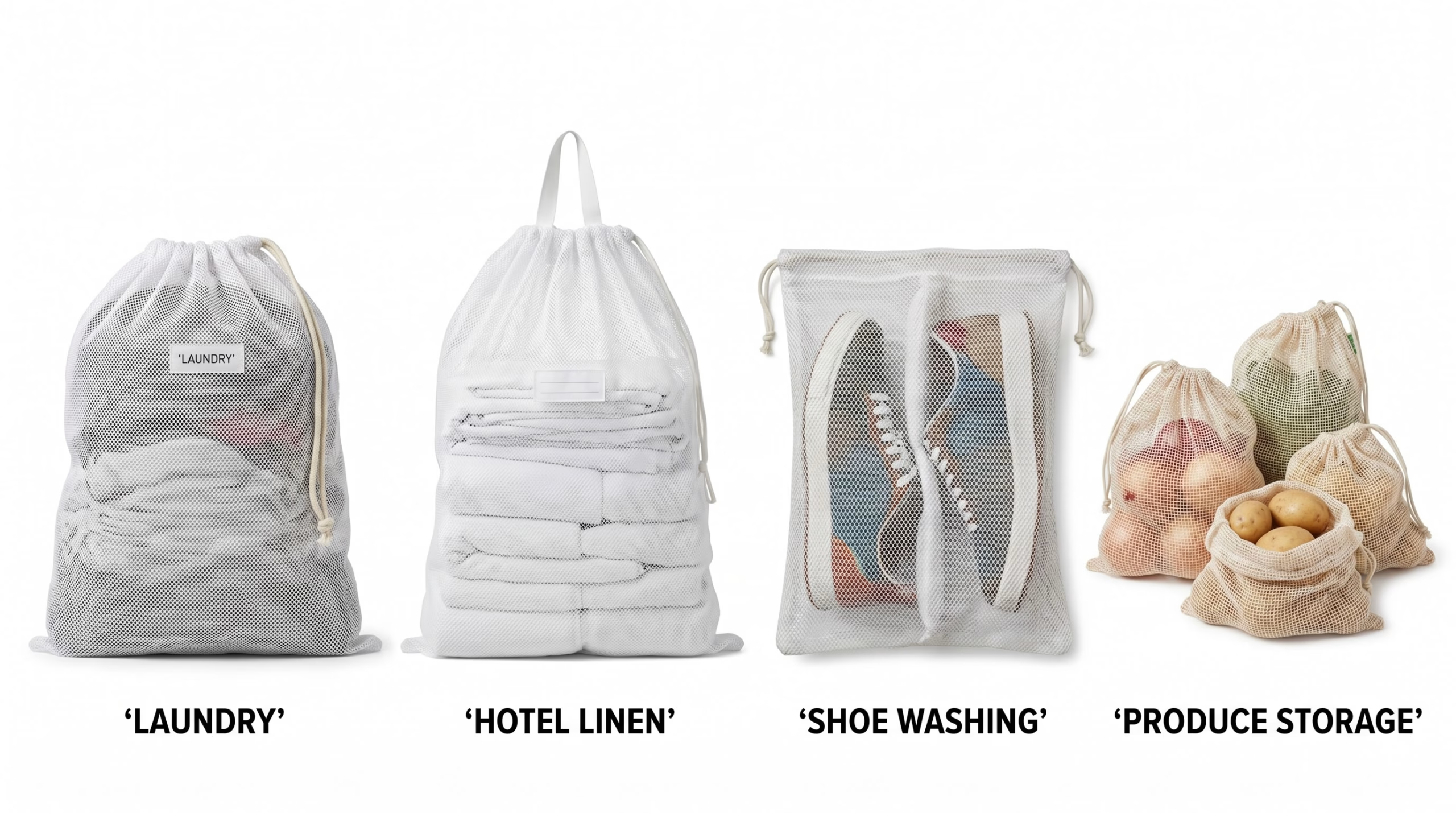
Start with the real use case for the mesh drawstring bag
The first buying step is not fabric. It is use case. Teams that skip this step often end up with the wrong size, wrong mesh density, or wrong cord structure.
Ask these questions first:
1. What will go inside the bag?
A bag for socks or undergarments does not need the same structure as one for shoes, towels, or hotel laundry.
2. How often will it be used?
A reusable mesh laundry bag used every week needs better stitching and better cord wear resistance than a bag used only for light storage.
3. Will it go into a washing machine?
If yes, fabric weight, seam strength, and drawstring construction all need closer review. Care guidance from the American Cleaning Institute also shows that wash method, load balance, and care-label compliance affect textile life and performance.
4. Is it for retail sale, institutional use, or internal handling?
Each use has a different priority. Retail buyers may care more about appearance and packaging. Laundry operations may care more about durability and size consistency. Product teams may need custom labeling, barcode placement, or bundle sets.
5. Does the end user need visibility or privacy?
Mesh is excellent for visibility and airflow, but some programs may need tighter mesh or layered construction.
A simple decision table helps:
| Use case | Best priority | Why it matters |
|---|---|---|
| Home laundry | Washability and size | Repeated machine use |
| Hotel laundry | Capacity and cord security | Fast handling and sorting |
| Shoe washing | Abrasion resistance | Heavier load and friction |
| Retail packaging | Appearance and print options | Shelf appeal and brand fit |
| Produce/storage | Breathability | Airflow and visibility |
If you define the use case at the beginning, the rest of the sourcing process becomes much easier.
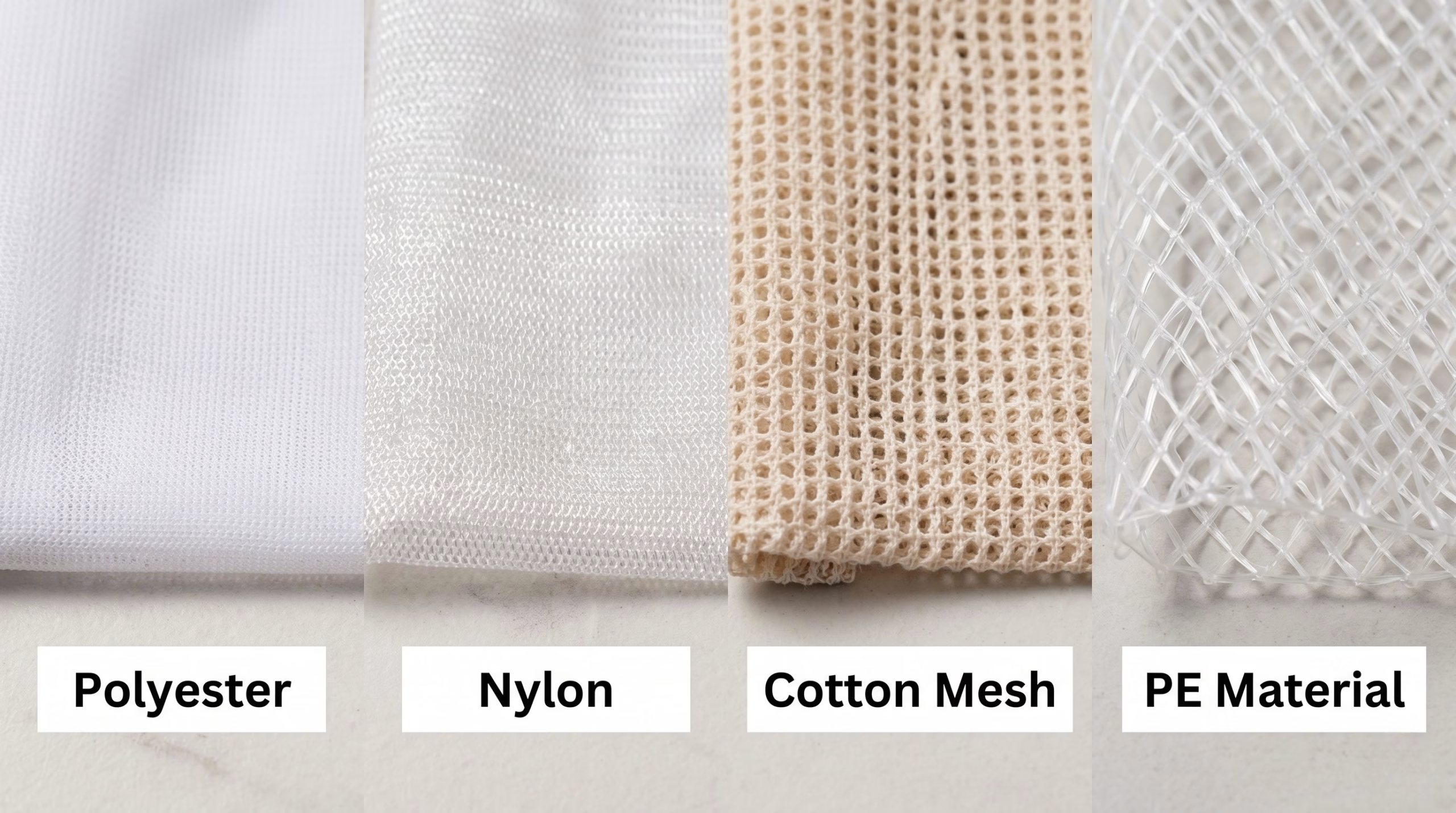
Material choice affects strength, feel, and wash life
Material is one of the biggest performance drivers. Buyers should ask what fiber is used, how dense the mesh is, and how the fabric behaves after repeated washing or loading.
The most common options include polyester, nylon, cotton mesh, and PE-based lightweight variants for disposable or semi-disposable use.
Polyester mesh
Polyester is widely used because it balances cost, durability, dimensional stability, and wash performance. It works well for many laundry and storage applications.
Best for:
- General laundry bags
- Reusable programs
- Travel sorting
- Retail sets
Nylon mesh
Nylon often offers good strength and abrasion resistance. It may be suitable for heavier use or bags that need a more durable feel.
Best for:
- Shoes
- Sports gear
- Heavier items
- Repeated use with friction
Cotton mesh
Cotton mesh feels softer and looks more natural. It can work well for shopping or produce storage, though it may not be the first choice for heavy-duty laundry settings.
Best for:
- Produce bags
- Shopping bags
- Natural-fiber product lines
PE or disposable variants
Some applications, including hotels and dry cleaning operations, may choose thinner or disposable options for convenience and hygiene workflows.
Best for:
- Temporary garment collection
- Hotel or laundry transfer
- Single-cycle or short-use programs
Here is a quick comparison:
| Material | Main advantage | Limitation | Common use |
|---|---|---|---|
| Polyester | Good all-round balance | Not as soft as cotton | Laundry and storage |
| Nylon | Better abrasion resistance | May cost more | Shoes and heavier items |
| Cotton mesh | Soft and breathable | Lower durability in heavy wash use | Produce and shopping |
| PE variant | Light and economical | Lower reuse potential | Hotels and transfer use |
Material selection should also connect to compliance goals. For textile products, many buyers ask about harmful substance controls, and REACH remains an important regulation framework in Europe for chemical safety.
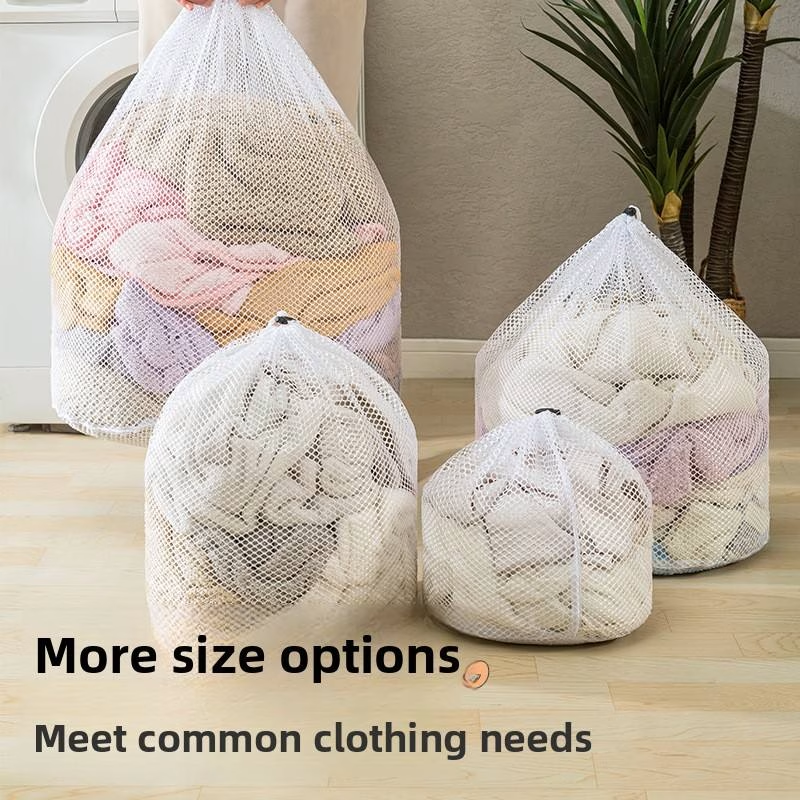
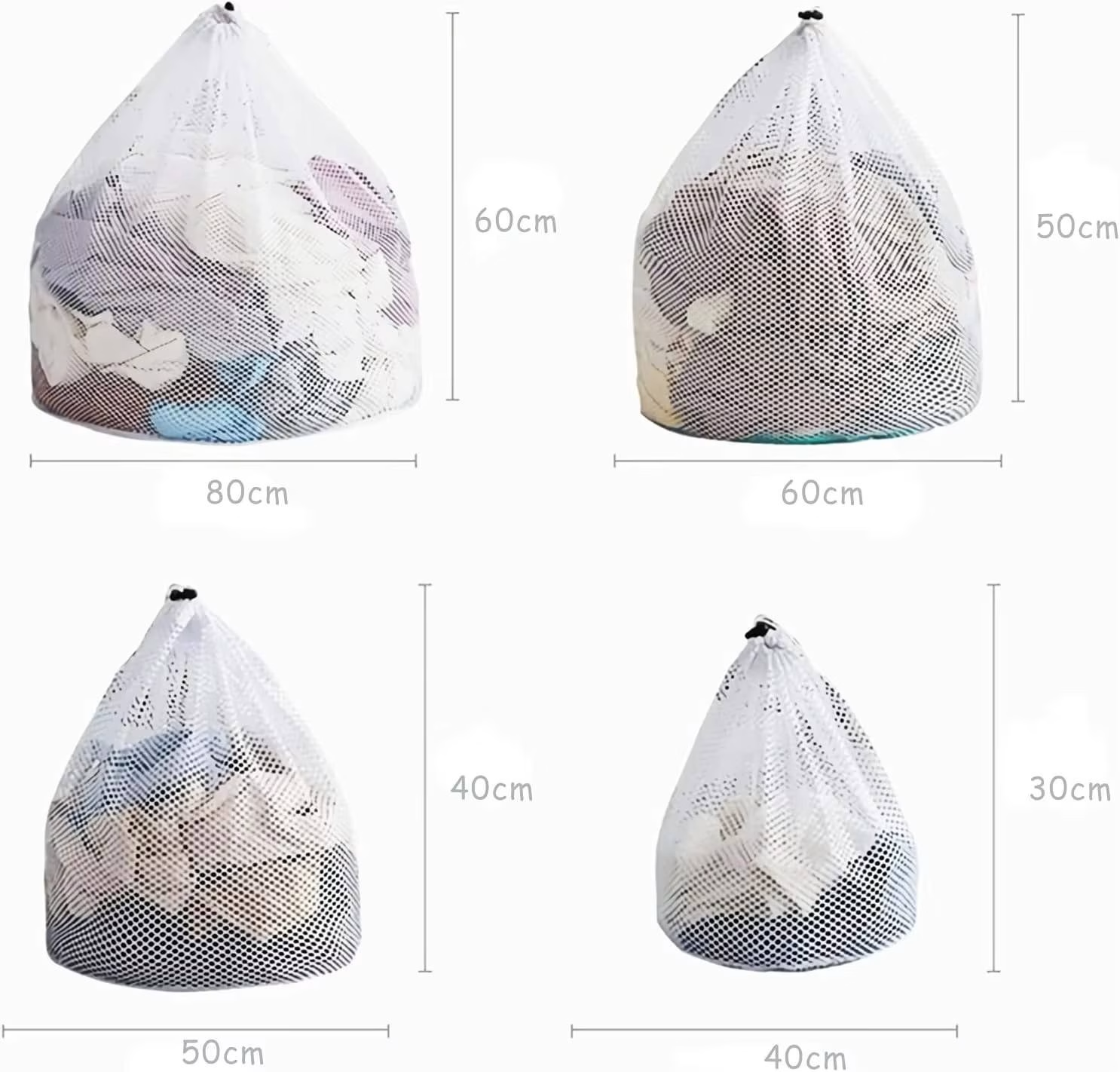
Use mesh drawstring bag size planning before placing orders
Size errors are one of the most common order problems. A bag may look fine in a sample photo but fail in practical use if the dimensions are wrong.
For size planning, buyers should review:
- Flat width and height
- Usable internal volume
- Drawstring channel allowance
- Stretch behavior under load
- Weight of typical contents
- Packaging count per carton
A drawstring mesh laundry bag for socks and small items may need a compact size for easy washing, while hotel or housekeeping programs may prefer larger formats for linen collection.
Typical questions to ask suppliers:
- What are the finished dimensions after sewing?
- Is there a production tolerance range?
- What size is recommended for shoes, garments, or linen?
- Does the mesh stretch after use?
- Can the supplier provide size samples?
You can review broader product size options in our laundry mesh bag product range and compare them with specific program needs.
Product teams often benefit from sampling more than one size before confirming volume orders. A size that works well for one market may not fit another. For example, a retail set sold for home laundry may need compact dimensions, while a hospitality project may need large capacity and faster handling.
For reference, these product pages show how size and end use can vary:
- drawstring bag product options
- disposable PE drawstring laundry bag for hotels and dry cleaners
- 60×90 cm big size drawstring laundry bag
Size planning tip
Ask the supplier to show the bag both flat and filled. A flat measurement alone does not always tell you how the bag performs under a real load.
Check drawstring design, closure control, and user handling
The cord system deserves more attention than many buyers give it. A bag may have good fabric but still fail if the drawstring frays, slips, or jams.
Look at these details:
Cord material
Soft cords may feel better in hand. Firmer cords may hold shape better during repeated opening and closing.
Cord thickness
A very thin cord may save cost but can wear out faster, especially in repeated wash cycles.
Channel construction
The cord channel should be sewn evenly so the drawstring runs smoothly. Poor channel sewing creates drag and uneven closure.
Single pull or double pull
Some orders use a simple single-cord system. Others benefit from dual-side pull closure for better balance.
Knot or stopper options
For some programs, cord stoppers or custom end finishes improve control and appearance.
For wash-use products, the closure should remain secure without causing tangling. Buyers sourcing a reusable mesh laundry bag should ask how the closure behaves in testing, especially after multiple wash cycles.
This is also where sample review matters. Pull the cord open and closed many times. Fill the bag. Shake it. Wash it if the use case requires it. Small weaknesses show up fast during this stage.
A product like the thickened white drawstring mesh laundry bag can be a useful reference when you want to review stronger body construction with a drawstring format.
Stitching quality often decides long-term performance
When buyers compare samples, they often focus on mesh appearance first. Yet the stitching is often what decides whether the bag lasts or fails.
Check these sewing points:
- Side seam strength
- Top channel seam consistency
- Bottom seam reinforcement
- Loose thread control
- Stitch density
- Alignment of panels
- Reinforcement at stress points
A breathable laundry storage bag still needs enough seam security to carry weight without distortion. This matters even more for larger formats and bags used in commercial laundry flow.
Easy factory questions to ask
- What seam type is used?
- Are stress points reinforced?
- Is there a standard pull or load check?
- What defect rate is accepted before shipment?
- Can inspection photos be provided before packing?
If your team is comparing offers from multiple factories, stitching consistency can separate a dependable supplier from a short-term option. Two bags may look similar in a listing image, but the sewing quality often tells a different story in real handling.
For bundled retail sets, consistent sewing also affects presentation. Uneven seams make a product look less organized, even when the mesh itself is acceptable. A packaged set like the set of 4 cleaning drawstring mesh laundry bag should have even stitching across each unit in the pack.
Compare mesh density and visibility before approving production
Not all mesh feels or performs the same. Mesh density changes airflow, visibility, softness, and resistance to snagging.
A more open mesh may offer:
- Better airflow
- Easier content visibility
- Lower fabric weight
A tighter mesh may offer:
- Better containment of small items
- Less snag risk for delicate contents
- More structured appearance
For laundry, the right density depends on what goes inside. Small items may need a finer mesh to reduce escape risk. Shoes or larger garments may work with a more open structure. Produce bags often benefit from visible, breathable construction.
This is especially relevant for a custom mesh drawstring bag because the visual effect changes the look of the finished product. The same size bag can feel more premium, more industrial, or more retail-friendly based on mesh density alone.
A quick review method
Ask the supplier to send:
- A close photo against white background
- A hand-held photo with contents inside
- A wash-use photo if the bag is intended for laundry
- Fabric weight or material spec if available
These small checks can prevent large order mismatches.
mesh drawstring bag customization options that add value
Customization should support function, not just appearance. The best custom programs improve usability, order clarity, or brand fit.
Common customization points include:
- Bag size
- Mesh color
- Drawstring color
- Printed logo
- Woven label
- Hangtag
- Set packaging
- Barcode label
- PE bag or carton marking
- Material thickness
For example, teams may color-code bags by department, garment type, hotel floor, or retail set purpose. A buyer sourcing for multiple markets may also request different label languages or packaging details.
A set of 12 vegetable drawstring shopping bag shows how the same drawstring format can shift from laundry use to produce and shopping use with the right sizing and pack plan.
Customization questions worth asking:
| Custom item | Why buyers request it |
|---|---|
| Size adjustment | Match a specific product or load |
| Logo print | Brand consistency |
| Label or tag | Retail and inventory control |
| Color coding | Sorting by use or department |
| Pack quantity | Retail set or bulk handling |
| Material choice | Meet performance target |
A bulk mesh bag supplier should be able to explain which custom items are easy to scale and which ones affect lead time more heavily. That helps teams avoid cost surprises later.
Ask about compliance, testing, and material claims early
Compliance questions should come early, not at the final PO stage. If your market requires chemical safety documentation, care labeling, or test support, bring that up before confirming materials.
Many buyers ask for support related to:
- REACH
- Material declarations
- Colorfastness or wash checks
- Dimension tolerance
- Packaging requirements
- Product traceability
- Sample approval records
The European Commission explains that REACH is the EU framework for the registration, evaluation, authorization, and restriction of chemicals. For buyers serving Europe, asking whether raw materials and finished products can support REACH-related requirements is a practical step during sourcing.
Textile buyers also often look for third-party safety signals. OEKO-TEX states that STANDARD 100 is a label for textiles tested for harmful substances and applies from yarn to finished product.
That does not mean every mesh drawstring bag needs the same certification path. It means buyers should know what their market expects and ask the supplier to confirm what support is available.
Useful external references for procurement review:
Review packaging, carton planning, and order efficiency
A good product can still create problems if the packing method is poorly planned. Carton count, compression, inner packaging, barcode labeling, and export marks all affect warehouse handling and shipping cost.
Buyers should ask:
- How many units per inner bag and per carton?
- Are the bags packed flat or folded?
- Will drawstrings tangle in bulk packing?
- Can mixed sizes or colors be packed in one carton?
- Are carton marks customizable?
These details matter more for larger programs, bundle sets, and cross-border shipments. A reusable mesh laundry bag sold online may need neat, consumer-facing packing. A hotel supply order may need bulk packing that saves space and speeds receiving.
This is also where a factory with laundry-specific experience helps. They can often suggest a packing format based on product type rather than using a generic export method.
For teams building a drawstring product line, it is useful to compare the bag itself and the packing plan together, not as separate decisions.
Supplier experience can reduce costly mistakes
Price matters, but supplier experience often saves more money over time. A factory that understands laundry mesh construction, custom sizing, and repeat-order control can help buyers avoid sampling delays, dimension errors, and packing confusion.
When evaluating a supplier, ask:
- How long have they produced mesh laundry products?
- Can they support OEM requests?
- What sample process do they use?
- Do they share inspection photos?
- Can they adjust material, size, and packaging?
- Have they supplied similar markets before?
Our manufacturing background is relevant here because buyers often want direct communication with the original source, not layers of handoff. Established in 2014, our company focuses on laundry mesh bags, bra laundry bag, washing bags for shoes, storage bag, laundry basket and drawstring mesh, with worldwide customers and support for OEM and customized designs.
That type of experience helps when a buyer needs:
- A size adjusted for a market program
- A better material match for repeated washing
- A custom set configuration
- A disposable option for hotel operations
- A clear path from sample to order
A dependable factory should answer practical questions with practical details, not only sales language.
A 15-point checklist buyers can use before approval
Here is a practical list you can use before sample approval or mass production:
- Confirm the exact use case
- Confirm the correct bag dimensions
- Review mesh material type
- Check mesh density
- Test drawstring closure
- Inspect seam quality
- Review bag weight and feel
- Ask about wash performance
- Confirm color and label details
- Review packaging method
- Ask about compliance support
- Confirm sample lead time
- Confirm production lead time
- Review carton quantity and shipping efficiency
- Confirm final approval sample before production
This checklist works well for both first-time orders and repeat programs. It is especially useful when more than one team is involved in the decision.
Choosing with better control
A mesh drawstring bag is a simple product only when the sourcing work is done well. For everyone else, it can become a chain of small issues: wrong size, weak seams, poor cord action, unclear packing, or material that does not fit the market.
When buyers define the use case first, compare material and mesh structure carefully, and ask the right supplier questions early, the product becomes much easier to manage. That leads to better consistency in stock, fewer quality surprises, and a better fit for laundry, storage, hotel, retail, and custom use.
If you are reviewing options now, it helps to work directly with the original manufacturer. That gives you clearer answers on materials, dimensions, customization, testing support, and order handling from the source itself. Send your requirements, target size, or sample idea, and we can help you compare the right bag structure for your application and prepare a quote with practical specifications.
Frequently Asked Questions
1. What size mesh drawstring bag should I order?
Choose the size based on the actual load, not just the product photo. Small-item laundry, shoes, hotel linen, and retail sets all need different dimensions. Contact us with your target use, and we can suggest suitable sizes or prepare samples.
2. Can you make a custom mesh drawstring bag?
Yes, custom options can include size, color, label, logo, packaging, and material choice. The best custom plan depends on your market, order quantity, and end use. Reach out with your artwork or specification sheet for a detailed review.
3. Do your bags support compliance testing?
Yes, our raw materials are environment friendly, and our products can pass REACH and related tests. If your market has specific documentation needs, share them early so we can match the correct material and support path.
4. How long does sample and production take?
Lead time depends on bag type, customization level, and order quantity. Standard samples usually move faster than fully customized programs. Contact us with your required quantity and specification so we can provide a more accurate schedule.
5. Can I request samples before bulk ordering?
Yes, sample review is a good way to check size, mesh density, drawstring handling, and stitching before volume production. Contact us to request samples and compare options against your real use case.