
Order the wrong mesh drawstring bag and the problems show up fast — torn seams after a handful of wash cycles, drawstrings that snap under load, or mesh so fine it traps lint and mildew. For teams sourcing in volume, those small failures multiply into returns, rework, and shrinking margins.
Small mesh drawstring bags sit at the center of a surprisingly wide product family. Buyers use them to protect delicates in the wash, sort shoes and gear, organize small parts, and package retail-ready sets. Getting the specification right — from material denier to closure strength — protects both the product and the customer relationships behind it. These 15 practical tips walk through the choices that separate bags that hold up from bags that fall apart, so your team can source with confidence and fewer surprises.
What Are Small Mesh Drawstring Bags and Why They Matter
A small mesh drawstring bag is a lightweight, breathable pouch closed by a cord that pulls the opening shut. The “small” format typically covers bags in the 20×30 cm to 40×50 cm range — compact enough for lingerie, socks, baby garments, shoe pairs, cosmetics, and small hardware. Unlike zippered laundry bags, the drawstring closure has no metal or plastic slider to corrode, jam, or scratch neighboring garments, which is why laundry and hospitality buyers favor it for repeated commercial washing.
Within the broader Mesh Drawstring Bags category, the small format is the fastest-moving size for laundry and retail buyers alike. These bags solve three recurring problems at once: they extend garment life by cushioning friction inside the drum, they keep small items from vanishing into larger loads, and they give housekeeping or laundry teams a visible, color-coded way to sort loads. A 2026 industry sourcing guide notes that a well-constructed polyester mesh bag rated at 1,000+ denier with double-bartacked seams can last 150–250+ wash cycles — roughly three to five years of weekly use. That service life is the gap between a one-time purchase and a recurring cost line.
When the specification lands right, the same bag can move from the laundry room to retail packaging to a gym counter. The shift away from single-use plastics has only accelerated demand here — a durable, washable mesh bag replaces hundreds of disposable plastic pouches over its service life, which is exactly the replacement story retail buyers respond to. That versatility is why buyers increasingly treat small mesh drawstring bags as a multi-use product family rather than a single-use accessory, and why getting the spec right pays back across every channel you sell into. You can see the range this applies to in our laundry mesh bag collection.
How to Evaluate Mesh Material Quality and Durability
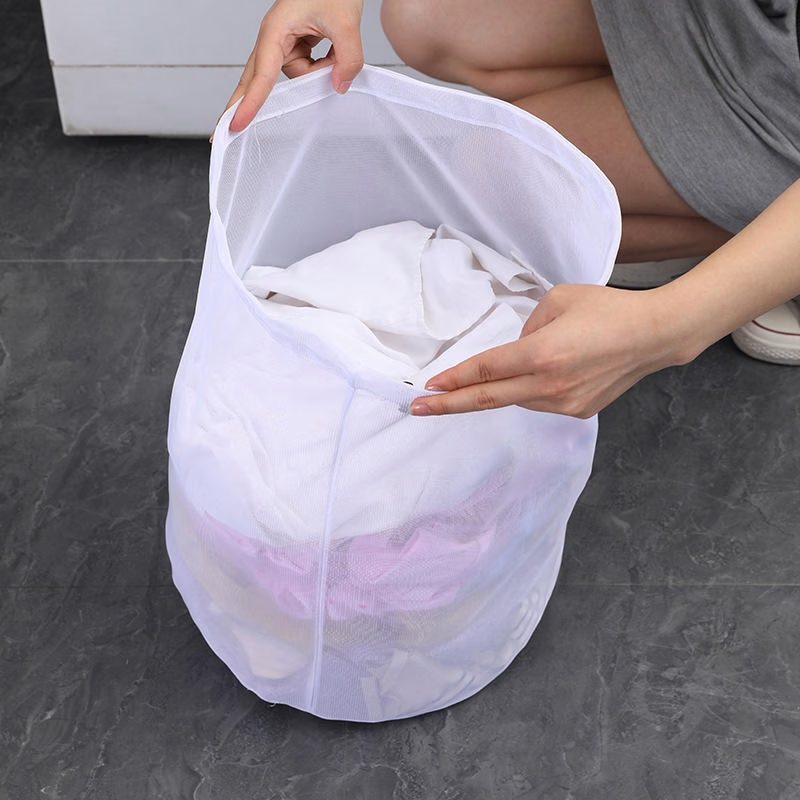
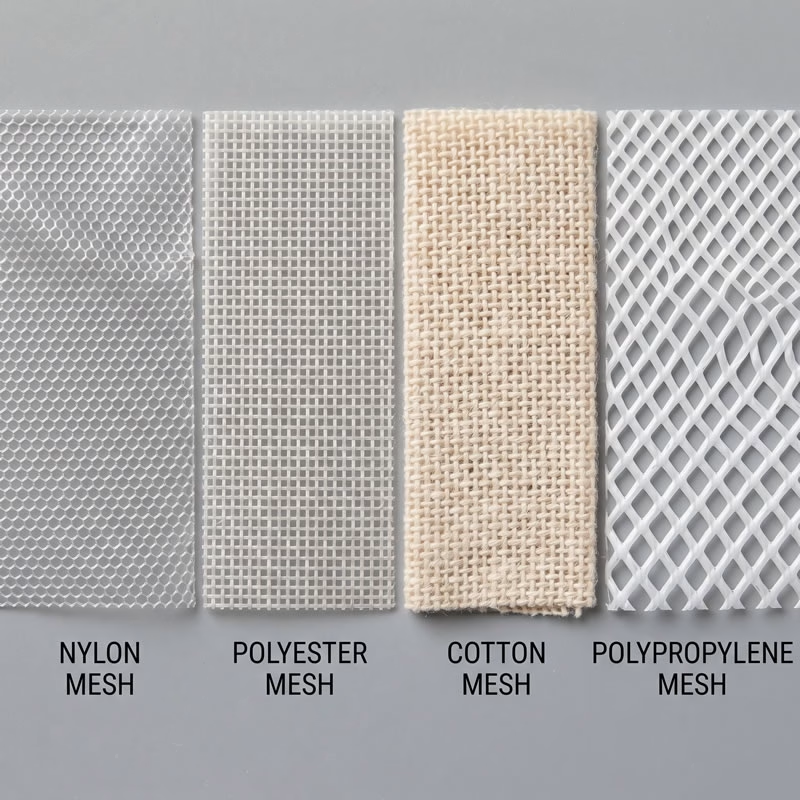
The mesh fabric is the most important factor in determining how well a bag performs. Nylon, polyester, cotton, and polypropylene are the four most common materials. Each offers different levels of strength, heat resistance, moisture control, and affordability.
Match the Material to the Working Environment
Choosing the right material begins with understanding how the bag will be used.
Nylon offers excellent tear resistance and elasticity, making it suitable for heavy or abrasive loads such as shoes, towels, and sports equipment.
Polyester provides a good balance of strength, UV stability, and moisture resistance. Because it absorbs very little water, it retains its color and shape after repeated washing.
Cotton is breathable and biodegradable, making it suitable for eco-friendly storage applications. However, it may wear out faster during frequent commercial washing.
Polypropylene is hydrophobic and resistant to mildew. It performs well in wet environments but may become brittle after prolonged exposure to sunlight or freezing temperatures.
Check the Denier and Mesh Count
Denier measures yarn thickness, while mesh count indicates the number of openings per inch. Both specifications influence the bag’s strength, protection, and drainage.
For general laundry and storage applications, consider:
- 700–1,200 denier polyester
- 600–900 denier nylon
Mesh fabric below 500 denier is generally designed for light-duty use and may wear thin under frequent washing.
A tightly woven mesh provides better protection for delicate garments and small items. In contrast, a coarser mesh allows water and detergent to circulate more freely, making it suitable for towels, shoes, and bulky laundry.
Compare Heat Tolerance with Your Wash Program
Heat tolerance is especially important when bags are used in commercial or sanitary washing programs.
Nylon may begin to lose structural integrity at approximately 175°F (79°C). Polyester can withstand temperatures of up to approximately 300°F (149°C), depending on its construction and finishing.
Therefore, polyester is generally the safer option for repeated hot-water washing. Nylon remains an excellent choice when abrasion resistance is more important than high-temperature performance.
Mesh Material Comparison
| Material | Approximate tensile strength | Moisture absorption | Approximate heat tolerance | Best application |
|---|---|---|---|---|
| Nylon | 50 MPa | Up to 4% | 175°F (79°C) | Heavy and abrasive loads |
| Polyester | 40 MPa | Under 1% | 300°F (149°C) | Repeated hot washes and UV exposure |
| Cotton | Lower | High | Varies | Breathable, eco-friendly storage |
| Polypropylene | Moderate | Very low | Moderate | Wet environments and short-term outdoor use |
Evaluate Abrasion Resistance
Abrasion resistance can be just as important as tensile strength. Nylon mesh may exceed 20,000 Martindale abrasion cycles before failure, compared with approximately 15,000 cycles for polyester.
In high-friction commercial laundry environments, this difference can significantly extend a bag’s service life. For buyers choosing nylon mesh drawstring bags, nylon’s resistance to rubbing and tearing is a valuable advantage. However, its lower heat tolerance should still be considered when hot wash cycles are required.
Consider Environmental Impact
Durability is not the only consideration. Some studies suggest that polyester may release more microplastic fibers during washing than nylon. This can be an important factor for buyers with strict environmental requirements.
Recycled polyester and recycled nylon are increasingly available. High-quality recycled materials can retain much of the abrasion and tear resistance offered by virgin fibers. As a result, they provide a practical option when both sustainability and long-term durability are purchasing priorities.
Which Size and Capacity Fit Small Mesh Drawstring Bags Best?
Sizing mistakes are the most common — and most avoidable — sourcing error. A bag that’s too small forces overfilling, which strains seams and blocks water circulation; a bag that’s too large wastes material and shipping volume.
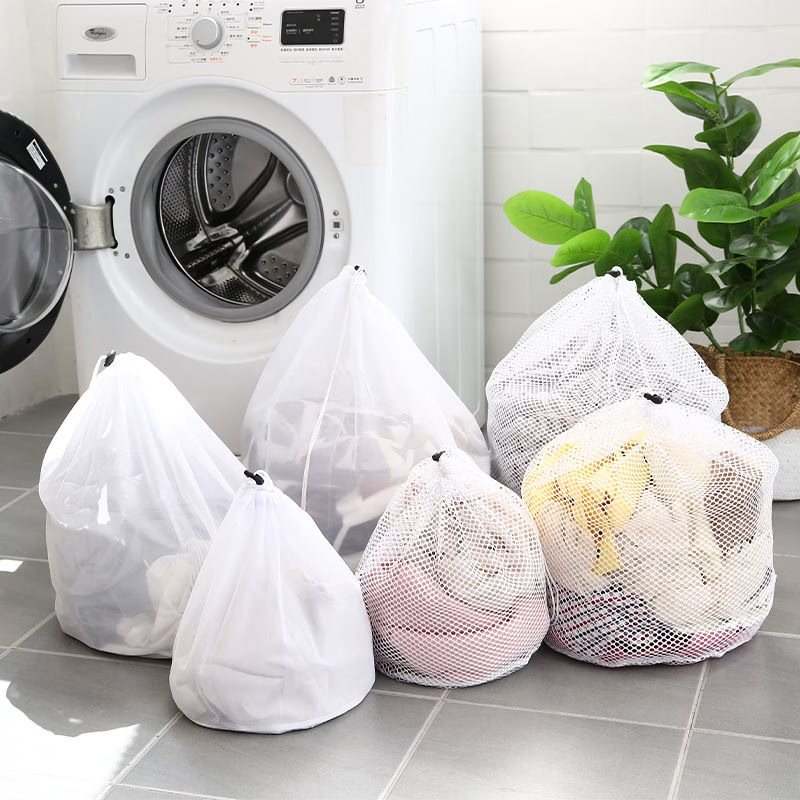
Tip 4: Size the bag to the item, not the load. Industry guidance maps bag dimensions to contents: a small 30×40 cm bag suits lingerie and baby garments, a medium 40×50 cm bag handles delicates and caps, and a large 50×60 cm bag fits shoes and cushions. For small mesh drawstring bags, the 30×40 cm and 40×50 cm formats cover most use cases.
Tip 5: Respect the two-thirds fill rule. The item inside should fill no more than two-thirds of the bag’s volume. The remaining space is what lets water and detergent circulate — overstuffing is the leading cause of incomplete cleaning and seam blowouts.
Tip 6: Confirm the stated weight capacity. Ask the supplier for the rated load and the test method behind it. A bag that holds a dry pair of shoes safely may fail under wet towels, because water adds substantial weight mid-cycle. Build in a safety margin of 20–30% above your heaviest expected load.
Tip 7: Factor in portability and pack-down size. Small mesh drawstring bags are often chosen because they collapse flat and weigh almost nothing. If your application involves travel retail or kiosk display, confirm the packed dimensions and unit weight so they fit your packaging and shelf plan. A product like the thickened white drawstring mesh laundry bag shows how a denser weave can still pack down small while raising the load rating.
How Do Drawstring Closures and Seam Construction Affect Performance?
A bag is only as reliable as its closure and its seams. These are the two points that fail first under stress, and they’re the two specifications buyers most often overlook.
Tip 8: Specify the drawstring cord. Look for braided polyester or nylon cord with a 3–5 mm diameter — thick enough to grip and pull without cutting into your hand, thin enough to glide through the casing. A cord stop (toggle) lets users tighten and lock the opening one-handed, which matters in busy laundry or retail settings. Avoid thin shoelace-style cords that fray and snap. Cord length matters too: a longer drawstring doubles as a carry loop for hanging the bag to dry, a small detail that improves the user experience in laundromat and hospitality settings.
Tip 9: Inspect the seam construction. Double-stitched seams spread tension across two rows of stitching, and overlock (serged) edges stop the mesh from unraveling at the cut line. The strongest bags combine both. Pay attention to the bottom seam and the corner stress points, where loads concentrate.
Tip 10: Demand bartack reinforcement at stress points. Bartacking is a dense zigzag stitch that locks high-stress zones — the drawstring exit holes, the bottom corners, and any strap attachment. Sourcing guides flag double-bartacked seams as a key marker of a bag built for 150+ wash cycles. If a supplier can’t confirm bartacking, treat the product as light-duty.
One practical check: grasp a sample bag at the drawstring and the opposite bottom corner, load it to your target weight, and lift. Creaking, stretching, or visible distortion at the cord exit tells you the closure isn’t rated for that load — long before it fails in a customer’s machine.
What Keeps Mesh Drawstring Bags Clean and Long-Lasting?
Maintenance is where a well-specified bag either pays off or gets discarded early. The right material and construction only matter if end users know how to care for the product — and if you, as the buyer, set realistic care expectations.
Tip 11: Prioritize breathability for the use case. Breathability prevents the moisture and heat buildup that causes mildew and odor. Open mesh drains and dries fast, which suits laundry and wet gear; breathable mesh washing bags cut drying time and reduce damp-storage smells. Tighter mesh slows airflow but gives finer protection for delicate knits. Match the weave to whether the bag will mostly run through a machine or sit packed in storage.
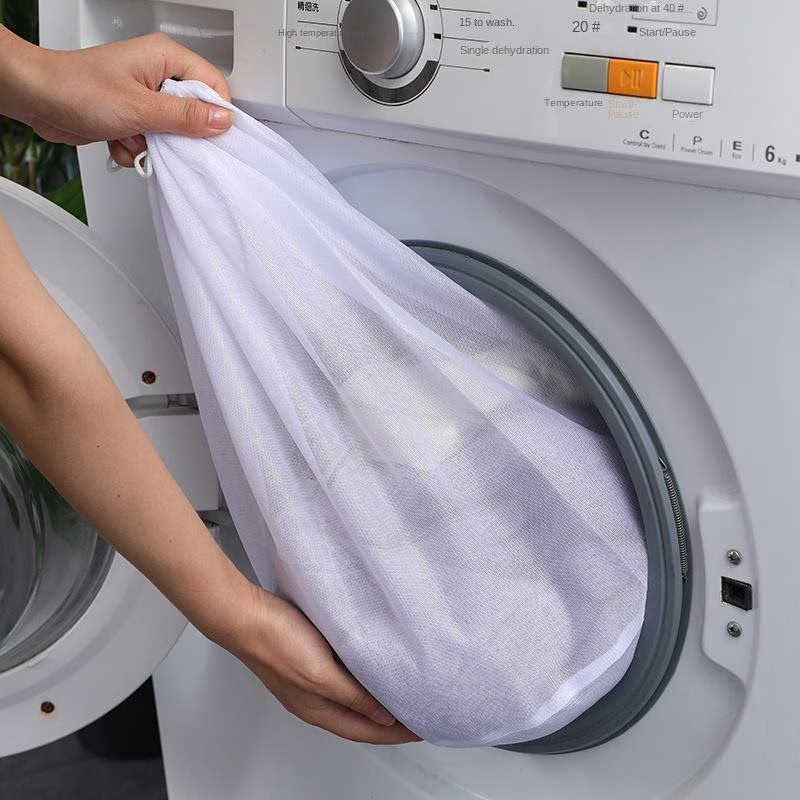
Tip 12: Confirm machine-washability and set a care routine. Most polyester and nylon mesh drawstring laundry bags are machine-washable at 40°C with the rest of the laundry, turned inside out and empty. Clean bags every two to three weeks under daily use, and skip fabric softener — it leaves a film on the mesh that reduces water permeability and speeds up residue buildup. Air-drying extends bag life and avoids the heat stress that weakens nylon over time; hanging the bag by its drawstring keeps the mesh open so it dries completely between uses. Sharing these care steps with your customers lowers complaint rates and extends perceived product life.
Tip 13: Evaluate multi-use versatility. The same small mesh drawstring bag that protects lingerie can organize charging cables, sort gym kit, hold produce, or package retail sets. Sourcing a versatile spec widens your addressable market without adding SKUs. Reusable mesh storage sacks that work across laundry, travel, and retail let you consolidate suppliers and simplify minimum-order complexity — and a multi-pack like the set of 4 cleaning drawstring mesh laundry bags shows how a single spec can serve several channels at once.
How to Balance Customization, Compliance, and Branding
Once the functional spec is locked, the next layer of decisions is about differentiation and market access. Color, branding, and regulatory compliance determine whether your bags land on shelves in Europe, North America, or Korea — and whether they stay there.
Tip 14: Verify REACH compliance before you commit. Any textile product sold in the European Economic Area must comply with the REACH regulation, which limits Substances of Very High Concern (SVHC) to no more than 0.1% of total product weight. Because mesh drawstring bags are classified as “articles” under REACH, your supplier must be able to supply SVHC declarations and test reports on request. Request these documents early — compliance gaps caught at customs are expensive and slow to fix, and several markets beyond the EU now reference REACH-style limits in their own chemical rules.
Tip 15: Use customization to build brand value. OEM and custom-design options let you align the bag with your catalog: brand-color mesh, woven labels, custom hangtags, printed toggles, and tailored size runs. A custom small drawstring mesh pouch can double as retail packaging, turning a functional item into a branded touchpoint. Start from a documented spec sheet — dimensions, denier, mesh count, color Pantone, cord spec, packaging — so the factory quotes against an exact target rather than a guess.
On eco positioning, environment-friendly raw materials that pass REACH and related tests support the sustainability claims your retail buyers increasingly require. Recycled polyester and cotton mesh options fit here, and any green claim should travel with the test documentation that backs it. Labeling rules differ by region — care symbols, fiber content, and country-of-origin labels all need to match the destination market — so confirm labeling requirements with your supplier alongside the compliance paperwork.
How to Compare Price Tiers and Find a Reliable Manufacturer
Price in this category falls into three loose tiers, and the tier you choose should match the bag’s expected service life — not just the unit cost.
A budget bag that tears after ten cycles isn’t cheap — it’s expensive per use. Run a quick cost-per-cycle estimate: divide unit price by expected wash cycles. A mid-range bag at twice the price but four times the cycle count is the better buy every time.
When assessing a manufacturer, look past the price quote. Ask how long they’ve produced this product category, request samples before a volume order, and confirm lead times and minimum order quantities in writing. A factory that has already shipped to your target markets understands the documentation, labeling, and test-report expectations those regions demand — and that familiarity shortens your launch timeline. Keep a short due-diligence checklist for every new supplier: years in category, export markets served, sample policy, documented lead time, MOQ, and available test reports. Consistent answers across these points are a strong signal of a dependable partner.
Our company has manufactured laundry mesh bags, drawstring mesh, washing bags for shoes, storage bags, and laundry baskets since 2014, shipping to customers across Europe, North America, South America, Korea, and Japan. OEM orders are welcome, customized designs are available, and our environment-friendly raw materials pass REACH and related tests. That track record means you’re working with a known source, not reverse-engineering a supplier’s capability from scratch.
If you’re comparing specs or planning a custom run, send us your requirements — dimensions, denier, mesh count, target quantity, and destination market. We’ll respond with samples, a quotation, and the compliance documentation your buyers expect. Because you’re reaching the original manufacturer directly, you get straight answers on materials, lead times, and pricing — no trading layer in between.
Frequently Asked Questions
1. What minimum order quantities apply to custom bags?
MOQ depends on the customization level — standard sizes and colors carry lower minimums, while custom prints, Pantone colors, and private-label branding raise the threshold. Share your target volume and we’ll confirm the MOQ and unit pricing. Reach out for detailed specifications.
2. How long do production and shipping typically take?
Lead times vary with order size, customization depth, and destination, but most production runs complete within a few weeks after sample approval. We confirm lead times in writing with every quotation. Contact us to request samples.
3. Can you provide REACH and related test reports?
Yes — our environment-friendly raw materials pass REACH and related tests, and we supply SVHC declarations and test reports on request. Tell us your destination market and we’ll match the documentation. Reach out for detailed specifications.
4. Do you offer OEM branding and custom sizes?
OEM orders are welcome and customized designs are available, including brand colors, woven labels, hangtags, and tailored dimensions. Send a spec sheet and target quantity for a quotation. Contact us to request samples.
5. What samples are available before a bulk order?
We provide samples so you can verify material, construction, and sizing before committing to volume. Sampling helps lock the spec and avoid rework down the line. Reach out for detailed specifications.