
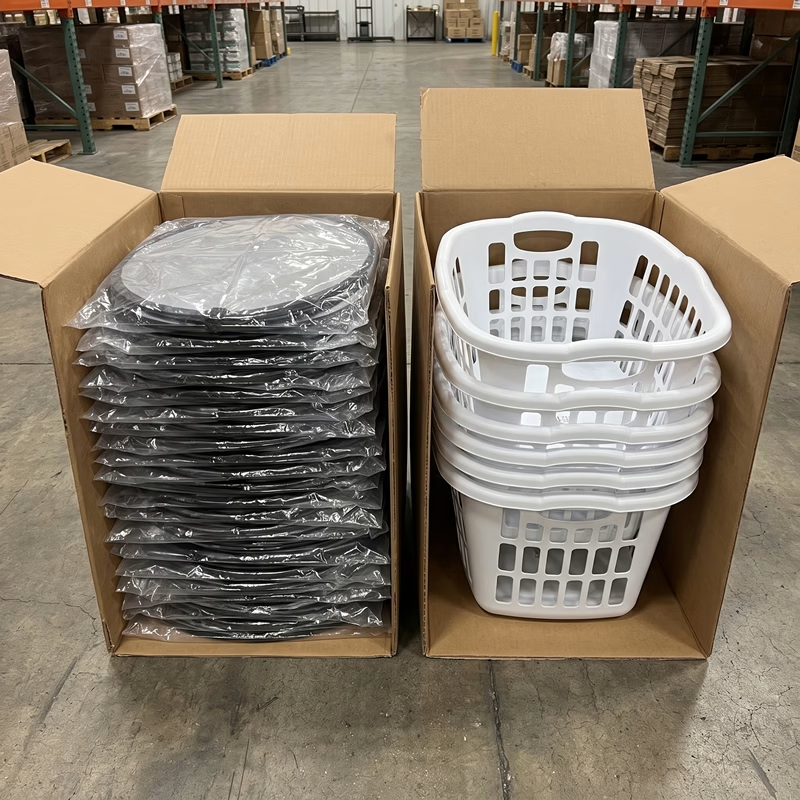
A rigid hamper ships mostly air. It takes the same carton space empty as it does full, so you pay freight on nothing. It also eats shelf space in stores and floor space in small homes.
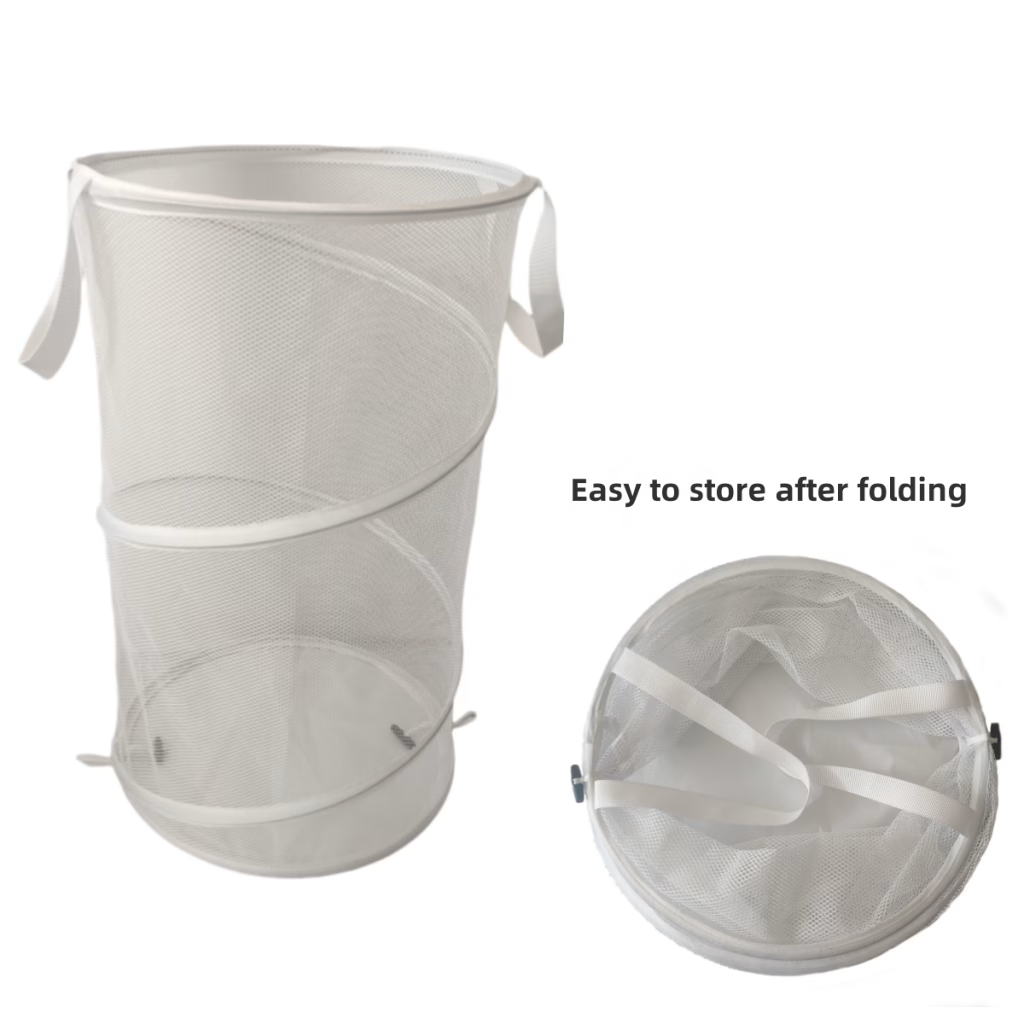
A pop up laundry basket fixes that with a spring frame and light mesh. It folds flat to a few centimetres, then opens in a second. Because of this, it appears on dorm lists, in travel kits, and in small-apartment ranges every year.
Still, two baskets that look alike in photos can perform very differently in use. Types, materials, and sizes vary more than pictures suggest. So before you place an order, it helps to know what to compare and what to test.
What Is a Pop Up Laundry Basket?
A pop up laundry basket is a collapsible laundry hamper built around a flexible spring frame. The frame holds the fabric open during use. When you press or twist it, the whole basket folds flat for storage or shipping.
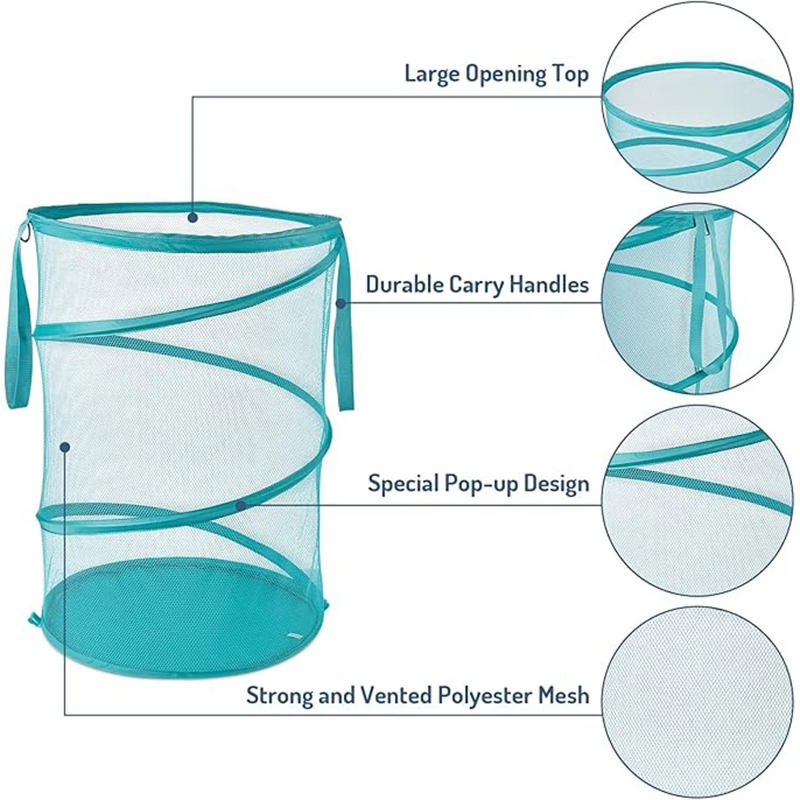
Most models share four parts:
- Frame: spring steel wire sewn into fabric channels
- Body: polyester mesh, Oxford fabric, or a mix of both
- Handles: webbing or fabric loops stitched to the top rim
- Extras: a side pocket, lid, drawstring cover, or wheels
How does the spring frame work?
There are two common frame designs. The first is a spiral wire that runs around a round body. Press it down, and the basket collapses to a flat disc.
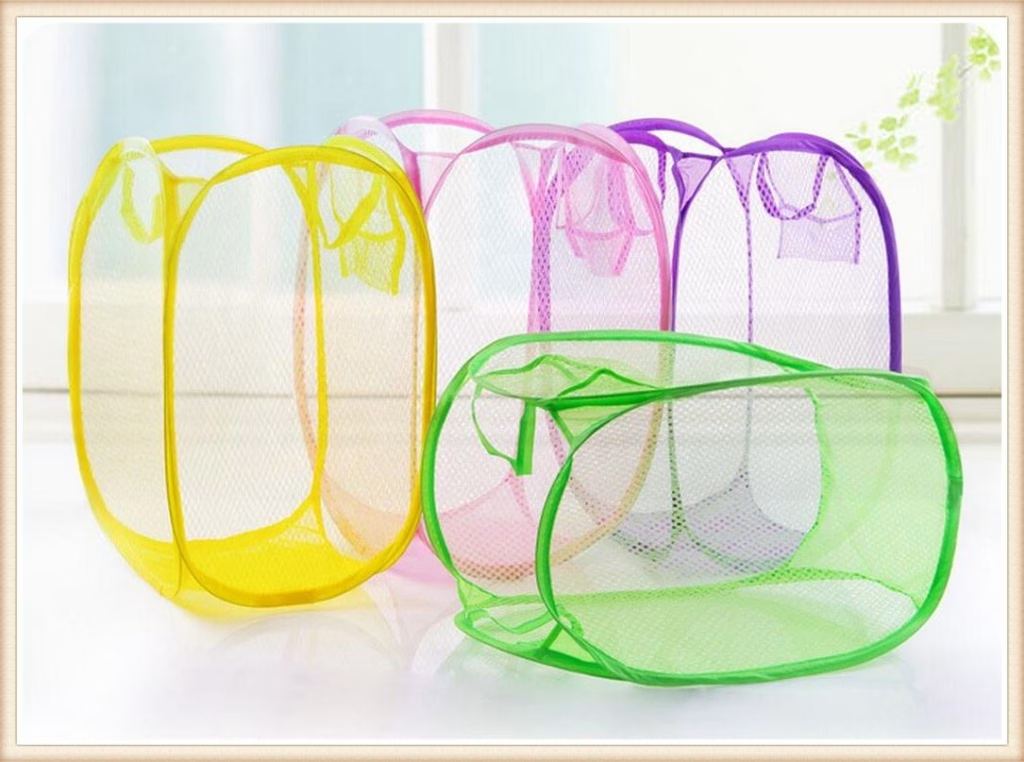
The second design uses wire loops inside each side panel. Twist the panels, and they fold over each other like a camping tent. This style gives square or rectangular shapes, which sit neatly against a wall.
Pop-up, folding, or collapsible: what’s the difference?
These three labels often get mixed up. Here is a quick guide:
- Pop-up: a spring wire frame that opens by itself
- Folding: a rigid X-frame or rods that you set up by hand
- Collapsible: a soft or accordion-style body that presses down
Pop-up styles are the lightest and flattest of the three. Folding styles carry more weight, but they cost more to ship. Collapsible plastic styles sit in between.
Is a hamper different from a laundry basket?
In daily use, the two words overlap. A hamper usually stands tall and stores worn clothes, while a laundry basket sits lower for carrying.
Pop-up designs do both jobs, so sellers use both names. For product listings, include each term, because shoppers search with both.
Why Do Buyers Add Pop-Up Hampers to Their Range?
Three reasons come up again and again: freight, flexibility, and steady demand.
Lower freight and storage cost
A pop up laundry basket folds to only a few centimetres thick. So one carton can hold dozens of units instead of a handful. That lowers the cost per unit at every stage, from the factory floor to the store shelf.
Warehouses benefit too, because flat packs stack tightly and do not crack like molded plastic can.
One product, many end users
The same item suits a wide group of shoppers:
- Students moving into dorms
- Renters in small apartments
- Families who sort laundry by color
- Travelers and campers
- Parents who need quick toy storage
Because of this spread, one product can sit in laundry, storage, and back-to-school displays. It also sells across seasons, from moving time to spring cleaning.
An easy price point
Pop-up hampers sit at the lower end of laundry pricing, which makes them a simple add-on purchase for shoppers. For you, it means volume, and volume rewards a build that stays consistent from first carton to last.
How do pop-up hampers compare with rigid baskets?
| Feature | Pop-up mesh basket | Rigid plastic basket | Woven hamper |
|---|---|---|---|
| Folded thickness | A few centimetres | Does not fold | Does not fold |
| Weight | Very light | Medium | Medium to heavy |
| Airflow | High with mesh | Depends on vents | Moderate |
| Shipping volume | Low | High | High |
| Typical use | Dorms, travel, small homes | Carrying wet loads | Bedroom decor |
| Branding | Labels, prints, hang tags | Molded color or stickers | Tags only |
In short, the pop-up format leads on space and weight. However, rigid baskets still suit heavy, wet loads. Many ranges carry both for that reason.
Which Laundry Basket Styles Should You Compare?
Shoppers search in loose ways. Some even type “basket laundry basket” and expect to see every style at once. So it pays to know the main styles and who buys each one.
| Style | Shape and build | Suits | Watch for |
|---|---|---|---|
| Round spiral mesh hamper | Spiral wire, full mesh body | Dorms, kids’ rooms, entry price bands | Wire ends at the rim |
| Square side-frame hamper | Wire loops in each panel | Bedrooms, closets, corners | Panels that lean when half full |
| Low carry basket | Wide opening, two handles | Trips to the washing machine | Handle stitching |
| Rolling basket | Fabric body, support rods, four wheels | Families, shared laundry rooms | Wheel fit and rod strength |
| Hanging drying net | Flat mesh layers on wire rings | Sweaters and delicates | Hook strength and layer sag |
Mesh carry baskets for daily use
A full-mesh body lets air pass through, so damp clothes can dry out instead of turning sour. This foldable mesh laundry basket is the classic format, and it suits most entry-level ranges. For a reference build, see our breathable mesh laundry basket for home use.
Rolling baskets for heavier loads
Wheels take the lifting out of laundry day. This style uses a fabric body with support rods, so it still packs down for shipping. Our laundry basket with 4 wheels shows how the format works. It suits families, shared laundry rooms, and anyone who dislikes carrying loads.
Drying nets as a companion product
Spring frames are not only for hampers. The same wire can hold flat mesh shelves for air drying knitwear. For example, a three-layer folding drying net folds flat and hangs from a single hook. It pairs well with baskets in a laundry-care set.
Lids, dividers, and pockets
Small features change who buys the product. A mesh lid or drawstring cover hides the contents, which suits bedrooms and shared rooms. A divider splits lights from darks, so it appeals to families. Meanwhile, a side pocket holds detergent pods, coins, or a room key. Each extra adds cost, so match features to your price band.
How many styles does a range need?
Most ranges start with two or three. First, pick one entry-level mesh hamper for volume. Second, add a larger or rolling model at a higher price. Then test a companion item, like a drying net or a wash bag set. This keeps your offer simple while still giving shoppers a choice.
Materials and Build: What Goes Into a Folding Hamper?
Photos hide most of what decides a basket’s working life. So the details below are worth raising with any supplier.
| Part | Common options | What it affects |
|---|---|---|
| Mesh | Polyester mesh, fine or coarse weave | Airflow, snag resistance, look |
| Solid panels | Oxford polyester or non-woven fabric | Shape, print area, privacy |
| Frame | Spring steel wire, coated or galvanized | Spring-back and rust resistance |
| Binding | Polyester tape over seams and wire channels | Safety at wire ends, neat finish |
| Handles | Webbing or self-fabric with bar-tack stitching | Load strength |
| Closures | Drawstring, zip lid, or elastic strap | Dust cover and folded storage |
Mesh and fabric
Polyester mesh is the standard choice because it is light, dries fast, and holds color well. Coarse mesh gives more airflow, but it snags more easily. Fine mesh looks cleaner and resists pulls, so it suits retail and gift packs.
Oxford fabric adds body. A basket with Oxford sides and a mesh window stands straighter, and it gives you space for a printed logo. However, it costs a little more and breathes less.
Linings and coatings
Some Oxford-fabric baskets carry a waterproof inner coating. It keeps damp towels from wetting the floor, and it wipes clean. However, a coated wall does not breathe. So coated styles work better as carry baskets than as hampers that hold clothes for days.
Frame wire
The wire does the heavy work. A thicker wire springs back with more force and keeps its shape longer. But if it is too thick, the basket becomes hard to fold and harder to pack. So ask for the wire diameter and the coating type. Coated or galvanized wire resists rust in damp bathrooms.
Seams, binding, and handles
Wire ends are the weak spot. If the binding tape is thin, a wire end can work through the fabric over time. Therefore, check that channel ends are double stitched or capped.
Handles need the same care. Look for bar-tack or box stitching where each handle meets the rim. A handle that tears on the first heavy load will sink a product’s reviews.
Material safety and compliance
Buyers in Europe usually ask about REACH first. REACH is the EU’s regulation on chemicals, and it has applied since 2007. It also covers substances in finished goods like textiles. The European Commission’s REACH explained overview is a clear place to start.
Our raw materials are environment friendly, and our products can pass REACH and related tests. Some retail programs also ask for OEKO-TEX STANDARD 100 testing on textile parts. If yours does, raise it at the quote stage, because it affects material choice and timing.
How Do You Choose the Right Size and Capacity?
The right size depends on who will use the basket and where it will sit. Capacity is usually listed in litres, but shoppers think in loads. So give both on your listing when you can.
| Size band | Typical open size | Capacity | Suits |
|---|---|---|---|
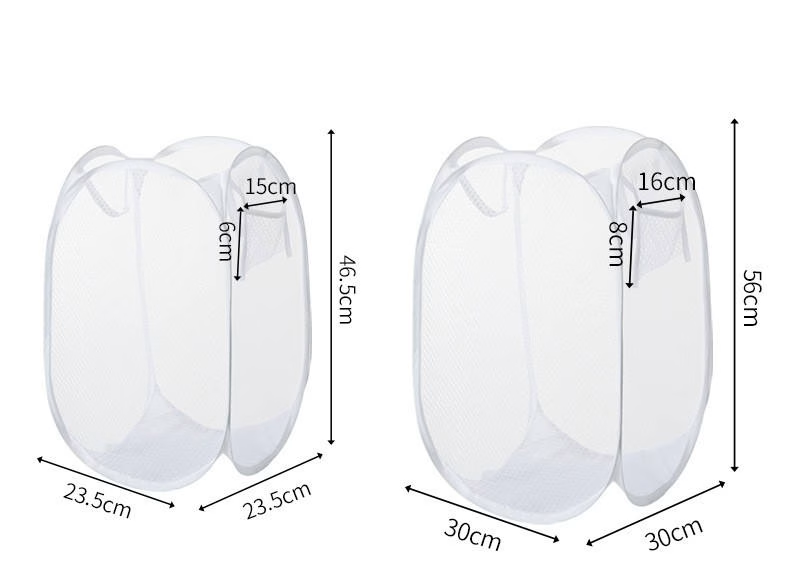
| Small | About 30 × 30 × 45 cm | About 40 L | Kids’ rooms, travel, delicates |
| Medium | About 36 × 36 × 60 cm | About 75 L | Dorms, one or two people |
| Large | About 40 × 40 × 65 cm | About 100 L | Families, bedding, rolling styles |
These figures are for square shapes. Round bodies of the same width hold a little less. Custom sizes are also possible if your range needs something in between.
How many loads does each size hold?
Shoppers rarely picture litres. Instead, they ask how many loads fit. As a rough guide, a medium hamper holds one to two machine loads of everyday clothes. A large one takes bedding or a family’s weekend wash. So a “loads” line on your pack copy helps people choose faster.
Think about the folded size too
The folded size of a pop up laundry basket shapes your carton plan. A spiral basket folds to a flat disc as wide as its body. A side-frame basket folds to one panel, or smaller if it twists into loops.
So ask the factory for three numbers: folded size, units per carton, and carton weight. Then you can work out the landed cost per unit before you commit.
Match the size to the sales channel
- Online stores: lighter, smaller packs keep postage low
- Supermarkets: medium sizes in two-packs sell on value
- Home stores: larger sizes, like a lidded hamper or a laundry basket with wheels, support a higher price
Also think about the shelf. A hang-tag pack suits pegboard displays, while a boxed pack suits stacked shelves.
7 Checks Before You Order a Pop Up Laundry Basket in Bulk
When you buy a pop up laundry hamper wholesale, a sample tells you more than any spec sheet. So request samples first, then run these seven checks.
- Fold it 30 times. Open and close the sample again and again. The frame should spring back to shape each time. Watch for bent wire or a rim that starts to sag.
- Load it and lift it. Fill the basket with wet towels, then lift it by the handles. After that, inspect the stitching for gaps or pulled threads.
- Feel every wire channel. Run your hand along the rims and corners. You should not feel a sharp wire end anywhere. A poke today becomes a return later.
- Rub the mesh. Drag a zip or a hook-and-loop strip across it. Tight mesh resists pulls, while loose weaves snag fast.
- Stand it half full. A basket that leans or folds on itself will annoy users. So test it with a small load as well as a full one.
- Fold it back into the pack. If you struggle, shoppers will too. Also check that the fold steps on the label are clear.
- Ask for the paperwork. Request test reports for the markets you sell in. For Europe, that means REACH. Then confirm the label and packaging rules for each country.
Finally, keep the approved sample. It becomes the standard for bulk production, and it settles any later dispute about build or color.
What causes most returns?
Returns on folding hampers tend to trace back to a short list:
- Frames that lose their spring
- Handles that tear under load
- Wire ends that break through the binding
- Baskets that arrive bent because cartons were overpacked
- Fold instructions that confuse the user
Each one links to a check above. That is why sample testing saves money, even on a low-cost item.
Care Tips to Share With End Users
Clear care advice cuts complaints, and it helps each basket last longer. So add these points to your listing, label, or insert card.
- Opening: Hold the basket away from your face, and let it spring open.
- Folding: Press or twist as shown on the label, then secure the strap.
- Cleaning: Wipe with a damp cloth and mild soap. Most wire frames should stay out of the washing machine.
- Drying: Air dry fully before folding, because trapped moisture leads to odor and rust.
- Loading: Carry wet loads in short trips, since water adds a lot of weight.
- Storing: Keep the folded basket flat, or hang it by a handle.
It also helps to explain the fold with pictures. A three-step diagram on the hang tag works better than a block of text. For online listings, a short video does the same job.
Delicate items deserve a mention as well. A hamper stores clothes, but it does not protect them in the wash. For that, shoppers need wash bags. You can pair baskets with our laundry mesh bag range to build a complete laundry-care set.
Custom Orders: Working Directly With the Manufacturer
Most retail ranges need more than a stock item. They need a size, color, and pack that fit the brand. A direct factory relationship makes that easier.
What can be customized?
- Size and shape: round, square, or rectangular, in the capacity you need
- Fabric and color: mesh weave, Oxford panels, and colors matched to your palette
- Branding: woven labels, printed logos, hang tags, and insert cards
- Features: lids, pockets, drawstring covers, dividers, or wheels
- Packaging: polybag, paper sleeve, color box, or multi-pack set
Which packaging suits a folding hamper?
Packaging does two jobs here. It protects the frame, and it explains the product. A paper sleeve or hang tag shows the open size with a photo. A color box suits gift sets and higher price bands. For online orders, a simple polybag with a barcode label keeps costs down. Whatever you choose, print the fold steps on it.
What should you send with an inquiry?
A clear brief gets a faster and more accurate quote. Include these five points:
- Target size, capacity, and style
- Fabric and color preferences
- Logo files and packaging ideas
- Order quantity and target markets
- Any test or label requirements
How does a custom order usually run?
First, we review your brief and send a quote. Next, we make a sample for you to test and approve. After approval, bulk production begins, followed by inspection and packing. Finally, the goods ship under the terms you agree with us. At each stage, you speak with the people who make the product.
Why source from the original factory?
We have made laundry products since 2014, and we work as a custom laundry basket manufacturer. Our lines also cover laundry mesh bags, bra laundry bags, washing bags for shoes, storage bags, and drawstring mesh. Customers in Europe, North America, South America, Korea, and Japan order from us. OEM orders are welcome, and customized designs are available.
Because we are the original manufacturer, you deal with the source. No middle layer sits between your brief and the sewing line. So your questions get direct answers, and your samples reflect real production. Pricing is also clearer, because no trading margin is added.
If a pop up laundry basket belongs in your range, send us your size, quantity, and branding ideas. We’ll reply with a quote and sample options built around your market. Reach out through our contact form, and let’s get the first sample onto your desk.
Frequently Asked Questions
1. What is the minimum order for a pop up laundry basket?
The minimum order depends on the style, fabric, and packaging you choose. Stock designs usually allow smaller runs than fully custom ones. Send us your target quantity, and we’ll confirm what works.
2. Can you add our logo and custom packaging?
Yes. OEM orders are welcome, and customized designs are available. Options include woven labels, printed logos, hang tags, and color boxes. Share your artwork, and we’ll suggest the method that fits.
3. Do your laundry baskets pass REACH testing?
Yes. Our raw materials are environment friendly, and our products can pass REACH and related tests. Tell us your target market, so we can match the test plan to it. Reach out for detailed specifications.
4. How long do sampling and production take?
Timing depends on the style, order size, and season. Samples of existing styles move faster than new custom builds. Share your deadline with us, and we’ll send a realistic schedule.
5. Can I request samples before a bulk order?
Yes, and we recommend it. A sample lets you test the frame, stitching, and fold before you commit. Contact us to request samples in the size and fabric you have in mind.