
Plastic bags are easy to buy, but they often create repeat problems: weak presentation, short use life, moisture buildup, and waste concerns. medium mesh bags give buyers a reusable option that can serve produce, garment care, storage, travel packing, and retail sets without looking complicated.
For procurement teams, the value is not only the bag itself. The real question is whether the bag fits the product range, customer habits, packaging plan, compliance needs, and reorder model.
A medium size works well because it is flexible. It can hold fruits and vegetables, small laundry items, socks, delicate garments, baby items, accessories, and travel goods. It is large enough to feel useful, yet compact enough for sets, shelf packs, and private label programs.
Medium mesh bags also support cleaner product storytelling. They show ventilation, visibility, reusability, and washable use at a glance. Buyers can explain the product without long education. That helps in supermarkets, home goods shops, online stores, gift bundles, and laundry care ranges.
Our company, established in 2014, manufactures laundry mesh bags, bra laundry bag styles, washing bags for shoes, storage bags, laundry baskets, and drawstring mesh products. We support OEM orders, customized designs, and worldwide supply, with key markets in Europe, North America, South America, Korea, and Japan. Our raw materials are environment friendly, and our products can pass REACH and related tests.
What Are Medium Mesh Bags?
Medium mesh bags are open-weave textile bags, typically sized around 40×50 cm, made from polyester, nylon, or recycled PET fiber. The woven structure creates a breathable, flexible, and durable enclosure that works across a wide range of applications — from fresh produce packaging and retail display to protecting delicate garments inside washing machines.
The term “medium” refers to a bag size that balances capacity with handling ease. Compared to small mesh bags (better for lingerie or single accessories) and large mesh bags (used in bulk commercial laundry or industrial sorting), medium formats serve the widest range of everyday professional needs.
Most medium mesh bags fall under HS Code 6307.90 — “other made-up textile articles” — which is relevant for procurement teams managing import classifications and customs documentation.
How Medium Mesh Bags Differ From Plastic Bags
The contrast between mesh and plastic comes down to four core properties:
The reusability gap is particularly significant for buyers managing cost-per-unit economics. A polyester mesh bag can deliver a break-even environmental impact after roughly 15 uses, while single-use LDPE plastic offers none.
Medium Mesh Bags for Produce: What Buyers Need to Know
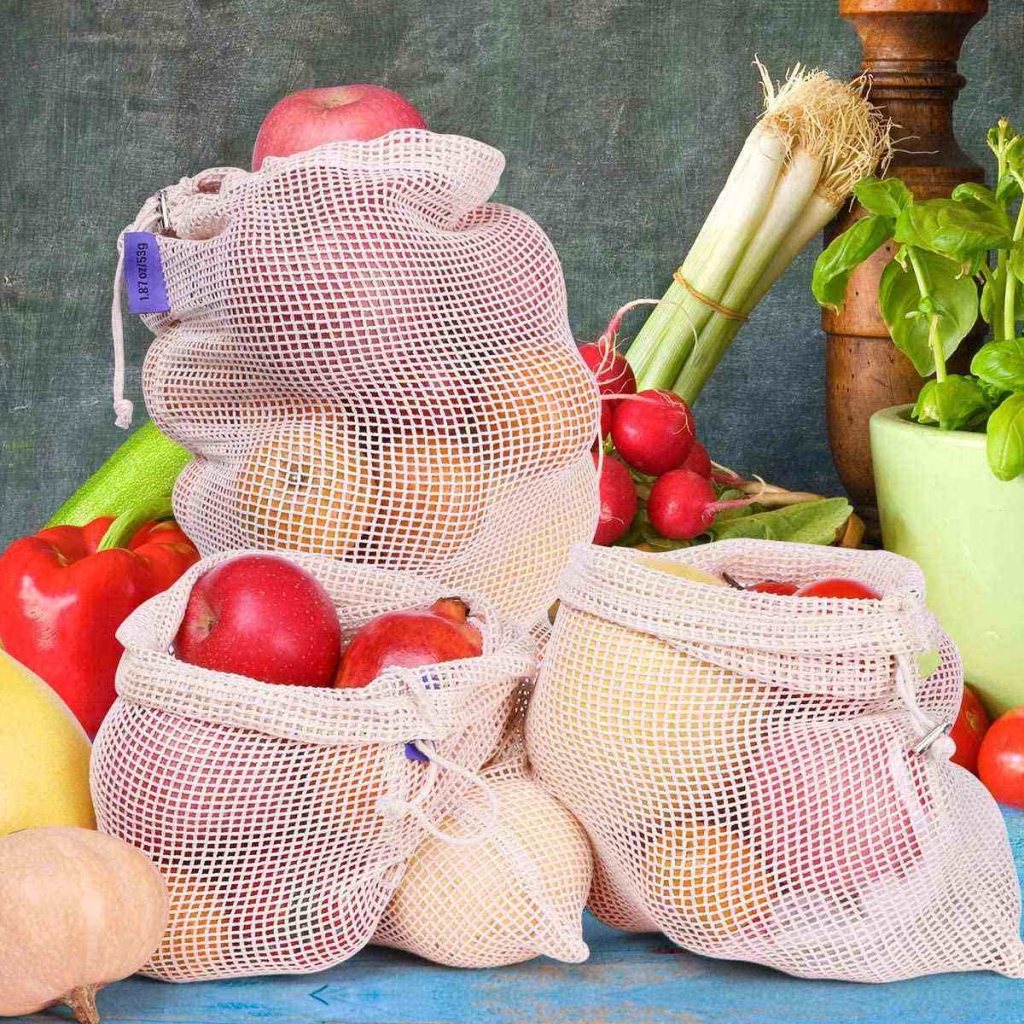
Fresh produce is highly sensitive to packaging decisions. A bad choice accelerates spoilage, increases returns, and creates waste management costs. This is where medium mesh bags have a measurable performance edge.
Airflow and Shelf Life
Mesh bags are designed to let air move continuously around the produce. Their open-weave structure releases heat and prevents moisture from settling — especially valuable for crops that continue respiring after harvest, like onions, corn, citrus, and potatoes.
Plastic bags, unless actively vented, trap air and create condensation. That trapped moisture can speed up spoilage rather than slow it down. According to postharvest research, mesh produce bags can extend refrigerator shelf life by 2–4 days for leafy greens and berries compared to sealed plastic alternatives.
Visibility and Retail Appeal
One practical advantage rarely discussed in procurement specs is visibility. Mesh bags let buyers and end consumers inspect produce without opening the packaging. The open, farm-fresh appearance builds trust on retail shelves — while still clearly displaying the product inside.
Plastic bags, even clear ones, create a more sealed, processed appearance that some retail segments now actively move away from.
Weight and Handling at Scale
Mesh bags are lightweight and flexible, which matters when dealing with heavier produce or stacked storage. They don’t add significant weight to net measurements and fold down compactly for logistics. For procurement teams comparing packaging costs at volume, this lightweight format also helps with per-unit shipping and warehousing efficiency.
Laundry Mesh Bags vs. Plastic Alternatives
When the conversation shifts from produce to laundry, the performance gap between mesh and plastic grows even wider. Laundry mesh bags — sometimes called mesh laundry sacks — serve a fundamentally different role: they protect garments from mechanical damage during machine washing.
How a Laundry Mesh Bag Protects Garments
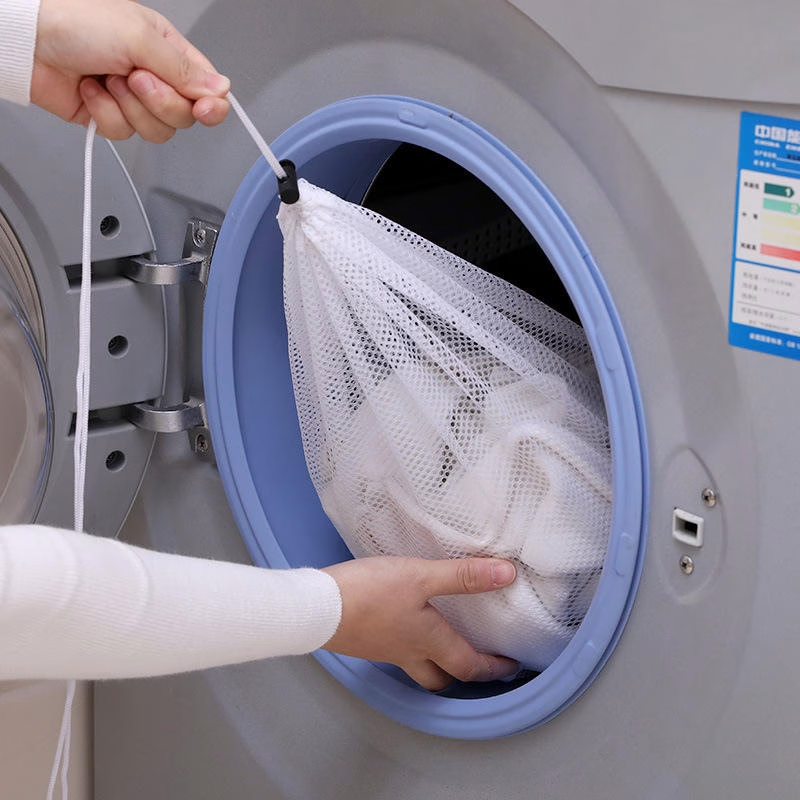
The washing machine environment is hard on delicate fabrics. Agitation, drum friction, and spin cycles can stretch, snag, or deform garments — especially items made from fine weaves, lace, or elastic materials. A laundry mesh bag creates a contained environment that absorbs some of that mechanical force, protecting the items inside.
Plastic laundry bags exist, but they create a fully enclosed pocket that traps water and detergent during the cycle — leading to incomplete rinsing, reduced cleaning effectiveness, and potential damage to the washing machine drum itself. Mesh, by contrast, allows water and detergent to pass through freely, cleaning the contents while still providing physical protection.
Size Matters: Why Medium Is the Versatile Format
For most professional laundry operations, the medium laundry mesh bag hits the right balance. At approximately 40×50 cm, it accommodates:
-
Delicate shirts, light knitwear, and blouses
-
Caps, scarves, and structured accessories
-
Wool jumpers and fine synthetic garments
-
Undergarments when packed together
Small bags (30×40 cm) serve lingerie specifically, while large bags suit bulk commercial loads. The medium format is the one product teams stock most consistently because it handles the widest variety of inputs.
Professional Use Cases for Mesh Laundry Sacks
Beyond household laundry, mesh laundry sacks see regular commercial use in:
-
Hotels and hospitality: Protecting guest garments in bulk laundering
-
Athletic facilities: Separating team apparel by player or garment type
-
Medical and care facilities: Organizing personal clothing for patients
-
Retail and e-commerce fulfillment: Packaging delicate garments for shipping presentation
For procurement teams, sourcing a reliable supply of medium mesh laundry bags often means working directly with manufacturers rather than distributors — primarily to control quality consistency across large orders. If you’re evaluating laundry bag options for bulk sourcing, our full laundry mesh bag range provides detailed specifications for both standard and custom configurations.
Environmental and Compliance Considerations
Procurement teams and product managers increasingly face scrutiny on material sourcing and environmental standards — especially when supplying into European, North American, or Japanese markets. This is an area where the mesh bag category has evolved significantly.
REACH Compliance and Textile Safety
Any textile product sold into the EU market must meet REACH regulation requirements. REACH controls the presence of Substances of Very High Concern (SVHC) in textile products — limiting them to no more than 0.1% of total product weight.
The regulation’s Entry 72 specifically restricts 33 substances in clothing, accessories, and textiles that come into contact with human skin — including polycyclic aromatic hydrocarbons (PAHs), cadmium compounds, chromium VI, lead, and phthalates. For buyers supplying into the EU, sourcing from a manufacturer with documented REACH compliance is not optional — it’s a procurement requirement.
Our laundry bags, washing bags, and storage bags are manufactured with environment-friendly raw materials and can pass REACH and related tests. This matters particularly for buyers placing OEM orders or sourcing under private-label arrangements, where compliance responsibility passes to the importer.
Lifecycle and Reuse Rates
The environmental case for mesh over plastic becomes stronger when lifecycle data is applied. Polyester mesh bags break even on environmental impact at roughly 15 uses; organic cotton bags require around 52 uses to offset production impact. Single-use LDPE plastic offers no break-even point — it generates waste from use one.
For buyers who include sustainability KPIs in their sourcing criteria, this lifecycle data provides a straightforward framework for justifying the switch from plastic to mesh.
Washing and Care Impact
One nuance worth flagging: mesh bags washed in hot water after every use add to their carbon and water footprint. Cold, infrequent washing reduces this burden significantly. For commercial laundry operations, this is a practical cost and environmental consideration — and it reinforces the value of sourcing bags with high-cycle durability rather than choosing based on unit price alone.
How to Choose the Right Medium Mesh Bag for Your Product Line
Whether you’re managing procurement for a retail chain, developing a private-label laundry accessory line, or sourcing produce packaging for a food brand, selecting the right medium mesh bag requires evaluating several intersecting specifications.
Material Options and Trade-Offs
For most volume buyers, polyester mesh remains the practical default — it balances durability, washing performance, and cost-per-unit effectively across commercial applications.
Mesh Size and Weave Density
Weave density affects both function and product appearance. Fine-weave mesh (smaller apertures) provides better protection for light fabrics and smaller produce items. Coarser mesh (larger apertures) maximizes airflow for heavier produce but offers less garment protection. For most laundry applications, a medium-fine weave is appropriate.
Closure Type
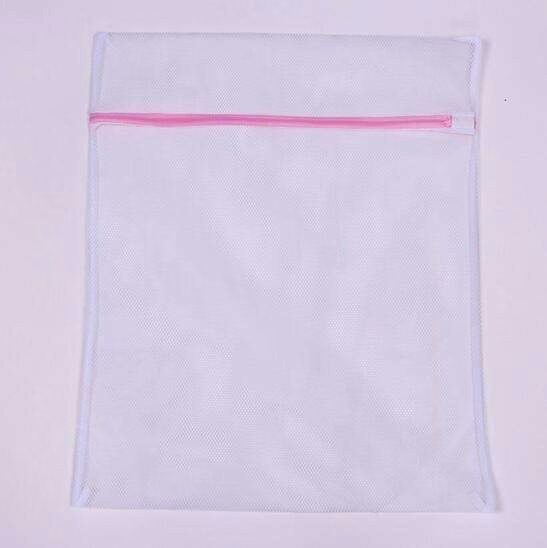
Drawstring closures are the standard for both produce and laundry applications — they’re easy to open and close under load, they don’t add mechanical stress to the bag, and they can be spec’d with different cord materials depending on use requirements. Zipper closures offer more security for laundry bags protecting high-value garments.
OEM and Custom Design Availability
For buyers developing branded products, the ability to customize size, mesh density, color, closure type, and printed branding is a practical requirement. Our manufacturing setup — established since 2014 — supports OEM orders and custom designs across our full range of laundry bags, washing bags, and storage bags. If you’re building a private-label product line, the laundry bag set illustrates how multiple sizes and functions can be packaged together for retail or wholesale distribution.
Medium Mesh Bags in Global Sourcing: What the Numbers Say
For sourcing professionals, numbers tell the clearest story. Here’s a quick reference to benchmark your sourcing decisions:
-
Minimum order quantities: Mesh laundry bags from manufacturers typically start from 30 units at the low end, with volume pricing scaling significantly at 500+ units.
-
Unit pricing range: From approximately $0.51/unit at volume, depending on material, mesh density, and customization.
-
HS Code classification: Most textile mesh laundry bags fall under HS Code 6307.90 for customs purposes. Note: plastic-coated mesh may classify differently — always confirm with your customs broker.
-
Lead times: Standard production lead times vary by manufacturer, but typically range from 15–30 days for custom orders with OEM specifications.
-
Compliance documentation: For EU market supply, request REACH test reports from your supplier before placing orders. OEKO-TEX® Standard 100 certification is an additional quality indicator for textile safety.
Understanding these benchmarks helps procurement teams move faster when evaluating supplier quotes and avoids the common mistake of comparing apples-to-oranges across different material and compliance tiers.
When Plastic Still Makes Sense
A fair comparison acknowledges that plastic bags retain advantages in specific scenarios. This isn’t about eliminating plastic — it’s about choosing the right tool for the right job.
Plastic bags remain appropriate when:
-
Short-term moisture retention is required: Some delicate produce (pre-washed salad leaves, fresh herbs) benefits from slight moisture retention that perforated plastic provides better than mesh.
-
Fine powders or granular products are being packaged: Mesh weave cannot contain fine-grain materials.
-
Single-use hygienic requirements apply: In regulated environments like food processing or medical supply, single-use plastic maintains hygiene standards that reusable mesh cannot always meet.
-
Cost per unit is the only evaluation metric: Single-use LDPE remains cheaper on pure unit cost, though this ignores total cost of ownership, disposal costs, and compliance exposure.
For most buying contexts, however, these are edge cases. The majority of produce, laundry, and storage applications are better served by medium mesh bags at scale.
Ready to Source Direct From the Manufacturer?
Working directly with a manufacturer — rather than through layers of distribution — gives sourcing teams something that product catalogs can’t replicate: direct access to production specs, customization conversations, and compliance documentation from the source.
We’ve manufactured laundry mesh bags, bra laundry bags, washing bags for shoes, storage bags, laundry baskets, and drawstring mesh products since 2014. Our customers span Europe, North America, South America, Korea, and Japan. OEM orders and custom designs are a regular part of our production, and all raw materials are environment-friendly and REACH-compliant.
If you’re evaluating medium mesh bags for a new product line, a private-label sourcing project, or a bulk order for distribution — we’re able to provide samples, specifications, and production pricing through a single conversation.
Reach out through our contact page and let’s discuss your requirements directly. No intermediaries, no distribution markups — just manufacturer-to-buyer communication with the full technical and production context your team needs.
Frequently Asked Questions
1. What is the standard size for a medium mesh bag?
Medium mesh bags typically measure around 40×50 cm, making them suitable for delicate garments, light knitwear, scarves, and caps during machine washing. They’re also widely used for produce packaging where a mid-range capacity is needed. Contact us to request samples in specific dimensions if your project requires a custom size.
2. Do laundry mesh bags pass REACH compliance standards?
Our laundry mesh bags are manufactured with environment-friendly raw materials and can pass REACH and related EU textile compliance tests. Procurement teams sourcing for EU markets should always request test documentation from their supplier before importing. Reach out for detailed compliance specifications or to request test reports.
3. Can medium mesh bags be customized for OEM orders?
Yes — OEM orders are a standard part of our production. Customization options include bag size, mesh density, cord material and color, closure type, and printed branding. Minimum order quantities and lead times vary by configuration; contact us directly to discuss your product requirements and get accurate pricing.
4. How many times can a polyester mesh laundry bag be reused?
Polyester mesh bags are rated for approximately 15 or more uses before their environmental break-even against single-use plastic, and typically last considerably longer in practice with proper care. Cold washing extends their lifespan and reduces per-cycle environmental impact. For commercial laundry operations, choosing bags with reinforced stitching and heavy-duty closures significantly extends working life.
5. What washing bag options are available for delicate garments?
Beyond medium mesh bags, washing bags for delicates include fine-mesh bra laundry bags, shoe washing bags, and specialized small-format bags for lingerie. We manufacture the full range and can supply them individually or as part of a coordinated laundry bag set. Visit the laundry bag set page to see packaging configurations available for retail or wholesale.