
Heavily soiled healthcare fabric can hold 1 million to 100 million colony-forming units per 100 square centimeters. CDC environmental guidance gives that figure for fabric loaded with body fluids. A nursing home moves that fabric every day. A laundry wash bag helps after clothes leave the room, because it keeps one resident’s items together in the washer and cuts extra sorting by hand.
The bag does not seal wet soil. Mesh has open holes. So water, detergent, and leaked fluid can pass through. Staff still need a leak-resistant container for wet, contaminated linen at the bedside. OSHA requires that step under the
CDC guidance says disease tied to healthcare laundry is rare when standard controls stay in place. Those controls include less shaking, gloves, closed bags, and a real wash process. A laundry mesh bag supports the clothing part of that system. It does not replace the linen bag, the cart rule, or the wash formula.
CMS surveyors review how a skilled nursing facility handles, stores, processes, and transports linen. A clear bag policy is easier to teach and audit. This article covers the laundry wash bag role, the mesh choices, and the wash limits that matter in daily care. U.S. homes follow OSHA and CMS. Homes in other countries should follow their own health authority, then keep the same clean-versus-soiled split.
Quick Answer: A laundry wash bag improves nursing home hygiene by keeping one resident’s clothes together in the washer, limiting extra handling, and letting water and detergent pass through mesh. It does not replace a leak-resistant bag for wet, soiled linen. CDC and OSHA still require point-of-use containment, gloves, and minimal agitation.
How a Laundry Wash Bag Helps
A laundry wash bag lowers hygiene risk by holding one resident’s clothing in a closed mesh pouch through the wash. Staff touch the bag, not each sock and shirt. The pouch also stops small items from mixing with another resident’s load. It does not hold wet fluid in a hallway.
CDC reports have linked a few worker infections to shaken soiled linen, including Salmonella, hepatitis B virus, and scabies. Still, overall risk stays low when controls stay in place. First, bag contaminated textiles where staff remove them. Next, close the bag. Then move it with little shaking.
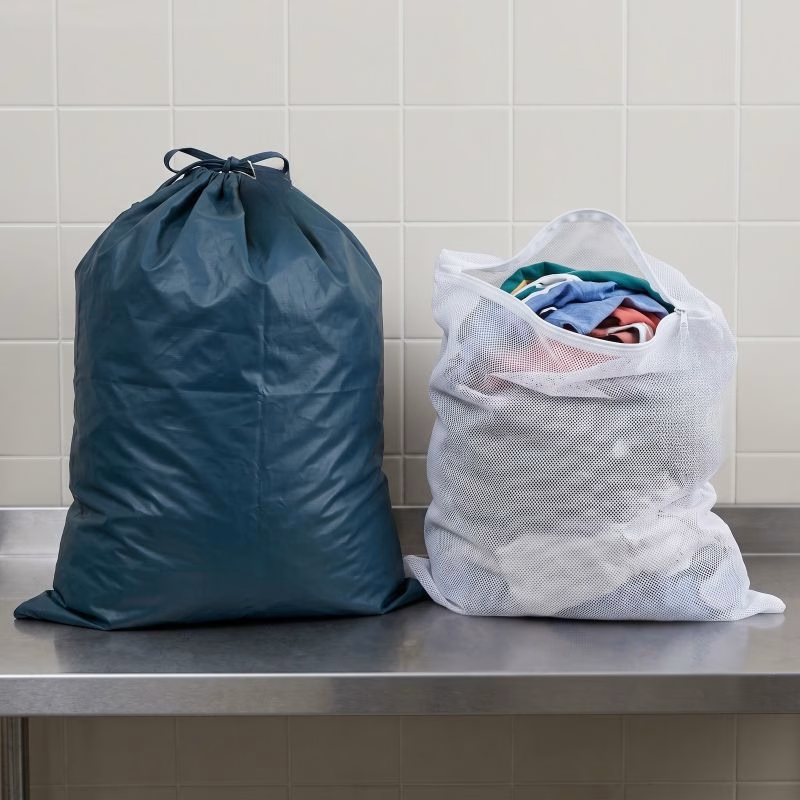
After the leak-resistant bag reaches the soiled side, staff can move labeled clothes into the mesh pouch. If a team drops wet sheets into mesh and walks the hall, fluid can reach the cart and the uniform. AHCA/NCAL tells staff to use a leak-proof container in the resident care area. They should not carry soiled linen by hand through the hall.
Meanwhile, loose socks and underwear land in the wrong room. A closed laundry wash bag keeps the name label with the load. So staff return the right clothes and skip a second sort on a dirty table. OSHA still requires gloves for any worker who contacts contaminated laundry. Still, the bag does not remove that duty. Staff still wash their hands after glove removal.
Laundry Wash Bag or Linen Bag
A laundry wash bag belongs in the wash cycle for resident clothing. A leak-resistant bag belongs on the trip from the room to the soiled laundry side. OSHA says staff must bag contaminated laundry where they used it and must not sort it there. Wet laundry needs a container that stops leakage.
CDC guidance matches that rule. One bag with enough strength is enough for ordinary containment. However, a leak-resistant bag is the right choice when wet laundry could soak cloth. Labels or color codes must tell every worker that the bag needs safe handling, on site or at an outside laundry. If the facility treats all soiled laundry with the same precautions, an alternate color code can be enough, as long as every employee recognizes it.
Double bagging is not the default. CMS survey guidance says isolation linen does not need a routine second bag. Add a second bag only if the outside is visibly soiled or wet through. Instead, use one strong, leak-resistant bag, closed at the bedside and carried away from the body
Meanwhile, clean linen needs its own path. AHCA/NCAL says staff must cover clean clothes during transport. Clean and contaminated loads must not share a cart at the same time. A washed laundry wash bag can travel back only after the wash and dry cycle, and only in a clean container. Do not clip a clean mesh pouch onto a soiled cart for one quick trip.
Off-site laundries add one more label rule. If the receiving laundry does not use the same precautions for all laundry, the sending facility must use the biohazard label or the allowed red-bag option. Still, train staff so a linen bag is not thrown out as trash. Washed reusable linen is not the same as regulated waste.
| Bag type | Main job | Holds fluid | Washer safe | Closure | Hygiene limit |
|---|---|---|---|---|---|
| Leak-resistant linen bag | Move wet or contaminated linen | Yes, if rated against soak-through | No. Empty it on the soiled side | Tie, zipper, or closed liner | Use when wet laundry may leak |
| Color-coded collection bag | Show soiled, personal, or isolation status | Only if the material resists fluid | No | Tie on a fluid-resistant bag | Every worker must recognize the code |
| Laundry wash bag, medium mesh | Wash shirts, pants, and gowns | No | Yes | Zipper or drawstring | Open mesh cannot replace a leak-proof bag |
| Fine-mesh laundry wash bag | Wash socks, underwear, and small items | No | Yes | Zipper holds small items better | A tight pack blocks water flow |
| Large coarse-mesh bag | Wash towels or bulky light clothing | No | Yes | Drawstring or heavy zipper | Large holes can let small items escape |
Mesh Size and Closure Choices
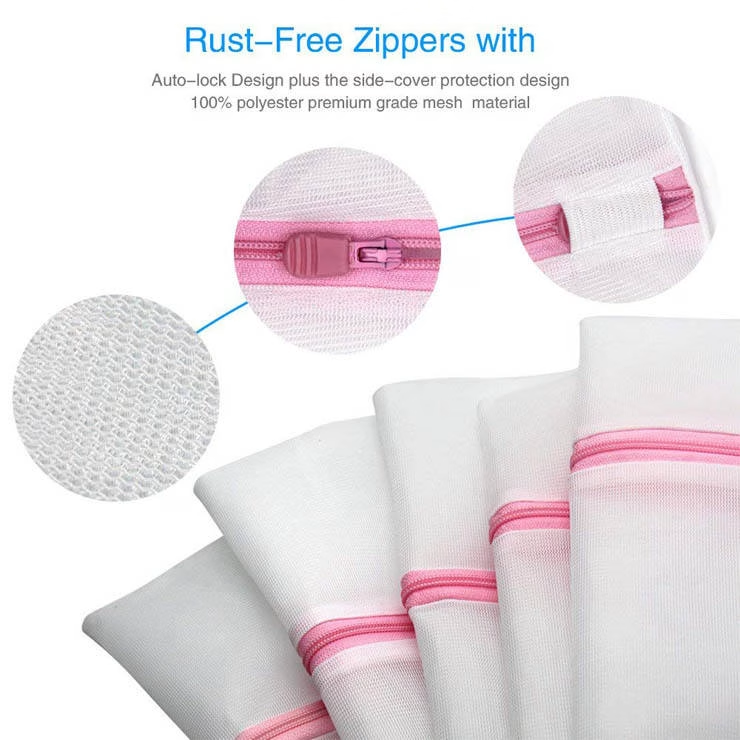
Choose a laundry mesh bag by what goes inside it, not by one facility size. Fine mesh holds small items. Coarse mesh lets more water through bulky loads. A zipper stays closed more reliably than a loose drawstring. Polyester mesh also dries faster than cotton mesh in repeated washes.
A laundry mesh bag is a porous pouch, usually polyester or nylon. It shields clothes while water and detergent pass through. For a care home, issue at least two sizes after you review fine and coarse mesh differences. One small zipper bag can take socks and underwear. One larger bag can take shirts and pants. Do not put bras with hooks in a coarse bag, because the hooks can catch other clothes.
Fill level changes hygiene, not just fabric care. If the bag is packed tight, water cannot move, and soil stays in the folds. A practical limit is about two-thirds full, with room to tumble. Then retire a bag with a broken closure the same day, because a split zipper lets clothes from two rooms mix.
Also, color and a name label do more for hygiene than a logo. Assign one color to resident clothing and another color to mops or cleaning cloths. Never wash cleaning cloths in the same laundry wash bag as resident clothes. Also put the resident name on a tag that survives hot water. A pretty print does not replace a readable name.
Buyers who import into Europe often ask about chemical rules. This maker states that its raw material can pass REACH and related tests. REACH covers chemical content. However, it does not prove that a wash cycle removed germs. Yiwu Yihang has made laundry bags since 2014 and offers custom colors. Before you order one giant pouch, compare extra-large mesh laundry bag sizes. A huge bag invites overfilling.
Room-to-Washer Staff Routine
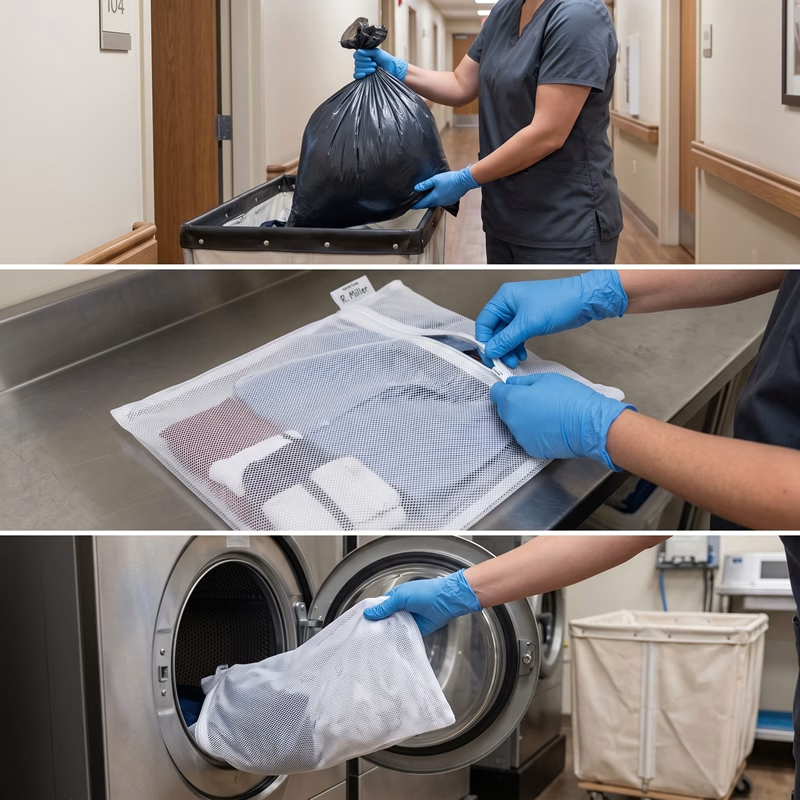
A laundry wash bag works only if every shift uses it the same way. Contain soiled linen at the bedside in a leak-resistant bag. Move that bag to the soiled side. Then place personal clothes into a named mesh pouch, wash it, and return it in a clean container.
Start in the room. Roll used linen inward. Do not shake it, because shaking can send particles into the air. Place sheets and wet pads in the leak-resistant bag before you leave the room. OSHA bars sorting and rinsing at the place of use. Also keep the bag off your body during the walk. A hidden sharp can puncture both the bag and the worker.
In the soiled area, gloved staff can move resident clothing into the laundry wash bag. Remove large solid waste before the wash, as CDC notes for smaller machines. Do not pre-rinse in a resident bathroom. Close the zipper or drawstring fully. If the bag has a drawstring, tie a bow that will not loosen in the drum. A half-closed bag becomes an open bag once the machine starts.
Then wash similar soils together. Do not add a mop head to a clothing load to save a cycle. After the cycle, treat the clean laundry wash bag as clean linen. Cover it on the return trip. Store clean clothes away from the soiled side, and keep the clean-room door closed when nobody is inside. If a bag falls on the soiled floor after washing, wash it again. Do not wipe it and deliver it.
Train with a five-minute drill, not a long memo. Watch one aide bag a bed change. Then watch one laundry worker load mesh pouches. Correct the miss on the spot. CMS expects the facility to monitor linen practice and fix deviations. A 2025 nursing-home guidance paper also tells homes to use industrial laundry equipment, protect clean linen, and teach staff which protection to wear for grossly soiled linen.
Wash Settings for Hygiene
Heat, chemistry, and drying do the germ-killing work. The laundry wash bag only has to let that process reach the clothes. CDC guidance calls for hot water at 160°F (71°C) for 25 minutes as a common recommendation. Chlorine in the bleach cycle adds a safety margin when the fabric allows it.
CDC also cites about 50 to 150 ppm of chlorine in that cycle. A controlled wash at 71°F to 77°F can work too, but only when detergent and bleach stay controlled.
First, check the garment label before you copy a hospital sheet formula onto a polyester blouse. Some resident clothes cannot take 160°F. In that case, use the chemical option your policy allows, and do not guess the dose. Chlorine bleach becomes active around 135°F to 145°F (57°C to 63°C). Oxygen bleach is another option. CDC says oxygen-based bleach used in healthcare should be EPA-registered if the goal is disinfection. Never mix products because a bottle looks similar.
The bag changes the wash action. Water must move through the holes, so keep the load loose, as a laundry mesh bag how-to shows. Sort heavy items out, close the bag, and match the cycle to the fabric. If the item cannot be washed safely, send it for family pickup or follow the discard rule.
Then drying finishes the job. Pull the laundry wash bag out promptly, because damp textiles should not sit in a machine overnight. Hang or tumble the mesh until it is dry. A damp pouch can soil the clothes you just washed.
Machine care still matters. Use the washer as the maker directs. Larger homes should prefer industrial machines, on site or through a qualified vendor. If you send linen out, ask whether the plant follows healthcare laundry standards such as those from the Healthcare Laundry Accreditation Council. HLAC accredits laundries that process reusable textiles for hospitals and nursing homes.
One limit needs plain language. A washed healthcare textile is hygienically clean, not sterile. That is the right goal for clothes and sheets. Also skip treated-fabric claims as your main control. CDC has said there is no evidence that antimicrobial consumer textiles prevent disease as an infection-control strategy. So buy a sound bag and run a sound cycle.
Keep Clothes on the Right Path
The hygiene gain is specific. Use a leak-resistant bag for wet, contaminated linen. Use a laundry wash bag to wash and return personal clothes with less mixing and less handling. Teach both steps. Then audit both steps. The laundry mesh bag becomes part of infection control, not a shortcut around it.
Facilities that write this split into the linen policy give surveyors something concrete to see. Staff can point to the bedside bag, the color code, the named mesh pouch, and the clean return cart. That record is easier to defend than a verbal habit that changes by shift. It also protects workers, because staff grab fewer loose, soiled items.
If you are setting a purchase spec, start with polyester mesh, a working zipper on small sizes, a readable resident tag, and at least two sizes. Review the laundry mesh bag options before you place the order. Match the bag to the task. Keep the leak-resistant linen bag on the soiled path, where OSHA and CDC already put it.
Laundry Wash Bag Questions
Do nursing homes need a laundry wash bag for soiled sheets?
No. Soiled sheets need a leak-resistant bag at the bedside, closed before staff leave the room. A laundry wash bag is for the washer, where mesh lets water reach resident clothing. Use it after sorting on the soiled side, not as the transport bag for wet linen.
Can a laundry wash bag go in a commercial washer?
Yes, if the bag is made for machine washing and the closure is shut. Polyester mesh is the usual choice because water and detergent pass through. A laundry wash bag should stay about two-thirds full. Check the zipper after hot cycles, and pull damp bags out so they do not sit overnight.
How full should a laundry wash bag be?
Keep a laundry wash bag about two-thirds full so water can move through the mesh. A tight pack leaves folds unwashed and can split a zipper. Small items such as socks belong in a finer mesh so they do not slip out. Leave mops and cleaning cloths out of resident clothing bags.
Does a laundry wash bag replace gloves?
No. OSHA still requires gloves and other needed protection for workers who touch contaminated laundry. A laundry wash bag reduces loose handling during the wash, but staff still bag linen at the point of use and wash hands after they remove gloves. The bag is a tool, not protective equipment.
Should isolation linen go in two bags?
Not as a routine step. CMS survey guidance says isolation linen does not need routine double bagging. Add a second bag only if the outside is wet or visibly contaminated. A laundry wash bag still should not carry that wet linen down the hall. Close one leak-resistant bag at the bedside instead.
How do color codes help a laundry wash bag program?
Color tells staff what is inside before they open anything. Use one color for resident clothing and another for utility cloths. OSHA allows color-coding when every worker understands it. A laundry wash bag in the clothing color should still carry a resident name, because color alone cannot prevent a wrong-room return.