
For many homes, especially in humid regions, winter seasons, or compact apartments, Hanging Clothes Drying indoors is not a choice—it’s the only workable option. The challenge is familiar to your customers: laundry that hangs for hours, even days, still damp in the seams, with a room that smells slightly musty.
At scale, this slows down household routines, increases complaints, and creates pressure on you as a buyer or product manager to specify drying solutions that actually work. You don’t only need a nice-looking clothes drying rack; you need a system that supports faster evaporation, protects textiles, and manages indoor humidity in a safe way.
This guide walks through simple, practical hacks and product decisions that help indoor Hanging Clothes Drying work better for your customers—while also giving you ideas on how to position mesh racks, folding clotheshorses, and related accessories in your assortment.
Established in 2014, our company is a professional manufacturer of laundry mesh bags, bra laundry bag, washing bags for shoes, storage bag, laundry basket and drawstring mesh. Our customers are located worldwide, with key markets in Europe, North America, South America, Korea, and Japan. OEM orders are welcome, and customized designs are available. Our raw materials are environment friendly, and our products can pass REACH and related tests.
With this production background, we’ll look at Hanging Clothes Drying from both sides: how end users can dry faster indoors and how you can source products that genuinely support that goal.
Why Hanging Clothes Drying Indoors Feels So Slow
Indoor drying feels slow to many households because the conditions are stacked against fast evaporation:
- Limited airflow in small rooms or apartments
- Higher baseline humidity, especially during rainy seasons
- Crowded racks where fabrics touch each other
- No sun exposure, so moisture has to leave the textile only via air movement and time
Several recent articles on indoor drying highlight that wet laundry can raise indoor humidity significantly, encouraging mould growth in poorly ventilated rooms.(The Times of India) When humidity rises, the air simply can’t hold any more moisture, which slows drying further.
For you as a buying or procurement professional, this explains why product design and material choice matter so much. A well-designed rack or mesh clotheshorse supports airflow and separation between garments, helping users compensate for poor room conditions.
Common barriers your customers face
- Small balconies or no balcony at all
- Shared housing with limited space
- Allergy sensitivities where mould risk is a serious concern
- Energy costs that make tumble dryers less attractive
Designing your assortment around these constraints—rather than treating a clothes drying rack as a simple commodity—can create real value for users.
The Basics: How Hanging Drying Works Indoors
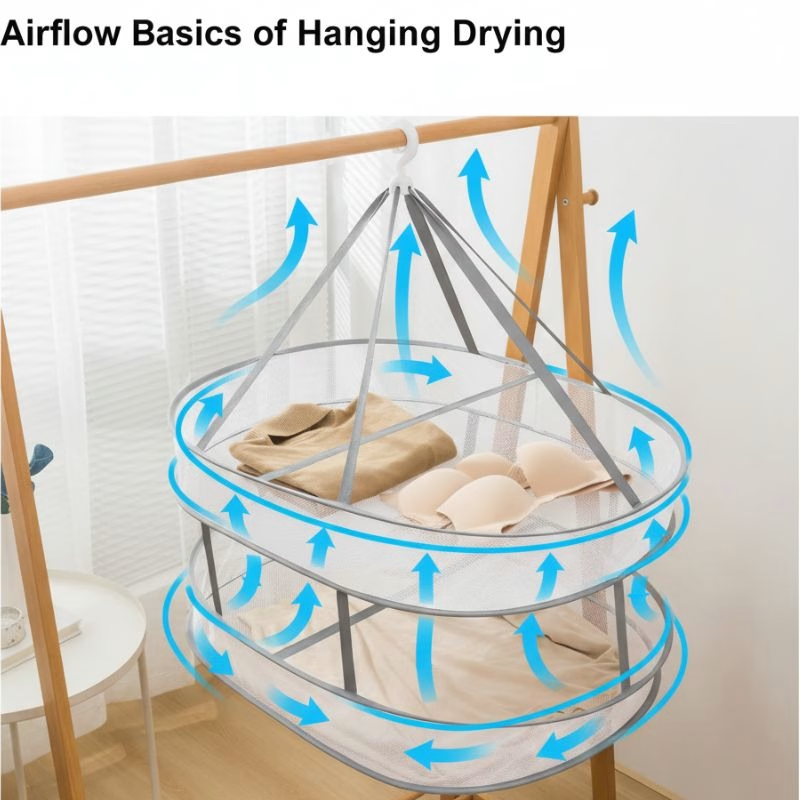
To speed up Hanging Drying, it helps to think like an engineer for a moment. Drying is driven by three simple elements:
- Air movement – moving air picks up moisture from fabric.
- Temperature – warmer air can hold more moisture.
- Humidity difference – the drier the surrounding air, the faster moisture leaves the fabric.
When customers dry laundry indoors:
- If the room is still and cool, moisture sits on the fabric longer.
- If the air is already humid, evaporation slows dramatically.
- If items are folded or layered, the inner areas can stay damp for many hours.
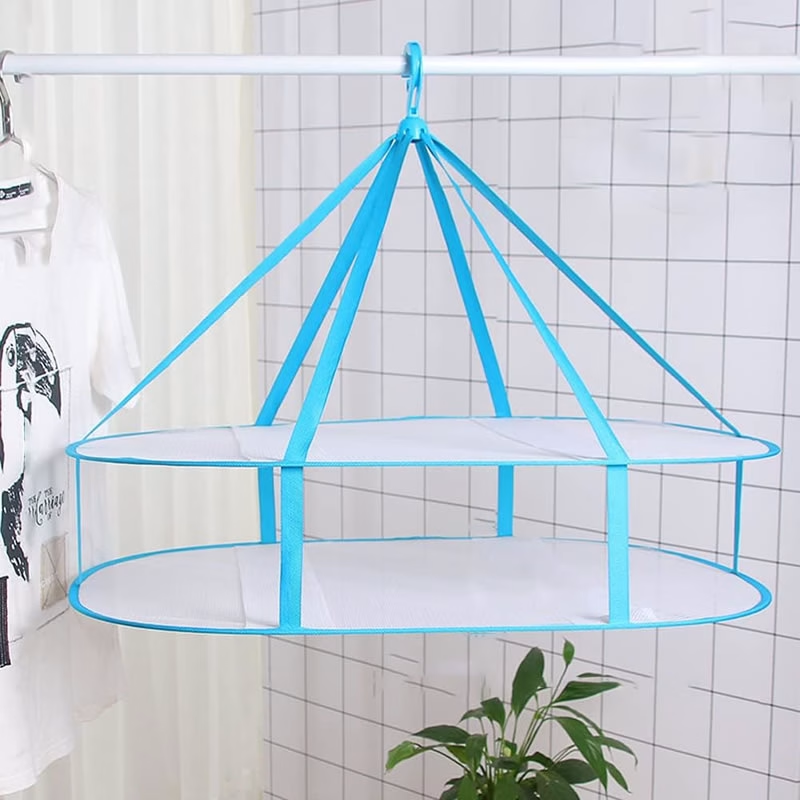
This is why the layout of the clothes drying rack and the type of rack matter. Flat mesh levels, like those in a breathable folding mesh clotheshorse, can support garments without hard marks while allowing air to move from above and below.
You can see examples of this design approach in our clothes breathable folding mesh clotheshorse in pink and the standard breathable folding mesh clotheshorse, which are both designed to support balanced airflow and garment protection:
- Pink model: https://laundrymeshbag.com/product-details/clothes-breathable-folding-mesh-clotheshorse-in-pink-color/
- Neutral model: https://laundrymeshbag.com/product-details/clothes-breathable-folding-mesh-clotheshorse/
For buyers, the key takeaway is simple: good hardware plus good layout equals faster indoor drying.
Health & Safety: Managing Humidity While Hanging Clothes Drying Indoors
Indoor drying is not only a comfort issue; it’s also a health and building-health topic. Several health and home care publications have warned that drying clothes indoors in poorly ventilated rooms can raise humidity, support mould growth, and increase exposure to mould spores, especially for people with asthma or weakened immune systems.
As you develop indoor drying products, it helps to align your recommendations with safe practice:
Key safety guidelines to highlight in product packaging or instructions
- Encourage ventilation:
- Place racks near windows or balcony doors where safe.
- Suggest airing the room during or after drying.
- Support distance from walls:
- Advise users to keep the clothes drying rack a few centimetres away from walls to reduce condensation and mould patches.
- Combine with dehumidification where needed:
- Suggest using dehumidifiers or humidity absorbers in tight spaces, especially in humid climates.
- Avoid drying directly on radiators or heaters:
- This can trap moisture against surfaces and increase local humidity extremes.
Including a simple safety panel in your product leaflet—covering humidity, ventilation, and regular cleaning of racks—signals that you understand the real-world context of indoor Hanging Clothes Drying.

Simple Hacks to Make Hanging Clothes Drying Faster Indoors
Here are practical hacks your end customers can use, and that you can incorporate into product guides or packaging. These directly affect how fast Hanging Clothes Drying works indoors.
1. Spin, Shake, and Smooth Before Hanging
- Recommend a high spin speed in the washing machine when fabrics allow it (check care labels).
- Suggest shaking each item once after spinning and smoothing seams and cuffs.
- This reduces heavy water pockets and helps fabric lie in a way that exposes more surface area.
2. Use the Clothes Drying Rack in “Single Layer Mode”
Racks often get overloaded. Encourage users to:
- Avoid double-layers (no t-shirts over jeans on the same bar).
- Keep a finger’s width between garments.
- Rotate heavier textiles (like jeans) halfway through drying.
A wide, multi-level clothes drying rack or mesh clotheshorse supports this spacing more easily than a narrow, basic frame.
3. Prioritize Mesh Levels for Delicates and Heavy Items
Mesh layers, like on our folding mesh clotheshorse products, help with:
- Sweaters and knitwear that need to lie flat to keep their shape.
- Heavier garments that can sag or stretch on single bars.
You can position mesh racks as a fabric-care accessory: they prevent stretching while still improving airflow from above and below.
4. Add Controlled Air Movement
Without mechanical drying, air movement is the main “engine” of indoor Hanging Drying:
- A small fan directed above or beside the rack (not directly on delicate fabrics) speeds evaporation.
- Ceiling fans or cross-ventilation (two open windows) also help.
- Product packaging can include a simple illustration showing optimal fan placement.
5. Choose the Right Room at the Right Time
Recommend placing the rack:
- In the driest room available, not necessarily the largest.
- Away from permanently damp spaces like bathrooms, unless well ventilated.
- In a room that can be closed off for a few hours if a fan or dehumidifier is running there.
6. Mix Methods for Heavy Items
Some textiles don’t dry well only by hanging, such as very thick towels or heavy bedding. A practical recommendation:
- Use a short tumble-dry cycle first (where customers have access), then finish on a rack.
- For sweaters and heavy knits, dry flat on mesh and flip halfway through.
7. Use Accessories: Clips, Hangers, and Pegs
- Add strong but gentle clips so garments can be hung by waistbands or seams.
- For shirts, use hangers on upper rails to keep collars and shoulders in shape and reduce ironing.
These accessory suggestions can be paired with your own product line—mesh bags, shoe washing bags, and storage bags—to build a complete laundry care solution.

Comparing Drying Options: Racks, Mesh Clotheshorses, and Tumble Dryers
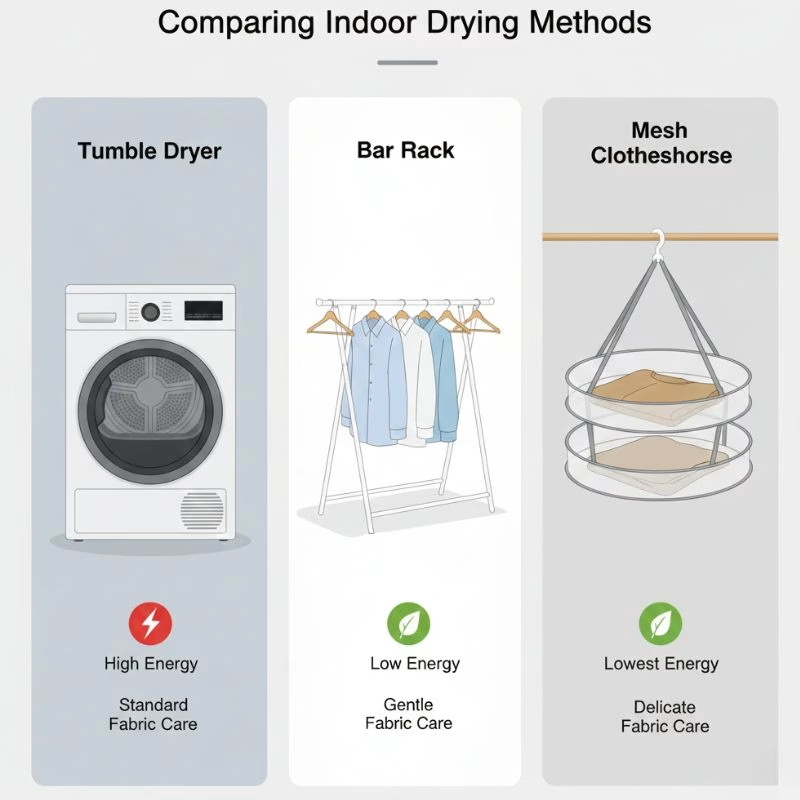
When discussing assortment or product development with your team, a simple comparison table can help clarify where Hanging Clothes Drying fits.
Drying Method Comparison
| Drying Method | Energy Use | Fabric Care Level | Speed (Indoor) | Typical Use Case |
|---|---|---|---|---|
| Tumble dryer | High | Moderate | Fast | Larger families, cold climates with low time |
| Basic bar-style clothes rack | Low | Good | Medium | Everyday mixed laundry |
| Mesh clothes drying rack / clotheshorse | Low | Very good | Medium–Fast | Delicates, knits, small apartments |
| Radiator or heater drying | Medium | Low | Medium | Emergency quick-dry, not recommended long term |
Mesh designs and folding clotheshorses sit in a high fabric-care / low energy quadrant, making them attractive for eco-conscious users and markets where energy prices are sensitive.
You can position these products as:
- A complement to existing bar-style racks.
- A safe way to dry delicate, knitted, or shape-sensitive garments.
- An indoor solution for regions with long rainy seasons.
Choosing the Right Clothes Drying Rack for Your Market
Now let’s look at how to select or develop the right clothes drying rack and mesh solutions for your target customers.
Design considerations for Hanging Clothes Drying
- Multi-level structure
- Allows separation of items by type (shirts, trousers, delicates).
- Increases surface area for Hanging Drying without taking more floor space.
- Mesh platforms
- Ideal for knits, bras, and shape-sensitive garments.
- Prevent marks from bars and preserve garment structure.
- Foldability and storage
- Essential for apartments and smaller homes.
- Buyers can highlight folded dimensions on packaging.
- Corrosion resistance
- Coated steel, aluminum, or durable plastic parts help racks maintain appearance even in humid rooms.
Example: Folding Mesh Clotheshorse
Our clothes breathable folding mesh clotheshorse in pink and the neutral version combine:
- A stable hanging frame
- Multiple mesh levels for flat drying
- Foldable design for easy storage
Product links for reference:
- Pink clotheshorse: https://laundrymeshbag.com/product-details/clothes-breathable-folding-mesh-clotheshorse-in-pink-color/
- Neutral clotheshorse: https://laundrymeshbag.com/product-details/clothes-breathable-folding-mesh-clotheshorse/
For a broader overview of our storage and laundry solutions, you can also view our full product range here: https://laundrymeshbag.com/our-products
By combining these racks with mesh laundry bags and bra laundry bags, retailers can offer a complete Hanging Clothes Drying system that protects garments from wash to dry.

Materials, Compliance, and REACH Considerations
For many buyers and procurement teams, material compliance is just as important as design. The EU’s REACH Regulation manages chemicals in consumer products, including textiles and textile-related items.
Why this matters for Hanging Clothes Drying products
- Racks, mesh, and coated metals are frequently in contact with wet textiles and skin.
- Non-compliant coatings or plastics can release unwanted substances during regular use.
- Brands working in Europe must ensure laundry accessories comply with REACH and related regulations.
Our company uses environment friendly raw materials and designs products that can pass REACH and related tests, which aligns well with buyers serving markets in:
- Europe
- North America
- South America
- Korea
- Japan
When assessing suppliers, you can request:
- Test reports for mesh and plastic components
- Coating and dye information
- Evidence of REACH-related testing from certified laboratories
This adds reassurance for your internal compliance teams and for any retail partners that perform random testing.
Simple material checklist for buyers
| Item Type | Key Material Questions |
|---|---|
| Mesh panels | What is the fiber type (e.g., polyester)? Any softeners? |
| Coated steel frames | Type of coating? Corrosion testing performed? |
| Plastic joints and caps | Any restricted substances under REACH? |
| Textile accessories (bags, straps) | Color fastness and wash testing completed? |
Packaging, User Instructions, and Education for Hanging Clothes Drying
A well-designed clothes drying rack can still underperform if users don’t know how to use it effectively. Product managers can add value by integrating simple education into packaging and inserts.
What to teach end users
- How to load the rack for Hanging Clothes Drying
- Show correct spacing between garments.
- Suggest which garments go on bars versus mesh platforms.
- Room setup guidance
- Helpful diagrams showing ideal placement near a window or door.
- Tips for using fans or dehumidifiers safely.
- Care and maintenance
- Cleaning recommendations to prevent mould on racks.
- Storage instructions when the rack is not in use.
- Garment-specific advice
- Short notes:
- “Dry knits flat on mesh to protect shape.”
- “Use clips for jeans and heavy items by the waistband.”
- Short notes:
Added value for your brand
By integrating practical drying tips into your products:
- Customers associate the product with faster drying and better fabric care, not just a metal frame.
- You differentiate your assortment from generic racks.
- Your customer support team receives fewer “Why is my laundry still damp?” complaints.
Working With a Direct Manufacturer on Custom Hanging Drying Solutions
When you work directly with the original manufacturer, you can adjust details that often make the difference:
- Dimensions that match local apartment sizes
- Colors that fit your brand identity
- Mesh density tuned for specific garment types
- Hooks or hanging systems that integrate with wardrobes or showers
Because OEM orders are welcome and customized designs are available, you can co-create racks, clotheshorses, and mesh solutions tailored to your market expectations.
Ideas for customized features
- Regional color ranges (e.g., pastel tones for Japan, neutrals for Northern Europe).
- Specialized racks for sportswear, children’s clothes, or lingerie.
- Bundled sets that combine a clothes drying rack with laundry mesh bags, bra laundry bags, and washing bags for shoes.
Turning laundry feedback into product briefs
Feedback from retailers and call centers often mentions:
- Drying time
- Storage space
- Mould or musty smell issues
You can translate these into concrete product requirements:
- Minimum bar spacing and mesh level sizes
- Maximum folded thickness for storage
- Coating and material specs aligned with REACH and other tests
This is where working with a direct manufacturer of laundry mesh bags, baskets, and clotheshorses becomes helpful. You can quickly adjust prototypes and test them in local markets.
Turning Faster Hanging Clothes Drying Into a Selling Point
Indoor Hanging Clothes Drying doesn’t have to be a compromise. With the right products and messaging, you can present it as:
- Energy-saving – no electricity for a dryer, especially when combined with efficient racks and good airflow.
- Fabric-friendly – less mechanical stress on garments.
- Space-aware – foldable designs for compact living.
When you promote your clothes drying rack and mesh clotheshorse ranges, you might highlight:
- “Dry faster indoors with better airflow and mesh support.”
- “Protect knits and delicates with flat mesh drying levels.”
- “Reduce moisture issues with recommended layout and ventilation tips.”
As the original manufacturer, we can help you build coherent collections of racks, mesh bags, baskets, and storage solutions that tell one clear story: efficient, fabric-safe Hanging Clothes Drying indoors, designed for real homes.
If you’re planning a new collection or refreshing your current assortment, consider sharing:
- Your key markets and climate conditions
- Typical dwelling sizes and laundry habits
- Brand-level requirements on materials and compliance
From there, we can propose concepts, adaptations, and OEM options to match your buyers’ expectations and support consistent, faster indoor drying experiences.
FAQ
1. What minimum order quantities do you support for racks?
We usually set minimum order quantities based on product type and configuration, for example different sizes or colors of clothes drying rack and mesh clotheshorse. Please reach out with your target model and annual volume so we can confirm the most efficient MOQ and shipping plan.
2. How can we customize a Hanging Clothes Drying rack for our market?
You can customize dimensions, colors, mesh density, packaging design, and accessories like clips or hangers. Many partners send us a short product brief or reference sample, and we develop OEM solutions around that. Contact us to discuss your local requirements and branding.
3. What compliance and safety tests can your products pass?
Our raw materials are environment friendly and our products can pass REACH and related tests for textiles and accessories in key markets. You can request specific reports for mesh fabric, coatings, and plastic components, and we can coordinate additional tests if your market requires them.
4. How long is the typical lead time for clothes drying rack orders?
Lead times depend on order size, customization level, and shipping route. Standard models usually ship faster, while custom Hanging Drying solutions require extra sampling time. Share your preferred delivery window and we can build a realistic production schedule together.
5. Can we request samples of racks and mesh clotheshorses before confirming an order?
Yes, sample review is strongly recommended for new projects. You can request samples of our existing clothes drying rack designs, folding mesh clotheshorses, or other laundry accessories. Contact us to request samples and confirm shipping arrangements.