
A drying net and a drying rack may look like simple tools, but they decide whether your pillows, cushions and plush toys stay fluffy and fresh—or come out lumpy, sagging and slow to dry. For brands and buyers responsible for home textiles and storage products, the way these bulky soft items dry is not just a comfort issue; it affects product lifetime, hygiene and customer satisfaction.
Many pillow and toy care guides warn that if padding stays damp deep inside, mold and dust mites can develop, shortening product life and creating odor problems. That’s why comparing a drying net and a drying rack is more than a hardware choice. It’s about how you support delicate shapes while letting air circulate freely.
In the following sections, we’ll look at how each option handles pillows, cushions and plush toys, how drying nets are engineered, and when each solution makes sense for your laundry process or product line. Along the way, you’ll see where flat mesh solutions—such as our pillow drying net and three-layers folding drying net—help you dry more safely, consistently and efficiently.
Why pillows, cushions and plush toys need gentle drying
Pillows, seat cushions and plush toys are built around fillings: foam, feather, down, polyester fiber, beads or blends. These fillings hold a lot of water during washing. The outer fabric may feel “almost dry” while the core is still wet. If that moisture stays trapped, it can lead to:
- Musty odors that are hard to remove
- Flattened or clumped filling
- Hidden mold or mildew inside the product
Many consumer care guides highlight the importance of thorough air drying on a flat, well-ventilated surface to keep pillows and stuffed toys hygienic and evenly shaped. Hanging them from a peg or line may feel convenient, but the weight of trapped water can pull the filling to one side, leaving an uneven, sagging look once dry.
For businesses that sell or maintain pillows and soft furnishings, this matters for several reasons:
- Shape retention – Cushions that dry unevenly lose their original profile and may no longer fit covers cleanly.
- Customer experience – Parents won’t appreciate a favorite plush toy turning stiff or misshapen after the first wash.
- Returns and complaints – Poorly dried fillings can shorten product life and increase warranty or replacement costs.
Drying tools are the link between washing and real-world performance. The right setup supports the entire surface of the item, encourages even airflow, and avoids tension that distorts seams or stitching. That’s where the difference between a drying net and a drying rack becomes clear.
What is a drying net and how does it work?
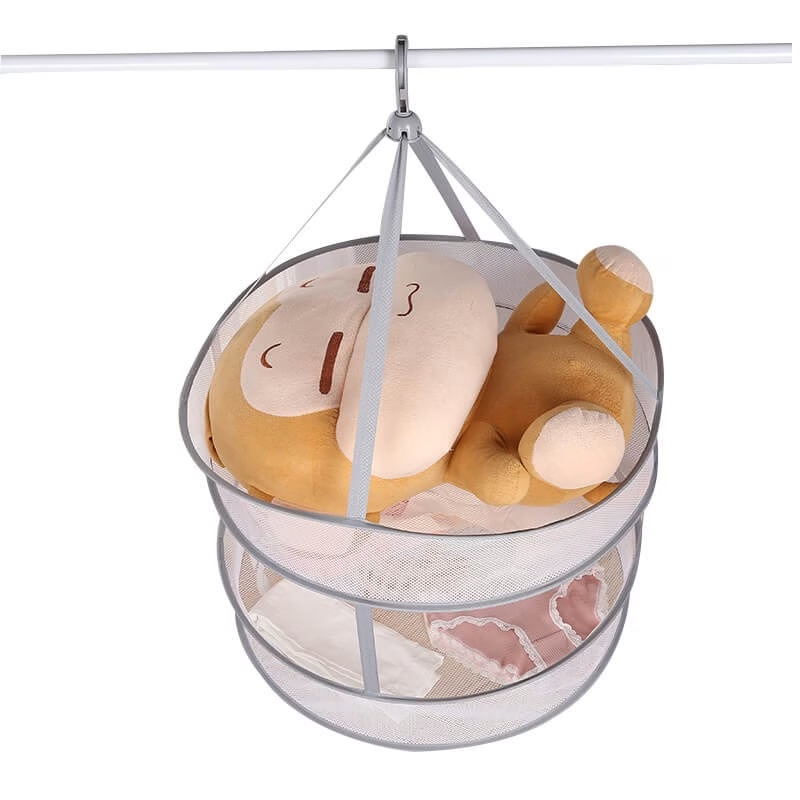
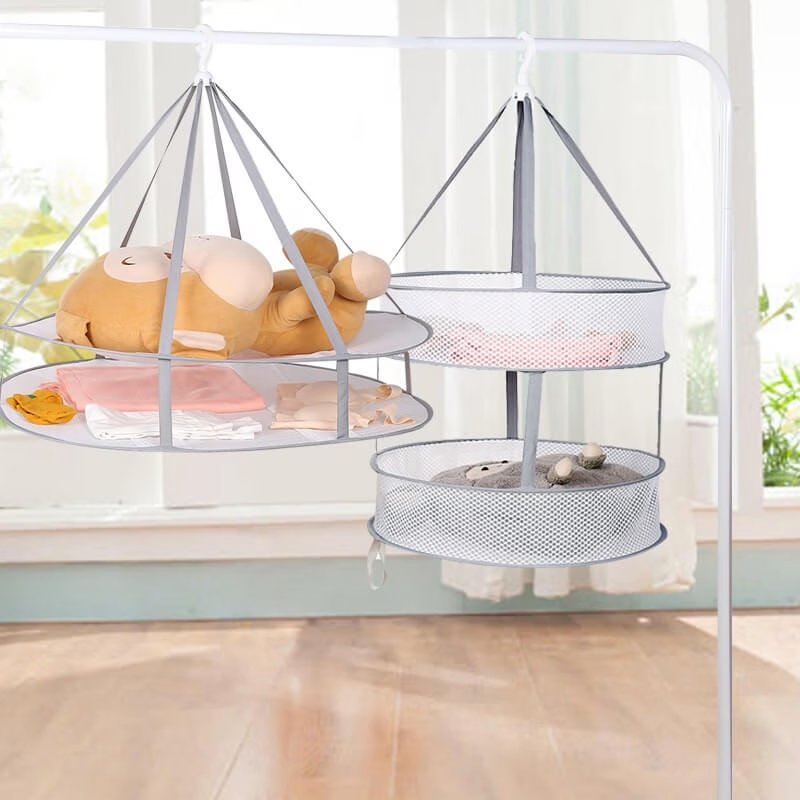
A drying net is a flat or multi-layer mesh platform designed to hold items horizontally while air flows through from above and below. Unlike a traditional drying rack that relies on bars or lines, a drying net uses fine mesh stretched across a frame, so the weight of the pillow or toy is fully supported.
Key characteristics of a drying net for pillows, cushions and plush toys include:
- Flat support – The filling stays evenly distributed instead of sliding down as it would on a line or narrow rail.
- Breathable mesh – Air can circulate through the fabric, helping moisture escape from both sides.
- Foldable frame – For storage and shipping, many designs fold into a compact circle or rectangle.
- Stable edges – A reinforced rim keeps the platform level, even when loaded with heavier cushions.
Our pillow drying net is designed around this principle: a wide, flat mesh surface that can sit on a table, bathtub, balcony rail or similar support. Buyers often pair it with gentle washing in mesh laundry bags to protect covers and seams in the machine, then move the clean pillow directly onto the net for air drying.
Many facilities also use a hanging drying net, suspended from the ceiling or balcony. The hanging design keeps items away from dusty floors and allows air to move through all sides. For soft toys and small cushions, this can be an efficient way to use vertical space, especially in compact laundry rooms.
Compared to improvised solutions like towels on a table, a purpose-built drying net is:
- Easier to clean and keep hygienic
- More stable when several items are loaded
- Consistent in size and performance from batch to batch
For brands customizing their own accessories, drying nets can be tailored to specific pillow dimensions, set weights and color schemes, with materials tested to meet standards such as REACH for textile safety in the EU.

What is a drying rack?
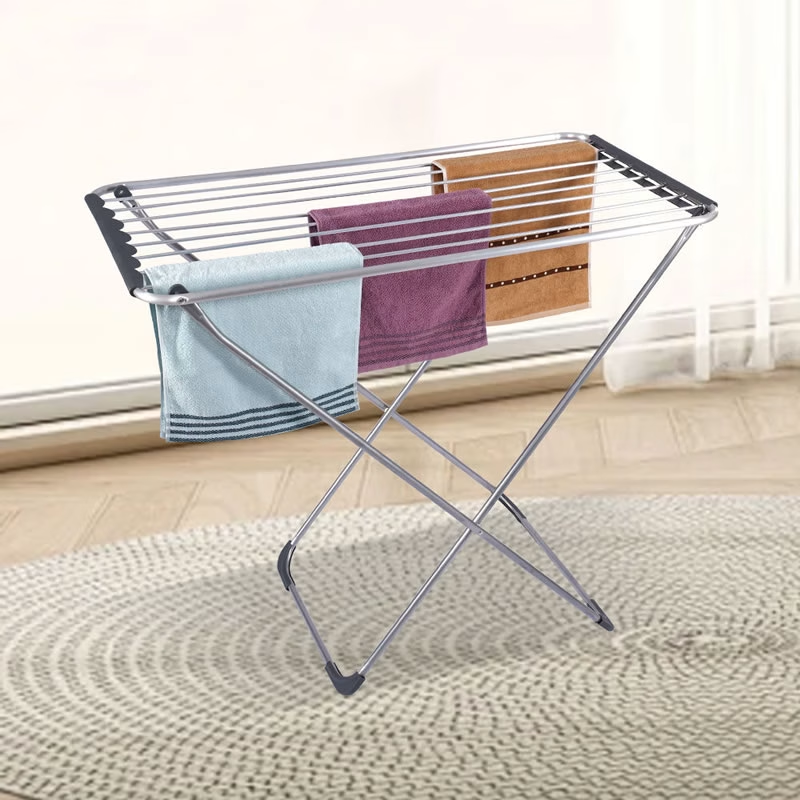
A drying rack is a frame with bars, rods or lines used to hang or drape laundry for air drying. Designs range from compact foldable racks to larger wall-mounted systems, and some heated models. For everyday laundry rack drying of shirts, towels and smaller garments, these racks are practical and familiar.
When it comes to pillows, cushions and plush toys, though, a typical drying rack has limitations:
- The weight of a wet pillow draped over a bar can stretch fabric and pull filling out of place.
- Narrow contact points create creases and pressure marks.
- Airflow may be reasonable for thin garments, but dense fillings need broader support to dry evenly.
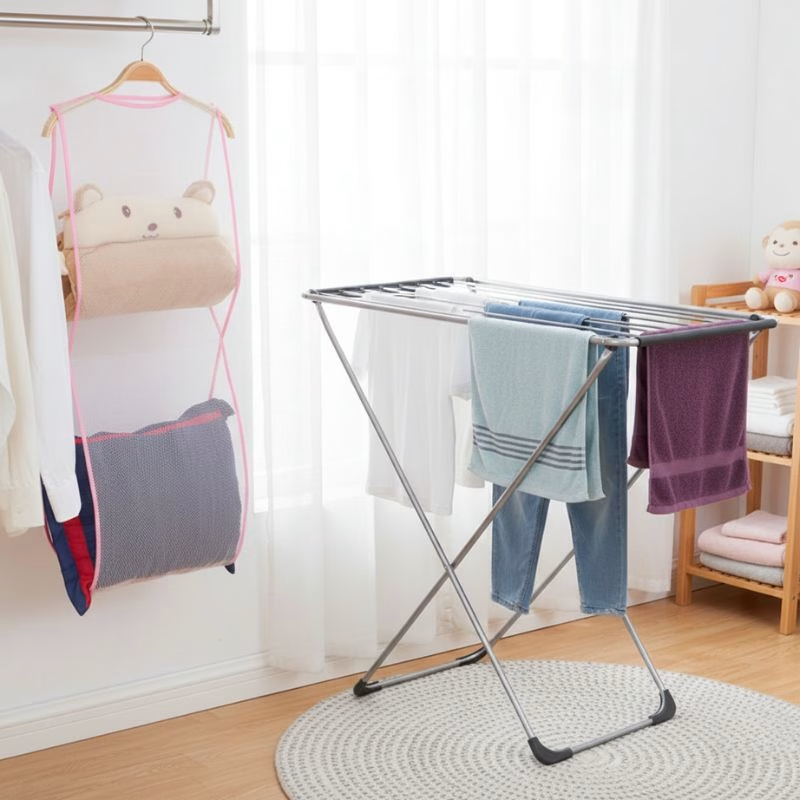
That doesn’t mean a drying rack has no role. Many facilities use racks for lighter items while reserving mesh platforms for bulkier pieces. Some modern racks also integrate flat mesh shelves, effectively combining the two concepts.
drying net vs drying rack: key differences for soft bulky items
When you focus specifically on pillows, cushions and plush toys, the comparison between a drying net and a drying rack becomes more targeted.
Comparison table: drying net vs drying rack for pillows, cushions and plush toys
| Factor | drying net (flat mesh) | drying rack (bars or lines) |
|---|---|---|
| Support for shape | Full-surface support, filling stays evenly spread | Weight hangs over bars, filling can slide or clump |
| Risk of distortion | Low, items rest in natural shape | Higher, especially for heavy pillows and large toys |
| Airflow | Through mesh from above and below | Mainly around exposed surfaces |
| Space usage | Uses floor or tub space; stackable or hanging nets | Uses vertical and floor space |
| Drying time (like-for-like) | Often faster for dense fillings due to even airflow | Can be slower if core stays shaded from air movement |
| Ease of handling | Items simply placed and turned | Larger items may be awkward to balance on bars |
| Ideal items | Pillows, plush toys, flat-knit garments, delicates | Shirts, towels, linens, lighter clothing |
In practice, many teams end up with a mixed system: drying nets for bulky, soft items and drying racks for standard garments. The goal isn’t to abandon one tool but to match the method to the item.
If your quality complaints often focus on flattened pillows or misshapen toys after washing, shifting those categories from racks to nets usually has an immediate effect: more even drying, fewer shape changes and more consistent texture across batches.
When to choose a drying net for your products
A drying net is especially helpful when:
- You wash pillows, seat pads or plush toys regularly, not just occasionally.
- Your products use delicate fabrics, embroidery, zippers or trims that shouldn’t bear hanging weight.
- You need predictable shape retention to match fitted covers or packaging.
- You want to reduce reliance on tumble dryers for energy or fabric-care reasons.
Scenarios where a drying net is particularly effective:
- Home textile brands – Offering a dedicated pillow drying net as an accessory helps end users care for your products correctly.
- Hotels, hostels and dormitories – When central laundry teams process cushions or decorative pillows, a mesh platform helps them dry flat between guest stays.
- Child-focused products – Plush toys and specialty cushions often have mixed materials that benefit from gentle, supported drying.
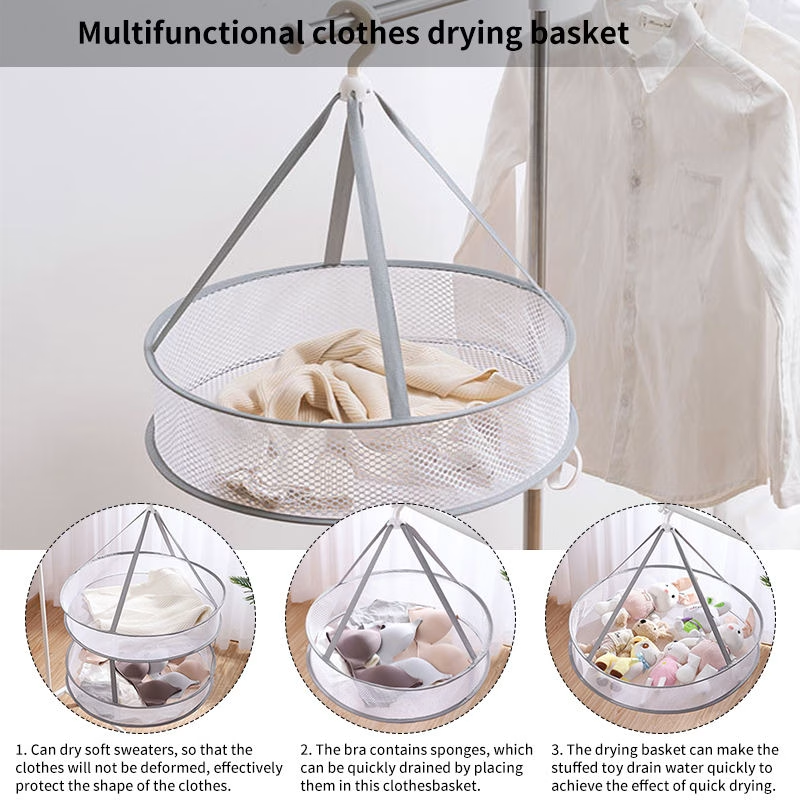
A hanging drying net is useful where floor space is limited. Multiple layers can be suspended from a balcony or ceiling hook, allowing different items to dry at once without touching.
When a drying rack still makes sense
Drying racks are still a practical part of most laundry systems. They handle lighter, flatter items with ease and can be folded away when not in use. For example:
- Everyday clothing such as T-shirts, shirts, underwear and socks
- Towels and bathmats
- Bed linen and smaller covers
For these categories, a regular drying rack offers:
- Good airflow around thinner fabrics
- Flexible hanging options
- Simple integration with existing laundry routines
A helpful approach is to separate loads by item type. Use racks for garments and linens, while setting aside pillows, large cushions and plush toys for flat drying on a mesh platform. This way, your laundry rack drying remains efficient while bulky pieces receive more targeted care.
Design features to look for in a pillow drying net
Not all nets are built the same. When you’re choosing or sourcing a pillow drying net, several design details influence durability, safety and day-to-day usability:
- Mesh density and material
- Fine mesh protects delicate fabrics from snagging yet still allows strong airflow.
- Synthetic meshes are often chosen for quick drying and durability.
- For markets such as the EU, fabrics should be tested to comply with REACH chemical safety regulations, especially if products are used in homes with children.
- Frame strength and shape
- A rigid frame along the edges keeps the surface flat, supporting heavier pillows without sagging.
- Rounded corners reduce stress on fabric edges and make handling safer.
- Number of layers
- Single-layer nets are ideal for individual pillows or small batches.
- Multi-layer designs resemble a herb drying net, offering several flat levels that can be used for small cushions, toys or other delicate items. This structure makes good use of vertical space while keeping items separate.
- Hanging vs. countertop use
- Some nets are meant to sit on a table, bathtub or rack.
- Others are designed as hanging systems with hooks and straps.
- Combination designs fold for storage and can be used in either mode, depending on the load.
- Folding and storage
- Pop-up designs twist into a compact disk, useful for shipping and for end users with limited storage.
- Reinforced elastic or bands keep the folded net secure.
- Customizable dimensions and branding
- For buyers supplying retailers or hospitality venues, it’s common to specify custom sizes, colors and labels.
- OEM production also allows adjustment of mesh thickness or frame strength to match particular pillow weights.
Factories that specialize in mesh laundry solutions can align these design choices with your product range and local compliance needs, including testing for chemical safety and color fastness.

Choosing between pillow drying net and three-layers folding drying net
Once you decide that flat drying is the right direction, the next question is capacity and layout. Our range includes both a pillow drying net and a three-layers folding drying net, each suited to different usage patterns.
Comparison table: single-layer vs three-layer drying nets
| Feature / Use case | Pillow drying net (single-layer) | Three-layers folding drying net |
|---|---|---|
| Typical load | 1–2 pillows or a few plush toys | Multiple pillows, cushions and plush toys at once |
| Space requirement | Uses one flat surface (table, tub, balcony rail) | Uses vertical space, small floor footprint |
| Handling | Simple to set up and fold away | Slightly more setup but higher capacity |
| Ideal users | Households, small laundries, trial programs | Hotels, dorms, retailers or workshops with larger loads |
| Storage | Folds flat or twists into compact disk | Collapses into slim vertical bundle |
You can view the pillow drying net here:
https://laundrymeshbag.com/product-details/pillow-drying-net/
And the three-layers folding drying net here:
https://laundrymeshbag.com/product-details/three-layers-folding-drying-net/
For projects where storage space, shipping volume and user handling time are key considerations, these two formats cover most scenarios. Single-layer nets are easy entry points; three-layer models suit higher turnover of pillows, cushions and toys, or multi-unit properties where several items need to dry at the same time.
Practical tips for efficient drying and care
Regardless of which hardware you choose, a few process details will help you get consistent results:
- Press, don’t wring
After washing, gently press out excess water from pillows and plush toys using towels or your hands. Avoid twisting, which can damage filling and stitching. - Shape items before placing on the net or rack
Smooth corners and seams while items are still damp. This small step helps them dry in their intended shape. - Space items out
Whether on a drying net or a drying rack, leave gaps between items so air can flow freely. Overloading slows drying and increases the risk of damp patches inside. - Rotate and flip
Turn pillows and toys periodically to encourage even drying. On a drying net, flipping items halfway through the cycle helps the underside dry as thoroughly as the top. - Use appropriate environments
- For indoor drying, choose a warm, well-ventilated room, and consider a fan or dehumidifier in humid climates.
- For outdoor drying, avoid direct harsh sunlight for long periods, which may fade fabrics or damage coatings.
- Combine with mesh laundry bags
Using mesh laundry bags for washing helps protect delicate fabric and trims in the machine. After washing, items can move directly from the bag onto a drying net or rack, simplifying the process.
Together, these practices reduce drying times, improve hygiene and limit returns due to shape issues or unpleasant odors.
How buyers and product teams can evaluate drying solutions
For procurement and product teams, drying tools sit at the intersection of quality, customer satisfaction and operational cost. A structured evaluation helps align accessories like drying nets and racks with your core product range.
Points to consider:
- Product compatibility
- Measure typical pillow, cushion and plush toy dimensions and weights when wet.
- Check that chosen drying nets comfortably support these sizes without overhang.
- Material and compliance
- Confirm that mesh and frame materials are suitable for the target markets (for example, REACH compliance for the EU).
- Review test reports for color fastness, tensile strength and chemical safety.
- User instructions and after-sales experience
- Clear care guides (online and on packaging) reduce misuse and returns.
- Consider including simple diagrams showing how to use a drying net with your pillows or toys.
- Logistics and storage
- Foldable or pop-up designs reduce shipping volume and storage cost for both you and your customers.
- Multi-layer options increase drying capacity in limited space.
- OEM and customization options
- Color, size, label and packaging can be aligned with your brand or your customer’s brand.
- Custom shapes (for example, wider platforms for body pillows) can be developed for specific lines.
Working with an original manufacturer of mesh laundry and storage products gives you more control over these details: materials, testing, custom branding and packaging can all be aligned with your positioning, rather than adapting to off-the-shelf consumer goods.
Frequently Asked Questions
1. How should I load mesh laundry bags in the washer?
Avoid overfilling each bag. Leave enough space for water and detergent to circulate so garments can move freely. As a rule of thumb, fill each mesh laundry bag to around two-thirds of its volume. This protects the fabric while still allowing effective cleaning. Contact us to discuss bag sizes that match your typical load mix.
2. Can mesh laundry bags handle zippers, hooks and delicate trims?
Yes, mesh laundry bags are designed to protect delicate items from abrasion and tangling. Place bras, garments with zippers and small pieces such as baby socks into separate bags so hard parts don’t rub directly against more delicate fabrics. For large-scale use, your procurement team can request reinforced bags made to suit heavier items.
3. How many wash cycles can a good mesh bag withstand?
Service life depends on fabric weight, stitching and how heavily the bags are loaded. Under normal use, quality mesh laundry bags can support many wash cycles before showing wear. If your operation runs frequent, heavy loads, consider requesting samples and test reports before placing volume orders.
4. Do mesh laundry bags affect washing performance or rinse quality?
When correctly sized and not overfilled, mesh laundry bags allow water and detergent to pass through easily. Clothes still receive a thorough wash and rinse while staying organized. If you notice residue, reduce the load per bag or switch to a slightly larger mesh size. Contact us to review options for your machine type and detergent system.
5. How can procurement teams compare different mesh laundry bag suppliers?
Key checks include fabric weight, stitching quality, zipper design, and any test data available for color fastness and chemical safety. It also helps to review sample bags after a few trial wash cycles to see how they hold up. If you need support, you can reach out to request customized samples and documentation tailored to your washing process.
Product range: For more mesh-based laundry and storage solutions, including laundry baskets and storage boxes,
visit: https://laundrymeshbag.com/our-products/
Choosing between a drying net and a drying rack is ultimately about how you want your pillows, cushions and plush toys to perform after many wash-and-dry cycles. When bulky soft items dry flat on breathable mesh, they tend to keep their shape, feel comfortable for longer and create fewer after-sales issues. Racks still play an important role for everyday garments, but nets give you a more controlled way to care for the products that customers handle most closely.
If you’re planning a new product line, reviewing your current care accessories, or considering a switch to eco-friendlier, tested materials, it often helps to see real samples and discuss load sizes, target markets and branding needs in detail. As an original manufacturer specializing in mesh laundry bags, drying nets and related storage products, we can work with your team on customized designs that match your specifications and compliance requirements.
You’re welcome to send an inquiry with your target sizes, markets and expected order volume. Our team can share material options, test information and sample plans so you can evaluate pillow drying net and three-layers folding drying net solutions directly at the source, before making a larger commitment.