
Your washing machines handle hundreds of loads every week. But are your textiles coming out damaged, mixed up, or tangled beyond recognition? A commercial laundry bag can solve these recurring problems.
These specialized containers help organize, protect, and streamline your washing process—whether you’re managing hotel linens, medical uniforms, or gym towels.
In the next few minutes, you’ll learn exactly how to select, source, and implement the right commercial laundry bag solutions to reduce labor costs, extend fabric life, and boost your facility’s overall efficiency.
Understanding Commercial Laundry Bags
What Makes a Laundry Bag “Commercial Grade”?
Commercial laundry bags differ significantly from household versions. They’re engineered for high-volume, repeated use in demanding environments.
A commercial laundry bag is a heavy-duty textile container designed to hold, sort, and protect fabrics during industrial washing processes. Made from reinforced mesh, polyester, or specialized nylon blends, these bags withstand hundreds of wash cycles while allowing water and detergent to circulate freely.
The construction matters. Commercial versions feature double-stitched seams, reinforced stress points, and industrial-grade closures. These details prevent failure during peak operation periods.
How These Bags Function in High-Volume Settings
The mechanics are straightforward but effective. Load sorted items into appropriate bags based on fabric type, wash temperature, or client. Place bags directly into commercial washers.
Water flows through the mesh or perforated material. Detergent reaches every garment inside. The bag’s barrier prevents fabric-to-fabric abrasion from rough surfaces or metal hardware.
After washing, transfer bags to dryers or hang-dry stations. Contents remain organized throughout the entire cycle. Your staff spends less time sorting and more time processing volume.
Core Functions That Drive Value
Fabric separation prevents cross-contamination. White linens stay separate from colored towels. Guest items remain distinct from facility uniforms.
Damage reduction extends textile life by 25-40%. Hooks, zippers, and buttons cause most fabric tears. Bags create protective barriers between aggressive fasteners and delicate weaves.
Labor efficiency improves dramatically. One facility manager reported cutting sort time by 35% after implementing a color-coded bag system. Staff load pre-sorted bags rather than handling individual items multiple times.
Small item containment eliminates lost inventory. Washcloths, socks, and undergarments stay grouped. Your replacement costs drop when items stop disappearing into machine crevices.
Material Science: Choosing the Right Fabric for Your Operation
Material selection directly impacts performance, durability, and total cost of ownership. Let’s examine the four primary categories.
Mesh Construction Options
Polyester and nylon mesh dominate commercial applications. The open weave allows maximum water flow—critical for cleaning efficacy and cycle speed.
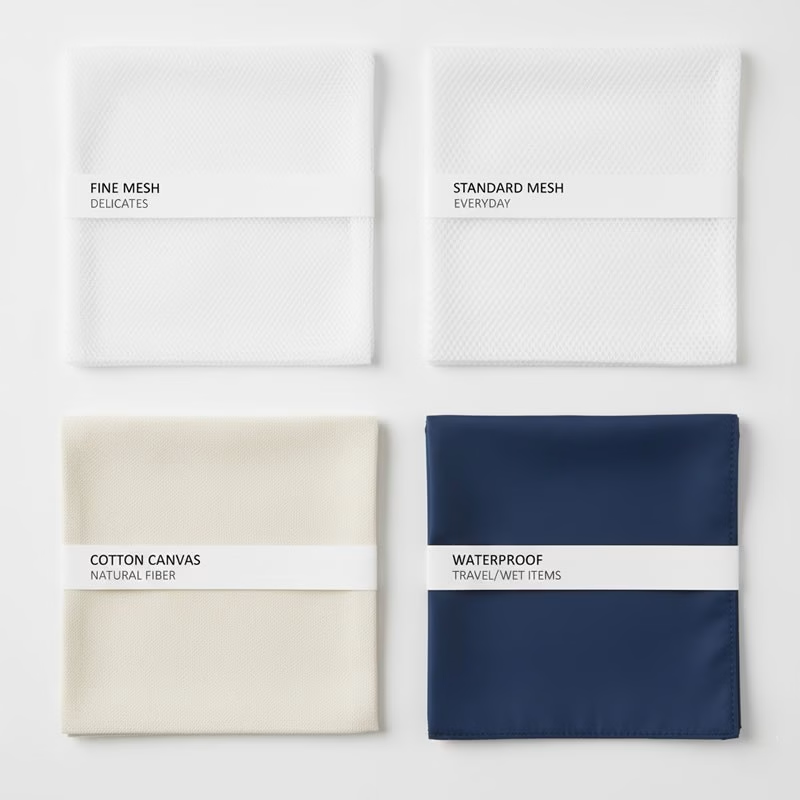
Fine mesh (1-2mm openings) protects delicate items. Think lingerie, embroidered linens, or lightweight medical scrubs. The tight weave prevents snags but may slow drainage slightly.
Standard mesh (3-5mm openings) handles general laundry loads. Towels, sheets, and everyday uniforms process efficiently. This balance of protection and flow suits most operations.
Heavy-duty mesh (5-8mm openings) accommodates bulky items. Commercial kitchen towels, work uniforms, and bath mats need aggressive washing. Wider openings enable thorough cleaning without sacrificing containment.
Quality mesh features reinforced edges. Check for bound seams rather than raw-cut edges. The binding prevents fraying after 200+ wash cycles.
Polyester Nylon Blends
Pure nylon offers excellent tear resistance. Polyester adds dimensional stability. Blended fabrics combine both advantages.
A 70/30 polyester-nylon blend provides optimal performance for most facilities. The polyester maintains shape during agitation. The nylon component resists punctures from sharp objects.
These blends dry faster than pure cotton. Your turnaround time decreases. Energy costs drop when bags require less dryer time.
Canvas and Heavy-Duty Options
Canvas bags suit laundry transport rather than in-machine washing. The thick cotton or cotton-poly blend construction handles heavy loads during collection and delivery.
Many facilities use canvas bags as hamper liners. Staff collect soiled linens in canvas. Then transfer contents to mesh bags for washing. This two-stage approach optimizes both collection and processing.
Canvas requires longer drying. Plan for air-drying or extended dryer cycles. The durability justifies the extra time—quality canvas bags last 3-5 years with proper care.
Waterproof and Coated Materials
Waterproof laundry bags serve specialized functions. PU-coated or PVC-lined bags contain damp items during transport.
Fitness centers use these for sweaty gym clothes. Medical facilities transport soiled linens without leakage. Hospitality operations move pool towels without dripping on carpets.
The coating limits breathability. Never store items in sealed waterproof bags for extended periods. Mold develops within 24-48 hours in moisture-trapped environments.
Material Comparison for Commercial Use
| Material Type | Wash Cycle Life | Dry Time | Best Applications | Cost Factor |
|---|---|---|---|---|
| Fine mesh polyester | 150-200 cycles | 15-20 min | Delicates, medical scrubs, fine linens | Medium |
| Standard mesh nylon | 200-300 cycles | 12-18 min | General laundry, towels, sheets | Medium-Low |
| Heavy-duty mesh blend | 250-350 cycles | 18-25 min | Work uniforms, kitchen textiles, mats | Medium-High |
| Canvas (transport) | 400+ cycles | 45-60 min | Collection, delivery, storage | High |
| Waterproof coated | 100-150 cycles | N/A (wipe clean) | Damp item transport, containment | Medium-High |
Consider your primary use case. Delicate care facilities need fine mesh. Industrial laundries require heavy-duty options. Most operations benefit from maintaining several types on hand.
Closure Systems: Securing Contents Through Cycles
The closure mechanism determines whether contents stay contained or spill during aggressive wash cycles. Five primary systems dominate commercial applications.
Drawstring Closures
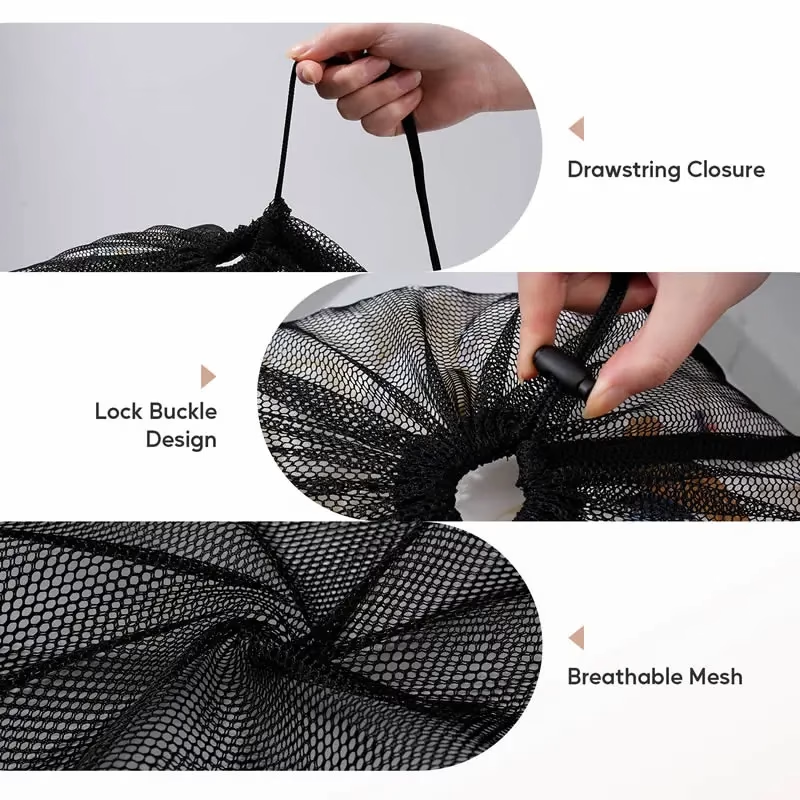
Drawstring designs offer simplicity and speed. Staff pull a cord to cinch the bag opening closed. A cord lock maintains tension.
Advantages: Quick loading, no hardware to break, lightweight design, easy to replace cords if worn.
Limitations: Can loosen under extreme agitation, cord locks may slip over time, requires proper tightening technique.
Specify drawstrings with reinforced grommets. The cord passes through metal or plastic eyelets that prevent fabric tearing. Double-pull systems (cords on both sides) provide more secure closure.
Zipper Systems
Zippers provide the most secure closure. Once closed, contents cannot escape regardless of machine action.
Heavy-duty zippers feature chunky teeth and durable sliders. Look for lockable zippers in high-security environments. Some facilities processing client belongings need tamper-evident closures.
Design consideration: Zipper guard flaps prevent snags. The fabric flap covers exposed teeth, protecting both bag contents and other laundry items.
Maintenance requirement: Zippers need periodic cleaning. Detergent buildup causes sticking. Quarterly inspection and light lubrication extend zipper life.
Snap and Button Options
Snap closures work well for bags that open and close frequently. Laundry attendants appreciate the one-handed operation.
Industrial snaps withstand repeated use better than household versions. Specify rust-resistant materials—nickel-plated brass or stainless steel.
Snaps create smaller openings than drawstrings. This limits the closure to bags handling smaller volumes or requiring partial access.
Hook-and-Loop (Velcro-Style) Closures
Hook-and-loop systems excel in speed. Staff press the closure shut in seconds. Opening requires a simple pull.
The adhesive strength decreases over time. Lint and debris accumulate on the hooks, reducing grip. Plan on replacing hook-and-loop bags every 12-18 months in high-volume settings.
These closures suit bags that don’t require absolute security. They work better for in-house operations than client service environments.
Locking and Tamper-Evident Systems
Healthcare, hospitality, and service laundries often need trackable, secure systems. Locking bag closures prevent unauthorized access.
Options include:
- Numbered plastic seals (break to open)
- Small padlocks through metal grommets
- RFID-tagged closures for inventory tracking
- Color-coded locking clips for department sorting
These systems add cost but provide accountability. You can trace which bags came from which locations and verify contents remained undisturbed during transport.
Closure Selection Guide
| Facility Type | Recommended Closure | Reason |
|---|---|---|
| Hotels, resorts | Zipper or locking clips | Guest item security, department sorting |
| Hospitals, clinics | Locking seals, numbered tags | Infection control, tracking |
| Fitness centers | Drawstring or zipper | Volume throughput, member privacy |
| Industrial laundry | Drawstring mesh bags | Processing speed, low cost per unit |
| Long-term care | Velcro or drawstring | Ease of use for staff, frequent access |
Your closure choice affects operational efficiency. Test multiple systems during your evaluation period. Staff feedback reveals which designs work best in your specific workflow.

Sizing Strategy for Commercial Operations
Bag dimensions directly impact both washing efficiency and staff ergonomics. Too small creates bottlenecks. Too large causes handling injuries and machine imbalances.
Standard Commercial Sizes
Small (12″ × 16″ / 30 × 40 cm) Capacity: 2-3 liters Best for: Delicates, small linens, medical items Typical contents: Washcloths, undergarments, surgical caps, hosiery
Medium (16″ × 20″ / 40 × 50 cm) Capacity: 8-12 liters Best for: Personal laundry, moderate loads Typical contents: Guest room linens, uniforms, kitchen towels
Large (20″ × 28″ / 50 × 70 cm) Capacity: 20-30 liters Best for: Bulk processing, heavy items Typical contents: Bed sheets, bath towels, work coveralls
Extra-large (28″ × 36″ / 70 × 90 cm) Capacity: 50-80 liters Best for: Collection, transport, industrial washing Typical contents: Comforters, heavy blankets, bulk sorting
Matching Bag Size to Machine Capacity
Commercial washers range from 20-pound to 400-pound capacities. Your bags should fill machines to 80-90% capacity for optimal cleaning and mechanical efficiency.
20-35 lb washers: Use medium and large bags. Plan on 2-3 bags per load. 40-75 lb washers: Combine large and extra-large bags. 3-4 bags achieve proper fill. 100+ lb washers: Extra-large bags or specialized bulk bags. 5-8 bags depending on contents.
Underfilling wastes water and energy. Overfilling prevents proper agitation. Proper bag sizing helps staff load correctly every time.
Weight Considerations for Staff Safety
Full laundry bags become heavy quickly. Wet textiles weigh 2-3 times their dry weight.
A large bag filled with towels weighs 15-20 pounds dry. After washing, that same bag weighs 35-50 pounds. Extra-large bags can exceed 70 pounds when wet.
OSHA recommends limiting repetitive lifts to 35 pounds for most workers. Your bag sizing should account for wet weight during transport.
Many facilities use medium bags to keep weights manageable. The slight efficiency loss beats the injury risk from oversized loads.

Sorting Systems: Color Coding and Organization
Visual sorting systems reduce errors and speed processing. Color-coded laundry bags create instant identification across language and literacy barriers.
Standard Color Coding Practices
Many operations adopt these conventions:
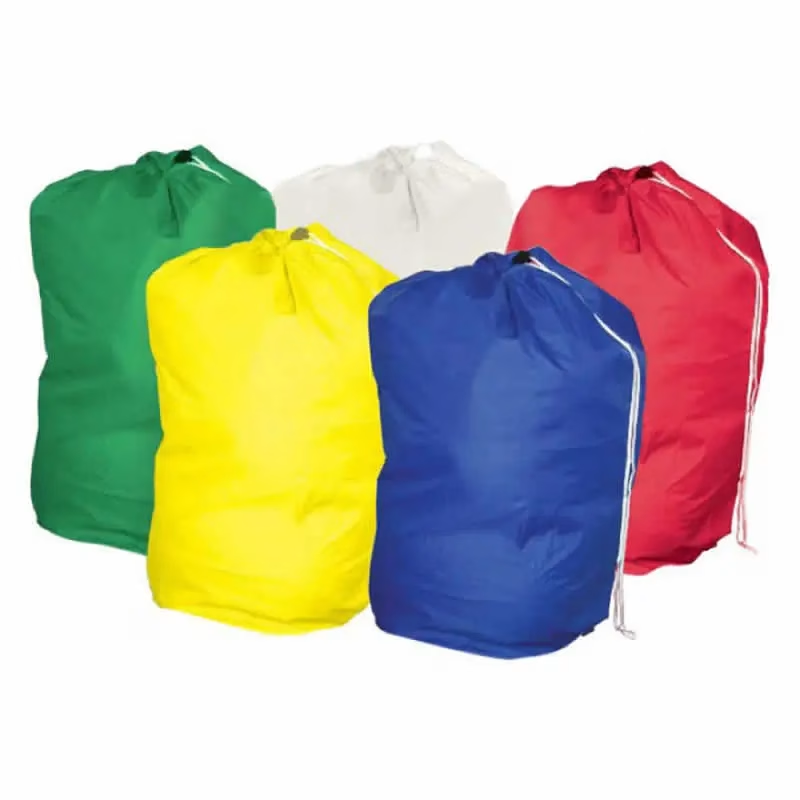
White bags: Light-colored linens, white towels, sheets Blue bags: Dark-colored items, jeans, colored towels
Red bags: Heavily soiled items, kitchen textiles, potentially contaminated materials Green bags: Delicates, special-care items requiring gentle cycles Yellow bags: Personal belongings, items for return to specific clients
Your facility may need custom colors for department sorting. Housekeeping uses orange. Dietary uses purple. Engineering uses gray.
Labeling and Identification Options
Beyond color, add secondary identification:
Screen printing: Permanent department names or logos Embroidery: High-end appearance for client-facing operations Heat transfer labels: Low-cost, moderately durable text Hanging tags: Removable identification for flexible sorting RFID tags: Electronic tracking for inventory management
Labels survive 50-200 washes depending on application method. Screen printing lasts longest. Hanging tags offer flexibility but may detach.
Department and Room Tracking
Large facilities process laundry from multiple locations. Tracking prevents mix-ups and enables accurate billing.
Number your bags. Guest room 234 uses bags marked “234-W” (white) and “234-C” (colored). The laundry processes them separately but can route clean items back to the correct location.
Service laundries handling multiple clients need robust tracking. Barcode labels or RFID tags link bags to customer accounts. Your billing becomes automated and accurate.
Commercial Applications Across Industries
Different sectors face unique laundry challenges. Understanding industry-specific needs helps you select appropriate bag systems.
Hospitality: Hotels and Resorts
Hotels process massive volumes. A 200-room property generates 1,500-2,500 pounds of laundry daily.
Sorting needs:
- Guest room linens (by room or floor)
- Pool and spa towels
- Restaurant table linens
- Staff uniforms (by department)
- Guest personal items (premium service)
Hotels benefit from color-coded systems with room number tags. Processing speed matters—bags move through wash, dry, fold, and return within 4-6 hours.
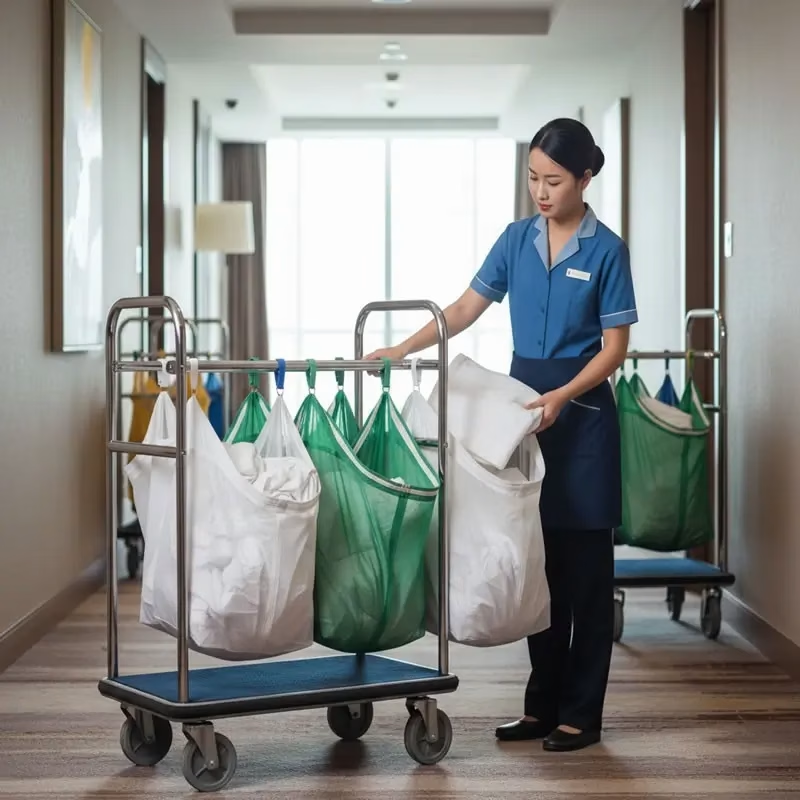
Many properties use medium and large mesh laundry bags for in-room collection. Housekeeping strips beds directly into bags. This one-touch system saves significant labor.
Healthcare: Hospitals and Clinics
Medical facilities require infection control and contamination prevention. Laundry bags become part of clinical protocols.
Classification requirements:
- Low-risk (general patient linens)
- Moderate-risk (OR towels, lab coats)
- High-risk (isolation room textiles)
- Personal (patient clothing for return)
Red bags universally indicate biohazard material. Many facilities use water-soluble bags for high-risk items. The entire bag dissolves during washing, eliminating handling exposure.
Healthcare operations need bags that meet FDA and CDC guidelines. Specify antimicrobial-treated materials where appropriate. Some facilities require bags with RFID tracking for inventory and cost allocation.
Fitness and Recreation Facilities
Gyms and athletic clubs handle constant towel turnover. Members expect fresh towels throughout operating hours.
Typical flow:
- Members deposit used towels in collection bins
- Staff bag towels for transport (waterproof bags prevent dripping)
- Laundry processes in large batches
- Clean towels return for folding and restocking
Fitness operations prioritize quick-dry materials. Processing happens multiple times daily. Bags that dry fast reduce your required inventory.
Antimicrobial treatment addresses odor concerns. Gym textiles develop unpleasant smells quickly. Treated bags help control bacterial growth between washes.
Industrial Laundry Services
Third-party laundries process textiles for multiple clients. Organization and tracking become critical business functions.
Requirements:
- Client identification on every bag
- Secure closures to prevent mixing
- Durable construction for repeated heavy use
- Large sizes for bulk processing
Service laundries often use extra-large drawstring mesh bags for main processing. Smaller, tagged bags separate client orders within larger batches.
Billing accuracy depends on proper tracking. Many operations now use bags with sewn-in RFID tags. The system automatically logs when bags enter and exit processing areas.
Senior Living and Long-Term Care
Assisted living and nursing facilities handle personal laundry for residents. Bags must track individual belongings reliably.
System needs:
- Resident name clearly marked
- Gentle enough for delicate personal items
- Easy for staff to load and unload
- Simple closures (velcro or drawstring)
Many facilities assign numbered bags to each resident. Mrs. Johnson’s laundry always uses bags 127-A and 127-B. This prevents mixing between residents—critical for dignity and property tracking.
Resident families appreciate seeing their loved one’s clothing cared for properly. Quality bag systems contribute to overall facility perception.
Sourcing Considerations: Working with Manufacturers
Selecting a manufacturing partner involves more than price comparison. Several factors determine long-term success.
Production Capacity and Scalability
Your chosen manufacturer should handle both current needs and future growth. Ask specific questions:
- What’s your minimum order quantity (MOQ)?
- Can you scale to larger orders as my operation grows?
- What’s your maximum monthly production capacity?
- How do you handle seasonal demand spikes?
Manufacturers with 100-piece MOQs let you test systems before committing large investments. Established facilities might order 5,000-10,000 bags quarterly—verify your supplier can support that volume.
Customization Capabilities
Generic bags work, but customized solutions work better. Assess these options:
Size customization: Can they manufacture non-standard dimensions? Material selection: Do they source multiple fabric types? Color options: Beyond standard colors, can they match your brand palette? Printing/branding: What decoration methods do they offer? Special features: Reinforced handles, specific closure types, antimicrobial treatments?
A manufacturer offering design consultation helps you specify bags that truly fit your operation. This partnership approach beats simply selecting from a limited catalog.
Quality Assurance and Testing
Reputable manufacturers implement quality control at multiple production stages. Look for:
Material verification: Testing incoming fabrics for weight, weave density, and colorfastness In-process inspection: Checking seam strength during assembly Finished product testing: Pull tests on closures, seam integrity verification Wash cycle testing: Sample bags undergo simulated use before shipment approval
Ask about failure rates. Defect rates below 2% indicate solid quality control. Higher rates suggest production issues.
Certifications and Compliance
Different markets require specific certifications. Verify your supplier holds relevant credentials:
OEKO-TEX Standard 100: Tests for harmful substances in textiles REACH compliance: European chemical regulations ISO 9001: Quality management system certification GRS (Global Recycled Standard): Verifies recycled content claims FDA food-contact approval: If bags will hold kitchen textiles
These certifications cost manufacturers significant time and money. Their presence indicates serious commitment to quality and compliance.
Lead Times and Logistics
Production and shipping timelines affect your inventory planning. Clarify:
- Standard production lead time (typically 15-30 days)
- Rush order availability and associated costs
- Shipping methods offered
- Customs handling for international orders
- Minimum order quantities for each turnaround option
A 30-day lead time might seem long when you need bags immediately. But consistent delivery from a reliable partner beats faster but unreliable alternatives.
Many operations maintain a safety stock covering 45-60 days of usage. This buffer accommodates production delays and shipping disruptions.

Environmental Impact and Sustainability
Facilities increasingly prioritize environmental responsibility. Laundry bags contribute to or detract from sustainability goals.
Reusability as a Core Benefit
A quality commercial laundry bag replaces thousands of single-use plastic bags over its lifetime. The environmental math favors reusable systems dramatically.
One mesh bag used 200 times prevents 200 plastic bags from entering the waste stream. Multiply that across your entire bag inventory for significant impact.
Calculate your annual plastic bag usage without reusable systems. Most operations discover they’d use 5,000-15,000 plastic bags yearly. Switching to durable bags eliminates that waste entirely.
Sustainable Material Selection
Manufacturers now offer eco-friendly material options:
Recycled polyester mesh: Made from post-consumer plastic bottles. Same performance as virgin polyester. Organic cotton canvas: Grown without synthetic pesticides. Biodegradable at end of life. Natural fiber blends: Hemp and cotton combinations offer durability with lower environmental footprint. OEKO-TEX certified materials: Free from harmful chemicals and safe for users and environment.
These materials typically cost 10-20% more than conventional options. The premium becomes negligible across a 2-3 year bag lifespan.
Energy and Water Efficiency
Properly sized bags optimize machine loading. Full loads use less water and energy per pound of laundry than partial loads.
A facility using correctly sized laundry bags reports:
- 18% reduction in water usage
- 15% decrease in energy consumption
- 22% fewer total wash cycles
These savings compound over years of operation. The efficiency gains often offset the entire bag investment within 12-18 months.
End-of-Life Considerations
Even durable bags eventually wear out. Plan for responsible disposal:
Natural fiber bags: Compost if free from synthetic content. Alternatively, repurpose into cleaning rags. Synthetic mesh bags: Many manufacturers now offer take-back programs. They recycle worn bags into new products. Mixed material bags: Separate components where possible. Metal zipper pulls and plastic cord locks can be recycled independently.
Communicate end-of-life options when training staff. Making disposal easy increases participation in sustainability programs.
Maintenance and Care for Extended Lifespan
Proper maintenance multiplies bag longevity. Simple practices prevent premature replacement.
Daily and Weekly Practices
After each use:
- Shake out loose debris before washing
- Check closures are fully engaged
- Avoid overloading bags beyond capacity ratings
Weekly:
- Inspect seams for loose threads or tears
- Test zipper function and drawstring movement
- Wipe down waterproof bags with mild disinfectant
These quick checks take minutes but catch small problems before they become bag failures.
Deep Cleaning Protocol
Bags themselves need occasional deep cleaning. Detergent residue and mineral deposits accumulate over time.
Monthly deep clean:
- Wash empty bags in hot water with laundry detergent
- Add one cup of white vinegar to rinse cycle (removes mineral buildup)
- Air dry completely before returning to service
This process maintains bag breathability and prevents musty odors.
Repair vs. Replace Decisions
Minor damage doesn’t require immediate replacement. Simple repairs extend useful life:
Small holes in mesh: Patch with matching mesh material and fabric glue. Or use iron-on repair patches. Loose drawstring cords: Replace cord (widely available at fabric stores). Thread through existing channels with safety pin. Stuck zippers: Clean with old toothbrush and mild soap. Rub paraffin wax or zipper lubricant on teeth. Frayed seams: Reinforce with straight stitch on sewing machine. Use heavy-duty thread matching bag material.
Replace bags when:
- Mesh develops multiple large holes (over 2 inches)
- Seams separate at stress points despite repair
- Closures fail repeatedly
- Material becomes excessively stretched or misshapen
Most commercial bags reach end-of-life at 200-300 cycles. Tracking cycle counts helps predict replacement timing.
Storage Best Practices
Between uses, proper storage prevents damage and contamination:
For clean bags:
- Store in dry, ventilated area
- Avoid direct sunlight (degrades some materials over time)
- Keep away from sharp objects that might snag mesh
- Don’t compress bags too tightly during storage
For dirty bags awaiting washing:
- Use ventilated collection bins (prevents mold growth)
- Process within 24 hours when possible
- Never seal damp bags in airtight containers
Your storage system affects bag condition as much as usage patterns.
Cost Analysis: Understanding Total Investment
Purchase price represents only part of your total cost. Smart buyers analyze the complete financial picture.
Unit Cost Factors
Bag pricing varies based on:
Size: Larger bags use more material. Expect 30-50% higher costs for extra-large vs. medium sizes. Material: Canvas costs more than basic mesh. Specialized waterproof materials command premium pricing. Features: Zippers cost more than drawstrings. Printing and customization add per-unit charges. Order quantity: Bulk orders receive significant discounts. 5,000 units might cost 40% less per bag than 500 units.
Typical commercial laundry bag pricing (as of 2024-2025):
- Basic mesh drawstring (medium): $2.50-$4.00 per bag
- Heavy-duty mesh with zipper (large): $5.00-$8.00 per bag
- Canvas hamper liner (extra-large): $12.00-$18.00 per bag
- Specialized waterproof bags: $6.00-$10.00 per bag
These figures assume moderate quantities (1,000-5,000 pieces) from established manufacturers.
Total Cost of Ownership
Calculate lifetime costs using this framework:
Initial investment: Purchase price × quantity needed Replacement frequency: Based on wash cycles and bag lifespan Labor savings: Reduced sorting time × hourly wage × staff members Damage prevention: Estimated textile replacement costs avoided Efficiency gains: Water and energy savings per year
Example calculation for 100-room hotel:
- Initial investment: 200 bags × $4.00 = $800
- Bag lifespan: 200 washes × 2 uses/week = ~2 years
- Labor savings: 30 minutes daily × $15/hour × 365 days = $2,737.50/year
- Linen damage reduction: 20% fewer replacements = $1,500/year saved
- Energy efficiency: 15% reduction = $400/year saved
Total 2-year savings: $9,275 Net benefit: $8,475 ($9,275 – $800)
Your ROI becomes clear when you account for all factors rather than just purchase price.
Budget Planning for Different Scales
Small facility (25-50 rooms, one shift):
- Bag inventory needed: 75-150 bags
- Investment range: $300-$800
- Replacement cycle: Every 18-24 months
- Annual budget: $200-$400
Medium facility (100-200 rooms, two shifts):
- Bag inventory needed: 300-500 bags
- Investment range: $1,200-$2,500
- Replacement cycle: Every 12-18 months
- Annual budget: $800-$1,800
Large facility (300+ rooms, continuous operation):
- Bag inventory needed: 800-1,500 bags
- Investment range: $3,200-$7,500
- Replacement cycle: Every 12 months
- Annual budget: $3,200-$7,500
Service laundries processing for multiple clients need proportionally larger inventories. Plan on 1.5-2× the quantities listed above.
Implementation: Transitioning to a Bag System
Moving from loose laundry handling to organized bag systems requires planning. A structured rollout prevents disruption.
Assessment Phase
Before ordering bags, document your current state:
Volume analysis:
- Pounds of laundry per day/week
- Number of loads by fabric type
- Peak processing times
Facility specifics:
- Washer and dryer capacities
- Storage space for clean and dirty bags
- Staff shift patterns
Sorting requirements:
- How many fabric categories?
- Department or location tracking needs?
- Special handling requirements (delicates, contaminated items)?
This data determines bag quantities, sizes, and types needed.
Pilot Program Approach
Don’t transform your entire operation overnight. Test first:
- Select one department (housekeeping or dietary)
- Order bags for 2-3 weeks of operation
- Train staff on new procedures
- Monitor for 4-6 weeks
- Gather feedback and adjust
- Expand to additional departments
Pilots reveal practical issues before you invest in facility-wide systems. You might discover that your initial size selection needs adjustment or that staff prefer different closures.
Staff Training Essentials
Your team makes or breaks the system. Cover these topics:
Loading procedures:
- How full should bags be? (generally 80% full)
- Which items go in which colored bags?
- How to properly secure closures
Handling protocols:
- Safe lifting techniques for heavy bags
- Where to place loaded bags awaiting wash
- How to check for damage before/after use
Maintenance responsibilities:
- Daily inspection checkpoints
- How to report damaged bags
- Proper storage between uses
Hands-on demonstrations work better than written instructions alone. Let staff practice loading and closing bags during training.
Ongoing Optimization
After implementation, continue refining:
Month 1-3: Monitor closely for issues. Adjust bag quantities if shortages occur. Month 4-6: Evaluate labor time savings. Calculate actual ROI. Month 7-12: Review bag condition. Refine maintenance procedures if premature wear appears. Year 2+: Renegotiate with supplier based on actual usage data. Explore additional customization options.
Systems improve with experience. The setup you implement initially will likely evolve as you discover what works best in your specific environment.
Making Your Sourcing Decision
You now understand commercial laundry bags comprehensively. Your final choice depends on matching options to your specific operational needs.
Key Decision Criteria Checklist
Before contacting suppliers, define your requirements:
Essential specifications:
- Primary bag sizes needed
- Preferred materials (mesh type, weight, blend)
- Closure mechanisms
- Color coding or customization requirements
- Approximate quantity per order
- Budget per bag and total investment
Supplier qualifications:
- Minimum order quantity fits your needs
- Customization capabilities
- Quality certifications relevant to your industry
- Lead time compatibility with your planning
- Willingness to provide samples
Partnership factors:
- Communication responsiveness
- Design consultation offered
- Post-sale support availability
- Replacement part availability (cords, locks, etc.)
Working with a Manufacturing Partner
Direct manufacturer relationships offer advantages over distributor purchasing:
Cost efficiency: Eliminate distributor markup. Typical savings of 20-35% compared to retail channels.
Customization: Manufacturers can modify designs to your specifications. Distributors offer only catalog options.
Quality control: Direct communication ensures your requirements reach production teams. Nothing gets lost in translation.
Scalability: As your operation grows, manufacturers scale production accordingly. Distributors may face inventory limitations.
Support: Many manufacturers provide design consultation, helping you specify ideal solutions rather than simply taking orders.
Founded in 2014, our manufacturing operation specializes in laundry mesh bags, washing solutions, and textile organization products. We serve facilities across Europe, North America, South America, Korea, and Japan.
Our production capabilities include:
- Low MOQs (100 pieces) for testing and smaller operations
- Complete customization (size, material, printing, features)
- Fast sampling (7-10 days for design approval)
- Environment-friendly materials meeting REACH and OEKO-TEX standards
- In-house quality control at every production stage
We welcome OEM partnerships and work closely with procurement teams to develop solutions matching their exact specifications.
Sample Evaluation Process
Always request samples before placing large orders. Evaluate:
Material quality:
- Does mesh feel sturdy? Check for loose weaves.
- Is fabric weight appropriate for your use?
- Do materials meet your sustainability requirements?
Construction integrity:
- Examine seam stitching. Look for even, tight stitches.
- Test closure mechanisms repeatedly. Do they function smoothly?
- Check stress points (handle attachments, grommets).
Size and fit:
- Fill bags to capacity with textiles. Is sizing practical?
- Place in your washing machines. Do they fit properly?
- Weigh full bags. Can staff handle them safely?
Washing performance:
- Process samples through 5-10 wash/dry cycles.
- Evaluate durability after repeated use.
- Check for color fastness, shrinkage, or distortion.
Document your findings. Share feedback with manufacturers. This dialogue helps refine specifications before production.
FAQs for Professional Buyers
Q1: What’s your minimum order quantity for custom bags? Standard MOQ is 100 pieces. Stock items available in smaller quantities. Bulk discounts start at 500 units, with additional tiers at 1,000, 2,500, and 5,000+ pieces.
Q2: How do I choose the right material for my equipment? Consider wash intensity, temperature, and fabric types. Polyester-nylon mesh suits most commercial washers. High-heat cycles (160°F+) need heat-resistant nylon. Healthcare facilities often require antimicrobial treatment. We provide test samples for your equipment.
Q3: Can you add our logo and color coding? Yes. Screen printing lasts 150+ cycles. We match any Pantone color and offer embroidered logos, heat-transfer labels, and RFID tags. Digital mockups provided for approval. Adds 5-7 days to production.
Q4: What certifications do your bags meet? ISO 9001 certified facility. OEKO-TEX Standard 100 and REACH compliant materials.
Q5: How long do your bags last? Is there a warranty? Standard bags: 200-300 cycles. Heavy-duty: 250-350 cycles. Canvas transport bags: 400+ cycles. Quality guarantee covers manufacturing defects within first 50 cycles—we replace if more than 2% are defective.
Q6: Can you handle rush orders? Standard production: 15-20 days. Stock items ship in 3-5 days. Rush service available in 7-10 days (+20% fee). Recommend ordering 6-8 weeks before facility opening to avoid rush charges.
Q7: Do you provide samples? Yes. Free sample sets (3-5 bags, you pay shipping). Custom samples: $50-100 setup fee, credited back on 500+ unit orders. Samples arrive in 7-10 days. Test in your equipment for 5-10 cycles before ordering.
Partner with a Direct Manufacturer for Your Laundry Bag Needs
Stop paying distributor markups. Source commercial laundry bags directly from our manufacturing facility and gain access to:
✓ Custom Solutions – Sizes, materials, and features designed for your exact requirements
✓ Flexible Minimums – Start with just 100 pieces for testing, scale to thousands as needed
✓ Quality Assurance – ISO 9001 certified production with OEKO-TEX and REACH compliant materials
✓ Fast Turnaround – Free samples in 7-10 days, production in 15-20 days
✓ Direct Support – Work with our design team to optimize bags for your operation
✓ Competitive Pricing – Manufacturer-direct costs with volume discounts
With over a decade serving hospitality, healthcare, fitness, and industrial laundry operations worldwide, we understand the demands your facility faces. Our mesh laundry bags, canvas hampers, and specialized washing solutions are built to withstand high-volume commercial use while protecting your textiles.
Ready to improve your laundry efficiency?
Request your free sample set today or contact our team to discuss your specific requirements. We’ll help you select the ideal bag system for your facility and provide a detailed quote within 24 hours.
Explore our commercial laundry bag collections:
- Premium Large Capacity Polyester Mesh Laundry Bag
- Complete Laundry Bag Sets
- 7-Piece Fine Mesh Bag Set
- 5-Piece Thickened Mesh Bra Laundry Set
Get your quote now – Email us your requirements or call to speak with our commercial sales team. We’re ready to support your operation with reliable, durable laundry bag solutions.