
A well-fitted bra can cost anywhere from $30 to over $100. Most women own between 6 and 10 bras at any given time. Yet the majority of those bras are tossed directly into a washing machine drum with jeans, towels, and everything else then pulled out misshapen, stretched, or with broken underwires. The fix is simple and costs less than a single bra: a bra cleaning bag.
A bra cleaning bag is a structured mesh pouch that holds your bra securely during machine washing. It keeps the cups from being crushed, stops hooks from snagging other garments, and protects underwires from bending under the mechanical force of a spin cycle. Add one to your laundry routine and your bras last measurably longer.
This article covers 10 concrete reasons why every woman whether she owns two bras or twenty needs a bra cleaning bag. Each reason addresses a real problem that machine washing creates and explains exactly how a bag solves it.
A Bra Cleaning Bag Prevents Cup Deformation
Padded and molded cups lose their shape when compressed against other garments at 800–1,200 RPM. A bra cleaning bag holds cups in a fixed position throughout the wash cycle, preventing them from collapsing or creasing.
This is the most visible form of washing damage. After just a few unprotected machine washes, molded foam cups develop permanent flat spots or asymmetrical dents. Once the cup structure is compromised, the bra no longer fits correctly and cannot be restored. A Sandwich Mesh Bra Laundry Bag Set uses a rigid sandwich-mesh frame that surrounds the cup area, maintaining its three-dimensional shape from start to finish of the wash cycle.

Why Molded Cups Are Especially Vulnerable
Molded foam is heat- and pressure-sensitive. The combination of centrifugal force in the spin cycle and the weight of wet fabric pressing against the cups is enough to permanently deform foam that has no structural support around it. A bag creates that support.
Push-up bras and T-shirt bras the most commonly owned styles use thick molded foam that is particularly susceptible. Bralettes and soft-cup styles are more resilient but still benefit from protection against tangling and hook damage.
It Stops Underwires from Bending and Breaking
Underwire bras are structurally dependent on a rigid metal or plastic channel sewn into the lower cup. Machine washing especially in front-loading machines creates enough mechanical stress to bend, shift, or snap underwires entirely.
Once an underwire bends, it cannot be straightened without risking the channel seam. Once it breaks through the fabric channel, the bra is unwearable and potentially a safety hazard. A bra cleaning bag surrounds the entire bra with a protective mesh barrier that absorbs mechanical impact, distributes pressure evenly, and prevents the underwire from being caught between other heavy garments.
According to fabric care guidance published by the American Cleaning Institute, delicate garments with structured components should always be placed in mesh protective bags before machine washing. This applies directly to underwire bras.
The Role of Bag Rigidity
Not all bra cleaning bags provide equal protection. A basic flat mesh bag reduces snagging but does not protect underwires from compression. A structured bag with internal framing or a hard shell like the Double Polyester Bra Laundry Bag creates a physical barrier that prevents the machine drum from pressing directly onto the underwire channel.
It Protects Delicate Fabrics from Snags and Pulls
Lace, satin, silk-blend, and microfiber bra fabrics snag on zippers, hook-and-eye closures, and rough fabric edges from other garments in the same wash load. A single snag can pull threads, create runs in lace, or permanently distort fabric weave.
A mesh bag for bra cleaning acts as a physical separator. The bra stays enclosed throughout the entire wash cycle, never making direct contact with abrasive surfaces. The mesh itself is fine enough to prevent fabric from poking through while still allowing water and detergent to flow freely.
This protection applies equally to the bra’s straps, band, and any decorative elements ribbon trim, embroidery, and lace overlays are all vulnerable in an unprotected wash.
A Bra Cleaning Bag Keeps Hooks from Damaging Other Clothes
Bra hook-and-eye closures are sharp. In a tumbling wash drum, an unprotected bra becomes a rotating abrasive the hooks catch on knitwear, pull threads from cotton, and leave snag marks on synthetic fabrics.
Always fasten the bra’s hooks before placing it in a bra bag for cleaning. This serves two purposes: it keeps the hooks from opening inside the bag, and it reduces the sharp profile that causes snag damage. Inside a closed mesh bag, the hooks remain contained regardless of whether they partially unfasten during the wash cycle.
A comparison of bra washing methods makes this protection difference clear:
| Washing Method | Cup Protection | Underwire Safety | Hook Damage Risk | Strap Tangle Risk |
|---|---|---|---|---|
| Machine wash — no bag | None | None | High | High |
| Machine wash — flat mesh bag | Partial | Low | Low | Low |
| Machine wash — structured bra bag | Full | High | None | None |
| Hand wash | Full | High | None | None |
The structured bra bag is the only machine-washing method that approaches hand wash protection levels.
It Extends the Life of Elastic and Straps
Elastic degrades faster under mechanical stress than under normal wear. The stretching, twisting, and compression of a machine wash cycle breaks down elastic fibers, causing straps to lose tension and bands to lose their recovery.
A bra cleaning bag limits how far straps can stretch during the wash. The bra is contained within a defined space, so straps cannot be pulled into a full stretch position by the weight of other garments or the force of water movement. Over multiple washes, this mechanical protection has a cumulative effect: the elastic retains its original tension significantly longer.
Research on textile longevity consistently shows that repeated mechanical stress is the primary driver of elastic degradation in intimate apparel more so than detergent chemistry or water temperature.
Hot Water Compounds the Problem
Hot water accelerates elastic fiber breakdown. Using a bra bag for wash paired with a cold-water setting (30°C / 86°F or lower) is the most effective combination for preserving elastic. The bag reduces mechanical stress; the cold water reduces thermal degradation.
A Bra Cleaning Bag Prevents Straps from Tangling
Bra straps are long, narrow, and flexible exactly the shape that ties itself around other garments in a wash drum. Tangled straps lead to stretching, twisted adjusters, and occasionally to other garments being deformed or damaged in turn.
Inside a mesh bag, the bra is fully enclosed. Straps stay within the bag boundaries for the entire cycle. There is no mechanism by which they can wrap around a sleeve or loop through the leg of jeans. This is one of the least discussed benefits of using a mesh bag for bra cleaning, but it is a common cause of both bra damage and damage to other garments in the same load.
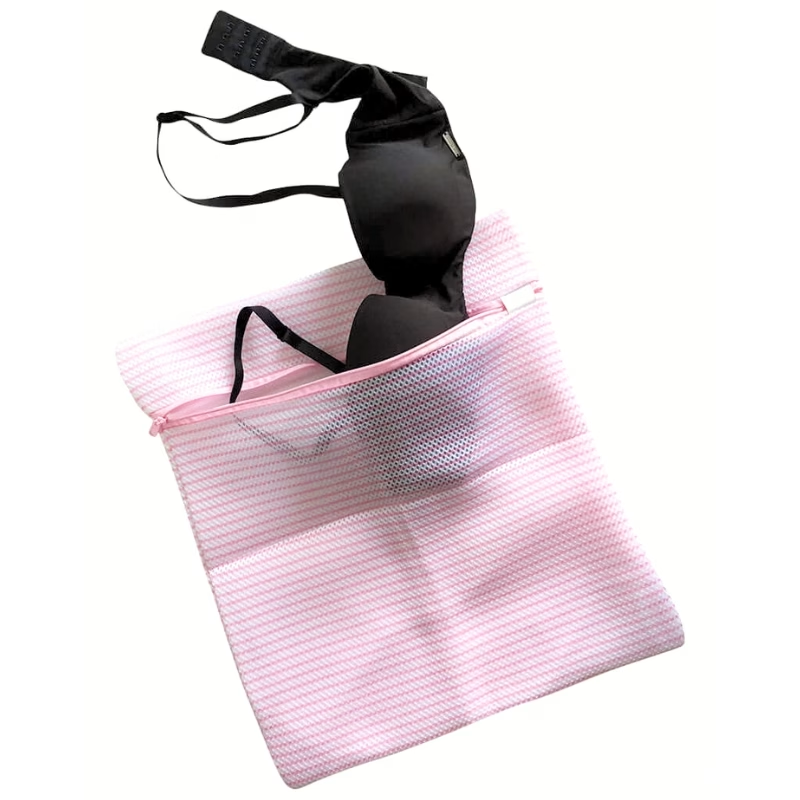
For women who wash multiple bras at once, placing each bra in its own separate bag provides the cleanest result. The Printed Folding Bra and Underwear Laundry Bag is a compact option that folds flat for travel and opens into a full-size washing bag practical for women who need protection both at home and when traveling.
It Allows Thorough Cleaning Without Hand Washing
Many women hand wash bras because they do not trust a machine to clean them safely. Hand washing is time-intensive, physically demanding for women with wrist or joint issues, and impractical for large households or busy schedules.
A bra cleaning bag makes machine washing genuinely safe for bras. The mesh construction of a quality bag allows water and detergent to flow freely through the fabric there is no cleaning compromise. The bag provides protection without creating a barrier to washing action. Bras cleaned in a structured mesh bag come out as clean as hand-washed ones, without the physical effort.
Use a gentle or delicate machine cycle, cold water, and a mild detergent formulated for delicates. The American Textile Manufacturers Institute recommends avoiding enzyme-based detergents for elasticated garments, as enzymes can degrade spandex and Lycra over time.
A Bra Cleaning Bag Is Reusable and Cost-Effective
A single bra cleaning bag costs between $5 and $15 and is reusable for hundreds of wash cycles. By comparison, a single mid-range bra costs $40–$80. Extending a bra’s usable life by even 30% means saving multiples of the bag’s purchase price on replacements.
The environmental case is equally clear. Replacing worn-out bras less frequently reduces textile waste. According to WRAP (Waste and Resources Action Programme), extending the active life of clothing by nine months reduces its carbon, water, and waste footprint by 20–30%. A reusable mesh bag is a low-cost way to achieve that outcome specifically for intimate apparel.
Most bra bags are machine washable themselves. After extended use, they can be washed on a normal cycle without any special care.
It Works for All Bra Types
One bra cleaning bag handles the full range of bra styles: underwire, wireless, padded, unpadded, push-up, sports, strapless, nursing, and minimizer. The bag does not require adjustments for different bra constructions.

Sports bras, despite their durability, benefit from bag protection for a different reason: their fabric traps lint and fibers from other garments, and their thick straps and wide bands are prone to tangling. Strapless bras are particularly vulnerable to cup deformation without support. Nursing bras, with their clip hardware, present the same hook-snagging risk as underwire styles.
One bag covers all of them. The bra laundry bag collection includes sizes suited to different bra dimensions, from smaller bralettes to larger-cup structured bras.
It Simplifies Laundry Organization
A bra cleaning bag serves a secondary function beyond protection: it keeps bras separated from the general wash load so they are easy to retrieve, air dry separately, and store without searching through a pile of laundry.
Place the bra in the bag before it goes into the hamper. When laundry day arrives, the bag goes directly into the machine. When the cycle ends, remove the bag, unzip it, and hang the bra to dry. There is no searching through wet laundry, no untangling from other garments, and no risk of the bra going into the dryer accidentally.
Dryer heat is one of the fastest ways to destroy bra elasticity and warp foam cups. Having a bra contained in a separate bag throughout the wash process makes it physically easy to remove it before drying starts a simple habit that dramatically extends bra lifespan.
Frequently Asked Questions
Q1. What is a bra cleaning bag and how does it work?
A bra cleaning bag is a structured mesh pouch designed to hold a bra securely during machine washing. It works by containing the bra within a defined space, preventing mechanical damage from the drum, protecting cups from compression, and stopping hooks from snagging other garments. Water and detergent flow freely through the mesh, so cleaning effectiveness is not reduced.
Q2. Can I wash all types of bras in a bra cleaning bag?
Yes. A bra cleaning bag works for underwire bras, sports bras, padded bras, wireless bras, strapless bras, and nursing bras. The bag provides structural containment that benefits all bra types. For underwire styles, a structured bag with internal framing provides the highest level of protection against underwire bending and cup deformation.
Q3. How many bras fit in one bra cleaning bag?
Most standard bra cleaning bags fit one bra comfortably, or two smaller-cup bras. Overfilling the bag reduces its protective function because cups can compress against each other. For best results, use one bra per bag. If you own multiple bras, multiple bags allow you to wash a full load without compromising protection.
Q4. Do I still need to fasten my bra before putting it in a mesh bag for bra cleaning?
Yes. Fasten the hook-and-eye closure before placing the bra in the bag. An unfastened bra presents exposed hooks that can still catch on the mesh fabric or partially open during the wash cycle. Fastening the hooks also reduces the sharp profile of the closure and keeps the bra in its natural shape inside the bag.
Q5. How often should I wash my bras using a bra bag for wash?
Most fabric care experts recommend washing bras every two to three wears. Washing more frequently than this accelerates fabric degradation; washing less frequently allows body oils and sweat to break down elastic fibers. Using a bra bag for wash on every cycle rather than hand washing makes it practical to maintain this frequency without significant time investment.
The Right Bra Cleaning Bag Pays for Itself Quickly
Bras are not cheap, and most women have experienced the frustration of a favorite one going misshapen after a careless wash. The solution is not to switch entirely to hand washing it is to use the right protective tool in the machine you already own.
A bra cleaning bag addresses every major form of machine-wash damage: cup deformation, underwire bending, strap tangling, hook snagging, elastic degradation, and fabric snags. It does this without reducing cleaning performance, without adding significant time to the laundry process, and at a cost that is a fraction of a single bra replacement.
The habit is straightforward. Fasten the bra, place it in the bag, zip the bag, add it to the wash. That sequence, repeated consistently, extends the usable life of every bra in your collection.
Explore the full range of bra laundry bags including structured sandwich-mesh designs, double-polyester options, and folding travel bags to find the right fit for your laundry routine.