
Bath toy storage needs to work through the whole cleanup routine: collecting toys, draining water, hanging or standing securely, and making the toys easy to retrieve next time. For importers and private-label buyers, this means looking beyond the mesh pattern or the size printed on the packaging.
Start with the intended bathroom setup and the toys the organizer must hold. Then compare usable pocket space, opening access, mounting requirements and removal for cleaning. Treat drainage features and mold-prevention claims as separate questions: a visible drainage path does not establish tested mold prevention.
Bath Toy Storage Options: Mesh Bags, Bins and Tub Baskets
Choose the storage format around where toys will stay between baths and how someone will collect them.
- Hanging mesh bags: Consider these when the brief calls for a flexible pocket on a wall or shower screen. Examine how the pocket hangs when filled, including whether its bottom folds or presses against the surface.
- Draining bins: Consider these when a shaped opening and removable container suit the cleanup routine. Assess the handle, drainage openings and storage position together.
- Tub-supported baskets: These offer an alternative to wall mounting. Match the support arrangement and adjustment range to the intended tubs.
- Small handled baskets: These are an option when toys will move outside the bathroom after draining. Include the destination and the carrying route in the selection brief.
An adjustable tub basket described as fitting most tubs still needs a defined fit range. Rim shape and available support space belong in the product specification; a broad fit statement should not become a universal-fit promise.
For a retail collection, consider whether customers need permanent bathroom storage, a removable carrier, or both. That decision helps narrow the design before choosing fabric or colors.
Drainage and Airflow: How Hanging Storage Fits the Routine
Drainage and drying describe different stages. Water needs a route out of the organizer, while remaining moisture needs an opportunity to dry. Raising toys above the floor creates space beneath them and can expose more of the storage area to air. Hanging storage also provides a way to use wall space in a small bathroom.
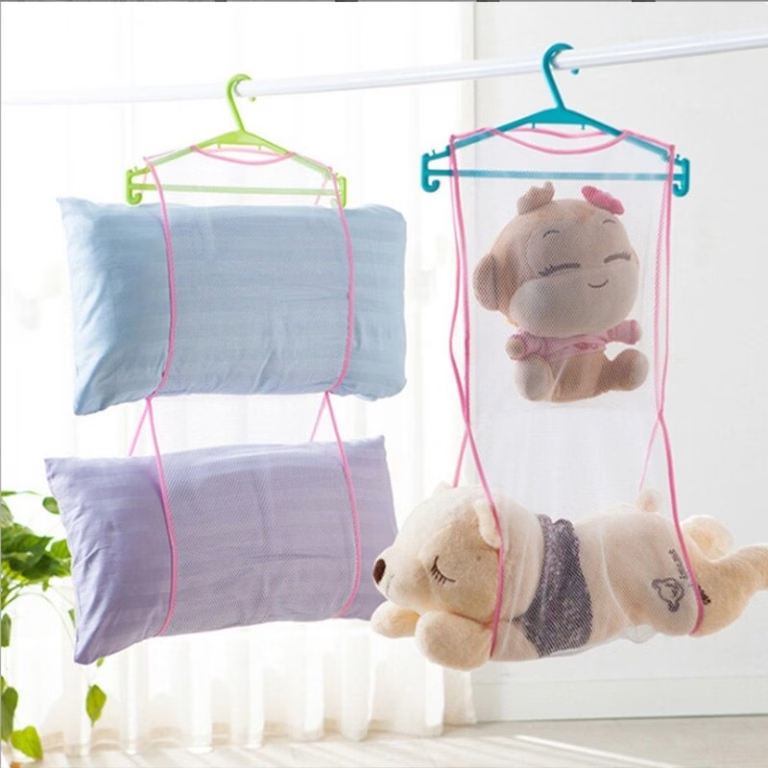
However, the filled organizer matters more than an empty sample. Look at whether toys crowd the pocket, cover its drainage area or pull the bag into a deep fold. A mesh panel on the front does not tell the whole story if the base or backing has a different construction.
Include these practical observations in sample assessment:
- Where does water leave the organizer, and where does it land?
- Does the filled pocket leave space around the toys?
- Can the bag hang without resting in standing water?
- Can someone remove the organizer to clean and inspect it?
Storage cannot establish whether a hollow toy has drained internally. Follow the toy’s own care instructions as well as those for the organizer. Avoid assigning a drying time to a bag simply because its mesh looks open.
Mounting Choices: Suction Cups, Adhesive Hooks and Magnetic Racks
Specify the mounting surface before choosing the attachment. Wall-mounted and shower-screen organizers are options for constrained bathrooms, but the proposed location still needs to suit the mounting hardware.
Suction cups
One mesh-organizer listing specifies a suction-cup mounting arrangement; confirm the cup count and suitable mounting surfaces with our sales team for the product you plan to order. That describes a particular arrangement, not compatibility with every bathroom wall. For your own product, identify the intended surface finish, installation method and filled condition used to assess attachment.
Evaluate the complete assembly. Even if the suction cup remains attached, the bag’s loop, hook or seam still has to support the intended contents.
Adhesive hooks
Adhesive-hook mounting is another available arrangement. Ask for the intended substrates, preparation instructions, installation conditions and removal guidance. Decide whether hooks are supplied with the organizer or purchased separately, and make that distinction clear on the packaging.
Magnetic racks
Magnetic racks broaden the choice beyond suction-mounted nets. They require a compatible magnetic mounting surface; a bathroom location alone does not establish compatibility. Assess the rack and the bag as a system if they will be sold together.
Whichever method you choose, define how the organizer is removed. A detachable bag may suit regular carrying, while a fixed arrangement requires a different cleaning and handling routine.
Openings and Compartments: Making Toys Easier to Put Away
A wide opening connects storage design with cleanup. It is a feature used in product descriptions to help children put toys away themselves. For a buyer, the useful question is whether the opening remains accessible when the bag is mounted and partly filled.
Try the intended toy assortment during sample review. Check whether a large toy passes through comfortably, whether the mouth collapses, and whether reaching into the pocket pulls on the mounting points. Assess access separately from capacity.
Overall dimensions and usable pocket dimensions are different specifications. One reference listing gives separate overall and mesh-pocket measurements; confirm the dimensions for your chosen design with our sales team. These are reference-product measurements, not dimensions of this manufacturer’s bags.
For a custom design, request a drawing that distinguishes the outside dimensions, usable pocket, opening and mounting positions. Avoid estimating capacity from the outside rectangle alone.
Compartments deserve the same attention. Decide which toys belong in each section, then assess access and drainage with those toys inside. A divided layout should serve a clear sorting purpose rather than simply add pockets to the front.
Removable Storage: Scooping, Carrying and Moving Toys Outside the Bathroom
Some bath-toy bins combine a handle for scooping toys from the tub with a carrying function, then use a separate plate for storage. This connects collection, transport and parking in one design. A flexible hanging bag needs its own handling assessment; a handle alone does not establish that it works as a scoop.
For toys stored elsewhere, a small plastic basket with a handle and drainage is another practical format. Decide where it will drain before carrying it and where it will stand afterward. Moving wet toys into a closed cupboard does not resolve the drying question.
For a removable mesh bag, assess:
- Whether it detaches without dismantling the mounting hardware.
- Whether the carrying grip remains accessible when filled.
- Whether toys stay inside during ordinary carrying.
- Whether it can be rehung without awkward handling.
Pay attention to the connection between the handle and bag body. For related construction considerations, see mesh bag tearing causes and prevention.
Drainage Features and Mold-Prevention Claims: What the Product Description Establishes
A product description can identify mesh panels, drainage openings, hanging points and removable parts. Those details explain the design. They do not, by themselves, establish that toys will remain mold-free or that the organizer has antibacterial properties.
Keep proposed retail wording tied to the available evidence. Describe the actual drainage arrangement and mounting method. A claim that one construction dries toys faster needs a comparison under defined conditions; a mold-reduction claim needs evidence addressing mold.
For washing-performance assessment, useful evidence includes photographs showing an organizer’s condition before and after washing and records describing how samples were washed and assessed. Photographs can document visible condition, while records should explain the sample, washing procedure and observations. Neither should be treated as proof of mold prevention unless that outcome was specifically assessed.
Separate bag condition from toy condition in any evaluation. A bag retaining its shape after washing does not demonstrate that stored toys dry completely. Likewise, an attractive photograph of an empty organizer says little about its behavior with the intended contents.
Custom Bathroom Hanging Bags for Retail Collections
Yiwu Yihang Daily-Use Commodity Co., Ltd. has manufactured laundry and storage products since 2014. Bathroom hanging bags and storage bags are part of its listed range, and OEM orders and custom designs are welcome. Europe and Japan are among its main markets.
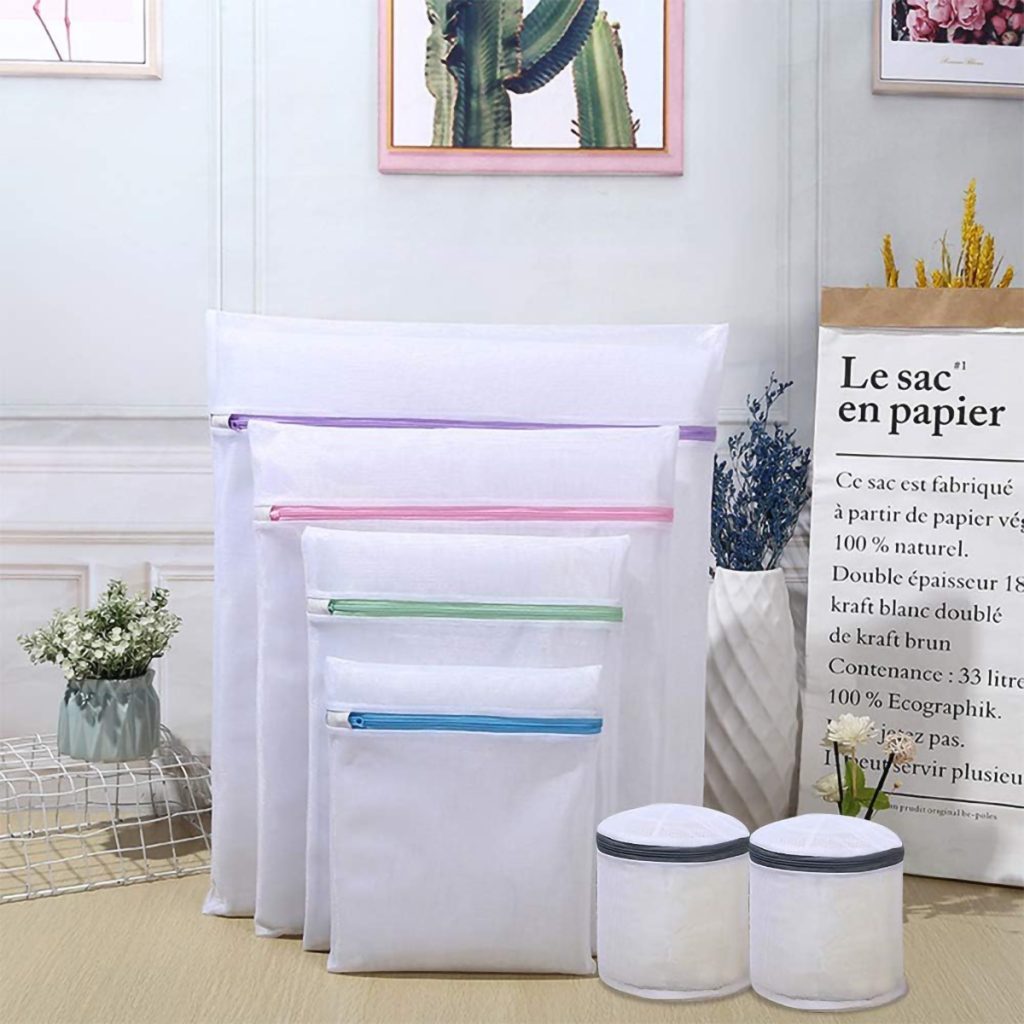
The broader portfolio includes fine, coarse, honeycomb, sandwich/3D and thickened polyester mesh constructions, as well as drawstring mesh bags. These are portfolio options, not evidence that a particular construction dries bath toys faster. The polyester mesh storage overview provides related background, while the product catalog shows the wider range.
A useful bathroom-storage brief should specify:
- The intended toy assortment and usable pocket dimensions.
- The mounting surface and proposed attachment method.
- The opening shape and any compartment requirements.
- Whether the organizer stays mounted or doubles as a carrier.
- The proposed material, seams, handles and attachment points.
- The care information and evidence needed for planned product claims.
Include a sketch of the organizer both hanging and being carried. To discuss an OEM bathroom hanging bag, send your design requirements with the intended storage routine and mounting arrangement.
FAQ
How should bath toys be stored between baths?
Follow each toy’s care instructions, let water drain and choose a storage position with airflow around the contents. Avoid packing the organizer so tightly that its drainage areas are covered. Hanging a bag does not establish that hollow toys have drained inside.
Which storage ideas work for bath toys?
Options include hanging mesh bags, draining bins, handled baskets and tub-supported baskets. Choose according to the available mounting surface, toy sizes and whether the toys stay in the bathroom or move elsewhere.
What makes a bathtub organizer suitable for toys?
Look for usable space that matches the toy assortment, an accessible opening, a clear drainage route and a mounting or support arrangement suited to the location. Assess these features with the intended contents rather than judging only an empty sample.
Which simple bath-toy storage tricks are useful?
Use wall space where suitable mounting is available, keep the opening easy to reach and choose a detachable container if toys need to be carried elsewhere. Distinguish overall size from pocket size before buying, and leave room for water to drain.