
A cord lock holds a drawstring at an adjusted position, helping keep a bag opening gathered without tying a knot each time. For a buyer specifying laundry or storage bags, the important question is whether the lock, cord and bag opening work together.
Start with the intended use, then define the cord construction, threading arrangement, lock dimensions and component materials. A product described simply as a “plastic cord lock” leaves too much open for purchasing and production. Hole size, recommended cord diameter and external dimensions describe different things and should appear separately in the specification.
What a Cord Lock Does on a Drawstring Bag
On a common spring-loaded cord lock, pressing the button releases the grip so the cord can move through the opening. Releasing the button allows the mechanism to grip the cord again. The user gathers the bag mouth, moves the lock into position and releases it.
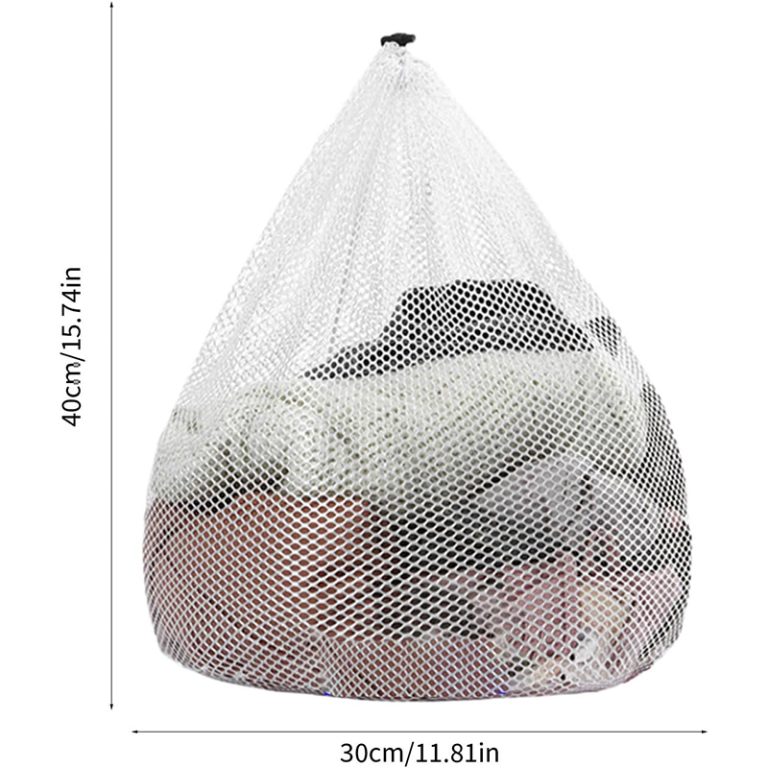
The complete closure includes more than the lock. The drawstring passes through a fabric channel, exits the bag and follows a particular route through the hardware. Cord ends may be knotted, joined or fitted with separate end pieces. Specify that arrangement with a drawing or an approved sample.
Also distinguish a bag used to collect laundry from one intended to enter a washing process. These uses create different requirements. A closure that operates comfortably on a storage bag still needs evaluation under the intended conditions before being specified for laundering.
Cord Lock Types: Single-Hole, Two-Hole, Dual-Slot and Springless Options
Accessory ranges include single-hole, two-hole, dual-slot and springless designs. These labels help identify candidates, but they do not fully describe how a particular part should be threaded or used.
- Single-hole: Check how many cord strands must pass through the shared opening. A drawing should show the assembled arrangement.
- Two-hole: Record the dimensions of each opening and the intended cord path. Hole count alone does not establish cord compatibility.
- Dual-slot: Request the slot geometry and threading instructions. Do not assume that a slotted part accepts the same cord shape as a round-hole model.
- Springless: Identify how the design grips and releases the cord. The absence of a spring does not establish its holding performance or suitability for washing.
Consider the operation as well as the shape. During sample review, check whether the intended user can reach the button, move the lock and reopen the gathered bag comfortably. If two cord ends share an opening, assess them together rather than testing a single loose strand.
Reading Size Specifications: Cord Diameter, Hole Size and Overall Dimensions
Recommended cord diameter is a compatibility statement
A stated cord limit refers to the cord the listing says the part accepts. Two-hole models can differ in the cord diameters they accommodate. The same number of holes therefore does not identify the same cord limit.
Category descriptions require extra care. An assortment description may give examples of cord thicknesses accommodated by different models in the range. Those are assortment examples, not evidence that every model accepts every listed thickness.
Specify cord material and construction alongside nominal size. For round cord, record diameter; for flat tape, record width and thickness. Include whether the cord is elastic or non-elastic and how the ends are finished. Final fit should be assessed using the proposed production cord.
Hole size describes the opening
A metal stopper specification should identify the hole size and finish separately. The hole measurement describes the passage through the part. The finish names describe appearance; they do not identify the base metal or establish corrosion resistance.
For a two-hole model, specify the opening size of each hole. That measurement is neither the external width of the lock nor a universal compatibility statement for every cord of that diameter. Cord construction, threading and the gripping mechanism still need consideration.
Overall size describes the hardware envelope
A stopper specification should record the hole count and overall dimensions separately. Keep those external dimensions separate from the hole measurements. External size helps a buyer assess how much space the hardware occupies beside the gathered bag mouth.
For a silicone closure, check whether a stated diameter refers to the body or the cord passage. A dimension without a clearly labeled feature should not be copied into the “hole size” field of a purchase specification.
For each candidate, request a dimensioned drawing identifying the openings, body and moving parts. Add the intended threading arrangement so the drawing describes the assembled closure, not just the loose component.
Material Options: Plastic Bodies, Metal Components and Silicone Closures
Separate the body material from the spring, button and any other components. “Plastic” describes only part of the construction when metal components are present.
Specify the body material and spring material separately for a spring-loaded cord lock. This is a useful specification format: each component has its own material description instead of being grouped under a general label.
A product specification should distinguish component materials, overall dimensions and units per package. These details answer different purchasing questions: construction, external size and packing quantity. Retail pack quantity does not establish bulk packing or order terms for a finished bag.
For silicone closures, request the actual cord passage dimensions and operating method. A material name alone does not explain how the cord is retained or released.
Construction descriptions do not establish wash-cycle durability, dryer suitability, corrosion resistance or quantified holding strength. Put the intended exposure conditions and acceptance requirements into the sample brief, then assess the complete bag-and-closure assembly against them.
Cord Locks and Cord Ends: Reading Accessory Listings Carefully
A cord lock adjusts and retains the drawstring position. A cord end or terminal finishes the end of a cord. Some accessories combine functions, so the name alone is not enough to decide what a part does.
A cord termination listing may specify compatible cord diameters and intended uses. This describes the listed terminal’s intended fit and applications. It does not establish that the terminal can replace an adjustable lock on a laundry bag.
Multilingual sourcing adds another reason to use drawings. German listings use “Kordelstopper.” Spanish listings may use “tope para cordón,” “topes,” “cierres” or “terminales”; these terms can cover different accessory functions. Japanese searches use “コードストッパー,” but the phrase can also return products associated with electrical cords.
In an inquiry, pair the local term with “drawstring bag closure,” a photograph and a threading diagram. Identify separately the part that holds the gathered opening and the part that finishes the cord end.
Applying These Specifications to Laundry and Storage Bag Sourcing
Define the bag before selecting the hardware
Yiwu Yihang Daily-Use Commodity Co., Ltd., based in Yiwu, Zhejiang, China, has manufactured laundry and storage products since 2014 and welcomes OEM orders and custom designs. Its relevant range includes drawstring mesh bags, storage bags and disposable PE drawstring laundry bags for hotels and dry cleaners.
Polyester mesh offerings include fine, coarse, honeycomb, sandwich/3D and thickened mesh, with embroidered and custom-logo bags also listed. These bag options do not establish a particular cord-lock specification. Review the product catalog to identify the bag construction before preparing the closure request.
Europe and Japan are among the company’s stated markets. For multilingual purchasing documents, keep the same component drawing and part reference across language versions.
If the closure format is still undecided, the zipper and drawstring comparison addresses that earlier choice. Institutional buyers can also refer to the professional drawstring laundry bag guide for the broader bag brief.
Prepare a complete closure specification
- Application: State whether the bag is for storage, collection, transport or a defined laundering process.
- Cord: Identify material, construction, nominal dimensions, elasticity, length and end treatment.
- Lock: Record hole or slot configuration, recommended cord fit, opening dimensions, overall dimensions and operating method.
- Components: Specify body material, metal components, color and finish separately.
- Assembly: Show cord routing, lock position and end fittings on the finished bag.
- Acceptance: Agree how operation, retention and any intended exposure will be evaluated using the assembled sample.
For branding and bag customization, use the customized laundry bag options as a companion to the closure specification.
Keep sample evidence and quotation scope together
Compare quotations against the same bag, cord and lock specification. State whether the quotation covers the loose accessory, an assembled closure or the complete bag, and identify packaging and order quantity. An accessory retail price is not a quotation for an OEM bag.
- Factory-measured cord and lock specifications: Confirm the measurements for your selected cord and lock with our sales team.
- Factory sample photograph references: Ask our sales team for photographs showing the proposed cord, lock and assembled closure.
- Quotation range and corresponding order scope: Confirm current pricing, currency, order quantity and what the quotation includes with our sales team.
Send the proposed specification through the contact page to discuss the bag project and closure availability. The options described here are specification choices to evaluate; the hardware selection belongs in the agreed project details.
FAQ
What does a cord lock do?
A cord lock grips a drawstring at an adjusted position to help keep a bag opening gathered. On a common spring-loaded design, pressing the button allows adjustment and releasing it restores the grip.
Which alternatives can replace a cord lock?
A tied drawstring is an alternative when knotting and untying suit the application. A zipper, flap or hook-and-loop closure requires a different bag design. Choose according to access needs and the intended use, then assess the finished sample.
Which cord lock is the best choice?
The best choice is the model that fits the specified cord, follows the required threading arrangement and meets the agreed acceptance requirements. Hole count, body material and appearance alone are insufficient grounds for selection.
How do you make a cord lock yourself?
A homemade design needs a way to grip the cord and release it for adjustment. For a simple storage prototype, consider a tied drawstring while developing the closure. For production bags, specify a repeatable component and assess the assembled sample before approving it.