
Why Stuffed Animals Need a Mesh Laundry Bag in the Washer
A stuffed animal is not like a T-shirt. Its outer fabric can be fluffy, its seams can hold stuffing under tension, and small parts such as plastic eyes, noses, or stitched accessories can catch on other items. When you wash a plush toy loose in the drum, the agitator or spinning drum can rub the surface against denim, towels, and zippers. Over several washes this causes matted fur, loose threads, flattened stuffing, or even torn seams. A mesh laundry bag acts as a soft barrier: it keeps the toy contained, reduces direct abrasion, and prevents small parts from falling off and getting lost in the pump filter.
Many buyers report that after a toy is washed unprotected, the surface looks dull and the stuffing shifts to one side. Using a bag does not make the toy magically cleaner, but it lowers the risk of mechanical damage. For an importer or retailer selling plush toys, offering a correctly sized mesh bag as an accessory is a simple way to reduce customer complaints.
How to Wash Stuffed Animals in a Mesh Laundry Bag: Step by Step
This method works for most polyester, cotton, and blended plush toys that do not contain electronics, glued parts, or foam beads. Always check the toy’s care label first. If the label says surface clean only, do not machine wash.
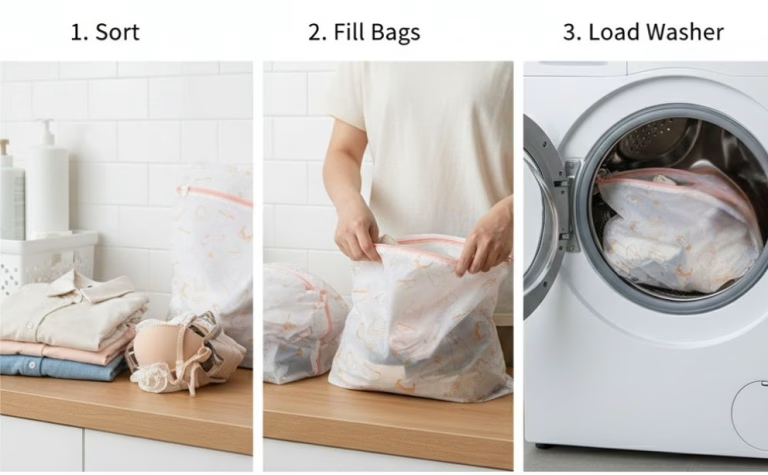
- Inspect the toy. Look for open seams, tears, or loose eyes/buttons. Repair loose seams before washing. Remove any batteries, sound boxes, or removable plastic parts. If a part is glued on, do not machine wash.
- Pre-treat stains. Apply a small amount of mild detergent or a paste of baking soda and water to obvious stains. Gently rub with a soft brush, then let it sit for a few minutes.
- Place the toy in a mesh laundry bag. Choose a bag that is at least two to three times larger than the toy so the toy can move slightly and water can flow through. Do not overstuff. For a single medium teddy bear, a bag around 30 cm x 40 cm is usually enough, but size varies.
- Close the bag properly. If using a zipper bag, tuck the zipper pull into the protective cover or clip so it cannot scratch the drum. If using a drawstring bag, tie a double knot and push the knot inside the bag to avoid catching.
- Select a gentle cycle. Use cold water or the temperature shown on the care label. A delicate, hand wash, or wool cycle with low spin is safer than a heavy-duty cycle. High spin can press the toy against the bag and distort the stuffing.
- Use the right detergent. Mild liquid detergent works best. Avoid bleach and fabric softener; fabric softener can coat long pile fibers and make them feel greasy or mat down.
- Wash similar items together. Wash the bagged toy with towels or light clothing in similar colors. Do not wash with heavy jeans or items with metal zippers that could rub against the bag from outside.
Front-Load vs Top-Load Washers: Does It Matter?
Top-load washers with a central agitator tend to twist and pull fabrics more aggressively. A mesh bag is especially useful in these machines because it holds the plush toy away from the agitator. Front-load washers tumble instead of twisting, so they are generally gentler on plush toys, but a bag still prevents small parts from falling out and reduces friction with other items. If your customers use a top-load machine, recommend a zip bag with a secure closure rather than a drawstring that could loosen.
Drying Stuffed Animals After Washing
Air drying is the safest option. Gently squeeze out excess water without wringing, then roll the toy in a clean towel to absorb moisture. Hang or lay flat in a well-ventilated area away from direct sunlight, which can fade colors. If the care label allows machine drying, put the toy back in a clean mesh bag and use low heat or air fluff. Remove the toy while still slightly damp and reshape the stuffing by hand. Never use high heat on synthetic fur; it can melt or become crinkled.
For more detail on drying plush toys and cushions, see our article ‘Drying Net vs Drying Rack: What’s Best for Pillows, Cushions and Plush Toys?’
Which Mesh Bag Type Works Best for Stuffed Animals?
The right bag depends on the toy’s size, surface material, and the washer type. Fine mesh bags are better for toys with long pile fur or small parts; the tight weave prevents fibers from poking through and keeps small eyes or buttons inside. Coarse or honeycomb mesh bags allow faster water exchange and are fine for smooth, durable plush without tiny attachments. Zip bags give a secure closure for toys with many small parts; drawstring bags are faster to open and close but require a good double knot.
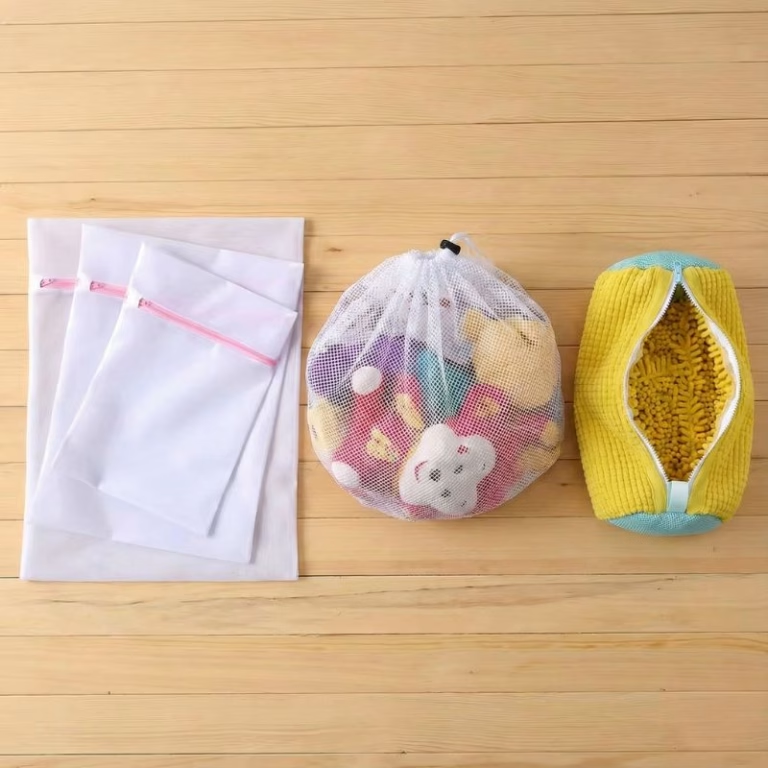
- Small keychain plush or beanie toy: fine mesh drawstring bag. Keeps small parts contained and prevents loss in the pump filter.
- Standard teddy bear or soft doll: honeycomb or sandwich mesh zip bag. Balances protection and water flow; zipper stays closed.
- Large jumbo plush or pillow toy: coarse mesh oversized bag. Allows enough water circulation and reduces twisting of the large body.
- Long-pile faux fur toy: fine mesh bag. Reduces matting and pilling of the high-pile surface.
- Toy with stitched-on accessories: zip bag with zipper cover. Prevents accessories from snagging on other laundry.
Choosing the Right Mesh Bag Size
Most home washing machines work best when there is some empty space inside the bag. A bag that is just barely larger than the toy restricts water flow and increases rubbing against the mesh. A bag that is far too large lets the toy tumble enough to lose shape. A practical rule is to use a bag that is two to three times the volume of the toy, not just slightly bigger. For a medium teddy bear about 30 cm tall, a bag around 30 cm x 40 cm or 35 cm x 45 cm is usually adequate, but test your specific models.
For bulk buyers, we can produce custom bag sizes to match your plush toy range. A consistent size guide printed on the bag or packaging helps end users choose correctly without guesswork.
Common Mistakes That Ruin Stuffed Animals
- Overloading the bag. If the toy is pressed tightly against the mesh, water and detergent cannot circulate, and the surface may still rub against the bag. Use one toy per bag or a larger bag for several small toys.
- Using a damaged bag. Check for holes or broken zippers before every wash. A torn mesh bag can release small parts into the machine.
- Choosing a heavy-duty cycle. Long, high-agitation cycles are the main cause of matted fur and shifted stuffing. Delicate or hand wash is enough for most plush toys.
- Adding fabric softener. Softener can leave a residue on synthetic fibers and make them sticky or flat. It is not needed for plush toys.
- Machine drying on high heat. Many synthetic plush fibers are heat-sensitive. High heat can melt or permanently crease the fur.
- Ignoring the care label. Some toys contain foam beads, memory foam, or cardboard stiffeners that should never be submerged. If the label says surface clean only, follow that.
When Not to Machine Wash a Stuffed Animal
Not every plush toy belongs in a washing machine. Do not machine wash if the toy has an internal battery box that cannot be removed, glued-on eyes or accessories that may dissolve, antique or collector value, or filling made of loose foam beads. These toys can lose shape or become waterlogged internally. Instead, surface clean with a damp cloth and mild detergent, or spot clean the dirty area only.
For Importers and Retailers: Selling Mesh Bags as a Plush Toy Care Accessory
If you import or distribute plush toys, adding a mesh laundry bag to the packaging gives your customers a ready-to-use care tool. Our factory has produced laundry mesh bags, washing bags, laundry baskets and storage goods since 2014. We supply fine mesh, coarse mesh, honeycomb, sandwich/3D mesh, drawstring and zip styles, with custom sizes, colors and logos. A simple printed insert with the washing steps above can reduce returns for matted fur or broken seams caused by improper washing.
Our materials can pass the REACH test according to the factory’s documentation, but we treat this as a material property, not as a separate certificate unless a specific report is requested. For OEM orders, we can provide sample lead time, MOQ, and test report options after receiving your target specifications.
If you also sell pet products, see our separate article ‘How to Wash Dog Toys in a Mesh Laundry Bag’ for a similar approach with dog toys.
Placeholder for evidence: add before/after washing photos of a plush toy washed with and without a mesh bag, plus internal washing test records showing surface wear or stuffing movement after a set number of wash cycles. These must be verified before publishing.
FAQ
Can I wash stuffed animals in a regular mesh laundry bag?
Yes, a regular fine or honeycomb mesh laundry bag works for most machine-washable plush toys. The key is to choose a bag large enough for water to circulate and to close it securely.
What temperature should I use to wash stuffed animals?
Use cold water or the temperature stated on the toy’s care label. Cold or low temperature reduces the risk of color bleeding and fiber damage. Avoid hot water unless the label specifically allows it.
Can I put stuffed animals in the dryer inside a mesh bag?
If the care label allows tumble drying, use a low or no-heat setting and put the toy in a clean mesh bag. Air drying is safer for most plush toys, especially those with long pile fur or heat-sensitive details.
How many stuffed animals can I put in one mesh laundry bag?
Do not overstuff. For small toys like beanie animals, you can fit several in a large bag, but each toy should still be able to move slightly. For medium or large plush toys, use one per bag or choose an oversized bag.
Do I need a special mesh bag for stuffed animals with plastic eyes?
No special bag is required, but a fine mesh zip bag with a zipper cover is a good choice because it prevents small parts from falling out if a seam opens. Check that all eyes and buttons are secure before washing.