
A laundry bag can look simple, yet small design choices often decide whether it protects garments properly, fits a retail range, and earns repeat orders. The right customized laundry bags combine practical mesh construction with details that support your product identity, customer use case, and packaging plan.
For procurement teams and product managers, customization is not only about adding a logo. It includes material selection, mesh density, size, zipper type, color, labels, set configuration, and compliance documentation. When these elements work together, a laundry bag can serve as a useful standalone item, a bundled accessory, or a branded addition to a home-care collection.
Established in 2014, we are a professional manufacturer of laundry mesh bags, bra laundry bags, washing bags for shoes, storage bags, laundry baskets, and drawstring mesh. We serve customers worldwide, including key markets in Europe, North America, South America, Korea, and Japan. OEM orders and customized designs are available, using environment-friendly raw materials with products that can pass REACH and related tests.
What Are Customized Laundry Bags?
Customized laundry bags are washing or storage bags produced to a buyer’s requested specifications. Those specifications may include the fabric, mesh opening, dimensions, color, closure, logo treatment, packaging, and product set.
Unlike a generic off-the-shelf item, a custom design starts with the intended use. A fine mesh bra bag needs different protection than a coarse mesh bag for sportswear or shoes. A retail set may need coordinated colors and printed packaging, while a hotel or laundry-service program may prioritize size coding, durable zippers, and clear care labels.
Core customization areas
-
Material: Polyester, nylon, sandwich mesh, coarse mesh, fine mesh, or mixed constructions
-
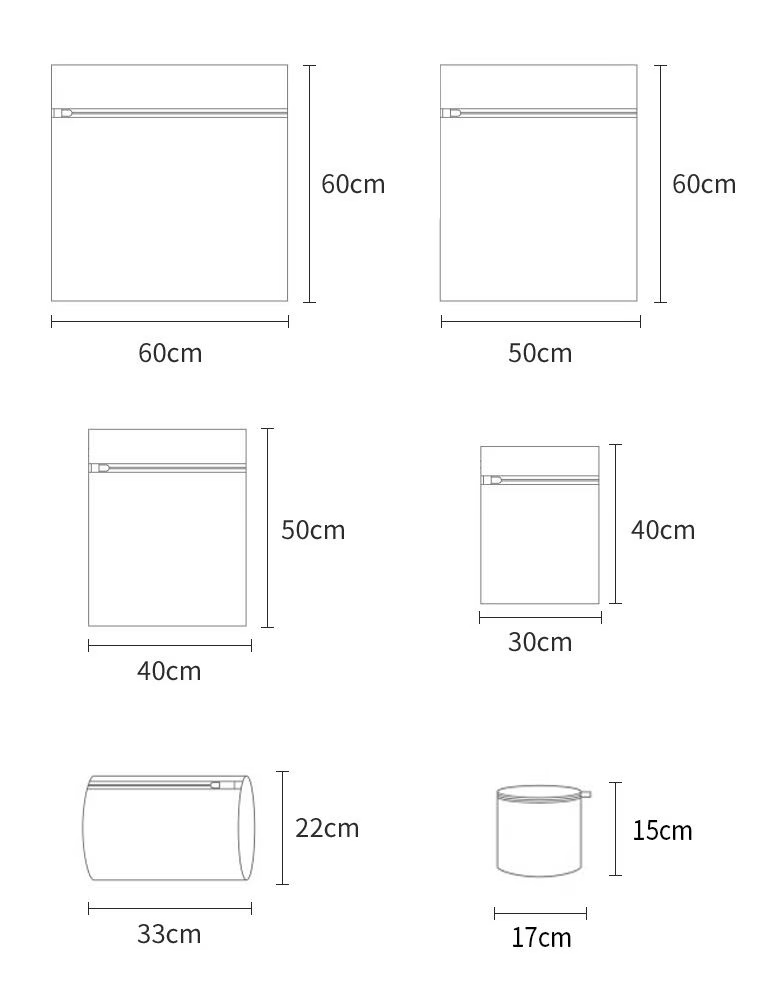
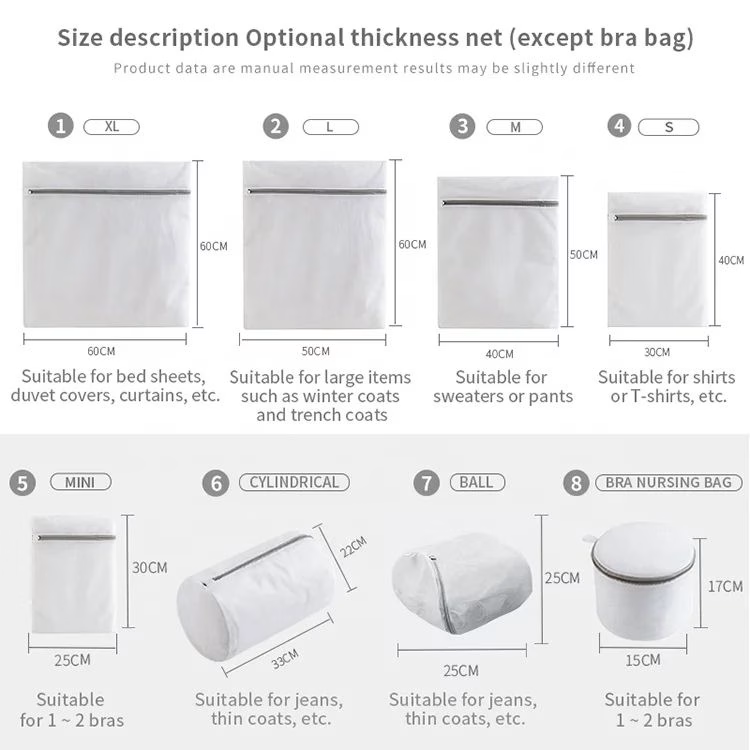
Size and shape: Small lingerie bags, medium garment bags, extra-large laundry sacks, cylinder bags, box-style bags, and shoe bags
-
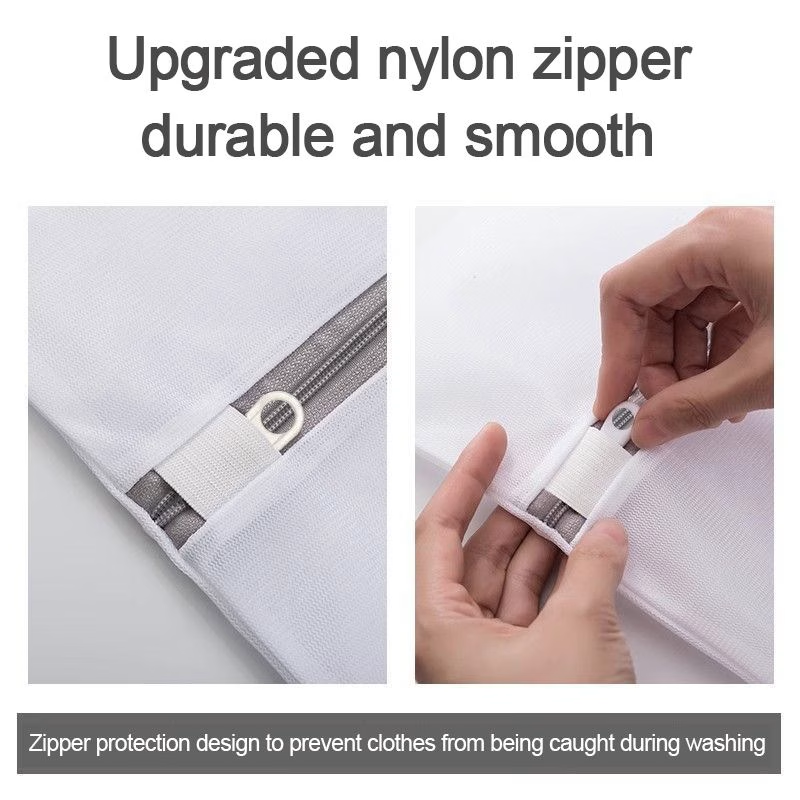
Closure: Zippers, drawstrings, hook-and-loop closures, or protected zipper covers
-
Branding: Embroidery, woven labels, printed logos, care labels, hangtags, and packaging inserts
-
Colors: White, black, seasonal colors, Pantone-matched shades, or multi-color sets
-
Retail format: Single bags, paired sets, three-piece sets, five-piece sets, or seven-piece laundry collections
A good specification sheet explains not just what the bag should look like, but why each feature is included. That makes sampling, approval, and final production more consistent.
Why customization affects product performance
A bag with overly large mesh holes may not protect delicate items. A zipper without a cover can catch on fabrics during the wash cycle. A logo placed in the wrong location may rub against garments or become hard to see on a store shelf.
These practical details are why custom mesh laundry bags should be designed around the customer’s washing habits before visual branding is finalized.
Why Choose Customized Laundry Bags for Your Range?
Customized laundry bags give buyers more control over function, presentation, and product positioning. They can be built for delicate laundry, travel, dorm rooms, shoe care, family laundry sorting, or garment protection.
For a wholesale program, a generic item can compete mainly on price. A well-planned customized version gives customers clearer reasons to choose one product over another: a protected zipper for delicates, a matching set for family use, or a compact bag designed for travel.
Product differentiation without unnecessary complexity
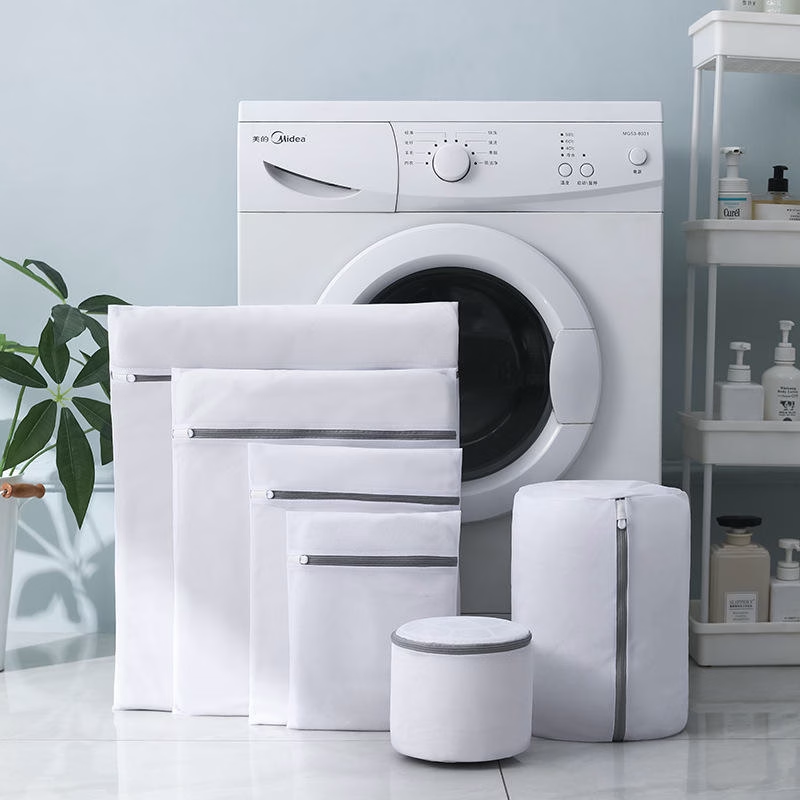
The most useful product ranges often use a limited number of meaningful variations rather than too many unrelated styles. For example, a five-piece set can include:
-
One extra-large bag for sweaters and jackets
-
Two medium bags for shirts and everyday garments
-
One small fine-mesh bag for hosiery or lingerie
-
One cylindrical bra bag with a protective structure
This layout gives shoppers a clear use case for each piece. It also helps product teams create more useful packaging copy and product photography.
Common customer use scenarios
Better alignment with retail channels
Retailers usually need packaging that explains a product within seconds. Marketplace listings need visual consistency across product images. Promotional programs often need logo placement that remains visible but does not interrupt the bag’s use.
For this reason, branded laundry bag sets should be planned as a complete product system. The bag, logo, packaging, inserts, and listing images should all communicate the same use case.
Customized Laundry Bags by Material and Mesh Type
Material selection should start with the garment category and wash conditions. Mesh affects water flow, detergent circulation, abrasion protection, drying time, appearance, and perceived product value.
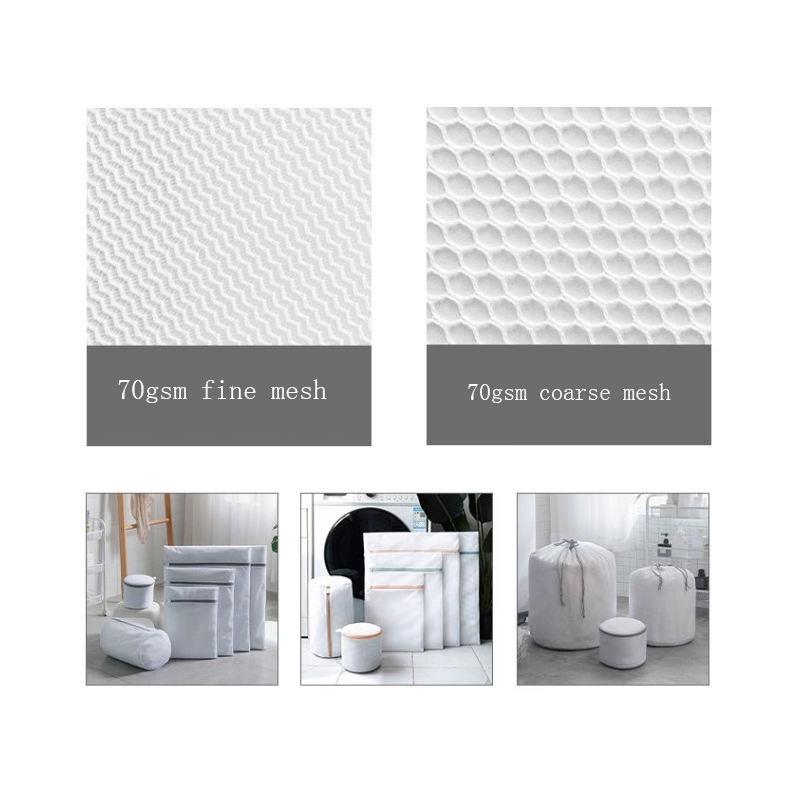
Polyester mesh is widely used because it is lightweight, durable, and suitable for repeated washing. Fine mesh provides more protection for delicate garments, while coarse mesh allows stronger water flow for heavier items. Sandwich mesh adds padding and structure, making it useful for bras, shoes, and items that benefit from extra cushioning.
Fine mesh laundry bags
Fine mesh has smaller openings and is commonly selected for lingerie, hosiery, silk garments, baby clothing, and lightweight knitwear. It helps reduce snagging and keeps small items contained during washing.
A set of seven thickened fine mesh bags can create a practical retail offer because it gives users several sizes for different garment types. Fine mesh styles are also suitable for personalized washing bags intended for gift sets or home-care collections.
Coarse mesh laundry bags
Coarse mesh is suitable for garments that need more water circulation, including T-shirts, jeans, sportswear, towels, and larger washable items. The structure is usually lighter and dries quickly after use.
For buyers seeking a versatile multi-piece offer, a set of five thickened coarse mesh laundry bags provides a useful starting point. Coarse mesh can be combined with color coding, logo labels, or custom packaging for a distinct product line.
Sandwich mesh laundry bags
Sandwich mesh has a layered, three-dimensional construction. It offers better cushioning than standard flat mesh and can hold its shape more effectively during a wash cycle.
This makes sandwich mesh useful for bras, footwear, structured garments, and products designed for customers who want added protection. A Korea-style sandwich mesh laundry bag shows how this construction can support a more specialized product format.
For a broader overview of available constructions, review the laundry mesh bag collection before selecting a starting style.
Image for this section
-
Image title: Fine, Coarse, and Sandwich Mesh Comparison
-
Image description: Close-up textile comparison showing three mesh constructions used in laundry bags
-
SEO-friendly file name: customized-laundry-bags-mesh-types.jpg
-
Alt text: Customized laundry bags made with fine mesh, coarse mesh, and sandwich mesh materials
-
AI image generation prompt: Square 1:1 macro product photography showing three labeled laundry bag material samples: fine mesh, coarse mesh, and thick sandwich mesh, visible weave detail, white and neutral gray fabrics, clean comparison layout, commercial textile catalog lighting
How to Customize Laundry Bag Sizes and Shapes
The right size depends on what the user is washing or storing. A well-designed range usually includes a mix of small, medium, and large bags rather than repeating one size across every product.
A small bag can protect socks, underwear, baby clothing, and accessories. Medium bags suit shirts, lightweight trousers, and workout clothing. Large bags can hold sweaters, bedding items, jackets, or bulkier loads.
Common sizes for custom programs
Dimensions should be confirmed during sampling because material stretch, zipper opening width, and seam allowance affect usable capacity. A large bag that opens too narrowly, for instance, may be inconvenient even when its overall dimensions look correct on paper.
Shape selection by intended use
Flat rectangular bags are common because they are easy to pack, wash, and display. Round or cylindrical bags are useful for bras and smaller delicates. Box-shaped bags can hold shoes more securely, while drawstring bags may work well for travel or storage.
If your range needs a compact item for small garments, a small laundry bag option can be adapted with a custom color, label, or packaging format. For products built around secure closure, explore laundry bags with zippers for useful design references.
Consider the laundry machine environment
The bag must move freely in the machine drum. Very large bags should not be designed for overfilling, since crowded loads can reduce cleaning performance and put pressure on seams and zippers. Care labels should recommend placing compatible garments together and avoiding excess weight.
The U.S. Federal Trade Commission provides guidance on care labeling for textile products, which can help teams plan clear garment-care and fiber-related product information.
Branding Options for Custom Laundry Bags Wholesale
Branding should support the product without weakening its function. Buyers usually choose between embroidery, screen printing, heat transfer, woven labels, silicone patches, care labels, and customized packaging.
For custom laundry bags wholesale, the right method depends on the material, expected order quantity, logo complexity, color count, and desired product positioning.
Embroidered logos
Embroidery gives a textured, long-lasting look. It is often chosen for thicker mesh, sandwich mesh, and reusable household sets. The stitching should be positioned away from areas that contact delicate garments where possible.
An example is this thickened white mesh laundry bag with embroidered logo. It illustrates how embroidery can add brand recognition while keeping the bag’s basic structure familiar.
Printed logos
Screen printing and heat transfer are useful for bold designs, simple logos, or designs that need larger coverage. Print placement should be tested through washing cycles, especially on flexible mesh surfaces.
Logo printed laundry bags can work well for promotional programs, retail bundles, and branded household-care ranges. A clear logo on a neutral mesh bag can also make product images easier to identify in online listings.
Woven labels and care labels
Woven labels are a practical choice when a logo needs to remain subtle. They can be sewn into a side seam or near the zipper. Care labels can include washing guidance, material details, country-of-origin information, and brand contact details where required.
The label should be readable but soft enough not to irritate users or catch delicate clothing.
Packaging customization
Packaging often shapes the first impression before the product is used. Available formats may include:
-
Printed polybags
-
Paper belly bands
-
Hangtags
-
Kraft boxes
-
Color-printed cartons
-
Fabric drawstring pouches
-
Instruction cards
-
Barcode labels and shipping labels
A package should explain what is inside, which garments the bags protect, how many pieces are included, and how to use the product. For retail ranges, simple icon-based instructions can reduce customer confusion.
Choosing Closures, Seams, and Practical Details
A laundry bag’s closure is often the most used part of the product. If it opens during washing, catches fabric, or becomes hard to grip, the user will notice immediately.
Zippers are common because they keep garments contained. Drawstrings are useful for some storage and travel bags, but they may be less suitable for delicate laundry unless the design includes secure end protection.
Zipper choices
A well-designed zipper should move smoothly, stay closed during washing, and avoid catching garments. Common additions include:
-
Elastic zipper covers
-
Fabric garages at the zipper end
-
Protective zipper tabs
-
Rounded pullers for easier handling
-
Reinforced zipper seams
-
Color-matched zipper tape
For delicate clothing, a zipper cover is often a more useful feature than a decorative trim. It helps reduce direct contact between the zipper and the garments inside the bag.
Seam construction
Seams should be selected according to bag size and expected load. Small fine-mesh bags may need neat binding for a clean finish. Large garment bags and shoe bags often benefit from reinforced stitching at stress points, especially around the zipper and handle areas.
During sampling, test seams under realistic conditions: wet fabric, full bag loads, repeated opening and closing, and machine movement. A sample that looks good on a table may behave differently after multiple wash cycles.
Useful functional additions
-
Hanging loops for drying or storage
-
Internal dividers for multi-item sorting
-
Name labels for family use
-
Color-coded zipper pullers
-
Reinforced handles for shoe bags
-
Water-resistant panels for travel storage
-
Small inner pockets for socks or accessories
Functional details should be based on a defined customer problem. Extra features that do not serve a clear purpose can add cost and make quality control more complicated.
How to Build a Useful Laundry Bag Set
A laundry bag set should solve several related wash-care needs rather than simply offer more pieces. The most effective sets explain how every bag is used and make sorting easier for the customer.
For example, a five-piece set may include both fine and coarse mesh. This allows users to separate delicates from everyday garments. A seven-piece set can add several size options, which suits family households, travel use, or retail gift bundles.
Set formats buyers often request
A set of three colorful mesh laundry bags can suit buyers who want an accessible color-led product range. For more complete assortments, the laundry bag set collection provides examples of different sizes and configurations.
Fine mesh or coarse mesh in the same set?
Combining both mesh types can make sense when the package clearly explains the difference. Fine mesh can be assigned to lingerie and small garments. Coarse mesh can be assigned to heavier clothing, sportswear, and larger items.
Clear labeling helps. Use printed icons, color stripes, size names, or product cards to show where each bag belongs.
Avoiding product overlap
Before finalizing a set, compare it with the rest of your product range. If a three-piece set, five-piece set, and seven-piece set all contain nearly identical bags, customers may not understand why one costs more.
Create a ladder of value instead:
-
Three-piece set: Everyday entry option
-
Five-piece set: Family laundry organization
-
Seven-piece set: Complete wash-care solution with specialty sizes
This approach supports clearer retail listings and makes the product range easier for sales teams to explain.
Compliance, Materials, and Quality Checks
Product teams should ask about raw materials, restricted substances, labeling, and testing before production begins. This is especially relevant for products sold across several markets, where retailer requirements and local regulations may differ.
Our environment-friendly raw materials can support REACH and related testing requirements. The European Chemicals Agency explains that REACH restricts and manages certain chemicals in products, making it a relevant reference for teams sourcing textile-based household goods for European markets.
Questions to ask before approval
-
What fiber composition will be used?
-
Is the mesh dyed, and can colorfastness be tested?
-
Can the product pass requested REACH-related checks?
-
What zipper material and puller design will be used?
-
How will logo placement be approved?
-
What are the bag dimensions and tolerances?
-
Is the packaging recyclable, recycled, or otherwise aligned with your material policy?
-
Can pre-production samples be supplied before bulk production?
A practical quality-control checklist
Quality checks should include both visual inspection and functional testing. A bag can look acceptable in photographs while still having weak zipper seams, uneven binding, or inconsistent mesh density.
For logo-centered programs, a set of five thickened coarse mesh bags with customized logo can serve as a useful reference point for discussing fabric weight, branding, and multi-piece packing.
How to Plan an OEM Laundry Bag Order
An OEM laundry bag manufacturer can produce a more consistent result when the buyer provides clear information early. A complete request reduces back-and-forth during sampling and gives the factory a better basis for quoting.
Prepare a clear product brief
Your request should include:
-
Product purpose and target customer
-
Preferred mesh material and thickness
-
Bag dimensions and shape
-
Closure type and zipper color
-
Logo file and branding method
-
Color references, ideally with Pantone codes where needed
-
Set quantity and packing method
-
Required testing or compliance documentation
-
Estimated order quantity
-
Target delivery schedule and destination market
Photos, sketches, competitor references, and sample products can also help explain the intended result. However, the final specification should state measurable details rather than relying only on visual references.
Sampling before production
Sampling helps confirm whether the design works in real use. Review the sample for:
-
Mesh feel and thickness
-
Actual capacity
-
Ease of opening and closing
-
Logo visibility
-
Label placement
-
Package fit
-
Product appearance after washing
If the bag is part of a retail collection, photograph the sample in its proposed packaging before approval. This helps identify issues with shelf presentation, bag visibility, or unclear product messaging.
Lead-time planning
Production timing depends on material availability, color development, logo method, sample approval, order quantity, packaging requirements, and shipping method. The earlier a buyer shares a complete brief, the easier it is to plan materials and production capacity accurately.
Avoid committing to a final delivery date before the design, sample, packaging, and compliance requirements have been confirmed. A realistic timeline protects both the buyer’s launch plan and the factory’s quality process.
Choosing the Right Customization Mix
Not every product needs every customization option. The better approach is to select the features that match the intended customer, price range, and sales channel.
A basic value-oriented set may only need reliable mesh, a standard zipper, simple color choices, and a printed insert. A more specialized bra care set may need sandwich mesh, a zipper cover, embroidered branding, structured shape, and coordinated packaging.
Match features to your product strategy
Before requesting a quotation, define what customers must notice first: garment protection, organization, color, brand identity, travel convenience, or set value. This focus keeps the product brief practical and helps prevent unnecessary cost additions.
The strongest customized laundry bag programs are easy to understand. Buyers should be able to explain the product in a few sentences, and end users should know how to use it without reading a long manual.
If you are developing customized laundry bags for retail, promotional use, or a dedicated wash-care range, share your target use, preferred materials, branding needs, and expected quantity. As the original manufacturer, we can help you move from an initial concept to samples and production with direct access to the source.
Frequently Asked Questions
1. What customization options are available for laundry bags?
Laundry bags can be customized by mesh type, size, color, zipper, drawstring, logo treatment, labels, packaging, and set configuration. Contact us to request samples and discuss the options that fit your product plan.
2. How can I add a logo?
A logo can be added through embroidery, printing, woven labels, silicone patches, or customized packaging. The suitable method depends on the mesh material, logo artwork, order quantity, and desired appearance.
3. What order quantities are available?
Order quantities depend on the chosen material, logo method, color, packaging, and design complexity. Reach out with your product brief for a quote based on your requested specifications.
4. Can laundry bags meet REACH-related requirements?
Our environment-friendly raw materials can support REACH and related tests. Share your destination market and required test standard so the material and testing plan can be reviewed before production.
5. How long do customized orders take?
Timing depends on sampling, material preparation, logo approval, packaging, order quantity, and shipping arrangement. A complete inquiry helps confirm a production schedule with fewer changes.