
A well-made bra costs real money. A favorite silk blouse took real effort to find. Yet both can be destroyed in a single spin cycle — stretched out of shape, snagged by a zipper on a pair of jeans, or tangled into something unrecognizable by an aggressive drum rotation.
The fix is simpler than most people expect: laundry bags for delicates. These lightweight mesh protectors do one thing exceptionally well — they create a buffer between fragile garments and the mechanical forces inside a washing machine. Whether you manage garment sourcing for a retail brand, oversee quality for a hospitality chain, or simply want to preserve a wardrobe investment, understanding how these bags work — and how to choose the right ones — matters more than the washing cycle itself.
Why Delicate Fabrics Need Extra Protection
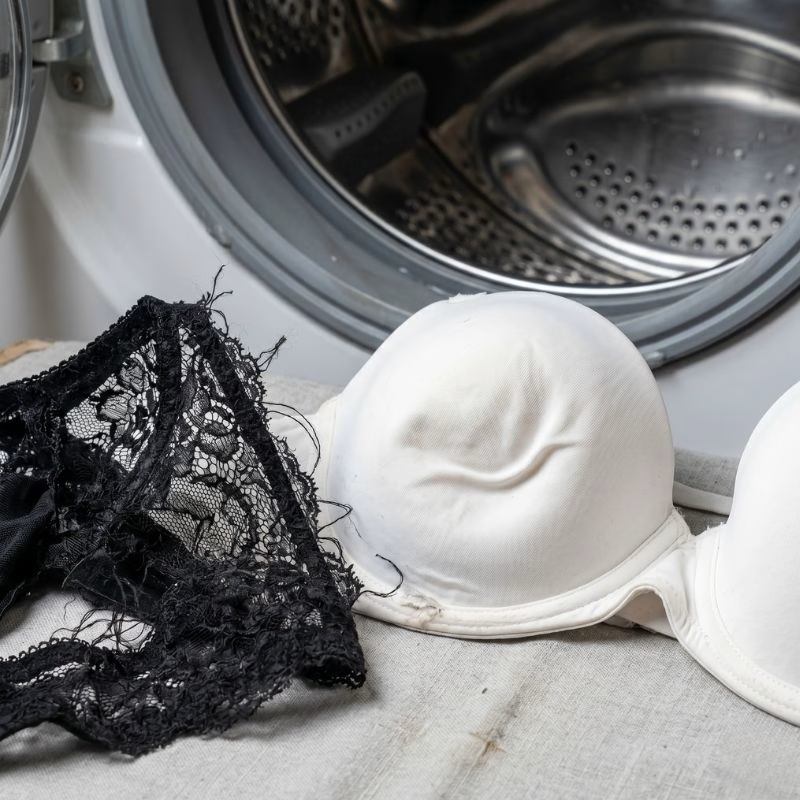
Washing machines are not gentle by design. They’re built for efficiency — agitating, spinning, and rinsing with enough force to clean heavy cotton and synthetic blends. That same mechanical action can be destructive for fabrics with finer weaves, elastic components, or intricate construction.
Here’s what typically goes wrong when delicates go unprotected:
-
Snagging — Bra underwires, hooks, and lace edges catch on other garments or the drum wall, pulling threads and distorting fabric.
-
Stretching — Elastic waistbands and lingerie straps lose their tension under high-spin torque.
-
Pilling — Fine knits like cashmere and lightweight wool develop surface pills when rubbed against rougher fabrics.
-
Shape loss — Molded bra cups and structured lingerie collapse or deform without physical support during the wash.
-
Color bleed — Lighter, finely dyed fabrics pick up color more readily when mixed with heavier items in warm water.
Mesh laundry bags for delicates address each of these risks by isolating the garment inside a breathable, porous enclosure. Water and detergent pass through freely; abrasion from other items does not.
How Laundry Bags for Delicates Actually Work
The mechanics are elegantly simple. A mesh laundry bag — typically made from polyester fiber — forms a semi-rigid envelope around your garments. The mesh weave is porous enough to allow water, detergent, and rinse water to circulate freely through the fabric, ensuring a proper clean. At the same time, the bag walls absorb friction and contain hooks, straps, and embellishments so they cannot contact other items in the drum.
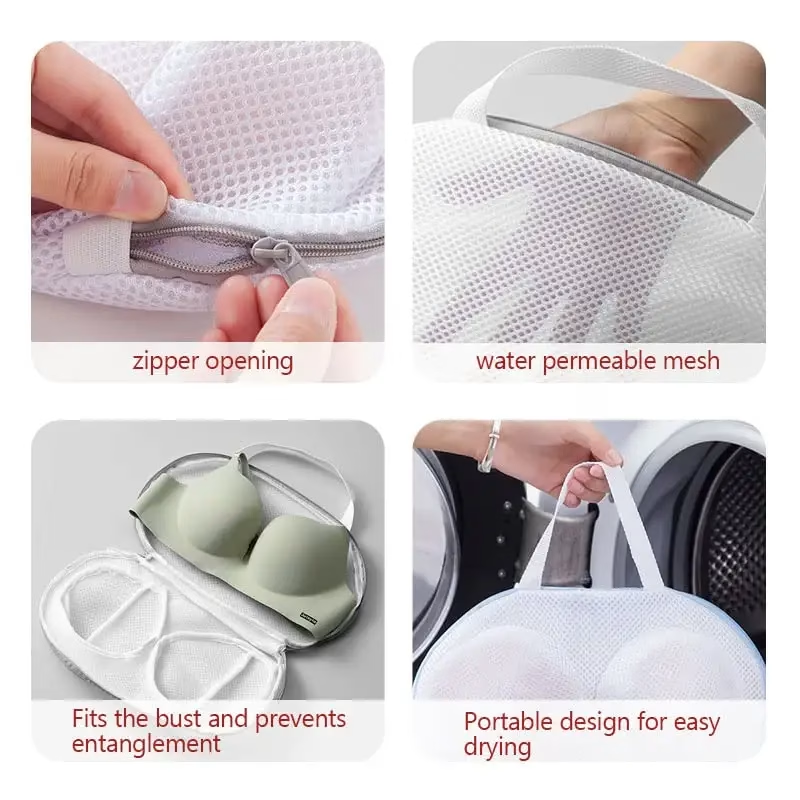
The zipper closure is particularly important. A quality rust-proof, non-slip zipper keeps the bag sealed through the entire wash and spin cycle, so garments don’t escape mid-wash — a common failure point on cheaper bags where drawstrings loosen under spin pressure.
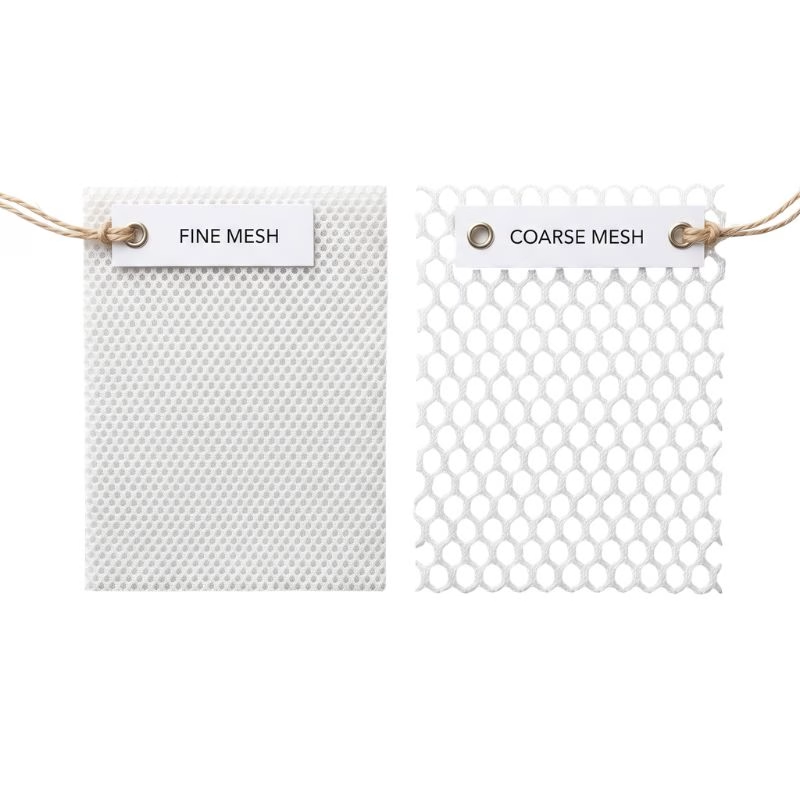
Two main mesh types serve different purposes:
Fine mesh is the standard choice for bras and lingerie because it prevents thin straps and lace from pushing through or catching on the weave itself. Coarse mesh suits slightly heavier items where maximum water circulation is more important than total containment.
Choosing the Right Mesh Laundry Bags for Delicates
Not all protective wash bags are equal, and selecting the wrong type can reduce effectiveness or even add new risks. Several factors determine how well a bag will perform across hundreds of wash cycles.
Mesh Density and Fabric Weight
Fine mesh is non-negotiable for anything with lace, embroidery, thin elastic, or underwire. The weave must be fine enough that underwire tips cannot push through and create their own snag points. Thickened mesh — where the polyester fiber is heavier gauge — adds durability to the bag itself, so it doesn’t thin or fray after repeated use.
Our thickened white mesh laundry bag with embroidered logo uses exactly this construction: abrasion-resistant polyester fiber in a fine weave that holds its structure wash after wash.
Zipper Quality
A zip closure that corrodes, stiffens, or opens mid-cycle defeats the entire purpose of the bag. Look for rust-proof metal or treated plastic zippers with a non-slip pull that stays closed at high spin speeds. This detail separates bags that last a season from ones that last years.
Bag Size and Fill Capacity
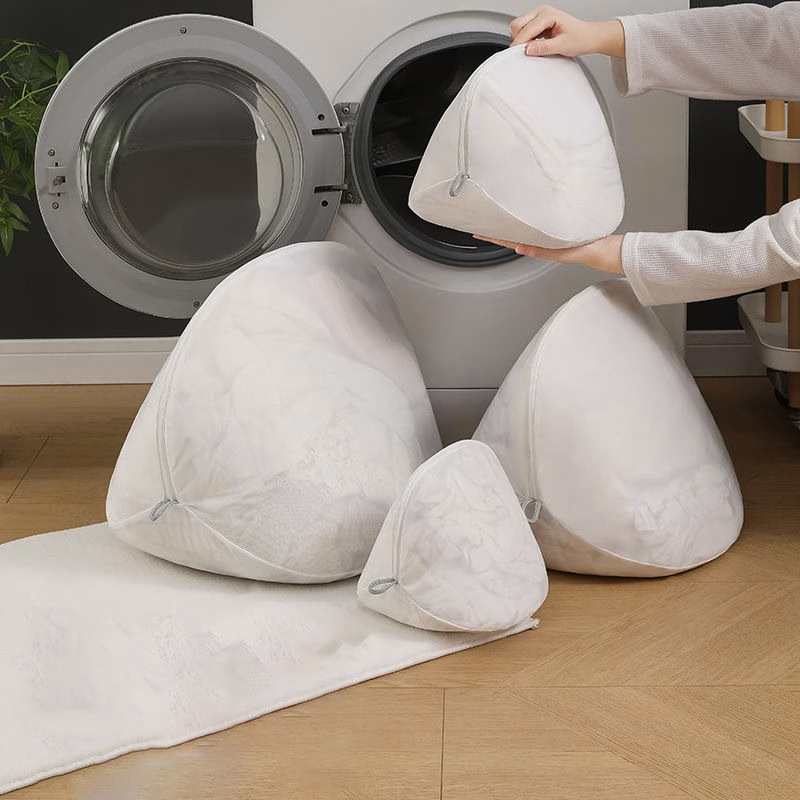
Overfilling a delicates wash bag is one of the most common user errors. When a bag is packed too tightly, garments inside cannot move freely enough to get thoroughly clean, and the protective spacing between items disappears. A useful rule: fill a bag no more than two-thirds full for bras, and no more than halfway for structured lingerie with cups or padding.
For buyers sourcing multiple sizes, our laundry bag set collections offer graduated sizes — small, medium, and large — allowing garments to be sorted by type and size rather than jammed into one bag.
Small Bags for Small Items
Socks, underwear, and baby clothes are frequently lost in large wash loads — sliding under drum seals, getting trapped in pillowcase corners, or tangling into larger items. A small laundry bag solves this without effort: drop small items in, zip, wash, remove everything at once.
How to Wash Bras and Lingerie in a Washing Machine Bag
Using a delicates wash bag correctly makes a measurable difference in how long garments maintain their shape and elasticity. The process is less complicated than hand-washing, but a few habits matter.
Step 1 — Prepare the garment.Fasten all bra hooks before placing them in the bag. Unhooked clasps are the primary source of damage — both to the bra itself and to neighboring fabrics. For padded or molded cups, reshape them by hand before washing if they’ve been compressed.
Step 2 — Load the bag correctly.Place one or two bras per bag — three at most if they are lightweight. For lingerie like lace underwear or camisoles, you can fit more, but leave visible space inside. Never mix a bra with hosiery in the same bag; tights and stockings tangle badly even inside mesh enclosures.
Step 3 — Close the zipper fully.Run the zipper all the way around and confirm it’s fully engaged at the stop point. A partially open zipper will release the garments before the spin cycle ends.
Step 4 — Choose the right machine setting.Select the delicate or gentle cycle, and use cold water. Hot water weakens elastic fibers and can cause dye to bleed. A mild, fragrance-free detergent is preferable for lingerie and fine fabrics.
Step 5 — Air dry after washing.Remove garments from the bag promptly after the cycle ends and reshape bra cups by hand. Hang or lay flat to dry — never tumble dry bras, as heat degrades underwire casing and elastic simultaneously.
For teams and facilities that handle garment care at volume — hospitality laundry, hotel amenity programs, or uniform management — a laundry bag with zipper design with a secure, industrial-grade closure ensures consistent results across large loads.
Washing Machine Bags for Delicates: Material Considerations
The fabric of the bag matters as much as the fabric it protects. Most washing machine bags for delicates on the market use standard polyester mesh — functional, but varying widely in durability and construction quality.
Our bags use abrasion-resistant, breathable polyester fiber throughout. This has two specific advantages: it resists thinning or developing holes at friction points (particularly around zipper edges and corners), and it remains dimensionally stable after repeated high-temperature machine washes — important for commercial or high-frequency household use.
Beyond polyester, some bags are constructed with a sandwich mesh structure — a layered design that adds body and prevents the bag from collapsing flat against garments during the spin cycle. Our sandwich mesh laundry bag in Korea style uses this layered construction, combining fine protection with structural integrity that standard flat-weave bags don’t offer.
What Fabrics Benefit Most from a Delicates Wash Bag?
-
Lace — Extremely prone to snagging and thread-pull; fine mesh is essential
-
Silk and satin — Delicate weaves that abrade easily and lose sheen under friction
-
Stretch fabrics (Lycra, spandex blends) — Elastic fibers weaken when subjected to high-spin agitation without containment
-
Embroidered or embellished pieces — Raised threads and beads can catch or pull if loose in the drum
-
Fine knitwear (merino, cashmere) — Prone to pilling and felting in warm water without protection
-
Hosiery and tights — Ladder easily when caught by rougher fabrics in a mixed load
Product Options for Every Sourcing Need
For buyers and product teams sourcing at volume, range and flexibility matter. A single bag size rarely covers an entire product line or retail assortment. Our manufacturing catalog covers the full spectrum.
Multi-Pack Sets for Retail and Private Label
Multi-pack sets are the dominant format in retail — they allow consumers to sort garments by type or size, and they offer stronger perceived value on shelf. We produce several options suited to different retail price points and market preferences:
-
Set of 3 Colorful Mesh Laundry Bags — Fine mesh construction in multiple colors for visual sorting; ideal for lifestyle and value retail
-
Set of 5 Thickened White Coarse Mesh Laundry Bags — Clean, neutral presentation suitable for premium retail or hotel programs
-
Set of 7 Thickened Fine Mesh Bags — Maximum variety in a single pack, covering small, medium, and large sizes across one SKU
-
Set of 7 Fine Mesh Laundry Bag Set — Consistent fine weave throughout the set, tailored for lingerie and delicates-specific retail
Customization and OEM
For brands that want their own identity on the product, we offer OEM and custom design services including logo embroidery, label color options, and custom zipper pulls. The thickened coarse mesh laundry bag with customized logo and the sandwich carton cleaning fine mesh laundry bag with embroidery are representative of what this customization looks like in practice — finished, shelf-ready products bearing the customer’s brand rather than ours.
Our colorful thickened fine mesh laundry bag for wholesale and white thickened fine laundry bag for wholesale are particularly suited to buyers who need consistent quality across large order volumes with stable pricing.
For a full overview of the range, the laundry mesh bag product catalog covers all formats, sizes, and construction styles in one place.
Environmental Standards and Compliance
Garment care product buyers in Europe, North America, and East Asia increasingly face compliance requirements tied to chemical safety, material transparency, and environmental responsibility. A delicates wash bag that cannot demonstrate material compliance may be blocked from retail channels or trigger sourcing audits.
Our raw materials are environment-friendly, and our products are manufactured to pass REACH testing and related international compliance evaluations. REACH — the European Union’s regulation on the Registration, Evaluation, Authorisation and Restriction of Chemicals — is one of the world’s most rigorous frameworks for restricting harmful substances in consumer products. Passing REACH testing is not a baseline formality; it is a substantive requirement that limits which dyes, finishes, and plastic components can be used in production.
For buyers supplying European retailers, this compliance is often a non-negotiable listing requirement. For those supplying markets in Korea and Japan — where our products have established distribution — material transparency is increasingly expected in supplier documentation regardless of local mandates.
Buyers interested in detailed compliance documentation, test reports, or material specifications are encouraged to request them directly — we provide these as a standard part of the quoting process.
Tips for Procurement Teams Evaluating Suppliers
If you’re comparing mesh laundry bag suppliers for a retail program, hospitality order, or private label launch, a few evaluation criteria separate workable suppliers from reliable partners.
1. Sample availability and lead timeA supplier who cannot provide samples before an order is a meaningful risk. Samples let you evaluate zipper integrity, mesh density, seam construction, and how the bag holds up through actual wash cycles — not just how it looks in photos.
2. OEM flexibilityCan the supplier accommodate your branding requirements without significant MOQ premiums? Logo placement, label language, color matching, and packaging format should all be negotiable without rebuilding the product from scratch.
3. Material documentationAsk for fiber composition data, test reports, and REACH certificates before placing large orders. A transparent supplier has these documents prepared; one who hedges or delays on documentation is signaling a potential quality gap.
4. Range depthA supplier with only one or two SKUs may not meet your assortment needs over time. Look for a manufacturer with a broad range of sizes, mesh types, and construction options so you can expand the line without switching suppliers.
5. Consistent quality across batchesRequest references or past buyer feedback on batch consistency. Mesh weave tightness, zipper quality, and print registration (for custom logos) can drift significantly between production runs at lower-tier manufacturers.
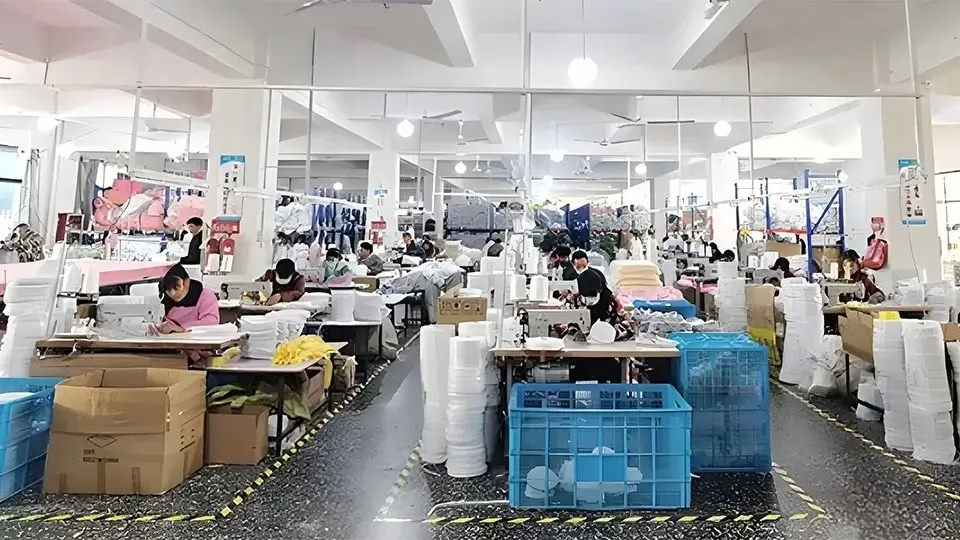
Established in 2014, we have supplied mesh laundry bags and related garment care products to buyers across Europe, North America, South America, Korea, and Japan. Our production is direct — not traded through intermediaries — which means consistent specifications, direct communication, and faster resolution when questions arise.
Ready to Source Directly from the Manufacturer?
If you’ve been evaluating mesh laundry bags for a retail program, wholesale order, or private label development, the most efficient path forward is a direct conversation with the manufacturer — not a distributor who adds margin and removes accountability.
We’ve been manufacturing laundry mesh bags, bra laundry bags, and delicates wash bags since 2014. Our products ship to buyers in Europe, the Americas, Korea, and Japan, and our production line is set up for both standard wholesale orders and fully customized OEM programs.
Reach out to request samples, discuss specifications, get a quote, or review our compliance documentation. You’ll speak directly to the team that makes the product — which means faster answers, accurate pricing, and no miscommunication between the factory and the person you’re actually talking to.
Frequently Asked Questions
1. What is the minimum order quantity for mesh laundry bags?
Minimum order quantities vary by product type and customization level. Standard catalog products have lower MOQs than fully customized OEM orders. Contact us directly to confirm quantities for your specific product interest — we’re happy to discuss options suited to your program size.
2. How do mesh laundry bags for delicates hold up after repeated washing?
Our bags are made from abrasion-resistant polyester fiber with rust-proof zippers, designed to maintain their structure and mesh integrity through extended use. Thickened mesh versions are particularly durable for high-frequency laundry environments. Request a sample to test performance in your own wash conditions before placing a bulk order.
3. Can we add our own branding to the bags?
Yes — OEM and custom design orders are a standard part of our production. Options include embroidered logos, custom label colors, zipper pull branding, and custom packaging. The thickened coarse mesh laundry bag with customized logo is a working example of what branded production looks like.
4. Do your products comply with REACH and other international standards?
Our raw materials are environment-friendly, and our products are manufactured to pass REACH testing and related compliance evaluations. Detailed test documentation is available upon request as part of the standard quoting process — reach out to receive specifications relevant to your target market.
5. What washing machine bags for delicates do you recommend for bra care specifically?
For bras, fine mesh is the appropriate choice — it prevents underwires, hooks, and lace edges from pushing through or catching on the weave. Our set of 7 thickened fine mesh bags and colorful thickened fine mesh laundry bags are well-suited for retail programs targeting lingerie care. Contact us to request samples for evaluation.