
Small mesh drawstring bags solve a specific problem: protecting, sorting, or packaging items that are too delicate or too small for a standard bag. A 4×6-inch polyester mesh pouch keeps jewelry from tangling in a suitcase. A 6×8-inch bag protects lingerie through a full wash cycle. A 3×4-inch cotton mesh bag holds loose-leaf tea or herb samples. These are not the same product as large laundry bags, and choosing one requires different thinking.
The market for small mesh drawstring bags covers retail gifting, delicate laundry care, produce storage, travel organizers, and B2B packaging. Each application has different requirements for mesh density, cord type, and material weight. Getting this right on a bulk order saves returns and complaints. Getting it wrong costs more than the bags themselves.
This guide covers what qualifies as “small” for mesh drawstring bags, which materials hold up best in each application, and what buyers need to verify before placing an order.
Quick Answer: Small mesh drawstring bags typically measure between 3×4 inches and 8×10 inches. They come in polyester, nylon, and cotton mesh. Polyester is the most durable for laundry use. Cotton is preferred for food-safe and eco-gifting applications. Most small mesh string bags weigh between 10–30 grams and use a doubled polyester braid cord for reliable closure.
What Makes a Mesh Drawstring Bag “Small”?
Small mesh drawstring bags fall in the 3×4-inch to 8×10-inch range. Anything below 3×4 inches is considered a micro pouch. Bags above 10 inches on the longer side move into the medium category. This size range covers most jewelry, lingerie, small produce, gift-packaging, and travel organizer applications.
Size labeling across suppliers is not standardized. One manufacturer’s “small” may be another’s “medium.” For this reason, always confirm dimensions in centimeters or inches — not just size names. The ASTM D5034 break-strength test and the ISO 139 textile conditioning standard apply to the fabric, but no universal sizing chart exists across the mesh bag industry.
Standard Size Ranges for Small Mesh Bags
| Category | Typical Size (in) | Common Use |
|---|---|---|
| Micro pouch | 2×3 – 3×4 | Jewelry, herbs, tea samples |
| Small | 4×6 – 6×8 | Lingerie, small produce, travel pouches |
| Small-medium | 7×9 – 8×10 | Socks, scarves, small garments |
These sizes are the most frequently ordered in consumer gifting and delicate laundry applications. Wholesale buyers typically order micro and small in quantities of 500–5,000 units. Reorders are common in retail gifting, where seasonal packaging needs drive consistent demand.
Best Uses for Small Mesh Drawstring Bags
Small mesh drawstring bags work across five core applications: delicate laundry, retail gifting, produce and food storage, travel organization, and promotional packaging. Each one demands a different balance of mesh density, material, and closure strength.
Knowing the end use before you order prevents mismatches. A bag made for gifting will fail in the washing machine. A laundry-grade bag is heavier and less attractive as a gift pouch. These categories overlap in look but not in construction.
Delicate Laundry and Lingerie
Fine mesh bags at 1–2mm hole size protect delicate fabrics in machine wash cycles up to 40°C. They keep bra underwires from snagging drum components and stop lace from stretching under agitation. Our Bra Laundry Bag uses a sandwich mesh construction — two layers bonded at the seams — which is the standard for protecting structured garments.
Laundry-grade small bags use lockstitch seams and doubled polyester cords. These survive 200+ wash cycles without fraying. Cotton or organza bags sold as gift pouches will degrade after 5–10 washes and should not be used as laundry bags.
Gift Packaging and Retail
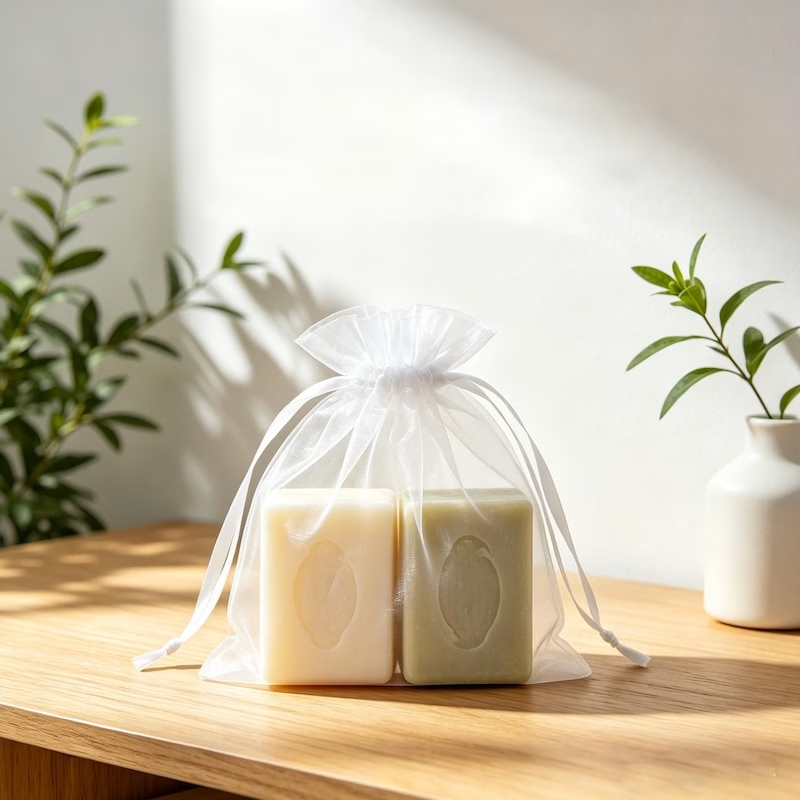
Organza and thin polyester mesh bags in the 4×6 and 6×8-inch range dominate retail gifting. They allow products to show through the mesh. This suits jewelry, candles, bath products, and promotional merchandise. Cord finishes matter here — satin ribbon ties and metallic cords signal a premium product. Standard polyester braid reads as utility packaging.
OEKO-TEX Standard 100 certification is increasingly required for gifting bags sold in EU markets. Retailers in Germany, France, and the Netherlands frequently request test reports before confirming orders. A certified product simplifies compliance and speeds the buying decision.
Produce, Travel, and Organization
Cotton muslin mesh bags in the 6×8 to 8×10-inch range work well for bulk produce sections and zero-waste grocery stores. They’re food-safe, machine washable, and compostable at end of life. Mesh hole size for produce bags should stay below 4mm to prevent small items like cherry tomatoes from slipping through.
Travel organizers benefit from coarser mesh (3–5mm holes) to allow visibility while keeping items separated. Small mesh string bags in this category typically use a reinforced nylon cord for repeated single-hand operation.
Materials That Work Best in Small Mesh String Bags
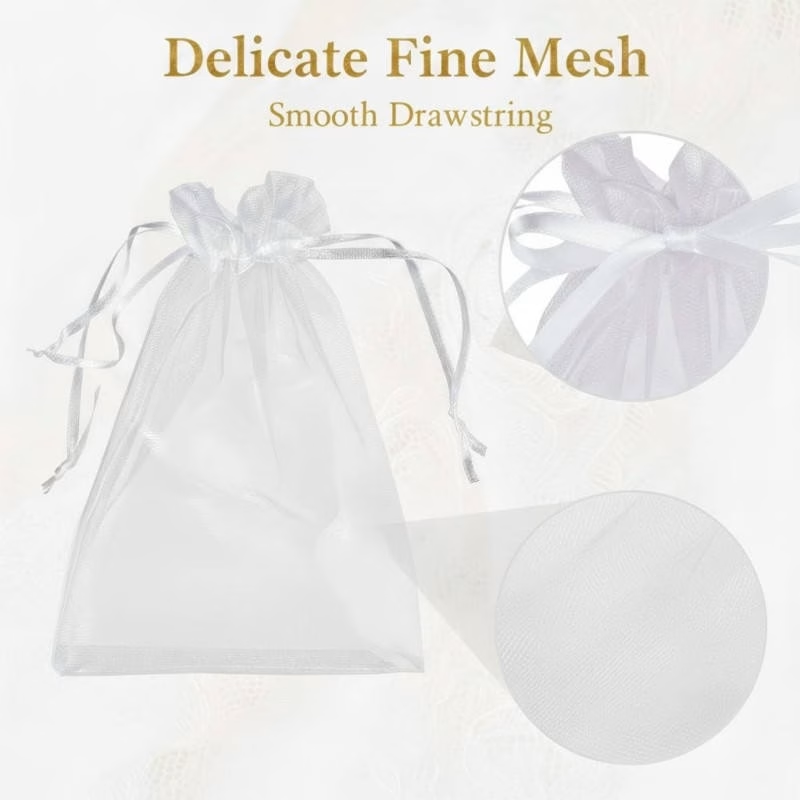
Polyester, nylon, and cotton are the three main materials for small mesh string bags. Each has a distinct performance profile. The right choice depends on washing temperature, aesthetic requirement, and end use.
Polyester mesh is the most widely used material. It resists moisture, UV degradation, and repeated stretching. Polyester bags tolerate machine wash up to 60°C and dry quickly. They’re the default for laundry and utility applications. Cost per unit runs lower than nylon or cotton at comparable quality levels.
Nylon mesh offers higher tensile strength and stretch resistance. This matters for bags that carry heavier items or go through industrial laundry cycles. Nylon costs 15–25% more than polyester at equivalent mesh weights. For small bags under 8×10 inches, the performance difference is minimal in consumer settings.
Cotton muslin mesh is the preferred choice for food contact and eco-branding applications. It’s breathable, compostable, and carries well-established consumer trust. Cotton weakens faster than polyester under high-temperature washing. Bags used repeatedly at 60°C will show fiber degradation within 50 cycles.
| Material | Max Wash Temp | Durability (cycles) | Best For | Relative Cost |
|---|---|---|---|---|
| Polyester | 60°C | 200+ | Laundry, travel, utility | Low |
| Nylon | 60°C | 300+ | Heavy-duty, industrial | Medium |
| Cotton muslin | 40°C | 50–80 | Produce, gifting, eco | Medium |
| Organza polyester | 30°C | 10–20 | Retail gifting only | Low–medium |
What to Check Before Ordering Small Mesh Drawstring Bags in Bulk
Bulk orders of small mesh drawstring bags require five checks before confirming a purchase order. Skipping any one of them creates problems that are costly to resolve after goods arrive.
First, confirm exact dimensions. Request samples and measure them yourself. A 4×6-inch bag from one factory may measure 3.7×5.8 inches from another. The difference matters when the bag is used as a branded gift pouch with a printed insert.
Second, verify cord lock quality. Small bags are opened and closed repeatedly. A cord that slips or knots under light use signals poor braid construction. Ask for a minimum pull strength spec — 15N is a reasonable threshold for daily-use bags.
Third, check seam construction at the channel. The hem where the cord runs is the highest-failure-risk point. Lockstitch seams hold. Single-pass stitching frays under tension. Request a cross-section photo or a cut sample if you can’t inspect in person.
Fourth, ask about certifications. For EU and North American retail, OEKO-TEX Standard 100 is the benchmark. It confirms no harmful substances in the finished product. For food-contact bags, ask specifically about food-grade compliance.
Fifth, request a production sample before committing to full volume. Most B2B buyers skip this step to save time. It consistently leads to disputes. A sample run of 20–50 units catches color, sizing, and stitching issues at a fraction of the cost of a corrective shipment.
Our drawstring mesh bag catalog covers multiple small-bag configurations with production samples available on request. The full product range includes custom sizing options for OEM orders.
Frequently Asked Questions
What size are small mesh drawstring bags?
Small mesh drawstring bags typically range from 4×6 inches to 8×10 inches (10×15 cm to 20×25 cm). Sizes below 4×6 inches are considered micro pouches and suit jewelry or small samples. Bags above 8×10 inches move into medium territory. Always confirm exact measurements with your supplier before ordering.
Are small mesh drawstring bags safe for washing machines?
Polyester and nylon mesh drawstring bags are machine-safe at 40°C–60°C. Cotton muslin bags should stay below 40°C to avoid fiber shrinkage. Organza bags sold for retail gifting are not designed for repeated machine washing and will degrade quickly. Always match the bag material to the washing temperature before use.
What is the difference between a mesh string bag and a regular drawstring bag?
A mesh string bag uses open-weave fabric that allows water, air, and detergent to pass through. A regular drawstring bag uses solid fabric that traps contents and blocks airflow. Mesh drawstring bags are better for laundry protection, produce storage, and travel organization. Solid bags suit heavier items where containment matters more than breathability.
How many small mesh bags can I order as a minimum?
Most manufacturers set a minimum order quantity (MOQ) of 500–1,000 units for small mesh drawstring bags. Custom sizing, color, or branding typically increases the MOQ to 1,000–2,000 units. Some suppliers offer sample runs of 20–50 units before full production. Confirm MOQ and sample availability before requesting a quote.
What certifications should I ask for on small mesh bags?
For EU and North American retail, request an OEKO-TEX Standard 100 certificate. This confirms no harmful chemicals in the finished bag. For food-contact applications like produce bags, ask for food-grade compliance documentation. Suppliers serving European markets should also confirm REACH regulation compliance under EU chemical safety rules.
Can small mesh drawstring bags be custom branded?
Yes. Custom branding options include screen-printed logos, woven labels, embroidered patches, and heat transfers. Screen printing on fine mesh produces clean results at 500-unit minimums. Embroidery suits thicker mesh and lasts longer through washing cycles. Most OEM manufacturers, including Yiwu Yihang, accept fully custom designs with standard lead times of 25–35 days.
The Right Small Mesh Drawstring Bag Makes Every Application Work Better
Choosing the right small mesh drawstring bag is a function of three variables: size, material, and construction. Get these right, and the bag performs exactly as expected across hundreds of use cycles. Get them wrong, and the first batch becomes a costly lesson.
For laundry protection, use polyester mesh with lockstitch seams and a doubled cord. Retail gifting calls for matching the mesh weight and cord finish to the product it holds. Cotton muslin is the right choice for produce and food-contact applications — confirm food-grade compliance before ordering at scale.
If you’re comparing suppliers, ask for production samples first. A 20-unit test order takes two weeks and eliminates most sourcing surprises. It’s the fastest way to confirm whether a supplier’s quality matches their spec sheet.
Browse our small drawstring mesh bags or contact our team to discuss custom sizing, OEM branding, and bulk pricing for your next order.