
Bras are among the most structurally complex garments in a wardrobe. Underwires, molded cups, elastic bands, and delicate fabrics like lace and microfiber are all engineered to hold their shape until a standard washing machine cycle destroys them. Studies from the American Cleaning Institute show that heat and mechanical agitation are the two leading causes of premature garment failure in delicate items. Mesh laundry bags for bras are the simplest, most effective solution to this problem, and most women are still not using one.
The damage happens fast. A single wash without protection can snag lace, warp underwire, and stretch elastic beyond recovery. Over time, you’re replacing bras far more often than necessary at an average cost of $40–$80 per quality bra, that adds up. A good bra laundry bag costs a fraction of that and extends garment life by months or years.
This article covers how mesh bra laundry bags work, what to look for when choosing one, the best options available from Bra Laundry Bag collection, and answers to the most common questions buyers ask before purchasing.
What Mesh Laundry Bags for Bras Actually Do
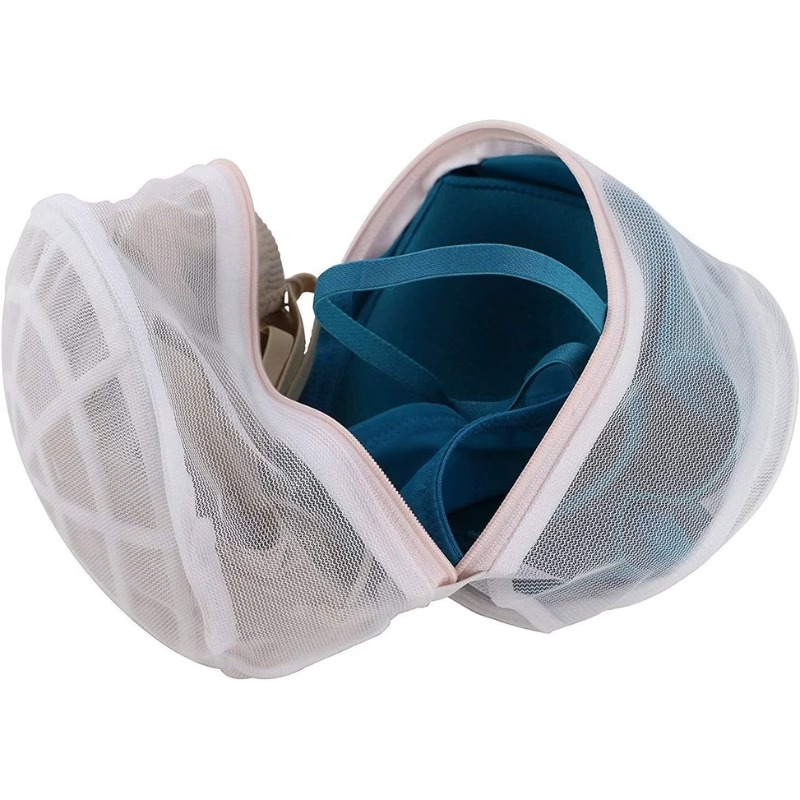
A mesh laundry bag for bras creates a physical barrier between the bra and the drum, agitator, and other garments inside the washing machine. The mesh fabric lets water and detergent pass through freely while stopping the bra from getting twisted, stretched, or snagged. This single function prevents the most common types of bra damage in one step.
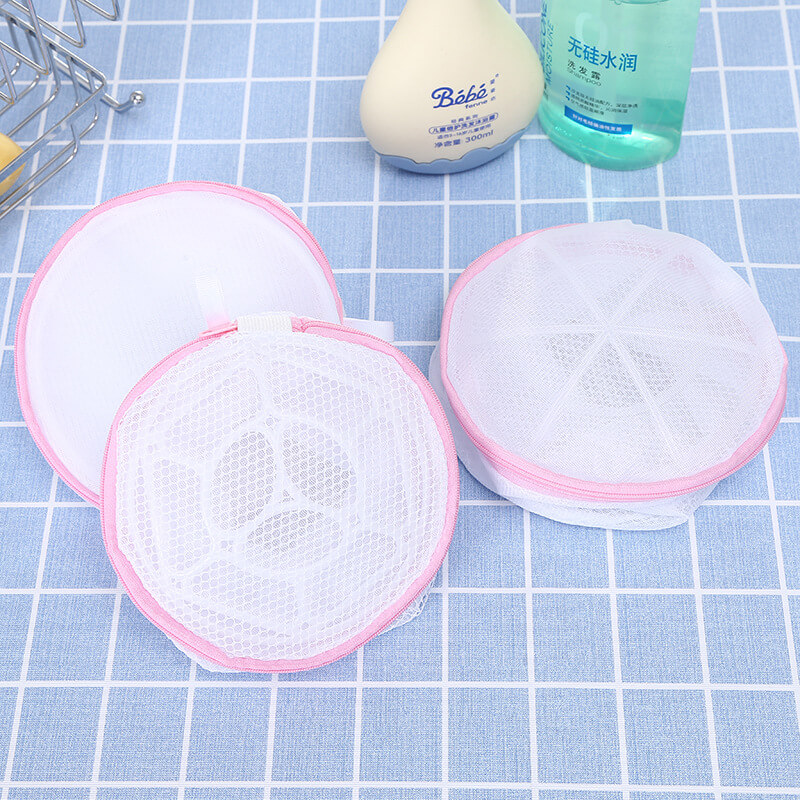
Most bra laundry bags are constructed from sandwich mesh a three-layer fabric with a stiff middle layer that adds structural rigidity. This is distinct from standard single-layer mesh used in general laundry bags. The thicker construction cushions the molded cup during spin cycles, which generate centrifugal forces strong enough to flatten and crack foam padding in unprotected bras.
1. How the Zipper Closure Makes a Difference
The zipper type matters as much as the mesh. A low-quality metal zipper corrodes quickly and can snag delicate fabrics even while enclosed. Quality bra wash bags use coil zippers or plastic-tooth zippers that are smooth, corrosion-resistant, and less likely to catch on lace or satin.
Sandwich Mesh Bra Laundry Bag Set uses a reinforced zipper closure designed specifically for repeated wash cycles without degradation. For high-volume laundry scenarios shared laundry facilities, commercial use zipper durability is a non-negotiable spec.
2. Mesh Density and Water Flow
Mesh density is measured in holes per square inch. Finer mesh protects more delicate fabrics (lace, silk) but reduces water and detergent circulation. Coarser mesh allows better wash performance but offers less mechanical protection. The ideal bra laundry bag balances both: fine enough to protect, open enough to actually clean.
Why Standard Washing Machine Cycles Damage Bras
Standard washing machine cycles particularly high-spin speeds above 800 RPM and hot water settings above 40°C cause three types of damage to unprotected bras: mechanical deformation, thermal degradation, and abrasion damage.
Mechanical deformation occurs when the bra gets caught in the drum or agitator and is pulled or stretched during the spin cycle. Thermal degradation happens when heat breaks down the elastane (spandex) fibers in the band and straps, causing them to lose their stretch recovery. Abrasion damage is caused by friction with other garments, particularly denim or fabrics with metal hardware.
According to research published by the Textile Research Journal, elastane fibers lose measurable tensile strength after repeated high-temperature wash exposures. Most bra manufacturers including major brands like Wacoal, ThirdLove, and Triumph explicitly recommend machine washing in a mesh laundry bag on a gentle or delicate cycle with cold water (30°C or below).
The Underwire Problem
Underwires are the most vulnerable structural component in a bra. They sit in a fabric channel sewn along the bottom of the cup. When a bra tumbles freely in a wash drum, the wire shifts inside its channel, bends at stress points, and eventually pushes through the fabric making the bra unwearable. A bra laundry bag keeps the bra stationary enough during the wash that the wire cannot build momentum and stress its casing.
How to Choose the Right Mesh Laundry Bag for Bras
The right mesh bra laundry bag depends on bra type, wash frequency, and whether you’re buying for personal use or in bulk. The three primary variables are size, mesh type, and construction quality.
| Feature | What to Look For | Why It Matters |
|---|---|---|
| Size | Fits bra flat without compression | Prevents cup distortion during wash |
| Mesh type | Sandwich mesh (3-layer) | Cushions molded cups; more durable |
| Zipper | Coil or plastic-tooth zipper | Prevents snagging and corrosion |
| Material | Polyester or nylon mesh | Withstands repeated washing |
| Closure type | Full-perimeter zip | Keeps bra fully enclosed |
| Pack count | Set of 2–3 bags | Allows rotation without waiting for laundry |
1. Sizing for Different Bra Types
Bra sizes vary significantly a 30A and a 44DD need very different amounts of interior space. A bra laundry bag that compresses a molded cup during washing defeats its own purpose. Look for bags with interior dimensions of at least 30cm × 25cm for most standard bra sizes, or choose from a multi-size set that covers different cup volumes.
15×16cm Sandwich Bra Mesh Laundry Bag is sized for smaller cup bras, while larger bags in their lineup accommodate full-cup and balconette styles without compressing the padding.
2. Material: Polyester vs. Nylon Mesh
Both polyester and nylon mesh are machine-washable, quick-drying, and durable. Nylon is slightly more resistant to abrasion; polyester holds color better and is less expensive at scale. For most personal-use applications, polyester mesh is the practical choice. The Double Polyester Bra Laundry Bag uses a doubled polyester construction that gives added rigidity without significantly increasing cost.
The Best Mesh Laundry Bags for Bras: Product Range
We manufactures and wholesale supplies bra laundry bags from their factory in Yiwu City, Zhejiang, China one of the world’s largest small commodity manufacturing hubs. Their range covers personal-use sets, commercial-grade bags, and custom OEM products for brands.
Their core bra laundry bag lineup includes four options suited to different needs:
- Sandwich Mesh Bra Laundry Bag Set — A multi-piece set using three-layer sandwich mesh construction. Designed for everyday home use. The structured mesh keeps cups from collapsing during the wash cycle. View the Sandwich Mesh Bra Laundry Bag Set.
- Double Polyester Bra Laundry Bag — A doubled polyester mesh bag that balances breathability with structural protection. A reliable option for regular machine washing. View the Double Polyester Bra Laundry Bag.
- Printed Folding Bra and Underwear Laundry Bag — A foldable design with printed branding, suitable for retail packaging or branded gifting. Fits both bras and underwear in a single bag. View the Printed Folding Bra and Underwear Laundry Bag.
- Thickened Mesh Bra Laundry Bag — Heavy-duty construction for commercial or high-frequency washing. Used in hospitality, laundry service operations, and retail bundling.
We accepts custom OEM orders with logo printing, custom sizing, and branded packaging making them a supplier option for lingerie brands looking to bundle care accessories with their products.
Mesh Laundry Bags for Bras vs. Hand Washing: Which Is Better?
When it comes to extending the lifespan of your lingerie, the “perfect” method has always been clear: hand washing. It is, without question, the gold standard. By eliminating mechanical agitation and removing the risk of heat variation, hand washing gives you full control over the environment, ensuring that delicate fibers and elastic bands aren’t subjected to unnecessary stress.
However, we have to be realistic about our daily lives. For most women, the consistency required for hand washing simply isn’t sustainable. Between busy schedules and “laundry day” fatigue, the habit often falls by the wayside. Consequently, the real-world choice isn’t usually between a sink full of soapy water and the machine; it is between machine washing your bras with a protective mesh bag or throwing them in loose, unprotected.
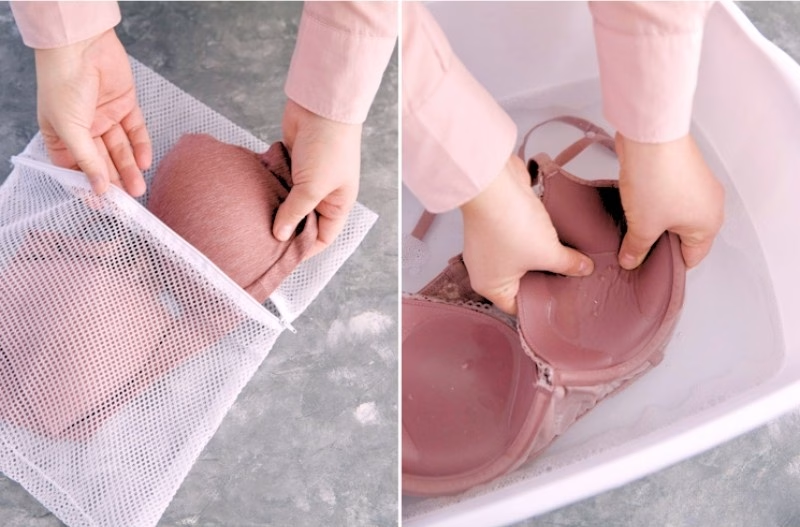
When looking at that practical comparison, the mesh bag wins decisively. Using a high-quality mesh laundry bag transforms a harsh washing machine cycle into a safe environment for your delicates.
According to research and care standards from the International Association for Textile Care Labeling (GINETEX), cool machine washing inside a protective mesh bag is an acceptable alternative to hand washing for most synthetic and blended fabrics. The science behind this is simple: the bag acts as a barrier, reducing the friction caused by the drum and other garments. However, for this method to be effective, you must adhere to strict variables. The water temperature should be set to 30°C (approximately 86°F) or below to prevent melting fibers or degrading elastic. Furthermore, the spin speed must be adjusted to a gentle or delicate cycle, capping out at a maximum of 400–600 RPM. Higher spin speeds can force water through the padding of the bra, causing the foam cups to wrinkle and misshape permanently.
When Hand Washing Is Non-Negotiable
While mesh bags are excellent for everyday t-shirt bras and sports bras, there are specific scenarios where hand washing still outperforms even the best bagged machine wash routine. You should head to the sink for:
- Ultra-Delicate Fabrics: Materials like pure silk or vintage lace are too fragile for even the gentlest machine agitation. The risk of tearing or puckering is simply too high.
- Structured Push-Up Bras: Bras with complex foam architecture or “molded cups” are prone to creasing. Even inside a bag, the tumbling motion of a washing machine can create permanent folds in the foam that are impossible to iron out.
- Heavily Embellished Lingerie: If your bra features lace, beading, or sequins, hand washing is safer. Embellishments can catch on the mesh of the laundry bag itself or snag on other items, leading to unraveling.
Frequently Asked Questions (FAQs)
Q1. What size mesh laundry bag do I need for a bra?
Most bras fit comfortably in a mesh laundry bag measuring 30cm × 25cm or larger. Full-cup and plus-size bras benefit from bags closer to 35cm × 30cm to avoid compressing the cups. Check the bag’s interior dimensions before purchasing. Compression during washing defeats the bag’s protective purpose and can warp molded padding permanently.
Q2. Can I put multiple bras in one mesh laundry bag for bras?
Placing more than one bra in a single mesh bag is not recommended. When two bras share a bag, the underwires can press against each other and cause the same deformation you’re trying to prevent. Use one bag per bra. If you need to wash multiple bras at once, use a multi-piece set of mesh laundry bags.
Q3. How often should I wash bras, and should I always use a mesh bag?
Bras should be washed after two to three wears under normal conditions, or after every wear if worn during physical activity. Every machine wash without exception should use a mesh laundry bag for bras. Hand washing on off-rotation days is optional but recommended for extending elastic life between machine cycles.
Q4. Do mesh laundry bags for bras work in all washing machine types?
Mesh bra laundry bags work in both top-loading and front-loading washing machines. Front-loaders are generally gentler due to their tumble action versus the agitator mechanism in top-loaders. If using a top-loader with a center agitator, keep the spin speed low (gentle cycle) and place the bagged bra away from the agitator to minimize mechanical stress.
Q5. Are mesh laundry bags for bras reusable and how long do they last?
A quality polyester or nylon mesh bra laundry bag is fully reusable and should last 12–24 months with regular weekly washing. Zipper failure is the most common point of degradation. Inspect the zipper teeth every few months. When the zipper begins catching fabric or resisting smooth closure, replace the bag. Our thickened mesh bags are built for higher wash-cycle durability than standard retail bags.
Q6. What’s the difference between a bra laundry bag and a regular lingerie laundry bag?
A bra-specific laundry bag typically uses sandwich mesh or thickened multi-layer construction to cushion molded cups something a standard single-layer lingerie bag doesn’t provide. Standard lingerie bags are fine for underwear, camisoles, and thinner fabrics. For bras with underwire or molded padding, the structural rigidity of a bra-specific mesh bag makes a measurable difference in shape retention.
Protecting Your Bras Is a Small Habit With a Real Payoff
The average woman owns 6–10 bras, and replacing them represents a consistent household cost. Proper wash care specifically using mesh laundry bags for bras is one of the simplest ways to extend garment life and reduce that cost over time. It takes less than 30 seconds per wash cycle.
Whether you’re buying for your own laundry routine, stocking up for a household, or sourcing in bulk for retail or brand bundling, the principle is the same: a structured mesh bag keeps a bra intact through cycles that would otherwise degrade it. That’s not a marketing claim it’s the same reason bra manufacturers print “use a mesh laundry bag” on their care labels.
Bra Laundry Bag collection includes options for individual use, multi-piece home sets, and wholesale or OEM orders. If you’re ready to start washing your bras correctly or need a reliable supplier for bra laundry bags in volume their product range covers both ends of that requirement.